


Buy A Fire Extinguisher!


When I used to fly Cessnas pretty regularly (3+ flights per week), I always had a Halon extinguisher on board.
I think what it comes down to is that Halon is better at putting out fire, period. The only reason we're told to stay away from it is because of "environmental concerns" and like Dan said, "The government put a regulation on Halon so people aren't using it in their kitchens and in houses to put out grease fires and other non critical situations."
David, that website you links to claims that, "In addition, the fact should not go unrecognized that Halon is both highly corrosive to metal surfaces, dissolves plastic components on contact and is an ozone-depleting substance." I find this extremely hard to believe: Halon flood systems have been used by IT departments for decades. I highly doubt a multi-million dollar server room is going to use something "corrosive to metal" that will "dissolve plastic components".
Anyway, I'm sure either would work fine to tackle a small engine fire, but if I was given the option I would take a Halon.
And don't feel bad David - apparently you didn't know that Dan is a volunteer firefighter on the weekends.

^ that may or may not be a tranny over his shoulder...
Cheers.
I think what it comes down to is that Halon is better at putting out fire, period. The only reason we're told to stay away from it is because of "environmental concerns"
and like Dan said, "The government put a regulation on Halon so people aren't using it in their kitchens and in houses to put out grease fires and other non critical situations."David, that website you links to claims that, "In addition, the fact should not go unrecognized that Halon is both highly corrosive to metal surfaces, dissolves plastic components on contact and is an ozone-depleting substance." I find this extremely hard to believe: Halon flood systems have been used by IT departments for decades. I highly doubt a multi-million dollar server room is going to use something "corrosive to metal" that will "dissolve plastic components".
Anyway, I'm sure either would work fine to tackle a small engine fire, but if I was given the option I would take a Halon.
And don't feel bad David - apparently you didn't know that Dan is a volunteer firefighter on the weekends.
^ that may or may not be a tranny over his shoulder...
Cheers.
LOL This dig is SakeBomb and David Hayes approved ! But in all seriousness, halon is twice as powerful per volume as halotron, and yes, IT departments, aviation, and many other sensitive applications use halon because safely and cleanly putting out those fire are mission critical. I'd also have to say that once my 20b is finally running, the obscene amounts of sweat, blood, and most importantly money makes my car mission-effing-critical too!!
David's link claims that halon dissolves plastics and metals. Considering the applications its used in, I HIGHLY doubt that. If we're talking about repeated applications of halon over and over then I could see that. The quote doesn't state if it's repeated applications, long exposure times, or if it instantly vaporizes anything it touches like magic. Let's be careful not to take partial information out of context. If it was NOT superior, why is it the go-to fire suppressant for aviation?
Yes, halon is bad for the atmosphere... when released. Anyone that knows me knows that I'm pretty big on the environment, to the tune of running twin parallel cats on my 20b
 . How often do you have an engine fire? It's a safety device for the possibly disastrous day that a fire MAY occur. It's regulated so jonny-BBQ doesn't use it on his out of control propane grill, in his kitchen, etc. It's regulated so large amounts of halon are not dispersed into the atmosphere. The production of halon is capped meaning the supply is ever dwindling.
 If you are going to be a halon owner you must do it responsibly by A) not shooting halon at your friends for tickles, and B) RECYCLING the halon at a halon recycling center and having them refill your bottle with new. When halon is recycled, it is reprocessed for use in another bottle and therefore does not have any significant environmental impact. Will the average homeowner do this? NO. That's why its now capped and regulated. I'm environmentally conscious, and also conscious about my wallet, so when the time comes to re-charge the bottle I'm going to do the right thing and take it to a recycler that can recharge my bottle for a fraction of throwing it in the trash and buying a new one. There are downsides, but does halon work better than everything else? Unfortunately yes, and by twice the amount. If you can't responsibly manage possession of it, then yeah its probably the wrong choice for you, and by all means rock a halotron unit.
But when I'M putting out a fire and the halotron runs out and the fire is still going, I (personally) don't want to be stuck there holding my... errr... extinguisher
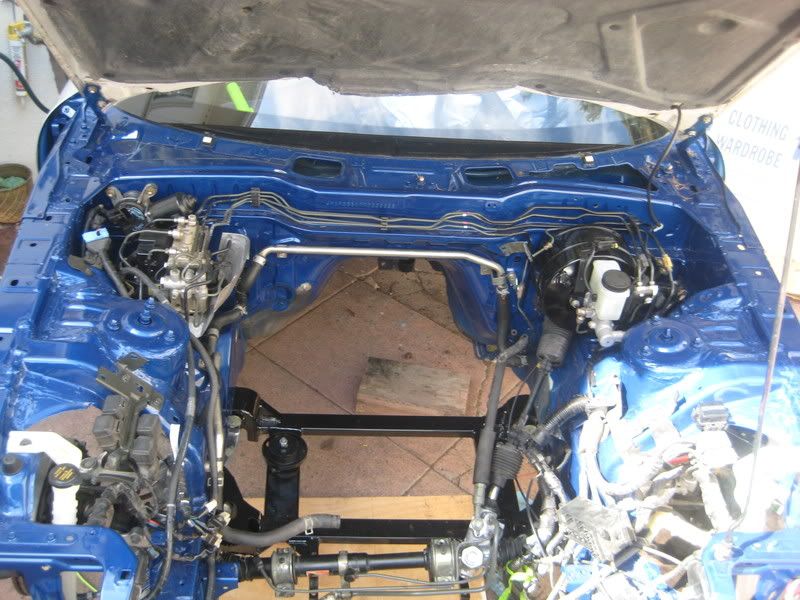
 waiting for the fire department while my car burns to the ground. Don't believe me? I own someone else's fire damaged car. He had a halotron bottle in his car. Guess what, it ran out and he waited for the SF fire department to come and the car was totaled by that point. On the plus side I got it cheap and its now my project car... but everything, and I mean EVERYTHING including the fiberglass headlight buckets were destroyed. Not a usable part left under the hood. I'm not speaking from what I've read, I'm speaking from experience. By all means, use whatever you want to use. I've made my choice.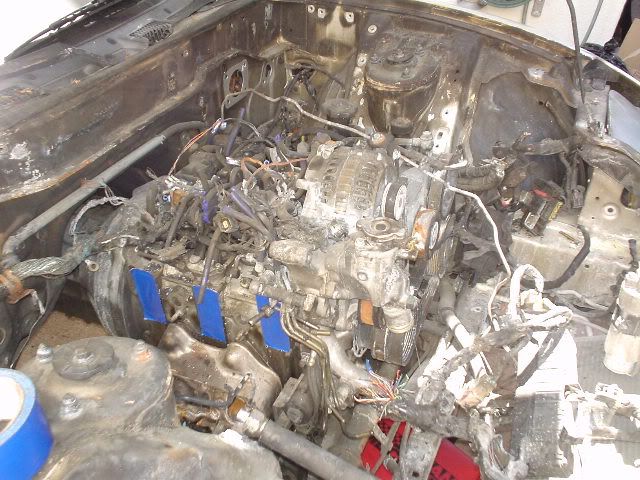
-Heath
 (shhhh) ... but I hadn't really thought about prettying it up a little and having them reproduced. If there are more than a few people that want them... idk its a possibility.
i'd guess it'd be one of those slow burning type of products. Not something that you'd sell a lot of in large doses but something that routinely gets sold.
The reason I say this is that people try to get the car to a drivable stage for a good amount of time - and thus spend the majority of their resources and attention that stage. The extinguisher comes in when you step back from the countless hours and $$ invested and say "uh yeah, that better not burn".
Small run product but with potential for longevity. Just a thought.
The reason I say this is that people try to get the car to a drivable stage for a good amount of time - and thus spend the majority of their resources and attention that stage. The extinguisher comes in when you step back from the countless hours and $$ invested and say "uh yeah, that better not burn".
Small run product but with potential for longevity. Just a thought.

I mean, I've got one for my personal car, and I'm working on one for Dan cause his extinguisher is literally thrown behind his seat (shhhh) ... but I hadn't really thought about prettying it up a little and having them reproduced. If there are more than a few people that want them... idk its a possibility.
(shhhh) ... but I hadn't really thought about prettying it up a little and having them reproduced. If there are more than a few people that want them... idk its a possibility. ok GO!
(just kidding...)



A work in progress

Joined: Feb 2005
Posts: 35
Likes: 0
From: Rocky Mountains
Is that safe?
It is a factory part that serves a specific purpose. Every guide I've seen to delete it starts with "..... IS NOT RESPONSIBLE FOR ANY DAMAGE BY THIS MOD." I'm all for preventing fires, but what is the downside of deleting it? Is it worth any possible risks?


Joined: Aug 2004
Posts: 4,497
Likes: 1,487
From: West Coast
I made the one for myself while back, and I'm working on a second one for my buddy Dan (scrub). It's got an aircraft grade quick release pin for quick removal, slides with the seat, strong enough for most any impact, still allows easy access to the seat adjust lever, and wont touch the passengers legs or impede getting in/out of the car. I like it, and I'm running a halon 1211 bottle with it.
That looks great! Do you mind posting up some kind of shopping list/diagram so we can emulate your mounting idea? Either that or maybe put together a "kit" and sell me one?
Heh, my 3 year old bottle of Halotron is in one of my rear bins. It'll be like a missile if I hit something.

Banned. I got OWNED!!!
Joined: Mar 2009
Posts: 1,045
Likes: 0
From: NC
Has there ever been an FD engine fire that isn't
1) FPD
2) fuel filter relocation
3) worn/cracked fuel lines, or
4) oil soaked insulaton
- related?
Eliminate those issues and you eliminate 99% of the problem. Prevention always wins.
Not saying Halon is a bad idea, but I don't have one, haven't in 12 years, and I'm not in the least bit worried. It's always the people who don't maintain their cars properly, keep the pulsation damper in place, or relocate the fuel filter to the engine bay that have the problem.
1) FPD
2) fuel filter relocation
3) worn/cracked fuel lines, or
4) oil soaked insulaton
- related?
Eliminate those issues and you eliminate 99% of the problem. Prevention always wins.
Not saying Halon is a bad idea, but I don't have one, haven't in 12 years, and I'm not in the least bit worried. It's always the people who don't maintain their cars properly, keep the pulsation damper in place, or relocate the fuel filter to the engine bay that have the problem.
Banned. I got OWNED!!!
Joined: Mar 2009
Posts: 1,045
Likes: 0
From: NC
I noticed a little extra hestitation when I get on and off the throttle quickly, that's about it. No biggie. I consider this another concession for street cars that I'm happy to delete, since my ultimate goal for the car is convert it to a track beast with everything stripped.


edit: I wouldn't mind a shopping list for that mount either.

Sorry to hear of your horrible experience. Thankfully you're ok; it could have been A LOT worse. I know exactly how you feel...
The demise of my first FD back in the fall of 2004. (electrical fire)

The demise of my first FD back in the fall of 2004. (electrical fire)
 yeah thats a bad one. the bumper on mine was noe melted away like that and the windshield did not explode. That ones is far gone... really sad to see .


That looks great! Do you mind posting up some kind of shopping list/diagram so we can emulate your mounting idea? Either that or maybe put together a "kit" and sell me one?
Heh, my 3 year old bottle of Halotron is in one of my rear bins. It'll be like a missile if I hit something.
Heh, my 3 year old bottle of Halotron is in one of my rear bins. It'll be like a missile if I hit something.
Not to hijack this thread, but after a rush of PM's from people we've decided to open up an interest thread for the extinguisher bracket/mount and possibly halon extinguishers. The link is not yet a GB thread, just an interest thread to see if we'll move forward. If you're interested, throw in your vote
-> HERE
...and now back to the thread!
I'm wondering what you guys thing about the CAUSES of these fires, so we can better direct our maintenance/replacement of suspect parts. what percentage of fires are caused by:
Faulty FPD
Faulty FPR
Leaking injector o-ring
Leaking/cracked rubber fuel line under UIM
Leaking/cracked rubber fuel line from the hardlines (driver side0
Leaking/cracked rubber coolant hose dumping onto hot turbos
Leaking oil fire
Electrical fire
Other
(please add anything else you can think of)
and then considering the previous list/percentages... what are good rules of thumb for when to replace these parts (age or mileage) to prevent the most common fires?
Faulty FPD
Faulty FPR
Leaking injector o-ring
Leaking/cracked rubber fuel line under UIM
Leaking/cracked rubber fuel line from the hardlines (driver side0
Leaking/cracked rubber coolant hose dumping onto hot turbos
Leaking oil fire
Electrical fire
Other
(please add anything else you can think of)
and then considering the previous list/percentages... what are good rules of thumb for when to replace these parts (age or mileage) to prevent the most common fires?


Even though it has been a while I thought I would update.
I was finally able to tear into the car and see the damage. It needed:
A new wiring harness, injectors, solenoids, ignition coils, omp lines/injectors, vacuum hoses etc. Basically everything you have access to when the UIM is removed.
Here is where it gets a bit interesting. This was a one owner car since new and everything and I do mean everything (even new tires) was done at the Mazda dealership where it was purchased.
I had them send me over a fax showing the work done to the car. One of the last things they did when the previous owner had the car was replace one of the OMP lines. To get to the OMP lines they had to remove the primary fuel rail if I am not mistaken?
I was working on removing the primary fuel rail and was very careful to not let the fuel rail spacer drop from under the rail. But wait! There was no spacer. So what happened? I am guessing whoever did the work at Mazda forgot to put the spacer back in. This caused a leak and it took the right amount of fuel and the right temperature to set the car ablaze. The bottom of the primary rail was covered in varnished fuel which I believe could indicate that there was a leak there for a while. Could it have been caused by the pulsation dampener? I guess, but this missing spacer seems to be the more likely culprit.
I have purchased all of the parts necessary to rebuild the car so it will be back on the road soon if time permits.
Bottom line: Don't let Mazda work on your FD and carry a fire extinguisher just in case.
I was finally able to tear into the car and see the damage. It needed:
A new wiring harness, injectors, solenoids, ignition coils, omp lines/injectors, vacuum hoses etc. Basically everything you have access to when the UIM is removed.
Here is where it gets a bit interesting. This was a one owner car since new and everything and I do mean everything (even new tires) was done at the Mazda dealership where it was purchased.
I had them send me over a fax showing the work done to the car. One of the last things they did when the previous owner had the car was replace one of the OMP lines. To get to the OMP lines they had to remove the primary fuel rail if I am not mistaken?
I was working on removing the primary fuel rail and was very careful to not let the fuel rail spacer drop from under the rail. But wait! There was no spacer. So what happened? I am guessing whoever did the work at Mazda forgot to put the spacer back in. This caused a leak and it took the right amount of fuel and the right temperature to set the car ablaze. The bottom of the primary rail was covered in varnished fuel which I believe could indicate that there was a leak there for a while. Could it have been caused by the pulsation dampener? I guess, but this missing spacer seems to be the more likely culprit.
I have purchased all of the parts necessary to rebuild the car so it will be back on the road soon if time permits.
Bottom line: Don't let Mazda work on your FD and carry a fire extinguisher just in case.
Batman
Joined: Jun 2011
Posts: 53
Likes: 0
From: Tasmania, Australia
I just wanted to back the OP up on the utter importance of having a fire extinguisher in the car.
My story involves a different type of car, but same situation.
I had just tuned the carburetor on my Hemi powered Australian Chrysler Charger. Had just bought oil and an oil filter from the parts shop, and was driving home to do an oil change. The car was pristine and had only ever done 79,000km since new. I'd never had any electrical dramas with the car.
I slowed to turn off the main highway into my driveway, and the car stalled out. I thought that I had got the carburetor settings wrong, so I didnt worry too much. But then I saw a huge black spot growing on the hood paint. The paint on the hood was literally frying black, from some heat source underneath. The AC fans were still running, and suddenly flames erupted from under the hood (bonnet) gap, and flames started licking out of the face-level AC vents on the dashboard. I jumped out and grabbed the fire extinguisher, but couldnt get the hood open due to the heat. I sprayed what I could, and had to sit on the side of the road and watch my car go up in flames. It took 15 minutes for the fire dept to arrive, and by that time, most of the front of the car was alight.
In 15 minutes, the fire had cost me $10,000 in damage, and the car was uninsured. All lanes of the highway had to be blocked for over an hour, and it was one of the most gut wrenching moments of my life.
Now I have to start again, and rebuild a car that took 10 years to build the first time. It wasnt a rotary, and it wasnt a Mazda. But it was a very sentimental piece of my life, and something that I had put a lot of effort into.
Go get an extinguisher and put it in your FD. Dont let the hard work go up in smoke. Trust me, it feels awful to come back the next day and lift the car cover on a charred wreck that used to be your pride & joy
EDIT: My fire was caused by the main battery positive cable rubbing slightly through the cable insulation and then contacting the firewall. The current from the Optima battery caused the cable to fuse to the firewall, and thus an electrical fire resulted. I had checked the battery cable a week before, due to strange behaviour. But the hole in the cable insulation was so small I didnt find it
My story involves a different type of car, but same situation.
I had just tuned the carburetor on my Hemi powered Australian Chrysler Charger. Had just bought oil and an oil filter from the parts shop, and was driving home to do an oil change. The car was pristine and had only ever done 79,000km since new. I'd never had any electrical dramas with the car.
I slowed to turn off the main highway into my driveway, and the car stalled out. I thought that I had got the carburetor settings wrong, so I didnt worry too much. But then I saw a huge black spot growing on the hood paint. The paint on the hood was literally frying black, from some heat source underneath. The AC fans were still running, and suddenly flames erupted from under the hood (bonnet) gap, and flames started licking out of the face-level AC vents on the dashboard. I jumped out and grabbed the fire extinguisher, but couldnt get the hood open due to the heat. I sprayed what I could, and had to sit on the side of the road and watch my car go up in flames. It took 15 minutes for the fire dept to arrive, and by that time, most of the front of the car was alight.
In 15 minutes, the fire had cost me $10,000 in damage, and the car was uninsured. All lanes of the highway had to be blocked for over an hour, and it was one of the most gut wrenching moments of my life.
Now I have to start again, and rebuild a car that took 10 years to build the first time. It wasnt a rotary, and it wasnt a Mazda. But it was a very sentimental piece of my life, and something that I had put a lot of effort into.
Go get an extinguisher and put it in your FD. Dont let the hard work go up in smoke. Trust me, it feels awful to come back the next day and lift the car cover on a charred wreck that used to be your pride & joy
EDIT: My fire was caused by the main battery positive cable rubbing slightly through the cable insulation and then contacting the firewall. The current from the Optima battery caused the cable to fuse to the firewall, and thus an electrical fire resulted. I had checked the battery cable a week before, due to strange behaviour. But the hole in the cable insulation was so small I didnt find it
Last edited by Matt535; Aug 2, 2011 at 08:57 PM. Reason: As above. More detail added.

Thread
Thread Starter
Forum
Replies
Last Post
Apoc3D
2nd Generation Specific (1986-1992)
10
Sep 5, 2015 10:24 AM
