


Adding downforce to stockbody FDs?




I can't find the website but I have seen yarn testing on the wing for the R1 FD's and all it did was add 0.01 to the Cd, nothing to downforce. So it's for show only and the car is actually slightly faster without it. You're not lugging it's weight around AND the car is more aerodynamic with it.
the '99+ wing I'm sure is a different story.
the '99+ wing I'm sure is a different story.




 reading every post...
Wangan Nasty

Joined: Apr 2006
Posts: 1,779
Likes: 3
From: Irvine, Southern California
There are Street FDs that have transmission back full flat underbodies: I.E: Scoot Rx-7 and a couple other i know of. Reason only transmission back, is to avoid the heat the transmission builds up.
Before the Carbon parts, back when the scoot FD3S was red, it had bolted on aluminum flat underbody panels and from talking to the owner of scoot, he said he noticed a big difference. But, on his car, the suspension, tires and aero works together to provide the total package of stability. Not just aero parts.

That is for sure a big step in the right direction. A diffuser alone does not do as much as a diffuser with flat underbody panels. The way a rear wing is mounted also makes the difference between drag and downforce.
You need to try different things to see what works for you to achieve the best stability in your type of driving. What is fast on a racetrack does not work for top speed and vice versa.
Canards and GT-Wings work on the track, but only add drag for top speed stability. A low profile GT-wing is a better idea with shorter stays and a different wing angle. There is no 1 correct answer unless you start designing stuff per application.
Password JDM made a full underbody dry carbon for the S2000, and it costs about 3500 USD.

But Password JDM here in Southern california also has the ability to make dry carbon in house, and worked for a long time with aerodynamics specialists to make it the most effective.
Before the Carbon parts, back when the scoot FD3S was red, it had bolted on aluminum flat underbody panels and from talking to the owner of scoot, he said he noticed a big difference. But, on his car, the suspension, tires and aero works together to provide the total package of stability. Not just aero parts.
That is for sure a big step in the right direction. A diffuser alone does not do as much as a diffuser with flat underbody panels. The way a rear wing is mounted also makes the difference between drag and downforce.
You need to try different things to see what works for you to achieve the best stability in your type of driving. What is fast on a racetrack does not work for top speed and vice versa.
Canards and GT-Wings work on the track, but only add drag for top speed stability. A low profile GT-wing is a better idea with shorter stays and a different wing angle. There is no 1 correct answer unless you start designing stuff per application.
Password JDM made a full underbody dry carbon for the S2000, and it costs about 3500 USD.
But Password JDM here in Southern california also has the ability to make dry carbon in house, and worked for a long time with aerodynamics specialists to make it the most effective.
Last edited by Miata_mx5; Dec 19, 2008 at 01:26 AM.



Basically, for applications such as wings or canards, the way to increase downforce is by increasing the angle of attack of the wing. Increasing the angle of attack increases airflow friction, i.e. drag. So the more downforce from a wing you need, the larger the angle of attack. The larger the angle of attack, the more drag you'll create. Diffusers works to basically tame the air exiting from under the car. Making the air less turbulent creates less pressure drag.
Basically, for applications such as wings or canards, the way to increase downforce is by increasing the angle of attack of the wing. Increasing the angle of attack increases airflow friction, i.e. drag. So the more downforce from a wing you need, the larger the angle of attack. The larger the angle of attack, the more drag you'll create. Diffusers works to basically tame the air exiting from under the car. Making the air less turbulent creates less pressure drag.
So, CoD is a measurement of resistance. Increasing a wing's angle of attack, can (and typically does) increase resistance.
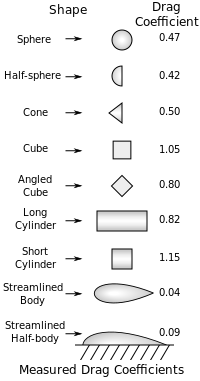
Not really but then can be related. CoD is just a number, basically the resistance of an object through a fluid or air. CoD in itself doesn't tell you much unless you know how to apply it. i.e. comparing CoD values across cars doesn't say much by themselves. Once you then apply that number to the frontal area of the car, then you get the overall effect. For instance BMW cars typically have a fairly low CoD (lower than an Elise IIRC). However, they also typically have a lot of frontal area so the overall amount of drag is greater.
So, CoD is a measurement of resistance. Increasing a wing's angle of attack, can (and typically does) increase resistance.
So, CoD is a measurement of resistance. Increasing a wing's angle of attack, can (and typically does) increase resistance.

Aero simply means it's related to airflow over the car. Lift (downforce), drag, stability, etc are all aero subjects.
Downforce is one way to get more traction. You can measure it as CoL (coefficient of lift, which is negative for the case where you're creating downforce). Aerodynamic downforce increases with the velocity of the vehicle. There are many ways to make downforce: ground effects (engineered flat bottoms), wings, spoilers, splitters. You need some speed to make use of aerodynamic downforce, such that under 50-60mph it gets kinda hard to generate downforce that's worth considering.
The penalty for making downforce is the weight of the added parts and the added drag. So if you're talking coefficients, you want to improve CoL (Coefficient of Lift) and minimize the resulting increase in CoD (Coefficient of Drag).
"Hmm. So by lowering your CoD you may actually be decreasing the aero effect of the car(increased drag=increased resistance)? "
To be frank, you're not going to lower your CoD much. The stock FD is .28-.29; very well optimized for a production car. Lowering the car helps some, and shaving handles and smoothing trim might help too but most guys do the opposite - larger spoilers, wider wheels, wider fenders, vented hoods, etc all increase drag. Some front ends and spoilers do pay off in downforce. But anyway without either great luck or substantial engineering cost you can't lower your CoD without paying a significant performance penalty.
For nearly all racing applications that start with a street car, you need to add downforce and try to minimize the drag penalty.
F1 cars have insanely high (negative) CoL's, such that the 07 BMW Sauber car has downforce equal to it's weight at only 117mph. But the CoD is also extremely high. They live and die by the downforce vs. drag tradeoff.
The challenge to a low budget racer is that any aerodynamic change affects the flow over the rest of the car. While it seems like rear wing is a great idea for grip, it can make the front end light. While canards are a good way to get more bite in cornering, it can change the effectiveness of downstream components. It takes hours and either massive CFD analyses or wind tunnel testing to really push forward with certainty that you're getting what you want. It's extremely expensive, involves building lots of one-off parts that are simply for testing, and takes lots of time. That puts puts us amateurs at a great disadvantage.
So really my point is that yes, you can improve your downforce. You will need more engine power to make up for it. There are very few simple recipes for improving your aero setup unless you fully convert the body. RE-Amemiya racing bodies, full 99-spec conversion, and other engineered body kits all work if you have all of the parts. Mixing and matching and homemade components involves guesswork.
Dave
Downforce is one way to get more traction. You can measure it as CoL (coefficient of lift, which is negative for the case where you're creating downforce). Aerodynamic downforce increases with the velocity of the vehicle. There are many ways to make downforce: ground effects (engineered flat bottoms), wings, spoilers, splitters. You need some speed to make use of aerodynamic downforce, such that under 50-60mph it gets kinda hard to generate downforce that's worth considering.
The penalty for making downforce is the weight of the added parts and the added drag. So if you're talking coefficients, you want to improve CoL (Coefficient of Lift) and minimize the resulting increase in CoD (Coefficient of Drag).
"Hmm. So by lowering your CoD you may actually be decreasing the aero effect of the car(increased drag=increased resistance)? "
To be frank, you're not going to lower your CoD much. The stock FD is .28-.29; very well optimized for a production car. Lowering the car helps some, and shaving handles and smoothing trim might help too but most guys do the opposite - larger spoilers, wider wheels, wider fenders, vented hoods, etc all increase drag. Some front ends and spoilers do pay off in downforce. But anyway without either great luck or substantial engineering cost you can't lower your CoD without paying a significant performance penalty.
For nearly all racing applications that start with a street car, you need to add downforce and try to minimize the drag penalty.
F1 cars have insanely high (negative) CoL's, such that the 07 BMW Sauber car has downforce equal to it's weight at only 117mph. But the CoD is also extremely high. They live and die by the downforce vs. drag tradeoff.
The challenge to a low budget racer is that any aerodynamic change affects the flow over the rest of the car. While it seems like rear wing is a great idea for grip, it can make the front end light. While canards are a good way to get more bite in cornering, it can change the effectiveness of downstream components. It takes hours and either massive CFD analyses or wind tunnel testing to really push forward with certainty that you're getting what you want. It's extremely expensive, involves building lots of one-off parts that are simply for testing, and takes lots of time. That puts puts us amateurs at a great disadvantage.
So really my point is that yes, you can improve your downforce. You will need more engine power to make up for it. There are very few simple recipes for improving your aero setup unless you fully convert the body. RE-Amemiya racing bodies, full 99-spec conversion, and other engineered body kits all work if you have all of the parts. Mixing and matching and homemade components involves guesswork.
Dave
Last edited by dgeesaman; Dec 21, 2008 at 09:54 AM.

Old School
Joined: Mar 2001
Posts: 473
Likes: 0
From: Baldwin City, KS
I remember reading somewhere that the Cd is actually lower on the older '93-'95 front bumper cover than the newer style. It makes sense because the ducts are much smaller and the air that enters them slows down a lot and exits the bottom of the car. The newer license plate holder is not very aerodynamic either. The newer style bumper cover IS supposed to produce more downforce and the air that flows around the outside is supposed to be smoother. I doubt there is much of an advantage aerodynamics wise to moving to the newer front bumper cover. Cooling yes, aerodynamics no.
Reducing rear lift with a rear diffuser should help the rear stick better at speed without increasing Cd (drag). The down force doesn't have to overcome as much lift (force) in that case and the net force is greater in the down direction. Unfortunately, as dgeesaman states, most diffusers have not been tested as to what they do for the aerodynamics and trying to improve aerodynamics with one is a guessing game.
Reducing rear lift with a rear diffuser should help the rear stick better at speed without increasing Cd (drag). The down force doesn't have to overcome as much lift (force) in that case and the net force is greater in the down direction. Unfortunately, as dgeesaman states, most diffusers have not been tested as to what they do for the aerodynamics and trying to improve aerodynamics with one is a guessing game.

Thread
Thread Starter
Forum
Replies
Last Post
Prediict
2nd Generation Specific (1986-1992)
32
Nov 18, 2015 08:41 AM
jeremyferguson4444
1st Generation Specific (1979-1985)
8
Sep 19, 2015 01:27 PM
