


1988 Japanese Car Manufacturer Agreement?


Thread Starter
Full Member

Joined: May 2003
Posts: 142
Likes: 0
From: New Jersey
 1988 Japanese Car Manufacturer Agreement?
"In 1988 all major Japaneese car manuf's signed an agreement that said that neither of them was going to import a sports car over 276HP. Mazda stayed true to that agreement where Mitsu,Toyota and Nissan did not. When word got out in 1990 that Nissan put out the Z at 300HP and the NEXT Supra was rated at 320HP,Mazda said #$%# it and blasted the engine. The RX-7 was originaly meant to have 276 RWHP(Rear wheel HP)which would be about 310 Flywheel HP. Fly wheel HP is the number you always see. Mazda was screwed,Toyota Mitsu and Nissan lied and said that their cars are holding true to the agreement. Bullshit,but it worked. Mazda decreased the engine output to 255 HP.Nobody could believe that the RX-7 could push 4.8 with 255 HP. And the truth is it can't beause Mazda was smart and they gave the 255 HP to be as RWHP,where in truth it really does 276 Flywheel and still stays true to the signed paper. When my 7 was stock I did dyno testing and track testing. Dyno said 280HP on the Flywheel."
That is a quote from the 3rd Gen RX-7 page at Ultimatecarpage.com. I don't know if you guys already know this or have ever heard of it because I've never seen anyone mention it on the forum but if you haven't i thought I would bring it to your attention. I don't even know if this is true anyway. I guess this would also mean that the J-spec turbos rated at 280hp would only be 4 hp more powerful than the 93 ones
That is a quote from the 3rd Gen RX-7 page at Ultimatecarpage.com. I don't know if you guys already know this or have ever heard of it because I've never seen anyone mention it on the forum but if you haven't i thought I would bring it to your attention. I don't even know if this is true anyway. I guess this would also mean that the J-spec turbos rated at 280hp would only be 4 hp more powerful than the 93 ones


Blow up or win

Joined: May 2001
Posts: 2,014
Likes: 3
From: Altezzaville
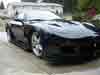
The one thing Mazda has always worked on is horsepower to weight ratio. Our engineers sweated the details. We are the proud recipients of their work.
Note the drilled pedals, lightweight seat pans, thin sheet metal, squeeze cast stock wheels, etc. Probably another 100 "small" things that add up to huge weight savings.
Can you say "Kansei Engineering?". BRILLIANT!
Even to this day...and imagine this all happened almost 15 years ago. I am still in awe when I see all the crap that is being passed off these days as "sports" cars.
Note the drilled pedals, lightweight seat pans, thin sheet metal, squeeze cast stock wheels, etc. Probably another 100 "small" things that add up to huge weight savings.
Can you say "Kansei Engineering?". BRILLIANT!
Even to this day...and imagine this all happened almost 15 years ago. I am still in awe when I see all the crap that is being passed off these days as "sports" cars.



Trending Topics


I could be wrong on this.. But this was called the "Gentlemen's Agreement".. Just as stated earlier, It was an agreement between companies to avoid Horsepower War..
I know other companies have sold cars in US with higher than 276.. but I heard that the same cars that were sold here were rated at 276 or below in Japan.. But abviously, thats what I heard and not sure about the actual fact. The first company to break this I heard will be Honda.. with either S2000R or NSX in 2005.
Also, I read somewhere that when the engine reaches 50,000 km, the engine must be replaced.. I think it was to reduce number of cars in Japan or pollution or something.. I read that somewhere but once again not sure about the accuracy of the info..
I know other companies have sold cars in US with higher than 276.. but I heard that the same cars that were sold here were rated at 276 or below in Japan.. But abviously, thats what I heard and not sure about the actual fact. The first company to break this I heard will be Honda.. with either S2000R or NSX in 2005.
Also, I read somewhere that when the engine reaches 50,000 km, the engine must be replaced.. I think it was to reduce number of cars in Japan or pollution or something.. I read that somewhere but once again not sure about the accuracy of the info..



Junior Member
Joined: Aug 2003
Posts: 14
Likes: 0
From: Fresno, CA
*Coming out of lurking mode*
The J-Spec Supras do make 280 HP, the others (300zx and GTO) make 300, 320 respectively. The US-Spec Supras make 320 hp through the use of diff turbo internals and a bump in boost.
Mazda RX7, Honda NSX and Toyota Supra adhired to the agreement by making a claimed 280 hp, Nissan and Mitsubishi did not (Though the last year 300ZX did make 280 hp due to the loss of their variable valve timing).
Toyota saw that Nissan and Mitsubishi weren't playing along so they bumped up the hp to compete.
This was one of the few cases where the US market got the more desirable engine and not the de-tuned version. (Recently it's been the Subaru STi's 300 hp to the J-spec's 280).
That was info i'd learned over the years reading and talking to owners. If anyone has info to dispute this, feel free to correct me
*Back in to the crowd*
The J-Spec Supras do make 280 HP, the others (300zx and GTO) make 300, 320 respectively. The US-Spec Supras make 320 hp through the use of diff turbo internals and a bump in boost.
Mazda RX7, Honda NSX and Toyota Supra adhired to the agreement by making a claimed 280 hp, Nissan and Mitsubishi did not (Though the last year 300ZX did make 280 hp due to the loss of their variable valve timing).
Toyota saw that Nissan and Mitsubishi weren't playing along so they bumped up the hp to compete.
This was one of the few cases where the US market got the more desirable engine and not the de-tuned version. (Recently it's been the Subaru STi's 300 hp to the J-spec's 280).
That was info i'd learned over the years reading and talking to owners. If anyone has info to dispute this, feel free to correct me
*Back in to the crowd*

Senior Member
Joined: Dec 2001
Posts: 468
Likes: 0
From: Somewhere in California
Originally posted by herblenny
I could be wrong on this.. But this was called the "Gentlemen's Agreement".. Just as stated earlier, It was an agreement between companies to avoid Horsepower War...
I could be wrong on this.. But this was called the "Gentlemen's Agreement".. Just as stated earlier, It was an agreement between companies to avoid Horsepower War...
The Gentlemans Agreement or Gentlemens Accord is based of the Keiretsu concept. Do a search on www.yahoo.com for the word KEIRETSU (post-WW2) or ZAIBATSU (pre-WW2).

Wankler
Joined: Apr 2003
Posts: 1,565
Likes: 2
From: Kobe, Japan
Also, I read somewhere that when the engine reaches 50,000 km, the engine must be replaced
As for the gentlemans' agreement - it's a handshake deal that has been continuously preached, but consistantly broken. 'On paper' the 280 claims have been kept.
a japanese car magazine independantly dyno tested the top cars and extrapolated the following data:
99 fd3s rx7: 313.5ps
supra rz: 320ps (later vvt-i engine = 350ps)
evo vii: 305.5ps
02 sti RA spec: 301ps
I guess this would also mean that the J-spec turbos rated at 280hp would only be 4 hp more powerful than the 93 ones

Constant threat

Joined: Jul 2001
Posts: 4,968
Likes: 39
From: near Wichita, Kansas
These "agreements" between manufacturers are usually meant to SCREW someone.
A very similar agreement was made by the top brass at Bombardier (Seadoo), Kawasaki, and Yamaha in the mid '90s regarding limiting the top speed of personal watercraft. It was agreed that no one would make a craft capable of 60+ mph speeds.
The ink was barely dry before both Yamaha and Kawasaki had models out that exceeded the 60 mph agreement. Seadoo officials were LIVID to say the least, but for a couple of years adhered to the agreement thinking that liability lawsuits would undo the other two. When that didn't happen, Seadoo pushed ahead with their own higher horsepower/higher speed machines. In the meantime they lost a HELL of a lot of market share, as they were seen as "weak" or "slow" or "not meeting the demands of the public".
It is all a pretty cutthroat world.
A very similar agreement was made by the top brass at Bombardier (Seadoo), Kawasaki, and Yamaha in the mid '90s regarding limiting the top speed of personal watercraft. It was agreed that no one would make a craft capable of 60+ mph speeds.
The ink was barely dry before both Yamaha and Kawasaki had models out that exceeded the 60 mph agreement. Seadoo officials were LIVID to say the least, but for a couple of years adhered to the agreement thinking that liability lawsuits would undo the other two. When that didn't happen, Seadoo pushed ahead with their own higher horsepower/higher speed machines. In the meantime they lost a HELL of a lot of market share, as they were seen as "weak" or "slow" or "not meeting the demands of the public".
It is all a pretty cutthroat world.


Joined: Mar 2001
Posts: 31,863
Likes: 3,243
From: https://www2.mazda.com/en/100th/
Originally posted by DaiOni
Absolutely untrue. Though japanese tuning houses do recommend that the 13b-rew should be overhauled at the 100,000km mark (probably as much for their own benefit though).
Absolutely untrue. Though japanese tuning houses do recommend that the 13b-rew should be overhauled at the 100,000km mark (probably as much for their own benefit though).
mike

Belligerent Security
Joined: Jul 2003
Posts: 70
Likes: 0
From: Pulling you over
Originally posted by DaiOni
Absolutely untrue. Though japanese tuning houses do recommend that the 13b-rew should be overhauled at the 100,000km mark (probably as much for their own benefit though).
Absolutely untrue. Though japanese tuning houses do recommend that the 13b-rew should be overhauled at the 100,000km mark (probably as much for their own benefit though).
Senior Member
Joined: Dec 2001
Posts: 468
Likes: 0
From: Somewhere in California
Originally posted by bajaman
These "agreements" between manufacturers are usually meant to SCREW someone.
These "agreements" between manufacturers are usually meant to SCREW someone.
The major flaw to that is if any outside automaker (German or American) makes and advertises cars which are better then the Japanese cars which are made under the K-concept, then ultimately the Japanese car aompanies are getting screwed over. Why would you want to buy a 98 Supra TT for ~$50K or 98 NSX for ~$90K when you could get a Corvette or Viper for roughly the same price BUT with lots more power?
Wankler
Joined: Apr 2003
Posts: 1,565
Likes: 2
From: Kobe, Japan
"Actually it's true. Maybe not for RX7's but for all piston driven cars it is"
nope - absolutely 100% untrue.
And just to make sure my sanity was intact, I asked the japanese person next to me. They were quite amused by the concept. sorry.
I've bought two 'piston' cars (a miata and a skyline) in japan and both were over 50,000km (the miata was over 150,000km). Both had the original engine.
nope - absolutely 100% untrue.
And just to make sure my sanity was intact, I asked the japanese person next to me. They were quite amused by the concept. sorry.
I've bought two 'piston' cars (a miata and a skyline) in japan and both were over 50,000km (the miata was over 150,000km). Both had the original engine.
Very interesting.. This is the reason, why sometimes you just can't trust what you read on the internet..
Like I said on my post, I wasn't sure about if this 50K km thing was true or not.. But I guess if someone in Japan says its not then I guess its not.. hmm.. interesting..
Like I said on my post, I wasn't sure about if this 50K km thing was true or not.. But I guess if someone in Japan says its not then I guess its not.. hmm.. interesting..

Thread
Thread Starter
Forum
Replies
Last Post
KAL797
Test Area 51
0
Aug 11, 2015 03:47 PM
