


Reasons to rebuild a perfect compression imported motor


Thread Starter
Banned. I got OWNED!!!
Joined: Jun 2008
Posts: 329
Likes: 0
From: usa
Reasons to rebuild a perfect compression imported motor
So 5 years ago a 13B-RE cosmo made it to the states. It was quickly bought by someone who left in thier basement for a year before selling it. The next owner left it in his garage for a year before selling it to me. I left it in my garage for a year before I started working on my swap. The history of this motor is unknown but I can tell you that it had been rebuilt. It had the S4/5/6 exhaust inserts so it had to of been cracked open at some point. The first thing that I did when i bought it was hook it up to my garden hose and flush the thing from every single waterinet opening I could get. Upper hose (no T-stat obviously), lower hose, heater core out, rear iron nipple. I flushed it unill all the water was coming out clear. Then I poured a littl antifreeze in, made sure the oil was completely drained, and poured a little oil in the sparkplug holes. Every once in a while I would pour a litte more oil in and rotate the motor. I still didn't know what the comp was.
Fast forward a year and it's time to start working on the swapo, what's the first thing I do, comp check. I had the RE starter so it was pretty damn esay. To my surpise, 105 F and 107 R. HOLY MOTHER OF ALL THAT IS ROTARY!!! I DON"T HAVE TO REBUILD THIS THING! So I flushed the antifreeze out and to my surprise came an ENORMOUS amount of crude out of a few of the passageways, like really nasty ****. Oh well, what can you do, I bet I got it this time
Fast forward 2 years and now the motor is running, and running pretty damn good too. Everyonce and a while it would hiccup, or stumble, run rough but it seemed to be doing great. Checked the coolant and it's FRICKEN MUD! Nastyness. The motor had to be hauled anyway so I drained the system, flushed the heater core which was puking nastiness for a while, flushed the rad which was puking nastiness for a while, then I dragged the block outside and opened the drain on the int. housing and rusty water started dripping out. I hooked up the hose to the upper hose and turned it on. Mud started pouring out of every orifice except the drain on the bottom Then all of sudden it started pissing 20'. It was litterally clogged with ****. I spent about a good hour flushing from every possible entrance I could find on the motor. Keep in mind this is now the third time this block has been flushed with substantial pressure. I MUST have gotten it all this time. I let it run alone for about 20 minutes, there's no way there's still **** in there.
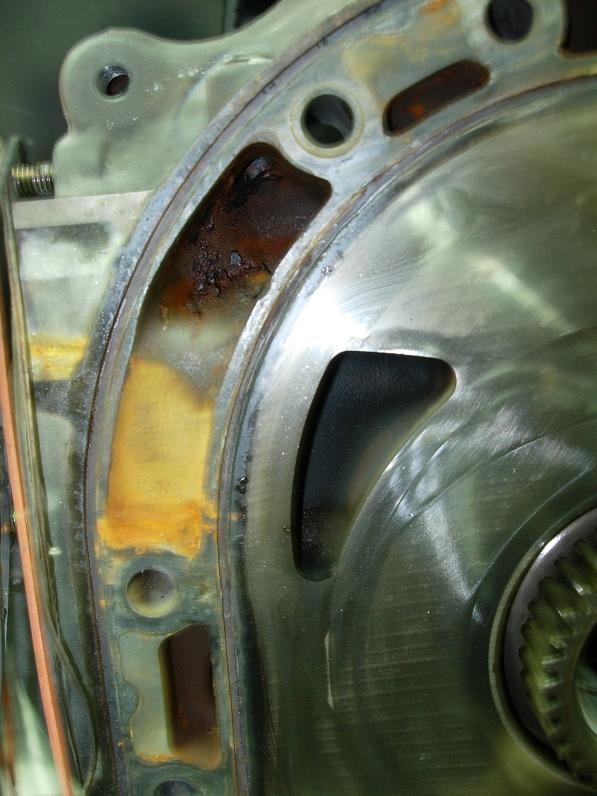
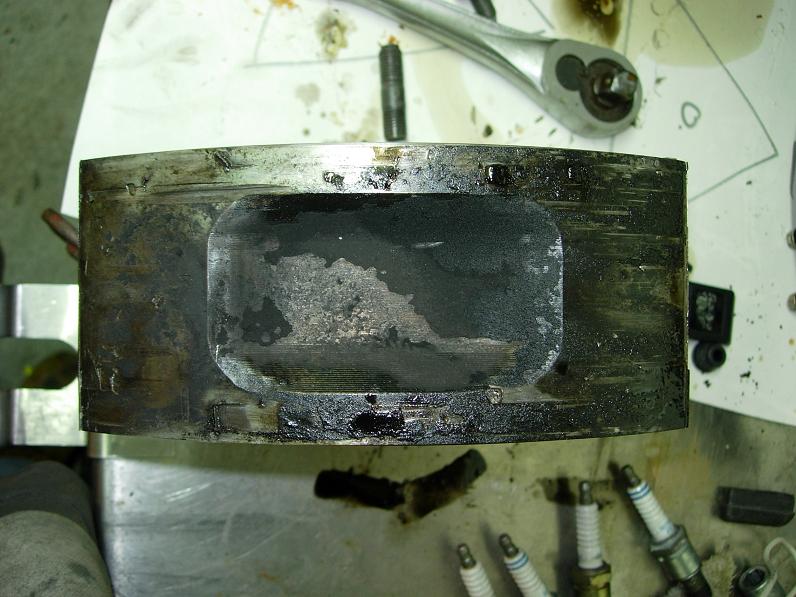
About 2 weeks later the motor popped, we'll get to that in a second - look what I found when I cracked the block
Front iron on the bottom, are you ******* kidding me? It's about 1/2" thick, just compacted ****.
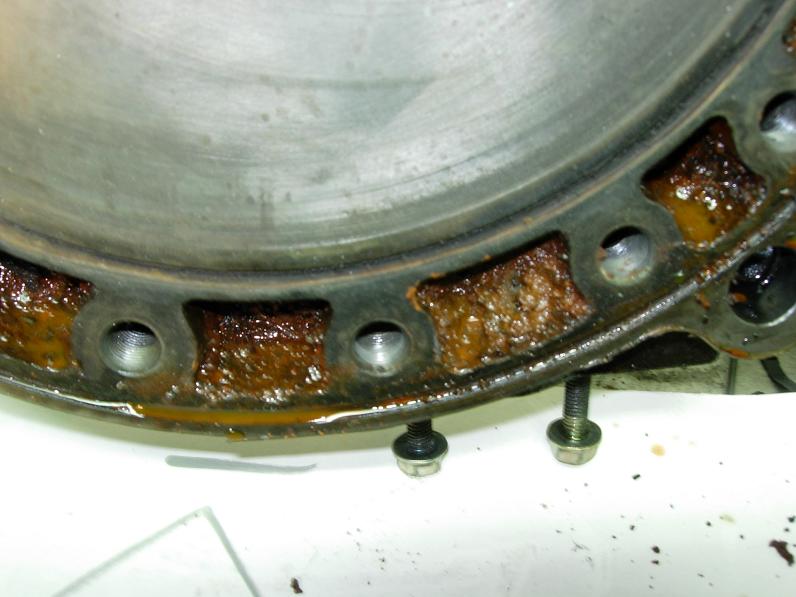
Front iron, on the top - ON THE TOP. It's not the bottom where it's tough to get the water out becuase the drain isn't at the lowest level, no, this is the top
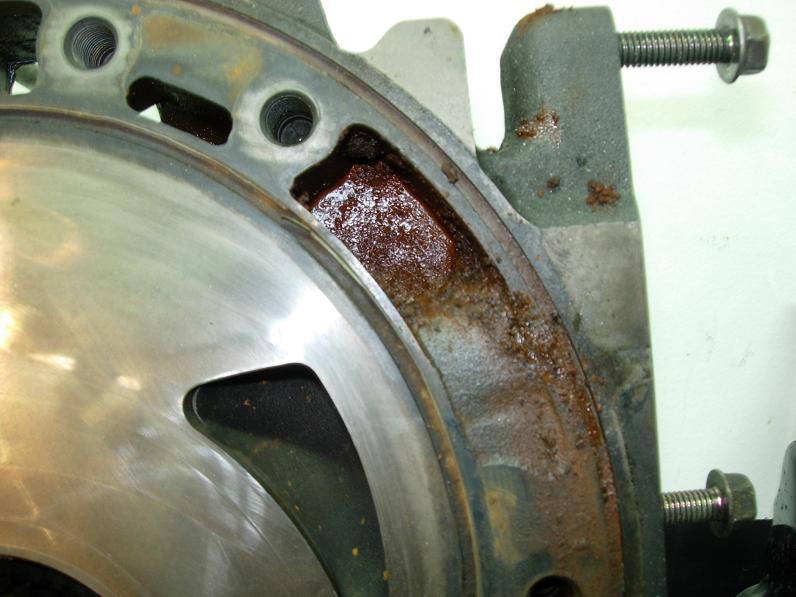
The front HOUSING, as in yes, aluminum. This pile of **** came from ONLY ONE PASSAGE and only half the passage at that..... is this a ******* joke?
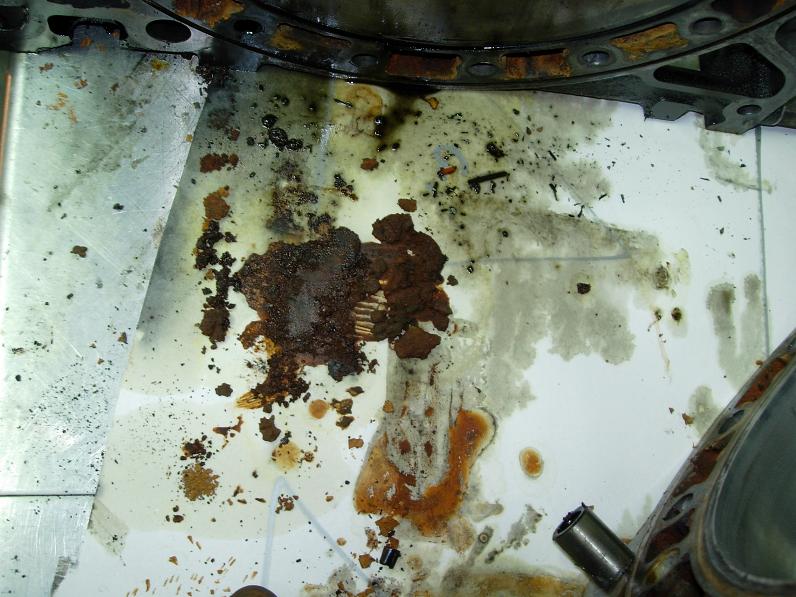
Rear iron - bottom..... come the **** on
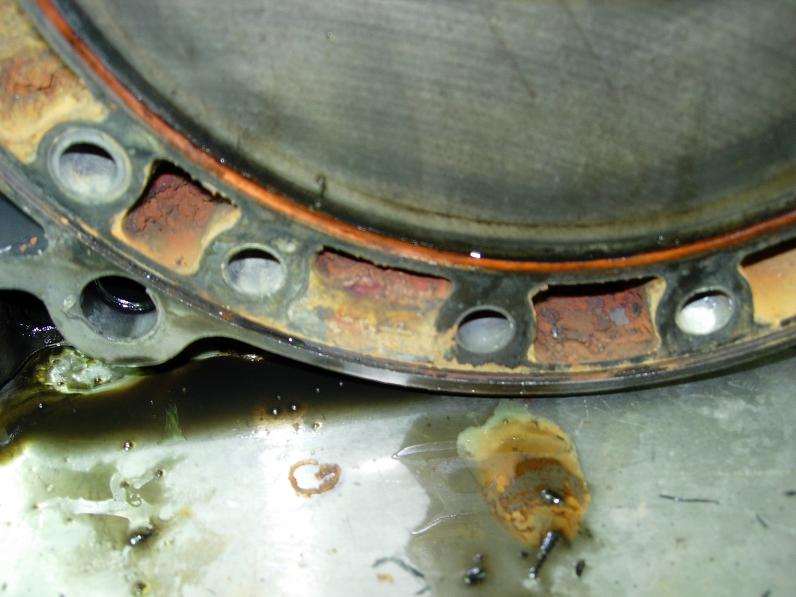
Rear Iron top - this one was probably mostly me. THat collant nipple I cut off and tapped 1/4" pipe to close it off but give me the flexibilty to use it if need be.... but still
Fast forward a year and it's time to start working on the swapo, what's the first thing I do, comp check. I had the RE starter so it was pretty damn esay. To my surpise, 105 F and 107 R. HOLY MOTHER OF ALL THAT IS ROTARY!!! I DON"T HAVE TO REBUILD THIS THING! So I flushed the antifreeze out and to my surprise came an ENORMOUS amount of crude out of a few of the passageways, like really nasty ****. Oh well, what can you do, I bet I got it this time
Fast forward 2 years and now the motor is running, and running pretty damn good too. Everyonce and a while it would hiccup, or stumble, run rough but it seemed to be doing great. Checked the coolant and it's FRICKEN MUD! Nastyness. The motor had to be hauled anyway so I drained the system, flushed the heater core which was puking nastiness for a while, flushed the rad which was puking nastiness for a while, then I dragged the block outside and opened the drain on the int. housing and rusty water started dripping out. I hooked up the hose to the upper hose and turned it on. Mud started pouring out of every orifice except the drain on the bottom
Then all of sudden it started pissing 20'. It was litterally clogged with ****. I spent about a good hour flushing from every possible entrance I could find on the motor. Keep in mind this is now the third time this block has been flushed with substantial pressure. I MUST have gotten it all this time. I let it run alone for about 20 minutes, there's no way there's still **** in there.About 2 weeks later the motor popped, we'll get to that in a second - look what I found when I cracked the block
Front iron on the bottom, are you ******* kidding me? It's about 1/2" thick, just compacted ****.
Front iron, on the top - ON THE TOP. It's not the bottom where it's tough to get the water out becuase the drain isn't at the lowest level, no, this is the top
The front HOUSING, as in yes, aluminum. This pile of **** came from ONLY ONE PASSAGE and only half the passage at that..... is this a ******* joke?
Rear iron - bottom..... come the **** on
Rear Iron top - this one was probably mostly me. THat collant nipple I cut off and tapped 1/4" pipe to close it off but give me the flexibilty to use it if need be.... but still
Thread Starter
Banned. I got OWNED!!!
Joined: Jun 2008
Posts: 329
Likes: 0
From: usa
On to the actual poppage
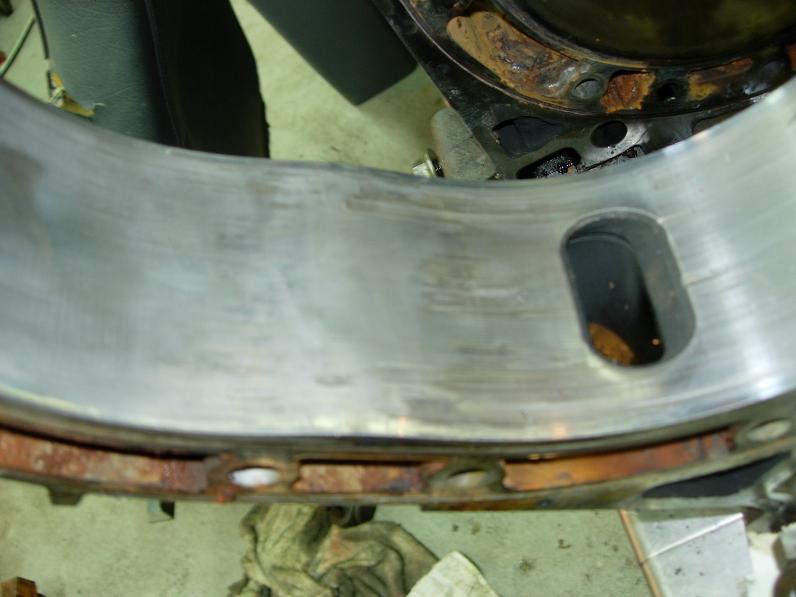
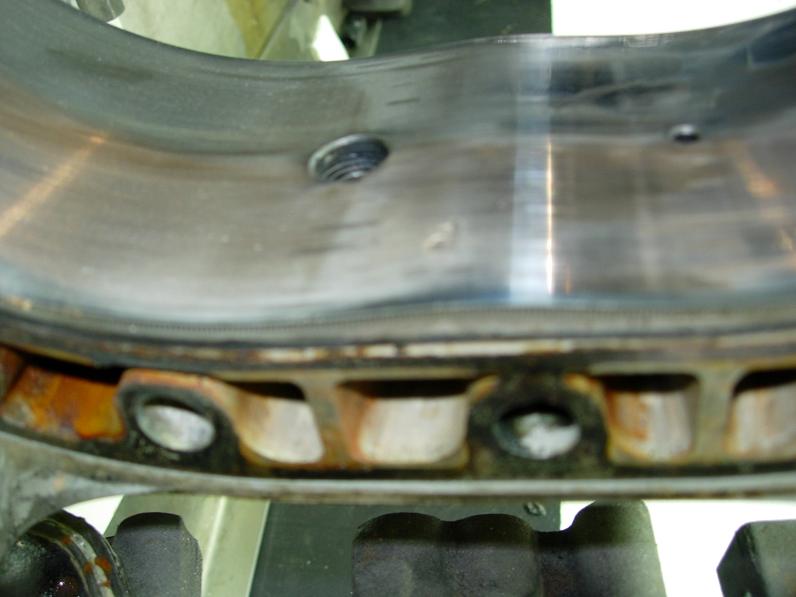
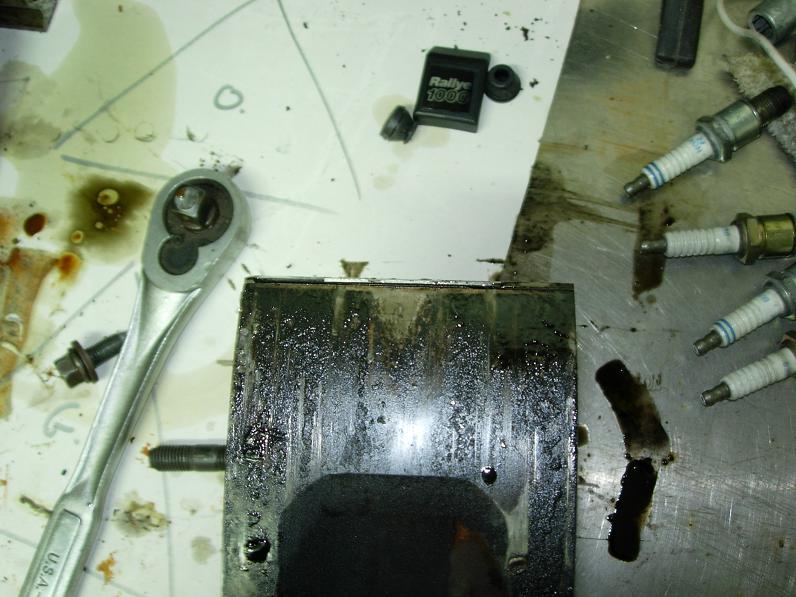
There was no real reason for this motor to let loose the way it did. I believe a corner seal plug managed to get loose as it was never found, and also by the breakage in the Apex seals. The motor had 4.5 hours of run time on it, it was a 3rd gear pull to 5850 RPMS, lambda was .8, timing was ~14*, and the boost was <9psi. There was no resaon for the motor to let loose. One Apex seal is 3/4 gone.... not to be found. The next seal was only cracked, but damaged pretty badly, and the thirds seal was midly cracked. So, what casused the Apex seal to go? There is no real issue with the tuning, I had a few people smarter than me look at the maps and the logs and they all said the same thing, no reason. Why is the front iron fragged to hell right where the corner seal tracks? The int housing as well? Regardless, the things gone and I'm out two irons, one rotor and one DAMN nice housing. It wasn't worth it to rebuild this one, so I bought another core motor.
However, I'm left wondering, what IF I had cracked that motor open and rebuilt it. I would've replaced the apex seals for sure, side seals and corner seals if they needed it. Could I have found the problem that killed this perfect $900 motor? Probably. Something that catastropic would've jumped out, I'm certain. So I'm left with kicking myself saying, damn - If I had rebult that motor, it woul've cost me a gasket kit and 6 apex seals/springs. Now I need an entire new motor PLUS the parts that I would've spend the first time had I cracked it open. I'm not one to make the same mistake twice. In the end it actaully worked out better becuase of the motor that a very close friend of mine found for me, still though, I believe that ALL imported/history unknown motors should be opened and any issues found, addressed.
On with the carnage -
However, I'm left wondering, what IF I had cracked that motor open and rebuilt it. I would've replaced the apex seals for sure, side seals and corner seals if they needed it. Could I have found the problem that killed this perfect $900 motor? Probably. Something that catastropic would've jumped out, I'm certain. So I'm left with kicking myself saying, damn - If I had rebult that motor, it woul've cost me a gasket kit and 6 apex seals/springs. Now I need an entire new motor PLUS the parts that I would've spend the first time had I cracked it open. I'm not one to make the same mistake twice. In the end it actaully worked out better becuase of the motor that a very close friend of mine found for me, still though, I believe that ALL imported/history unknown motors should be opened and any issues found, addressed.
On with the carnage -


I think its much better to rebuild the motor regardless if its imported or not, at that point its seals and supplies instead of rotors, housings, etc..
I had sold probably 2 dozen jspec rotary motors years ago, most of them were installed and used as-is without too many problems, but I think the key with that is you must install them right away, not let them sit for a year or two, which is obviously in addition to the time its been sitting before you got your hands on it.
I got my motor from a friend, I knew its history. It ended up sitting for 4+ years, when it came time to finally swap my car I decided to not take the chance and take the motor apart- glad I did.
I had sold probably 2 dozen jspec rotary motors years ago, most of them were installed and used as-is without too many problems, but I think the key with that is you must install them right away, not let them sit for a year or two, which is obviously in addition to the time its been sitting before you got your hands on it.
I got my motor from a friend, I knew its history. It ended up sitting for 4+ years, when it came time to finally swap my car I decided to not take the chance and take the motor apart- glad I did.

I had purchased a J-Spec from a local member. When I installed it and put it in the car the compression was OK and was able to get it started, but it completely ate the coolant. The engine had probably sat for 15 years. The compression may have been fine, but one of the coolant seals was so dried up it cracked and ruined everything. It would have been a better idea for me to rebuild the engine, but I was in a rush to get my only car running at the time. I was doomed either way I guess.

Mother****ing Wow
Joined: Jul 2008
Posts: 1,290
Likes: 0
From: NJ
I dunno.. I have heard many different opinions in regards to engines sitting for an extended amount of time. My 87 base HAD to have sat for a long time, I bought it with 60,000 on the ticker in 2008 and have now put 10,000 miles of pretty hard driving on it and I overheated it once... the only repair I have done since I bought it is a clutch and a exhaust. I Highly doubt anyone turned the engine during the time it was sitting. Apparently in the early 90's mine was hit and sat for nearly a decade.
The engine pictured above looks as if it was a flood victim while in the basement or something... sorry man.
here is mine when I bought it.


The engine pictured above looks as if it was a flood victim while in the basement or something... sorry man.
here is mine when I bought it.

the mud in the front housing is pretty common. there isn't much coolant flow in that area and the fact that the engine is made of aluminum and cast iron produces its own corrosion.


looks like an eneven mix of coolant/water was used for an extended period or that the engine sat with only tap water in it for an extended period. as stated this is not uncommon. i have split two engines with similar problems.
Trending Topics

Joined: Apr 2005
Posts: 3,785
Likes: 30
From: And the horse he rode in on...
You can also see issues like that, corrosion, sludge etc if someone has put Dex Cool in a rotary. ONE of Dex Cool's flaws is that it cannot tolerate Hydrocarbon contamination. Every rotary has a little. This is why it is so important to use only GREEN antifreeze in your rotary engine.
Jack
Jack

I am back

Joined: Sep 2003
Posts: 829
Likes: 0
From: Highland, IL near St. Louis
You can also see issues like that, corrosion, sludge etc if someone has put Dex Cool in a rotary. ONE of Dex Cool's flaws is that it cannot tolerate Hydrocarbon contamination. Every rotary has a little. This is why it is so important to use only GREEN antifreeze in your rotary engine.
Jack
Jack
Joined: Apr 2005
Posts: 3,785
Likes: 30
From: And the horse he rode in on...
There are lots of 'superior' chemistry antifreeze types out there. I wouldn mix any of them together.
But, Hell, I use Evans NPG+, so what do I know?



Thats some pretty nice fragging!! Hell of a job! 
That's an excellent rule of thumb re: JDM/imported engines. I'm a firm believer that they should be cracked and reassembled, if everything is mint mint you'll just need soft seals.....but usually - you find an issue or two that may lead to a failure.
Glad its getting resolved, any porting plans for the new keg?
That's an excellent rule of thumb re: JDM/imported engines. I'm a firm believer that they should be cracked and reassembled, if everything is mint mint you'll just need soft seals.....but usually - you find an issue or two that may lead to a failure.
Glad its getting resolved, any porting plans for the new keg?

After 2 years on my J-spec, time for a rebuild. Cracked apex seal is the most likely culprit. Carbon deposits in the seal grooves can also cause apex failure. With J-specs, you don't really know how much carbon has built up, until you open up the motor to measure the apex seal slot clearance.
Thread Starter
Banned. I got OWNED!!!
Joined: Jun 2008
Posts: 329
Likes: 0
From: usa
I think its much better to rebuild the motor regardless if its imported or not, at that point its seals and supplies instead of rotors, housings, etc..
I had sold probably 2 dozen jspec rotary motors years ago, most of them were installed and used as-is without too many problems, but I think the key with that is you must install them right away, not let them sit for a year or two, which is obviously in addition to the time its been sitting before you got your hands on it.
I got my motor from a friend, I knew its history. It ended up sitting for 4+ years, when it came time to finally swap my car I decided to not take the chance and take the motor apart- glad I did.
I had sold probably 2 dozen jspec rotary motors years ago, most of them were installed and used as-is without too many problems, but I think the key with that is you must install them right away, not let them sit for a year or two, which is obviously in addition to the time its been sitting before you got your hands on it.
I got my motor from a friend, I knew its history. It ended up sitting for 4+ years, when it came time to finally swap my car I decided to not take the chance and take the motor apart- glad I did.
I've been thinking about using the evans, I'm glad I haven't thus far becuase the coolant has been drained and refilled twice. Maybe when I'm convinced the motor won't be coming out for a while will I drop the coin.
Thanks, I was quite happy. That last log showed a 3rd gear pull from ~2k - 6k in ~3 seconds iirc - It was fast

front iron - $309
Front housing - $724
Int Iron - $443
Front Rotor - $630
Rotor Kit - $1275
$3,381 - So yeah, better to crack them by all means
Actaully the keg I bought has about 30 minutes of run time on it before it ate the front thrust bearing. The history of this motor is known. It was built & ported by a very VERY reputable pro. I haven't seen the ports yet but I spoke to the builder about them and while they weren't really what I had in mind (VERY small "streetport," more just finessing the openings) they shouldn't effect the idle/driveability too much, certainly no more than some of the other mods
 but will help in the long term when I slap the BNR stage 3's on. We'll see, I'll snap some pics and probably update the Motec thread.
Oh, as a little added bonus, every friction surface in the motor is coated/cryo treated. Worst comes to worst, I should be able to trade the motor for an RE keg plus ALOT of cash, enough to rebuild it anyways.
Right now though the plan is to have this thing @ DGRR - 9 weeks from today. I should be able to pull that off
Thread Starter
Banned. I got OWNED!!!
Joined: Jun 2008
Posts: 329
Likes: 0
From: usa
After 2 years on my J-spec, time for a rebuild. Cracked apex seal is the most likely culprit. Carbon deposits in the seal grooves can also cause apex failure. With J-specs, you don't really know how much carbon has built up, until you open up the motor to measure the apex seal slot clearance.
Cracked Apex seal does make some sense though. The very first pull I made when I was comfortable with the L & timing the thing lifted the nose in 3rd and went from 25 - 85 in 3.9 seconds. I continued running around and the thing felt GREAT. A few days later I went for a few more pulls with the L a little leaner - .8 as opposed to .75-.77 and the thing felt slower which made no real sense. I'm assuming it was already hurt a little before she totally let loose.
Again though, probably something that could've been avoided had I cracked the motor.


Junior Member

Joined: Feb 2009
Posts: 9
Likes: 0
From: In a home
Well you learned something? Just because compression is there doesn't mean that the motor is good. Only can really know if you open it up and check everything. People shouldn't just purchase Jspec and think that since it low miles and has good compression that it is a good engine. If you drop it in and not check it, you are likely to get maybe a year or less on it. Yearly engine swaps? Hell no!
Build it right the first time, it will love you long time.
Build it right the first time, it will love you long time.
who cares if its "jspec", if its ANY used motor coming out of storage rebuild it.
I know alot of guys dont have the budget or the skills, but a little piece of seal can cause alot of internal parts failures and will cost you twice as much if not more in the long run.
just a FYI- I have had Peak Extended Life anti-freeze in my original convertible motor for like 14 years, I only changed it once in that time, and again a few months ago when we swapped the motor into another convertible I picked up that had no engine, the guy I sold it too enjoys the car as a daily driver, thats a 154k mile motor with extended life antifreeze in it.
I know alot of guys dont have the budget or the skills, but a little piece of seal can cause alot of internal parts failures and will cost you twice as much if not more in the long run.
just a FYI- I have had Peak Extended Life anti-freeze in my original convertible motor for like 14 years, I only changed it once in that time, and again a few months ago when we swapped the motor into another convertible I picked up that had no engine, the guy I sold it too enjoys the car as a daily driver, thats a 154k mile motor with extended life antifreeze in it.
Joined: Apr 2005
Posts: 3,785
Likes: 30
From: And the horse he rode in on...
who cares if its "jspec", if its ANY used motor coming out of storage rebuild it.
I know alot of guys dont have the budget or the skills, but a little piece of seal can cause alot of internal parts failures and will cost you twice as much if not more in the long run.
just a FYI- I have had Peak Extended Life anti-freeze in my original convertible motor for like 14 years, I only changed it once in that time, and again a few months ago when we swapped the motor into another convertible I picked up that had no engine, the guy I sold it too enjoys the car as a daily driver, thats a 154k mile motor with extended life antifreeze in it.
I know alot of guys dont have the budget or the skills, but a little piece of seal can cause alot of internal parts failures and will cost you twice as much if not more in the long run.
just a FYI- I have had Peak Extended Life anti-freeze in my original convertible motor for like 14 years, I only changed it once in that time, and again a few months ago when we swapped the motor into another convertible I picked up that had no engine, the guy I sold it too enjoys the car as a daily driver, thats a 154k mile motor with extended life antifreeze in it.
I bet your original long life formula was a phosphate based inhibitor, since OAT just being introduced as Dex Cool 12-13 years ago.
Here is a good article-
http://www.aa1car.com/library/2005/us90554.htm

Good thread! I was about to just toss my RE in my vert, but now I think I'll be opening it up.. Freshen everything up, switch out exhaust sleeves, and ooh why not a nice street port while I'm at it!
That's interesting info about the anti-freeze as well!
Thanks!
I was about to just toss my RE in my vert, but now I think I'll be opening it up.. Freshen everything up, switch out exhaust sleeves, and ooh why not a nice street port while I'm at it! That's interesting info about the anti-freeze as well!
Thanks!
Joined: Apr 2005
Posts: 3,785
Likes: 30
From: And the horse he rode in on...
Here a couple of images taken from articles regarding Dex Cool corrosion. Look at the similarity to the OP pictures above.
Why don't we just use the Green stuff? Except for me, of course.
Why don't we just use the Green stuff? Except for me, of course.
Thread Starter
Banned. I got OWNED!!!
Joined: Jun 2008
Posts: 329
Likes: 0
From: usa
Uh yeah, that's the plan at least. As much as I love pouring money and time into my most ungrateful mistress, I would like a little payoff at some point
Looks like the ole' "chevy mud"
BTW - found the Cause Of Death, or at least what I am pretty damn sure is. I was cleaning out the fragged rotor so I could powdercoat it as yet a 3rd showpiece and I found a piece of side seal missing. Put the rotor on the fragged front iron and the grooves line up nicely. The Apex seals sorta tell the tale too, the first in the series as it rotates is the worst. There was ALOT of carbon deposits as well causing the side and corner seals to stick pretty badly. All three corner seals in the front of the front were compressed and had to be knocked out. So yeah, my mistake, should've cracked it and cleaned everything out.
On the bright side, it seems the only hard piece that I'll need to replace on the core keg is the front main bearing. The thrust bearing that was pinched took out the original e-shaft, stat gear, main bearing and all the the front bearings. Surprinsingly the main bearing pulled out of the stat gear and ledged itself on the e-shaft, but still spun. Of course the int iron, front rotor and e-shaft all came out as one becuase the e-shaft wouldn't pass through the rotor. A little work with the cut-off wheel to open the bearing half-way and pried it the rest saving the rotor and all the seals. Most of the parts I have except my original main bearing was toast. On the brighterside, all the coolant and oil galleys on the core keg are already spotless
BTW - found the Cause Of Death, or at least what I am pretty damn sure is. I was cleaning out the fragged rotor so I could powdercoat it as yet a 3rd showpiece and I found a piece of side seal missing. Put the rotor on the fragged front iron and the grooves line up nicely. The Apex seals sorta tell the tale too, the first in the series as it rotates is the worst. There was ALOT of carbon deposits as well causing the side and corner seals to stick pretty badly. All three corner seals in the front of the front were compressed and had to be knocked out. So yeah, my mistake, should've cracked it and cleaned everything out.
On the bright side, it seems the only hard piece that I'll need to replace on the core keg is the front main bearing. The thrust bearing that was pinched took out the original e-shaft, stat gear, main bearing and all the the front bearings. Surprinsingly the main bearing pulled out of the stat gear and ledged itself on the e-shaft, but still spun. Of course the int iron, front rotor and e-shaft all came out as one becuase the e-shaft wouldn't pass through the rotor. A little work with the cut-off wheel to open the bearing half-way and pried it the rest saving the rotor and all the seals. Most of the parts I have except my original main bearing was toast. On the brighterside, all the coolant and oil galleys on the core keg are already spotless
Last edited by NotTTT; Feb 14, 2009 at 10:10 PM.
for discussion purposes- what about all the people will coolant seal failures who were running green?
im not suggesting people switch from green, but I was running extended life with no problems, and to top it off my car would sit for months at a time without being started, once it sat for almost 2 years.
im not suggesting people switch from green, but I was running extended life with no problems, and to top it off my car would sit for months at a time without being started, once it sat for almost 2 years.
Joined: Apr 2005
Posts: 3,785
Likes: 30
From: And the horse he rode in on...
Joined: Apr 2005
Posts: 3,785
Likes: 30
From: And the horse he rode in on...
for discussion purposes- what about all the people will coolant seal failures who were running green?
im not suggesting people switch from green, but I was running extended life with no problems, and to top it off my car would sit for months at a time without being started, once it sat for almost 2 years.
im not suggesting people switch from green, but I was running extended life with no problems, and to top it off my car would sit for months at a time without being started, once it sat for almost 2 years.
What I am stating is that OAT inhibitors are not designed for our engine types. OAT (and Dex Cool especially) is intolerant of aeration and is intolerant of hydrocarbon exposure. Rotaries are notorious for aerating the coolant and for some blowby hydrocarbon.
The proven results are similar to the pictures at the top of the thread. GM is fighting in court. Ford instead did a massive recall and bit the bullet that may kill GM. GM internal memos show that GM analyzed the Ford recall and decided that subtle design changes, individual claims and possible lawsuits would be cheaper than a recall.
Woman on plane, horrified: "What car company did you say you work for?"
Tyler Durden, slyly, "A really BIG one."
Off-hand, do you know what inhibitor technology was in the PEAK extended life stuff you were running?Tyler Durden, slyly, "A really BIG one."
What color was it?