


Peripheral port questions...


Thread Starter
...94% correct.

Joined: Oct 2002
Posts: 1,283
Likes: 2
From: High Texas
Peripheral port questions...
I am searching you *****...:p. I'm either spelling "peripheral" wrong or there just isn't a lot of easy-to-find really in-depth discussion floating around.
Anyway:
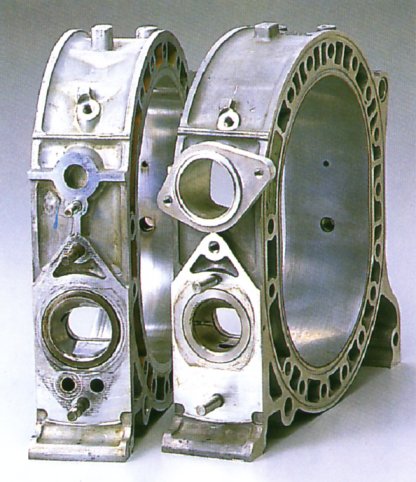
I'm cruising around and see that. It looks SO simple to me...simple to the point that I don't understand why there aren't more of them. Can anyone tell me?
From what I'm looking at, it looks completely like someone just simply cut a hole in the rotor housing, stuck a pipe in there, blocked the intake passages on the irons, and called it a day. Did I miss something? Do standard Apex seals hold up well against a peripheral port? Cooling issues? Do they not last long? Too stressed? Something that makes it just not that great of an idea? I KNOW that I have GOT to be missing something here.
Does a p-port work at all with the stock EFI? Just curious because I have a spare 13b, a shop, a hole saw, some pieces of pipe, and nothing better to do with my life. Of course I know I'd have to come up with a way to stage injectors and built an intake manifold but the previous statement applies here too.
another thing I'm curious about is that the standard ports on the irons are usually blocked by using a filler substance. This isn't safe and I don't understand why anyone would risk have an impropper mix or a section of filler break off from heat stress and destroy the rotor and housing? Why not just build a block off plate to mount on the outside of the housing?
Anyway:
I'm cruising around and see that. It looks SO simple to me...simple to the point that I don't understand why there aren't more of them. Can anyone tell me?
From what I'm looking at, it looks completely like someone just simply cut a hole in the rotor housing, stuck a pipe in there, blocked the intake passages on the irons, and called it a day. Did I miss something? Do standard Apex seals hold up well against a peripheral port? Cooling issues? Do they not last long? Too stressed? Something that makes it just not that great of an idea? I KNOW that I have GOT to be missing something here.
Does a p-port work at all with the stock EFI? Just curious because I have a spare 13b, a shop, a hole saw, some pieces of pipe, and nothing better to do with my life. Of course I know I'd have to come up with a way to stage injectors and built an intake manifold but the previous statement applies here too.
another thing I'm curious about is that the standard ports on the irons are usually blocked by using a filler substance. This isn't safe and I don't understand why anyone would risk have an impropper mix or a section of filler break off from heat stress and destroy the rotor and housing? Why not just build a block off plate to mount on the outside of the housing?
I wish I was driving!

Joined: Dec 2001
Posts: 5,241
Likes: 84
From: BC, Canada
Yes, its pretty much that simple.
There's a thread in the rotary performance section on building them.
Reason they're not run very much: limited by racing regulations and they are not all that streetable for most people. High idle, high power band, VERY sensitive to backpressure is there main drawbacks.
They will NOT run on the stock ECU. At all.
I've built and driven a couple PP's. They're fun, but I would not want to drive one everyday.
You can simply use block off plates for the intake ports if you want. I use devcon liquid epoxy to fill the irons and I've never had a problem with it.
There's a thread in the rotary performance section on building them.
Reason they're not run very much: limited by racing regulations and they are not all that streetable for most people. High idle, high power band, VERY sensitive to backpressure is there main drawbacks.
They will NOT run on the stock ECU. At all.
I've built and driven a couple PP's. They're fun, but I would not want to drive one everyday.
You can simply use block off plates for the intake ports if you want. I use devcon liquid epoxy to fill the irons and I've never had a problem with it.
Thread Starter
...94% correct.
Joined: Oct 2002
Posts: 1,283
Likes: 2
From: High Texas
What about cureting one? I've heard and seen that...what kind of monster would I be looking at fueling and what setups seems to work well?
High idle I understand, but I've heard stories about their astronomically placed powerband...any crank/balance issues with them?
High idle I understand, but I've heard stories about their astronomically placed powerband...any crank/balance issues with them?
I wish I was driving!
Joined: Dec 2001
Posts: 5,241
Likes: 84
From: BC, Canada
Originally Posted by Makenzie71
What about cureting one? I've heard and seen that...what kind of monster would I be looking at fueling and what setups seems to work well?
High idle I understand, but I've heard stories about their astronomically placed powerband...any crank/balance issues with them?
High idle I understand, but I've heard stories about their astronomically placed powerband...any crank/balance issues with them?
Fuelling is up to you. Fuel injection is not all that hard... 4 fuel injectors would typically do it. Depends if you're able to make your own intake manifold, or not, really. There are manifolds that exist to bolt on a pair some FI Throttle bodies or a pair of carbs.
Not sure what you mean by curetting... a curette is a medical instrument for scraping the inside of something... like, your vagina.
Thread Starter
...94% correct.
Joined: Oct 2002
Posts: 1,283
Likes: 2
From: High Texas
Originally Posted by scathcart
Their powerband is not THAT high. Keep the intake ports relatively sane, and you can keep a power band below 9500-9600 (about the limit for 2mm steel apex seals).
Fuelling is up to you. Fuel injection is not all that hard... 4 fuel injectors would typically do it. Depends if you're able to make your own intake manifold, or not, really. There are manifolds that exist to bolt on a pair some FI Throttle bodies or a pair of carbs.
Not sure what you mean by curetting... a curette is a medical instrument for scraping the inside of something... like, your vagina.
Fuelling is up to you. Fuel injection is not all that hard... 4 fuel injectors would typically do it. Depends if you're able to make your own intake manifold, or not, really. There are manifolds that exist to bolt on a pair some FI Throttle bodies or a pair of carbs.
Not sure what you mean by curetting... a curette is a medical instrument for scraping the inside of something... like, your vagina.
I thought that the stock EFI wouldn't work due to the high power delivery but fuel cut can be defeated with the factory setup...an AFC and fuel cut controller would be useable, along with propper injectors, wouldn't they?
If I undergo this, it will be reletively mild as I don't have the means to cut a propper 2" hole...which is what I see most people do. It'd actually be closer to 1 3/4" id and the exhaust ports would just be de-sleeved, I think, if not left alone all together.
The manifold would be easy...mount a 90* elbow with a 6" rise into the intake cut and secure it, mount the throttle bodies on top, 2+ liter air box, plumbing to the stock air meter (if used that way). The fuel rails would be easy to construct...hell the stock primary could be kept and the acustom secondary just mounted to the new manifolds.
How do they secure the tubing placed in the intake cut?
I wish I was driving!
Joined: Dec 2001
Posts: 5,241
Likes: 84
From: BC, Canada
Originally Posted by Makenzie71
How do they secure the tubing placed in the intake cut?
Heat the rotor housing to 100 degrees and freeze the pipe before pressing the pipe into place.
Then fill the rest of the rotor housing, surrouding the pipe, with epoxy.
The stock ECU will not work for fuelling. The injector timing is dependant upon the eccentric shaft position. PP's have radically changed port timing... The fuel injectors basically would not be firing for the majority of the intake stroke.
You could *probably* get away with using the stock computer for timing, but why would you bother? I would use at LEAST a megasquirt n' spark.

Trending Topics
Thread Starter
...94% correct.
Joined: Oct 2002
Posts: 1,283
Likes: 2
From: High Texas
Originally Posted by scathcart
OD of the pipe = ID of the hole. IE; 2.000" pipe into a 2.000" hole.
Heat the rotor housing to 100 degrees and freeze the pipe before pressing the pipe into place.
Then fill the rest of the rotor housing, surrouding the pipe, with epoxy.
The stock ECU will not work for fuelling. The injector timing is dependant upon the eccentric shaft position. PP's have radically changed port timing... The fuel injectors basically would not be firing for the majority of the intake stroke.
You could *probably* get away with using the stock computer for timing, but why would you bother? I would use at LEAST a megasquirt n' spark.
Heat the rotor housing to 100 degrees and freeze the pipe before pressing the pipe into place.
Then fill the rest of the rotor housing, surrouding the pipe, with epoxy.
The stock ECU will not work for fuelling. The injector timing is dependant upon the eccentric shaft position. PP's have radically changed port timing... The fuel injectors basically would not be firing for the majority of the intake stroke.
You could *probably* get away with using the stock computer for timing, but why would you bother? I would use at LEAST a megasquirt n' spark.
Of course, I don't really know. All I see are pictures and they don't seem to match the excuses people give.
How to P-ports react to forced induction? That was the subject of some minor debate a few nights ago.
I wish I was driving!
Joined: Dec 2001
Posts: 5,241
Likes: 84
From: BC, Canada
Let's look at an example
Mazda factory peripheral housings:
Intake opens 86* BTDC
Intake closes 75* ABDC
Mazda factory port timing for a turbo engine:
Intake opens 32° ATDC
Intake closes 50° ABDC
Peripheral port opens 118 degrees before what the stock computer thinks it should be opening at. In total, the intake port is open for 288 degrees of eccentric shaft rotation.
PP is open for 431 degrees. That's 50% more duration than stock. Doesn't exactly make a well-mixed intake charge.
You're welcome to try it. It *will* run, just very, very poorly.
Mazda factory peripheral housings:
Intake opens 86* BTDC
Intake closes 75* ABDC
Mazda factory port timing for a turbo engine:
Intake opens 32° ATDC
Intake closes 50° ABDC
Peripheral port opens 118 degrees before what the stock computer thinks it should be opening at. In total, the intake port is open for 288 degrees of eccentric shaft rotation.
PP is open for 431 degrees. That's 50% more duration than stock. Doesn't exactly make a well-mixed intake charge.
You're welcome to try it. It *will* run, just very, very poorly.
I wish I was driving!
Joined: Dec 2001
Posts: 5,241
Likes: 84
From: BC, Canada
Originally Posted by Makenzie71
How to P-ports react to forced induction? That was the subject of some minor debate a few nights ago.
Thread Starter
...94% correct.
Joined: Oct 2002
Posts: 1,283
Likes: 2
From: High Texas
Originally Posted by scathcart
Let's look at an example
Mazda factory peripheral housings:
Intake opens 86* BTDC
Intake closes 75* ABDC
Mazda factory port timing for a turbo engine:
Intake opens 32° ATDC
Intake closes 50° ABDC
Peripheral port opens 118 degrees before what the stock computer thinks it should be opening at. In total, the intake port is open for 288 degrees of eccentric shaft rotation.
PP is open for 431 degrees. That's 50% more duration than stock. Doesn't exactly make a well-mixed intake charge.
You're welcome to try it. It *will* run, just very, very poorly.
Mazda factory peripheral housings:
Intake opens 86* BTDC
Intake closes 75* ABDC
Mazda factory port timing for a turbo engine:
Intake opens 32° ATDC
Intake closes 50° ABDC
Peripheral port opens 118 degrees before what the stock computer thinks it should be opening at. In total, the intake port is open for 288 degrees of eccentric shaft rotation.
PP is open for 431 degrees. That's 50% more duration than stock. Doesn't exactly make a well-mixed intake charge.
You're welcome to try it. It *will* run, just very, very poorly.
Why not move the intake port closer to the exhaust port, then?
I didn't think they reacted well to turbocharging, I was thinking supercharging.
I wish I was driving!
Joined: Dec 2001
Posts: 5,241
Likes: 84
From: BC, Canada
Originally Posted by Makenzie71
The stock ECU fires the primaries all the time, right? Why not use an AFC and 1200cc primaries, then?
...just letting my curiosity ask the questions...lol...
...just letting my curiosity ask the questions...lol...
Thread Starter
...94% correct.
Joined: Oct 2002
Posts: 1,283
Likes: 2
From: High Texas
Originally Posted by scathcart
No, it fires them in relation to eccentric shaft positioning.
<~hates aftermarket efi...for some unknown reasoning...
I wish I was driving!
Joined: Dec 2001
Posts: 5,241
Likes: 84
From: BC, Canada
Yeah, you can't really go down any further as it increases the intake timing (and overlap) even more, and it would cut into one of the tension bolt holes.
Hate standalones? geez, I think they're one of the first mods a person should do. HELLO idle quality and throttle response.
Hate standalones? geez, I think they're one of the first mods a person should do. HELLO idle quality and throttle response.
Thread Starter
...94% correct.
Joined: Oct 2002
Posts: 1,283
Likes: 2
From: High Texas
Originally Posted by scathcart
Hate standalones? geez, I think they're one of the first mods a person should do.

I live in an igloo

Joined: Jul 2004
Posts: 2,546
Likes: 0
From: calgary alberta
Just curious, but why don't people use the PP and the stock ports for airflow, that would be a shitload more air than just a PP and closing up the stocks. I mean if your creative, you could make a manifold that could put all ports to use. Is it becuase we can't make the exhaust ports really any bigger? and it acts as a bottleneck to airflow?
What about boosting PP engines? I would think that during the intake cycle, wouldn't there be a small degree to wich boosted air will leak out the exhaust ports due to the position of the rotor?
What about boosting PP engines? I would think that during the intake cycle, wouldn't there be a small degree to wich boosted air will leak out the exhaust ports due to the position of the rotor?
I wish I was driving!
Joined: Dec 2001
Posts: 5,241
Likes: 84
From: BC, Canada
Originally Posted by BlaCkPlaGUE
Just curious, but why don't people use the PP and the stock ports for airflow, that would be a shitload more air than just a PP and closing up the stocks. I mean if your creative, you could make a manifold that could put all ports to use. Is it becuase we can't make the exhaust ports really any bigger? and it acts as a bottleneck to airflow?
What about boosting PP engines? I would think that during the intake cycle, wouldn't there be a small degree to wich boosted air will leak out the exhaust ports due to the position of the rotor?
What about boosting PP engines? I would think that during the intake cycle, wouldn't there be a small degree to wich boosted air will leak out the exhaust ports due to the position of the rotor?
You can boost a PP, no problem. You just really have to keep backpressure to a minimum with a large turbo. See if you are making 25 psi, you have at LEAST 25 psi of exhaust backpressure, usually more. With a PP, the exhaust and intake are open at the same time for an EXTREMELY large duration... so the higher pressure exhaust flows into the lower pressure intake charge and dilutes the intake charge. To keep this effect to a minimum... we need to keep the exhaust pressure very low until the engine speeds come up and give the charges less time to dilute.
So we need to put a very big turbo onto a very high-rpm engine.
BIG power, very little usable powerband outside of flat-out drag racing.
Thread Starter
...94% correct.
Joined: Oct 2002
Posts: 1,283
Likes: 2
From: High Texas
Originally Posted by scathcart
With a PP, the exhaust and intake are open at the same time for an EXTREMELY large duration...
I had not thought about that...that gives a slightly different angle to think with.
I wish I was driving!
Joined: Dec 2001
Posts: 5,241
Likes: 84
From: BC, Canada
Originally Posted by BlaCkPlaGUE
Whats the good and bad for the combo port? was I semi right?
You can search if you wish... if not, I'll bring it up tomorrow.
I'll grab those OPR pics tomorrow too.
G'night.

I'm a boost creep...
Joined: Jan 2002
Posts: 15,608
Likes: 8
From: Auckland, New Zealand
The reason you've seen so few of these is that they are a race only engine. Anybody how tells you they're streetable is talking out their ***. Simply being able to drive it on the street does not mean streetable! The power is concentrated very high in the powerband, making low-speed drivability terrible, and the effects on noise and emissions make them totally illegal.
You should not even consider the stock EFI system. Don't even give it a second though. Injection timing is critical for PP's due to the large overlap, so this must be adjustable. For a carb you'd be looking at a Weber 51IDA with extended float bowls as a minimum. A 48IDA will restrict you to power levels you can achieve with a bridge-port, making the whole exercise pointless. An aftermarket EFI set-up will give you much more scope for both power and widening the power band. 50mm or 55mm throttle bodies on a Weber manifold would be the way to go.
In the old days a PP with a big Weber would get ~300fwhp. AFAIK the most power extracted from a NA rotary is 175hp/rotor (R26B), but that engine had every trick in the book applied to it, so that's a slightly unrealistic target. You can have a reasonably quiet, drivable and legalish 13BT that makes 350fwhp and more torque, so you wouldn't even consider a PP unless you were racing in a class that does not allow turbos.
Mazda tried the "combi-port" in the early days and gave up on it. Too many of the PP disadvantages and not enough of the side-port advantages.
You should not even consider the stock EFI system. Don't even give it a second though. Injection timing is critical for PP's due to the large overlap, so this must be adjustable. For a carb you'd be looking at a Weber 51IDA with extended float bowls as a minimum. A 48IDA will restrict you to power levels you can achieve with a bridge-port, making the whole exercise pointless. An aftermarket EFI set-up will give you much more scope for both power and widening the power band. 50mm or 55mm throttle bodies on a Weber manifold would be the way to go.
In the old days a PP with a big Weber would get ~300fwhp. AFAIK the most power extracted from a NA rotary is 175hp/rotor (R26B), but that engine had every trick in the book applied to it, so that's a slightly unrealistic target. You can have a reasonably quiet, drivable and legalish 13BT that makes 350fwhp and more torque, so you wouldn't even consider a PP unless you were racing in a class that does not allow turbos.
Mazda tried the "combi-port" in the early days and gave up on it. Too many of the PP disadvantages and not enough of the side-port advantages.

Full Member
Joined: Aug 2005
Posts: 152
Likes: 0
From: Gold Coast, Australia
i may be only 13 but i know that you have to vut through the water seal and then block off some of the water galleries and eventually the galleries you blocked off give way( heat,wear ect) coolant leaks into ur motor then da motor ***** itself. you also have to get away with overlap somehow 
