When you click on links to various merchants on this site and make a purchase, this can result in this site earning a commission. Affiliate programs and affiliations include, but are not limited to, the eBay Partner Network.
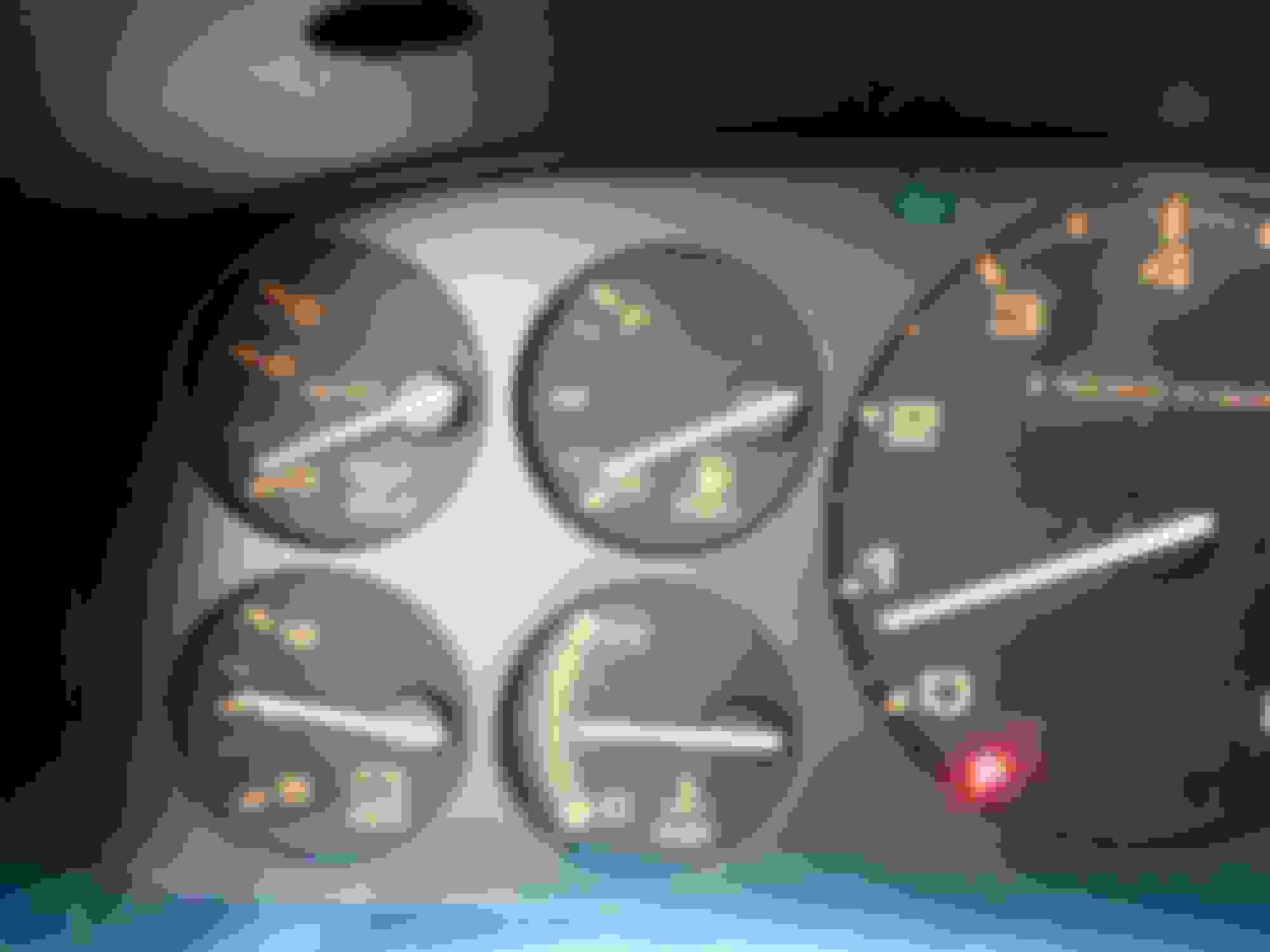
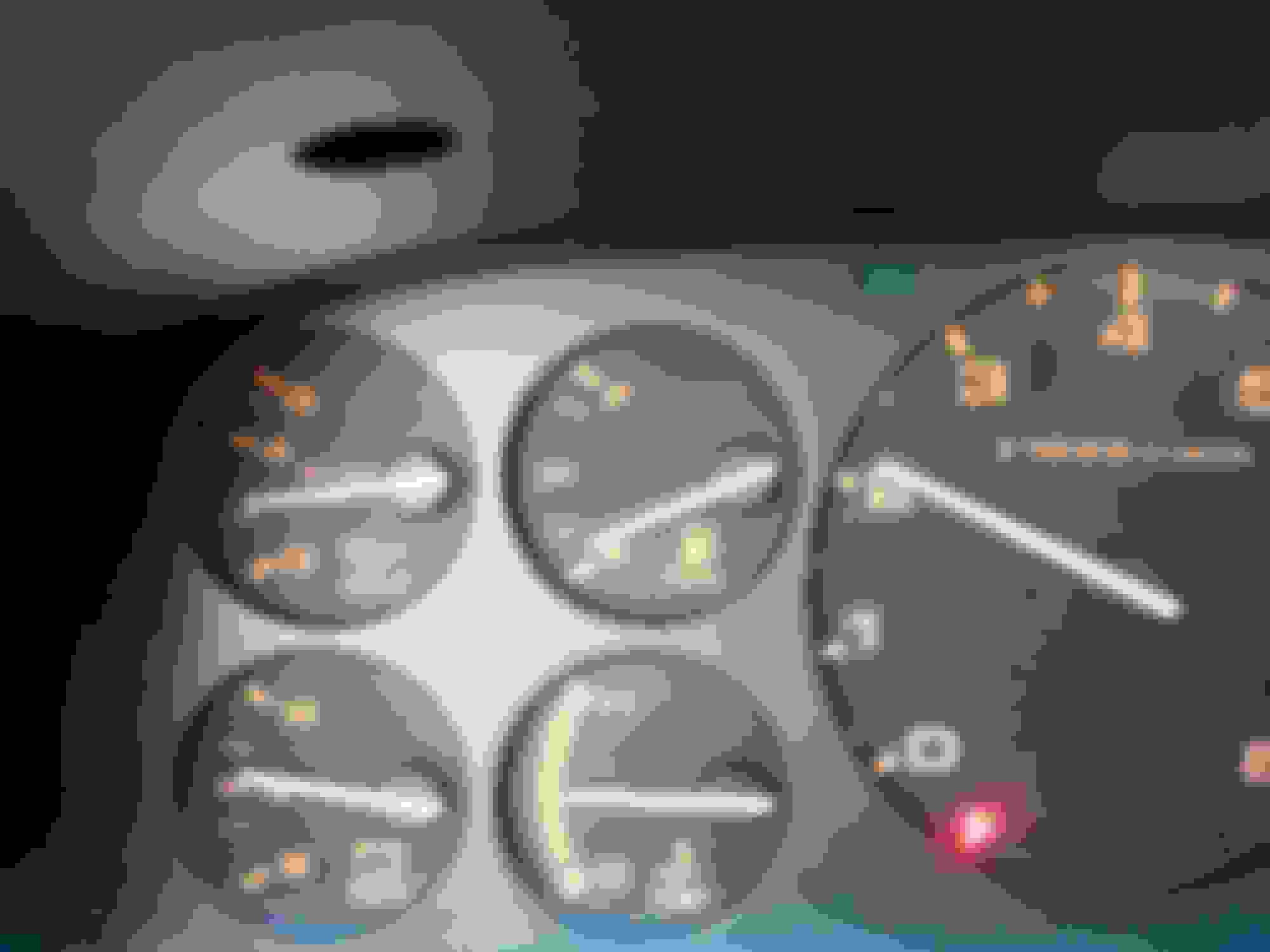
Have not started it for about 2 weeks due to weather ( very shitty storms ) and went to go start it tonight and the oil pressure seemed low on the guage but for the life of me I could not remember what is the stock position for idle/2500/3000/3500 rpm.
I took these pictures because I need an opinion before I put myself in the ground with stress.
It drops a little after 3000rpm. Read a few threads that lead to people thinking about a rebuild to getting a new sending unit
If your concerned it is lower, buy a cheap aftermarket gauge and verify it make sure u buy the right fitting for the gauge they don't ususally come with the right adapter, look it up
was it rebuilt recently? a front cover oring blow out can cause low oil pressure at all times, more noticeable at temperature
No recent rebuild that I know of. I wish I could remember if it was the same before I parked it. If the oring blew out would it cause smoke during running?
So trying to get ahold of a buddy to get a pressure guage. Where would you hook it up ? Where the sender is by removing it ?
Also I'm starting to fear it is the front o ring because I moved it to the front of my place and when you start moving in gear it moves up and around 3000 it drops off slowly down a little.
Is it a hard job or expensive job if I can't do it myself? Would it survive a drive to the nearest rotary specialist which happens to be about 70-90 km away ? If it's diagnosed as low oil pressure due to the oring when I test it ?
Aaron Cake has a lot of video of engine breakdown and assembly, definitely worth your time.
It's certainly going to be harder for you because he's working on an engine stand instead of in the bay.
(and he's got the tools and experience)
You'd at least have a general idea what you're getting into.
No way to estimate your time frame, it's very dependent on the particular car...like, how free is the hardware? Is every nut and bolt going to fight back or does it come apart easily? Will the OMP lines break because you dared get within 5"?
It's also worth thinking about what you're going to do if the suspect o-ring is actually in place and in good shape. IF you have verified low pressure but the easy o-ring fix isn't applicable, then what?
To confuse the issue I must tell you that I bought a S5 NA in '07 with 177k miles on her and almost immediately discovered low compression and oil pressure. That motor continued to run just fine till a few months ago and put on another 100k until a bad cat finally brought her down.
When torn down, the new owner discovered a very slack oil chain but all the main engine parts were good enough to reuse, no damage from low pressure at all.
Maybe you'll get lucky too.
Aaron Cake has a lot of video of engine breakdown and assembly, definitely worth your time.
It's certainly going to be harder for you because he's working on an engine stand instead of in the bay.
(and he's got the tools and experience)
You'd at least have a general idea what you're getting into.
No way to estimate your time frame, it's very dependent on the particular car...like, how free is the hardware? Is every nut and bolt going to fight back or does it come apart easily? Will the OMP lines break because you dared get within 5"?
It's also worth thinking about what you're going to do if the suspect o-ring is actually in place and in good shape. IF you have verified low pressure but the easy o-ring fix isn't applicable, then what?
To confuse the issue I must tell you that I bought a S5 NA in '07 with 177k miles on her and almost immediately discovered low compression and oil pressure. That motor continued to run just fine till a few months ago and put on another 100k until a bad cat finally brought her down.
When torn down, the new owner discovered a very slack oil chain but all the main engine parts were good enough to reuse, no damage from low pressure at all.
Maybe you'll get lucky too.
That's what I'm afraid of. If either A: I get someone to do it in a shop but that's not it and I just threw money away. B: I try to do it and save money but more chance of breaking things.
Also funny how you brought that up about the oil chain. Did it have a slight rattle at idle ? Because I'm noticing a slight rattle at idle coming from the front. It goes away with rpm. Maybe that's my problem.
What is the size of the fitting for the oil pressure sender ? My buddy does have one that fits. He has only 2 fittings in his kit. So I am going to go buy a kit. But I want to make sure it has the correct one first.
Well good news everyone I guess my guage is faulty because it now reads properly after I tapped it with my finger lol. 30 psi +- 3psi at idle and 60-65 psi at high RPMs.
Double checked with guage and they are both accurate now. Beats me but if it ain't broke don't fix it I suppose.
I should probably replace the sending unit soon...
That sender has a connector that slips over the tit of the sender..
It can and sometimes gets some crud on it and can make the system quit or read funky.
If you check the connector at the sender you can rule that out by cleaning the connection there.
Applying the clutch when you remove and reinstall the front pulley can help prevent the torrington bearings from dropping down.
Since you are removing the front cover anyway, you can just give it a quick visual inspection before putting it back together. If the bearing has dropped, you can just quickly restack.
Applying the clutch when you remove and reinstall the front pulley can help prevent the torrington bearings from dropping down.
Since you are removing the front cover anyway, you can just give it a quick visual inspection before putting it back together. If the bearing has dropped, you can just quickly restack.
How are you supposed to keep it in place after you reinstall the front cover?