


Engine Rebuild

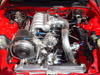


Take a clear picture of the top of the TII housing at the oil injector, looks like you have a number there. Looks like you have a N318 casting which has already been discussed and it has been explained that those particular S4 TII housings have the same plug location as the S5 & S6. Typically S4 TII are the same as S4 N/A.

Thread Starter
Junior Member
Joined: Jul 2007
Posts: 14
Likes: 0
From: leesburg, GA
kouki and zenki turbo have the SAME spark location , its only the knock sensor
its the zenki NON TURBO that has the leading spark 5 mm higher towards the centerline S4 T and S5 T have the SAME spark locations the s4 NA does not.
This is an S5T motor with an S5 front housing and S4 NA rear.
With his setup this would hardly be noticeable in fact not noticeable at all. The timing of the motor is still the same as mentioned above it is not controlled by the plug locations. However the physical timing combustion locations are slightly different. As each rotor fires individually of each other every 180deg the differences would be no greater then say one rotor carrying more or less compression then another. As we know per the FSM we are aloud up to 25psi of differences. In my experience anything reaching 20 is fixing to pop. If one had gotten serious in power with stand alone's the tuner may begin to recognize possibly one cylinder making more power then another or running slightly different AFR range. This however could even be tuned out but the likely hood of this even being a factor is slim to none. This is not to say it's acceptable to practice your building in this manner it is only to say the effects he will see in this motor are the cause of him blowing it is slim to none.
$50 forum bucks says he had a cracked gear when assembled and it finally gave way or he over rev'ed it.
Umm yeah, no way is that ever going to happen.
its the zenki NON TURBO that has the leading spark 5 mm higher towards the centerline S4 T and S5 T have the SAME spark locations the s4 NA does not.
This is an S5T motor with an S5 front housing and S4 NA rear.
With his setup this would hardly be noticeable in fact not noticeable at all. The timing of the motor is still the same as mentioned above it is not controlled by the plug locations. However the physical timing combustion locations are slightly different. As each rotor fires individually of each other every 180deg the differences would be no greater then say one rotor carrying more or less compression then another. As we know per the FSM we are aloud up to 25psi of differences. In my experience anything reaching 20 is fixing to pop. If one had gotten serious in power with stand alone's the tuner may begin to recognize possibly one cylinder making more power then another or running slightly different AFR range. This however could even be tuned out but the likely hood of this even being a factor is slim to none. This is not to say it's acceptable to practice your building in this manner it is only to say the effects he will see in this motor are the cause of him blowing it is slim to none.
$50 forum bucks says he had a cracked gear when assembled and it finally gave way or he over rev'ed it.
Umm yeah, no way is that ever going to happen.
Already has happened. At my shop, we rebuilt a 13bt motor with no porting done just rebuilt the motor, put a larger turbo (I don't remember the exact size and boost it was at), front mount intercooler and Greddy e-manage. Used a fuel pressure regulator and tuned it. After a few runs on the dyno we got to 294, (sorry for rounding up...) But I have seen it done to nearly 300whp.

Passing life by

Joined: Feb 2005
Posts: 4,028
Likes: 2
From: Scotland, USA
300 crank HP would require 1650cc of fuel / 4 = 412.5cc per injector. This is not WHEEL hp this is crank. One 550cc injector at 80% duty cycle our maximum we can run safely without risking hanging the injector is 440cc of fuel. Without calculate safe AFR ranges we are just in scope of making the power we targeted.
With the standard 20% drive train loss to make 300whp we need to be making 360bhp. Repluging in our calculations we end up with 495cc of fuel per injector x 4 = 1980cc of fuel now leaving us 55cc shy on each injector at 80% duty cycle of achieving 360bhp or approximately 300whp.
With the standard 20% drive train loss to make 300whp we need to be making 360bhp. Repluging in our calculations we end up with 495cc of fuel per injector x 4 = 1980cc of fuel now leaving us 55cc shy on each injector at 80% duty cycle of achieving 360bhp or approximately 300whp.
Thread Starter
Junior Member
Joined: Jul 2007
Posts: 14
Likes: 0
From: leesburg, GA
300 crank HP would require 1650cc of fuel / 4 = 412.5cc per injector. This is not WHEEL hp this is crank. One 550cc injector at 80% duty cycle our maximum we can run safely without risking hanging the injector is 440cc of fuel. Without calculate safe AFR ranges we are just in scope of making the power we targeted.
With the standard 20% drive train loss to make 300whp we need to be making 360bhp. Repluging in our calculations we end up with 495cc of fuel per injector x 4 = 1980cc of fuel now leaving us 55cc shy on each injector at 80% duty cycle of achieving 360bhp or approximately 300whp.
With the standard 20% drive train loss to make 300whp we need to be making 360bhp. Repluging in our calculations we end up with 495cc of fuel per injector x 4 = 1980cc of fuel now leaving us 55cc shy on each injector at 80% duty cycle of achieving 360bhp or approximately 300whp.
I also understand the difference between crank and wheel horsepower. That needn't be explained as if I'm new to cars. For the sake of experience, I have worked and been around cars since I was six. yes six. I don't claim to know everything and when I need help I will ask. But this isn't something I just pulled out of my a.s either. I didn't do the work on the car, only saw the numbers and knew what had been done.
again, are you sure you set end play correctly? do you remember what the clearance was? also did you mic the rotor surface and rotor housing surface to check the rotor running clearance? sometimes the gear on the rotor can walk out a bit and it needs to be re seated, did you check for that when you did the rebuild? If that gear walked out it could easily destroy it.

Junior Member
Joined: Jul 2009
Posts: 49
Likes: 0
From: livermore Ca 94550
so when you rebuild do the rotors and the shaft have to be machined or anything like that like you would do to a regular block and crank or do you just have to take it apart and replace all the seals bearings and gears sorry for the newb ? but this is my frst rotory car


300 crank HP would require 1650cc of fuel / 4 = 412.5cc per injector. This is not WHEEL hp this is crank. One 550cc injector at 80% duty cycle our maximum we can run safely without risking hanging the injector is 440cc of fuel. Without calculate safe AFR ranges we are just in scope of making the power we targeted.
With the standard 20% drive train loss to make 300whp we need to be making 360bhp. Repluging in our calculations we end up with 495cc of fuel per injector x 4 = 1980cc of fuel now leaving us 55cc shy on each injector at 80% duty cycle of achieving 360bhp or approximately 300whp.
With the standard 20% drive train loss to make 300whp we need to be making 360bhp. Repluging in our calculations we end up with 495cc of fuel per injector x 4 = 1980cc of fuel now leaving us 55cc shy on each injector at 80% duty cycle of achieving 360bhp or approximately 300whp.
so when you rebuild do the rotors and the shaft have to be machined or anything like that like you would do to a regular block and crank or do you just have to take it apart and replace all the seals bearings and gears sorry for the newb ? but this is my frst rotory car
Thread Starter
Junior Member
Joined: Jul 2007
Posts: 14
Likes: 0
From: leesburg, GA
again, are you sure you set end play correctly? do you remember what the clearance was? also did you mic the rotor surface and rotor housing surface to check the rotor running clearance? sometimes the gear on the rotor can walk out a bit and it needs to be re seated, did you check for that when you did the rebuild? If that gear walked out it could easily destroy it.
I'm honestly just guessing, the gear cracked either due to me missing something or due to just honest failure. I won't really ever know, but the reasons have been a little more pinpointed with your help. Thanks.
the thing i have learned about building these engines is, lots of parts are reused during the rebuild procedure, this means the inspection of the parts to be reused is very very important. Personally if was doing a rebuild and i was unsure about an items condition even slightly, id replace it..for example, im building a motor right now and upon inspection of the rear stationary gear, i see two stamp marks where it looks like someone beat it out of the housing with a regular steel hammer. this does not effect the teeth but for all i know someone beat on this thing like they where hammering a nail into a wall..so i balance out the risks, buy a new one for $100 or risk it destroying other parts of the motor which costs me a another rebuild kit and now a rotor and rear plate..
also it sounds like you need to be a bit more thorough when checking your clearances, if you are unsure of all the clearances you need to be looking at, you should have a real mazda FSM next to you, following it step by step, i also recommend you watch the rebuild videos that are available. They offer such a huge wealth of knowledge. When your building you should write down all your clearance check numbers so if something fails you can go back to your paper and know you had it right.
also it sounds like you need to be a bit more thorough when checking your clearances, if you are unsure of all the clearances you need to be looking at, you should have a real mazda FSM next to you, following it step by step, i also recommend you watch the rebuild videos that are available. They offer such a huge wealth of knowledge. When your building you should write down all your clearance check numbers so if something fails you can go back to your paper and know you had it right.

Joined: Feb 2001
Posts: 29,798
Likes: 128
From: London, Ontario, Canada
300 crank HP would require 1650cc of fuel / 4 = 412.5cc per injector. This is not WHEEL hp this is crank. One 550cc injector at 80% duty cycle our maximum we can run safely without risking hanging the injector is 440cc of fuel. Without calculate safe AFR ranges we are just in scope of making the power we targeted.
With the standard 20% drive train loss to make 300whp we need to be making 360bhp. Repluging in our calculations we end up with 495cc of fuel per injector x 4 = 1980cc of fuel now leaving us 55cc shy on each injector at 80% duty cycle of achieving 360bhp or approximately 300whp.
With the standard 20% drive train loss to make 300whp we need to be making 360bhp. Repluging in our calculations we end up with 495cc of fuel per injector x 4 = 1980cc of fuel now leaving us 55cc shy on each injector at 80% duty cycle of achieving 360bhp or approximately 300whp.
Thread Starter
Junior Member
Joined: Jul 2007
Posts: 14
Likes: 0
From: leesburg, GA
the thing i have learned about building these engines is, lots of parts are reused during the rebuild procedure, this means the inspection of the parts to be reused is very very important. Personally if was doing a rebuild and i was unsure about an items condition even slightly, id replace it..for example, im building a motor right now and upon inspection of the rear stationary gear, i see two stamp marks where it looks like someone beat it out of the housing with a regular steel hammer. this does not effect the teeth but for all i know someone beat on this thing like they where hammering a nail into a wall..so i balance out the risks, buy a new one for $100 or risk it destroying other parts of the motor which costs me a another rebuild kit and now a rotor and rear plate..
also it sounds like you need to be a bit more thorough when checking your clearances, if you are unsure of all the clearances you need to be looking at, you should have a real mazda FSM next to you, following it step by step, i also recommend you watch the rebuild videos that are available. They offer such a huge wealth of knowledge. When your building you should write down all your clearance check numbers so if something fails you can go back to your paper and know you had it right.
also it sounds like you need to be a bit more thorough when checking your clearances, if you are unsure of all the clearances you need to be looking at, you should have a real mazda FSM next to you, following it step by step, i also recommend you watch the rebuild videos that are available. They offer such a huge wealth of knowledge. When your building you should write down all your clearance check numbers so if something fails you can go back to your paper and know you had it right.

