


What makes the rotary go "brap brap" instead of "hmmmm?"


I need a new user title

Joined: Oct 2005
Posts: 2,646
Likes: 1
From: Yaizu, Japan
The BRAP BRAP BRAP I am thinking of sounds WAY too low a frequency to be individual combustions.
Lets say you idle at 750 rotations/minute which equals 12.5 rotations per second. Any 2rotor engine will have a combustion event 2 times per rotation. So,
12.5 rotations/second * 2 combustions/rotation = 25 combustions / second (at 750 rpm).
That would be 25 "BRAPS" per second based on the technical description in this thread. I am acoustomed to hearing something more on the order of 5 BRAPS per second at idle.
If I had to guess, it seems like the engine speed fluctuates for some reason (without intentional external input).
Could it be that the speed oscilates becasue of an imbalance between air pumping losses and BMEP???
so at 740 rpm the pumping losses drop, allowing the engine to speed up, then when it hits 760 rpm, the pumping losses catch up resulting in the engine dropping back down over and over again? I don't think a typical rpm gage would be accurate enough to show you this fluctuation at this low of a speed. Maybe the CAS and ECU can't tell the difference either, so there is no way to counteract this effect electronically. Do 13B-REW engines that use "crank trigger" instead of a CAS also go "BRAP BRAP BRAP"?
Lets say you idle at 750 rotations/minute which equals 12.5 rotations per second. Any 2rotor engine will have a combustion event 2 times per rotation. So,
12.5 rotations/second * 2 combustions/rotation = 25 combustions / second (at 750 rpm).
That would be 25 "BRAPS" per second based on the technical description in this thread. I am acoustomed to hearing something more on the order of 5 BRAPS per second at idle.
If I had to guess, it seems like the engine speed fluctuates for some reason (without intentional external input).
Could it be that the speed oscilates becasue of an imbalance between air pumping losses and BMEP???
so at 740 rpm the pumping losses drop, allowing the engine to speed up, then when it hits 760 rpm, the pumping losses catch up resulting in the engine dropping back down over and over again? I don't think a typical rpm gage would be accurate enough to show you this fluctuation at this low of a speed. Maybe the CAS and ECU can't tell the difference either, so there is no way to counteract this effect electronically. Do 13B-REW engines that use "crank trigger" instead of a CAS also go "BRAP BRAP BRAP"?



Joined: Mar 2001
Posts: 31,849
Likes: 3,238
From: https://www2.mazda.com/en/100th/
if you would like to learn more, the book 'rotary engine' is out on the web
Environmentally-Hostile

Joined: Sep 2005
Posts: 1,662
Likes: 3
From: Ennis/Arlington Texas
The BRAP BRAP BRAP I am thinking of sounds WAY too low a frequency to be individual combustions.
Lets say you idle at 750 rotations/minute which equals 12.5 rotations per second. Any 2rotor engine will have a combustion event 2 times per rotation. So,
12.5 rotations/second * 2 combustions/rotation = 25 combustions / second (at 750 rpm).
That would be 25 "BRAPS" per second based on the technical description in this thread. I am acoustomed to hearing something more on the order of 5 BRAPS per second at idle.
If I had to guess, it seems like the engine speed fluctuates for some reason (without intentional external input).
Could it be that the speed oscilates becasue of an imbalance between air pumping losses and BMEP???
so at 740 rpm the pumping losses drop, allowing the engine to speed up, then when it hits 760 rpm, the pumping losses catch up resulting in the engine dropping back down over and over again? I don't think a typical rpm gage would be accurate enough to show you this fluctuation at this low of a speed. Maybe the CAS and ECU can't tell the difference either, so there is no way to counteract this effect electronically. Do 13B-REW engines that use "crank trigger" instead of a CAS also go "BRAP BRAP BRAP"?
Lets say you idle at 750 rotations/minute which equals 12.5 rotations per second. Any 2rotor engine will have a combustion event 2 times per rotation. So,
12.5 rotations/second * 2 combustions/rotation = 25 combustions / second (at 750 rpm).
That would be 25 "BRAPS" per second based on the technical description in this thread. I am acoustomed to hearing something more on the order of 5 BRAPS per second at idle.
If I had to guess, it seems like the engine speed fluctuates for some reason (without intentional external input).
Could it be that the speed oscilates becasue of an imbalance between air pumping losses and BMEP???
so at 740 rpm the pumping losses drop, allowing the engine to speed up, then when it hits 760 rpm, the pumping losses catch up resulting in the engine dropping back down over and over again? I don't think a typical rpm gage would be accurate enough to show you this fluctuation at this low of a speed. Maybe the CAS and ECU can't tell the difference either, so there is no way to counteract this effect electronically. Do 13B-REW engines that use "crank trigger" instead of a CAS also go "BRAP BRAP BRAP"?


Whoops, the White One goes hmmmmmm, not brap. Is there something wrong with it?
http://www.youtube.com/watch?v=3bcwNT6XoX4
http://www.youtube.com/watch?v=3bcwNT6XoX4


what made you guys say its "brap" "brap" "brap" thats Aus interpretation. Us in the US must make our own.
In comparison to a dog, a dog bark is interpreted by every country differently. here's a good example.
# English - woof, woof; ruff, ruff; arf, arf (large dogs and also the sound of sea lions); yap, yap (small dogs); bow-wow
# Afrikaans - blaf, blaf woef, woef keff, keff (small dogs)
# Albanian - ham, ham
# Arabic - hau, hau; how how (هو هو)
# Armenian - haf, haf
# Basque - au-au, txau-txau (small dogs), zaunk-zaunk (large dogs) and jau-jau (old dogs)
# Balinese - kong, kong
# Bulgarian - bau-bau (бау-бау); jaff, jaff (джаф-джаф)
# Catalan - bau, bau
# Chinese, Cantonese - wow, wow (汪汪)
# Chinese, Mandarin - ****, ****
In comparison to a dog, a dog bark is interpreted by every country differently. here's a good example.
# English - woof, woof; ruff, ruff; arf, arf (large dogs and also the sound of sea lions); yap, yap (small dogs); bow-wow
# Afrikaans - blaf, blaf woef, woef keff, keff (small dogs)
# Albanian - ham, ham
# Arabic - hau, hau; how how (هو هو)
# Armenian - haf, haf
# Basque - au-au, txau-txau (small dogs), zaunk-zaunk (large dogs) and jau-jau (old dogs)
# Balinese - kong, kong
# Bulgarian - bau-bau (бау-бау); jaff, jaff (джаф-джаф)
# Catalan - bau, bau
# Chinese, Cantonese - wow, wow (汪汪)
# Chinese, Mandarin - ****, ****


Double Ds for me to share
Joined: Mar 2005
Posts: 513
Likes: 4
From: abbotsford
The brap comes from large porting where leftover exhaust gasses enter the next intake phase, causing a near stall effect, but the way the rotary works, it basically won't die...unless tuning is off. Since there are two rotors, each with 3 phases (intake, burn/compression, exhaust.) it keeps the motor running...put a large P-Port will not idle smoothly at all...it will jump around 1700rpm-2000rpm.
I need a new user title
Joined: Oct 2005
Posts: 2,646
Likes: 1
From: Yaizu, Japan

Full Member
Joined: Nov 2007
Posts: 103
Likes: 0
From: Dearborn, MI
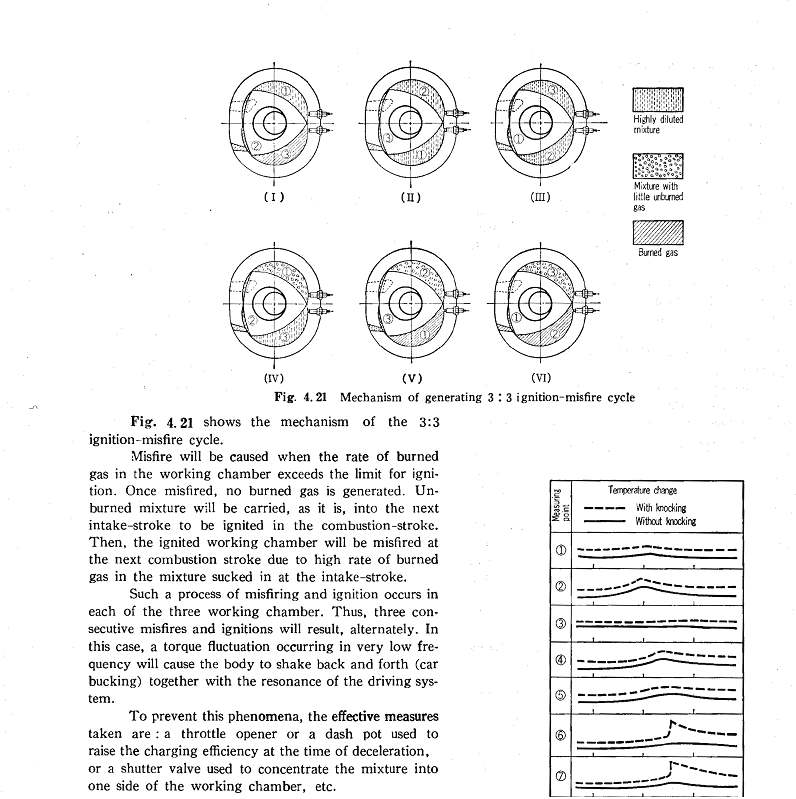
Ok I read through that part of the online book, but the preceding paragraphs explain the situation a little better. Basically, when the intake manifold is at high vacuum it will suck exhaust into the intake chamber via the overlap. It will want to do this because the intake is at high vacuum, whereas the exhaust chamber / exhaust system will be a bit above atmospheric pressure. When the air in the intake that has been polluted makes it's way to the spark plug, nothing will fire because it is too diluted with inert chemicals (CO2, H2O). Of course it will also contain the full dose of vaporized fuel and some fresh air. When this chamber comes around the exhaust port again, the same thing will occur, but this time when the over-lapped intake chamber sucks crap out of the exhaust chamber, it will contribute to a mixture that will experience combustion. So on a chamber to chamber basis, each chamber will skip an ignition due to dilution, that succeed in an ignition the next time. I understand why each rotor skips 3, then succeeds in 3, but why is it that both rotor (in a 2rotor) will have success at the same time, and failure at the same time.
My next question is:
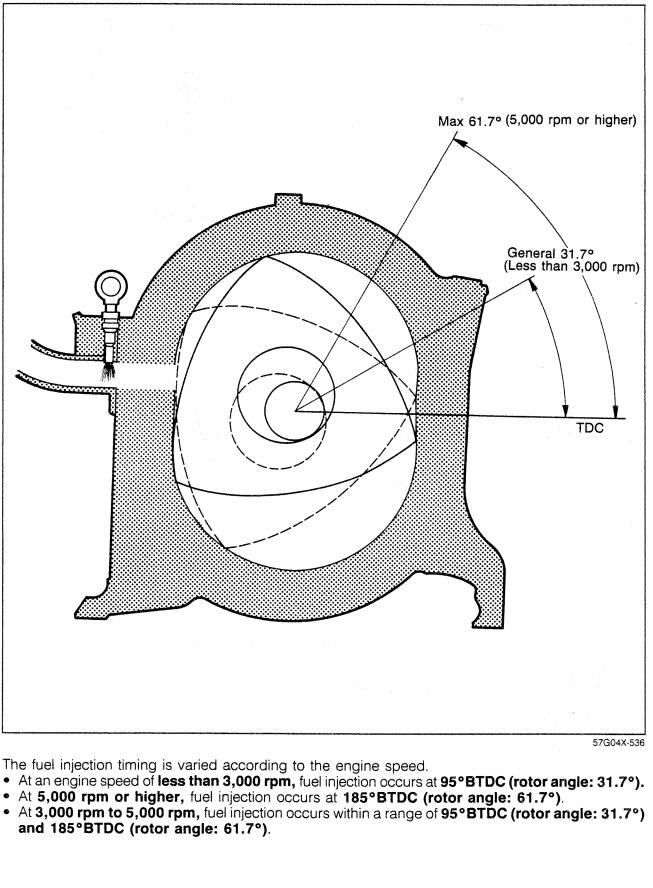
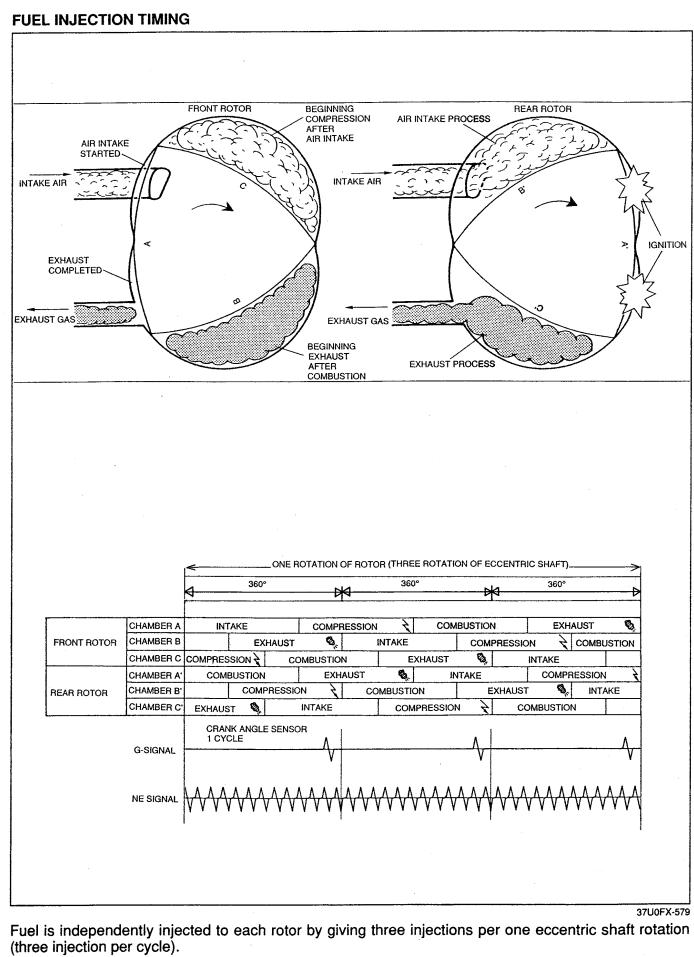
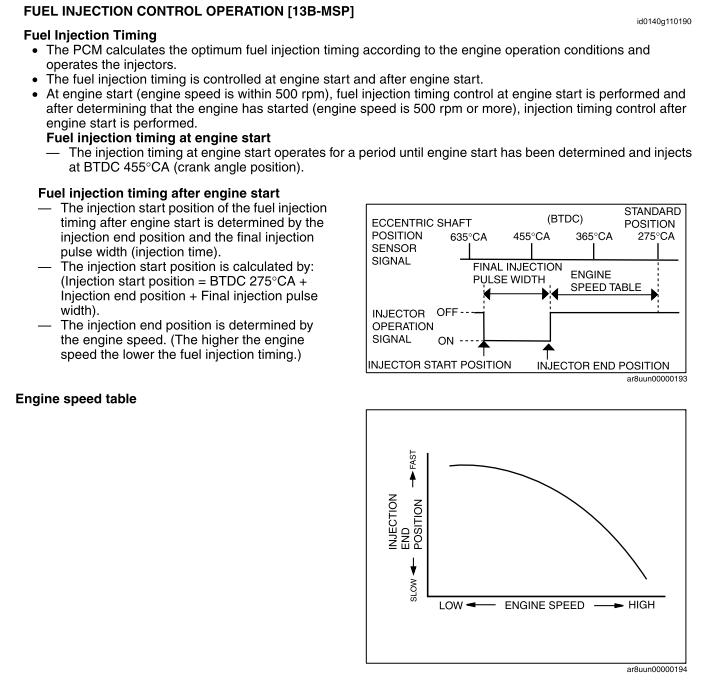
Could an ECU theoretically cut fuel on the 3 intake events that are destined to fail anyway (and then give a little more fuel to the ones that will succeed to make up for the fuel that would be lost in carry over). I know this only would help at idle, but you could probably greatly improve fuel economy at idle. This isn't something that most people on these forums would care about, but I'm sure Mazda tried something like this. Is this how the stock ECU works?
Max
My next question is:
Could an ECU theoretically cut fuel on the 3 intake events that are destined to fail anyway (and then give a little more fuel to the ones that will succeed to make up for the fuel that would be lost in carry over). I know this only would help at idle, but you could probably greatly improve fuel economy at idle. This isn't something that most people on these forums would care about, but I'm sure Mazda tried something like this. Is this how the stock ECU works?
Max




Lurking on thread near U

Joined: Dec 2008
Posts: 143
Likes: 0
From: Huntsville, Alabama
Hmmm, not sure what you've been smoking lately, but I want some!
Nothing wrong with the car, but if you listen closely to the exhaust note after she warms up, you'll hear about 10 stumbles per second (average for a stock 12a). They are more pronounced with an open exhaust, but they are still there from the factory. This is because, as PercentSevenC pointed out, ALL mazda rotaries have overlap. Even the renesis, which is the reason mazda decided to put valves in the thing (that's what I heard, I haven't ever studied the renesis design).
Whoops, the White One goes hmmmmmm, not brap. Is there something wrong with it?
http://www.youtube.com/watch?v=3bcwNT6XoX4
http://www.youtube.com/watch?v=3bcwNT6XoX4

Joined: Jun 2008
Posts: 8,376
Likes: 28
From: Chino Hills, CA
Also explains why bridges and other "wide" ports have a bigger problem with this; the port is not just exposed earlier, but MORE of the port is exposed earlier in the overlap.
The width of the port doesn't just perform the function of "lift" in a conventional engine, it also changes the RATE of opening... e.g., the "slope" of the cam-face, which governs how rapidly the port opens.
With a valved engine, there's a mechanical limit to how fast the port can open, because there is a mechanical limit as to how much slope-per-degree the cam and follower can tolerate without jamming. The rotary can be ported to open much more rapidly in comparison.
Also, the drawing leaves out the indentations in the faces of the rotors; makes it look like there's only a tiny path from port to port when overlapped, when in fact it's a sizeable volume that joins the two ports during overlap.
The width of the port doesn't just perform the function of "lift" in a conventional engine, it also changes the RATE of opening... e.g., the "slope" of the cam-face, which governs how rapidly the port opens.
With a valved engine, there's a mechanical limit to how fast the port can open, because there is a mechanical limit as to how much slope-per-degree the cam and follower can tolerate without jamming. The rotary can be ported to open much more rapidly in comparison.
Also, the drawing leaves out the indentations in the faces of the rotors; makes it look like there's only a tiny path from port to port when overlapped, when in fact it's a sizeable volume that joins the two ports during overlap.
I need a new user title
Joined: Oct 2005
Posts: 2,646
Likes: 1
From: Yaizu, Japan
Nothing wrong with the car, but if you listen closely to the exhaust note after she warms up, you'll hear about 10 stumbles per second (average for a stock 12a). They are more pronounced with an open exhaust, but they are still there from the factory. This is because, as PercentSevenC pointed out, ALL mazda rotaries have overlap. Even the renesis, which is the reason mazda decided to put valves in the thing (that's what I heard, I haven't ever studied the renesis design).


I looked at the OP and thought what a stupid question. I have actually learned a bit about porting by reading all the posts. Thanks OP... for asking a question which is common knowledge ;D
Joined: Mar 2001
Posts: 31,849
Likes: 3,238
From: https://www2.mazda.com/en/100th/
My next question is:
Could an ECU theoretically cut fuel on the 3 intake events that are destined to fail anyway (and then give a little more fuel to the ones that will succeed to make up for the fuel that would be lost in carry over). I know this only would help at idle, but you could probably greatly improve fuel economy at idle. This isn't something that most people on these forums would care about, but I'm sure Mazda tried something like this. Is this how the stock ECU works?
Max
Joined: Mar 2001
Posts: 31,849
Likes: 3,238
From: https://www2.mazda.com/en/100th/
Also explains why bridges and other "wide" ports have a bigger problem with this; the port is not just exposed earlier, but MORE of the port is exposed earlier in the overlap.
The width of the port doesn't just perform the function of "lift" in a conventional engine, it also changes the RATE of opening... e.g., the "slope" of the cam-face, which governs how rapidly the port opens.
With a valved engine, there's a mechanical limit to how fast the port can open, because there is a mechanical limit as to how much slope-per-degree the cam and follower can tolerate without jamming. The rotary can be ported to open much more rapidly in comparison.
Also, the drawing leaves out the indentations in the faces of the rotors; makes it look like there's only a tiny path from port to port when overlapped, when in fact it's a sizeable volume that joins the two ports during overlap.
The width of the port doesn't just perform the function of "lift" in a conventional engine, it also changes the RATE of opening... e.g., the "slope" of the cam-face, which governs how rapidly the port opens.
With a valved engine, there's a mechanical limit to how fast the port can open, because there is a mechanical limit as to how much slope-per-degree the cam and follower can tolerate without jamming. The rotary can be ported to open much more rapidly in comparison.
Also, the drawing leaves out the indentations in the faces of the rotors; makes it look like there's only a tiny path from port to port when overlapped, when in fact it's a sizeable volume that joins the two ports during overlap.

New to the Club!
Joined: Jun 2020
Posts: 1
Likes: 0
From: Germany

Thread
Thread Starter
Forum
Replies
Last Post
streetlegal?
New Member RX-7 Technical
13
Mar 17, 2022 02:46 PM
