


Please help! (Fb Rx7 Gs 1984 automatic trans)


Thread Starter
Junior Member
Joined: Apr 2022
Posts: 20
Likes: 0
From: Arizona
Please help! (Fb Rx7 Gs 1984 automatic trans)
Rx7 Idles at 750-850-950-1k smooth, but when I slam on the gas it gets stuck at 4k, when I do it slowly it reaches 5k then stops, fuel comes out of both primary and secondaries, any ideas? It stutters hard at 4k and slowly at 5k.(Fb Rx7 Gs 1984 automatic trans) 


Trending Topics
Thread Starter
Junior Member
Joined: Apr 2022
Posts: 20
Likes: 0
From: Arizona
I daily this Rx7, have had this same power through out, my rpm gauge didn’t work before so I thought that’s all this car had to offer, I I replaced the trailing ignitor, boom trailing power worked and my tach, swapped my spark plugs, car still only does 4k, why am I not able to reach dorito power, my 0-60 is 44 seconds… 
This is a hard one to troubleshoot without being able to get hands on. Bad timing or vacuum leaks can be one cause. We can rule out the trans but it does have a vacuum line from the carb. Another cause can be hung up carb linkage or cable.
Thread Starter
Junior Member
Joined: Apr 2022
Posts: 20
Likes: 0
From: Arizona
would bad timing cause bad idle?

Junior Member
Joined: Feb 2022
Posts: 43
Likes: 9
From: East Tennessee
Is the accelerator pump squirting?
Maybe wire the throttle shafts together to make the secondaries open mechanically as a test?
I don't know much about automatics, do they have an ignition cut somewhere in the circuit? It sounds a bit like a rev limiter cutting in early but I didn't think these cars had one.
Maybe wire the throttle shafts together to make the secondaries open mechanically as a test?
I don't know much about automatics, do they have an ignition cut somewhere in the circuit? It sounds a bit like a rev limiter cutting in early but I didn't think these cars had one.
Sounds to me like the dizzy advance mechanism is not working right or an ignition issue. Going back over this, if it started after rebuilding the carb, I would suspect the carb has an issue or the rats nest is messed up. Could be the secondaries not kicking in. When you rebuilt the carb tell me you didn't use the new needles and seats, if you did that could explain the gas pouring out of the primaries and secondaries.
Thread Starter
Junior Member
Joined: Apr 2022
Posts: 20
Likes: 0
From: Arizona
Sounds to me like the dizzy advance mechanism is not working right or an ignition issue. Going back over this, if it started after rebuilding the carb, I would suspect the carb has an issue or the rats nest is messed up. Could be the secondaries not kicking in. When you rebuilt the carb tell me you didn't use the new needles and seats, if you did that could explain the gas pouring out of the primaries and secondaries.
Thread Starter
Junior Member
Joined: Apr 2022
Posts: 20
Likes: 0
From: Arizona
Is the accelerator pump squirting?
Maybe wire the throttle shafts together to make the secondaries open mechanically as a test?
I don't know much about automatics, do they have an ignition cut somewhere in the circuit? It sounds a bit like a rev limiter cutting in early but I didn't think these cars had one.
Maybe wire the throttle shafts together to make the secondaries open mechanically as a test?
I don't know much about automatics, do they have an ignition cut somewhere in the circuit? It sounds a bit like a rev limiter cutting in early but I didn't think these cars had one.

Thread Starter
Junior Member
Joined: Apr 2022
Posts: 20
Likes: 0
From: Arizona
Junior Member
Joined: Feb 2022
Posts: 43
Likes: 9
From: East Tennessee
Throttle cable determines how far the throttle plates in the carburetor open, so in a way yes. If you look down the carburetor primary side, when the throttle is pushed all the way down do the plates twist completely open? If not then your throttle cable is not adjusted correctly or something is blocking the pedal from going down all the way.
As far as the accelerator pump, there is a nozzle in between the two primary barrels that squirts raw fuel into the primaries when the throttle is pushed. This helps smooth out acceleration when stomping the pedal and waiting for the secondaries to open.
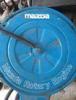
You can look both of these without the car running, just pop the air cleaner lid off and look down the primary side of the carb while somebody works the throttle pedal inside the car.
As far as the accelerator pump, there is a nozzle in between the two primary barrels that squirts raw fuel into the primaries when the throttle is pushed. This helps smooth out acceleration when stomping the pedal and waiting for the secondaries to open.
You can look both of these without the car running, just pop the air cleaner lid off and look down the primary side of the carb while somebody works the throttle pedal inside the car.
Thread Starter
Junior Member
Joined: Apr 2022
Posts: 20
Likes: 0
From: Arizona
Throttle cable determines how far the throttle plates in the carburetor open, so in a way yes. If you look down the carburetor primary side, when the throttle is pushed all the way down do the plates twist completely open? If not then your throttle cable is not adjusted correctly or something is blocking the pedal from going down all the way.
As far as the accelerator pump, there is a nozzle in between the two primary barrels that squirts raw fuel into the primaries when the throttle is pushed. This helps smooth out acceleration when stomping the pedal and waiting for the secondaries to open.
You can look both of these without the car running, just pop the air cleaner lid off and look down the primary side of the carb while somebody works the throttle pedal inside the car.
As far as the accelerator pump, there is a nozzle in between the two primary barrels that squirts raw fuel into the primaries when the throttle is pushed. This helps smooth out acceleration when stomping the pedal and waiting for the secondaries to open.
You can look both of these without the car running, just pop the air cleaner lid off and look down the primary side of the carb while somebody works the throttle pedal inside the car.

Senior Newbie Member
Joined: Jun 2017
Posts: 1,051
Likes: 89
From: Downey California
I'm the resident expert on automatics around here and that's very bad because I feel I know jack.
If your auto trans is not shifting, you will pretty much reach 7000 RPM and or grenade the trans, the first gear will not handle much more than 45 mph for more than a few mins without overheating and burning the clutches out.
Your vacuum diagram only helps smooth out shifts, if it fails you will suck ATF into the engine. Low ATF causes the trans to disengage from first at low RPM into neutral and then to brutally engage into first, even lower RPM will do this between first and second. I have never had issues with the electronic selenoids, so no idea what happens when they go bad. What it sounds like here is a lack of gas , your trans shouldn't limit your engine power or throttle response.
If your auto trans is not shifting, you will pretty much reach 7000 RPM and or grenade the trans, the first gear will not handle much more than 45 mph for more than a few mins without overheating and burning the clutches out.
Your vacuum diagram only helps smooth out shifts, if it fails you will suck ATF into the engine. Low ATF causes the trans to disengage from first at low RPM into neutral and then to brutally engage into first, even lower RPM will do this between first and second. I have never had issues with the electronic selenoids, so no idea what happens when they go bad. What it sounds like here is a lack of gas , your trans shouldn't limit your engine power or throttle response.