


Hg


Thread Starter
Old [Sch|F]ool


Joined: May 2001
Posts: 12,856
Likes: 568
From: Cleveland, Ohio, USA
Not yet. Right now it's still resting. 
Even after the engine is complete, I still will need to figger out what i will do with the brakes (aux. vacuum can or convert to manual) and sort out some sort of exhaust system that will be streetably quiet.
Even after the engine is complete, I still will need to figger out what i will do with the brakes (aux. vacuum can or convert to manual) and sort out some sort of exhaust system that will be streetably quiet.


Hmm, maybe you could hook up a low power electric motor to create a vacuum? You know, something that won't weigh very much, won't draw hardly any power when just sitting there waiting for you to apply the brakes, and then when it's needed, it'll recover quickly enough for race conditions. There's gotta be something like that out there for those who are on boost all the time etc.
Heh, or hook up an air pump and hook your brake booster to the intake side.
j9fd3s has found that a small nipple supplies enough vacuum to run his power brakes in his 20B FC. It's one of those really small 'vacuum advance' size nipples on the 20B manifold, not one of those 11/32" monsters that we're all used to.
Heh, or hook up an air pump and hook your brake booster to the intake side.
j9fd3s has found that a small nipple supplies enough vacuum to run his power brakes in his 20B FC. It's one of those really small 'vacuum advance' size nipples on the 20B manifold, not one of those 11/32" monsters that we're all used to.
Thread Starter
Old [Sch|F]ool
Joined: May 2001
Posts: 12,856
Likes: 568
From: Cleveland, Ohio, USA
Originally posted by Jeff20B
There's gotta be something like that out there for those who are on boost all the time etc.
There's gotta be something like that out there for those who are on boost all the time etc.
Part of the reason I wanted 15" wheels was so i could cram larger brakes under the front, requiring less pad pressure for a given amount of braking, so manual brakes would have acceptable pedal force vs. pedal travel.
But the problem is, since this car gets rallycrossed, I still need to fit my 13" wheels over it, unless I somehow find *another* set of 15" wheels that fit, and come with rally tires. Fat chance, so I'm probably sticking with power brakes. And power brakes need manifold vacuum, and the engine in the works won't have much of that, not much of it at all
edit: But manual brakes is a good idea anyway, just for consistency's sake. I LFB on the rallycross course, and after the second or third stab there's no power assist left even with the stock engine. So it's quite inconsistent.
Last edited by peejay; Jun 3, 2004 at 12:09 AM.
Trending Topics



Mazspeed.com

Joined: Oct 2002
Posts: 1,172
Likes: 0
From: Maryland
Sorry peejay, but as someone of Greek heritage, I have to correct you. Mercury is the Roman name for the Greek god Hermes - the messenger, etc of the gods. 
Apollo is one of the few (only) gods who is the same in both Roman and Greek mythology (at least in name).
Apollo is one of the few (only) gods who is the same in both Roman and Greek mythology (at least in name).
Thread Starter
Old [Sch|F]ool
Joined: May 2001
Posts: 12,856
Likes: 568
From: Cleveland, Ohio, USA
D'oh!
Well my first instinct was Haephestos, but that's Vulcan.
Hmm... Hermes.... Hermes Conrad... I used to work for Conrad's, a major tire/repair shop chain in Cleveland...
Coincidence? (Yes.)
Well my first instinct was Haephestos, but that's Vulcan.
Hmm... Hermes.... Hermes Conrad... I used to work for Conrad's, a major tire/repair shop chain in Cleveland...
Coincidence? (Yes.)
Nikki-Modder Rex-Rodder
Joined: Feb 2001
Posts: 2,890
Likes: 14
From: Trying to convince some clown not to put a Holley 600 on his 12a.
Originally posted by pratch
Mercury is the Roman name for the Greek god Hermes - the messenger...
Mercury is the Roman name for the Greek god Hermes - the messenger...
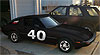
Nice car, peejay!
I thought this was going to be a cool chemistry thread.

Thread Starter
Old [Sch|F]ool
Joined: May 2001
Posts: 12,856
Likes: 568
From: Cleveland, Ohio, USA
The trick is to take the pictures near dusk, so it's hard to make out all the rust and dents.
Think about that next time you see ricer pics. (you know, pic taken at like midnight with the parking lights on, so all you see is lights and maybe a silhouette of a car)
Think about that next time you see ricer pics. (you know, pic taken at like midnight with the parking lights on, so all you see is lights and maybe a silhouette of a car)


Originally posted by peejay
Sure there is - it's called manual brakes.
. . . And power brakes need manifold vacuum, and the engine in the works won't have much of that, not much of it at all
Sure there is - it's called manual brakes.
. . . And power brakes need manifold vacuum, and the engine in the works won't have much of that, not much of it at all
If, however, you do want to go manual, here are some of the things I ran across when I did it (on a different car):
1. Keeping the pedal efforts low enough without going to a weird size master cylinder required a new lever arm ratio -- a Wilwood pedal set -- cool!
2. A balance bar setup with twin MCs is nice. Eliminates the need for a prop valve. This means the hysteresis in rear brake line pressure is gone, so if you lock the rears, they unlock quicker when you lift off (you don't have to back off past the knee point in the prop valve pressure curve to unlock them)
3. The extra force put on the dash panel by the manual setup created big-time flex in the panel and resultant vagueness in brake feel. I solved this by bracing the master cylinders to the strut tower bar.
4. You can only set brake bias accurately with the same tires you race on, so getting it right can be time consuming and expensive, in terms of flat-spotted tires. Get it in the ballpark with old race tires.
Thread Starter
Old [Sch|F]ool
Joined: May 2001
Posts: 12,856
Likes: 568
From: Cleveland, Ohio, USA
Originally posted by elwood
My man, you don't need manifold vacuum -- you just need vacuum. There are electric vacuum pumps made just for the purpose. The Chrysler electric minivans used them. It's much simpler to do this than convert to manual brakes -- your pedal efforts will remain stock -- yada, yada, yada.
My man, you don't need manifold vacuum -- you just need vacuum. There are electric vacuum pumps made just for the purpose. The Chrysler electric minivans used them. It's much simpler to do this than convert to manual brakes -- your pedal efforts will remain stock -- yada, yada, yada.
If I still had a functional power steering pump, I'd gank a Hydro-Boost setup. It uses hydraulic pressure from the power steering pump, and was first used in the 70's when good manifold vacuum wasn't always possible due to the quarter-assed emissions controls used in the era. Nowadays it's used on vehicles where there's just not enough room for a vacuum booster. (4.6 powered Mustangs, various GM trucks) My '76 T-bird had Hydro-Boost and the braking feel was rather nice in comparison to vacuum assist.
If, however, you do want to go manual, here are some of the things I ran across when I did it (on a different car):
(lots of yada yada that I'd already gleaned heavily from specialstage.com)
4. You can only set brake bias accurately with the same tires you race on, so getting it right can be time consuming and expensive, in terms of flat-spotted tires. Get it in the ballpark with old race tires.
Optimizing for any one set would be impossible. FWIW with anything but the Yoks the braking on the GSL is too rear-heavy, with the grippy tires the rear brakes don't lock up early so I can get enough braking force down to the pavement to lock up the right front, mainly because the left front caliper is rather problematic. Sounds backwards (normally you want LESS rear braking with more grippy tires since you get more load transfer to the front) but hey, I just make observations and try to fit a theory to them...

RTFFAQ
Joined: Jun 2003
Posts: 1,049
Likes: 0
From: Olathe, KS USA
Originally posted by peejay
Why not, it's already used for hauling stuff. I've been known to completely fill the hatch area, remove the passenger seat, and fill that area up too.
Why not, it's already used for hauling stuff.
I've been known to completely fill the hatch area, remove the passenger seat, and fill that area up too.