When you click on links to various merchants on this site and make a purchase, this can result in this site earning a commission. Affiliate programs and affiliations include, but are not limited to, the eBay Partner Network.
Just some basic reading here has been super insightful already. I especially want to thank the fine gentlemen who linked up downloadable copies of all parts/service/tech manuals by age. Immense help. You guys are serious bosses.
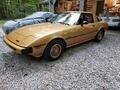
Recently came upon an opportunity to rebuild a 1985 GSL. Sat in a yard for 19 years, but was a flawless piece of 12a awesome until the grandma let it sit. Planning a full interior and reupholstery, sheet metal patching out the *** and whole new carpet, weather seals and plastics all around. Was able to get a plan together there.
On the mechanical end, I want to ask the experienced pros:
- If the motor and carb are still crisp and clean after the downtime, is it still possible that OMP may need attention before starting and running?
- If I keep stock drivetrain (I've got 4 wheel disc, LSD, standard manual trans), would porting irons and swapping carbs put me at risk of overpowering/overstressing any single component? If so, what is the likely failure point?
- Are 12a irons so rare at this point that porting is a sin?
- If dumping Nikki carb, is it a better plan to swap to a new dual port carb or do a full fuel and ignition system teardown and rework?
- Maybe, but just premix until you are sure it works or not.
- No unless you get over 250HP, then drivetrain starts getting stressed, also depends on the tire patch you have too.
- No, but start without tearing down the engine. 12As are incredibly sturdy and often survive sitting with just some extra love by oiling and hand rotation to get em freed up.
- Do not use Holley 4 barrels, use weber or weber knockoffs downdrafts for best results and dual if you can get a manifold. Ignition system can use some work, see my link for what I did for my car.
Change all your fluids and rubber lines for fuel at least. Make sure t he fuel pump puts out the right flow and pressure (FSM has details on that).
Get the car running before taking ANYTHING off. You want to know the current state of how things are running. I'd even say drive get it running and drive it for a few hundred miles first. When you start adding/removing things, it make it much harder to know what caused an issue. Start with the basics. Drain the old gas, replace the fuel filter. Check the oil but do not change it yet. Pull the plugs and inspect/clean, rotate the engine by hand. Maybe even pore a little oil in the top plug holes (not too much though). Fresh gas. Disconnect the fuel line at the carb and run some fuel through via the pump.
In regards to weatherstrips, I replaced all of mine on the doors (including the 3 around the door glass) and hatch with the one on rockauto with no problems.
- Maybe, but just premix until you are sure it works or not.
- No unless you get over 250HP, then drivetrain starts getting stressed, also depends on the tire patch you have too.
- No, but start without tearing down the engine. 12As are incredibly sturdy and often survive sitting with just some extra love by oiling and hand rotation to get em freed up.
- Do not use Holley 4 barrels, use weber or weber knockoffs downdrafts for best results and dual if you can get a manifold. Ignition system can use some work, see my link for what I did for my car.
Change all your fluids and rubber lines for fuel at least. Make sure t he fuel pump puts out the right flow and pressure (FSM has details on that).
Why would you say "don't use Holley"? Just curious here
Why would you say "don't use Holley"? Just curious here
Because they are not oriented to flow correctly for the intake manifold and this is why you get issues with them when cornering. To resolve t hat requires and lot of extra tuning and modifications to the carb to almost fix the issue. Also, the quality of the carbs, like all things holley lately, is poor. Heres a take, how many rotary road racers use holleys on the track? I think the answer would be interesting. The nikki is hands down the best carb I have used on a rotary, webers and dellortos work well too. Holley, not so much.
Because they are not oriented to flow correctly for the intake manifold and this is why you get issues with them when cornering. To resolve t hat requires and lot of extra tuning and modifications to the carb to almost fix the issue. Also, the quality of the carbs, like all things holley lately, is poor. Heres a take, how many rotary road racers use holleys on the track? I think the answer would be interesting. The nikki is hands down the best carb I have used on a rotary, webers and dellortos work well too. Holley, not so much.
I have always ran Holley's on rotaries and have never had issues. I have owned rotaries with Holley's since the late 80's. I grew up about 50 miles northeast of Atlanta and visited Mazmart alot during those years. Rick Engman always ran Holley's on his own street driven Rx3 so I figured it was good enough for me. Rick Engman Jr. was at DGRR earlier this year with his dad's old rx3 and it it still sporting a Holley after all these years. Holley's are pretty simple and work very well when you know what your doing with them. My car runs pretty well with the old junky Holley. I understand your own personal experience may have been bad with Holley's, but lets be careful and not give bad information to the newbs on the forum.
I agree with this, The Holleys on my Dad's cars run flawlessly and have since the 80's, he went through several variations until he got the Carb matched and tuned to the Engine. The Holley 535cfm on the Street Ported RX-3 hasn't had a finger laid on it in probably 10+ years and it will still Prolapse your ******* on a start. IMO, most people that have bad experiences with Holley are trying to stuff too much Carb on top of their Engine or it's improperly tuned. I'm not a real big Holley fan to begin with, when I was a Kid (before my Dad started with Rotarys) we did Chevy Stuff and used Carter AFB's on everything... and I'm sure if he could have gotten a Carter/Edelbrock to work better than the Holley then he would have used it.
I've seen all kinds of experimental stuff over the years while hanging out at my Dad's shop, every variation of Delorto, Fuel Injection etc... some worked some didn't but the fact that he's always had Holley on his personal Cars speaks volumes.
My car started out as one that had sat for many years, here's what I learned:
t_g_Farrell is right - 12a engines are sturdy. A bit of ATF squirted in the spark plug holes and some patience hand rotating it got it unsiezed. Been running it a decade since and it now has 250,000km on it!
Flush the fuel system! And I don't mean just run some fresh fuel through the lines. Gas turns to varnish over time so you'll have to drop the tank and have it professionally cleaned by a tank shop, new fuel filter, flush out the lines, and likely a carb rebuild. Fuel pump might or might not work but the stock one kind of sucks anyway.
Replace anything rubber. It will all be brittle and cracked and you'll spend ages tracking down issues from vacuum leaks to steering/suspension issues.
If you live somewhere that it's legal, removing the emissions equipment will solve LOTS of headaches. The whole rat's nest of hoses and solenoids is a nightmare of vacuum leak troubleshooting. The Air Control Valve is probably seized, same for the shutter valve. Better to just toss them. The three catalytic converters are a huge exhaust restriction and tend to clog if the rest of the system isn't working perfectly, so get a Racing Beat exhaust on there. Toss the Air Pump.
My main recommendation is to concentrate first on getting the car running, then do upgrades after. Don't crack open the engine unless you have to - get it unsiezed and see what you've got. Considering the rarity of 12a parts nowadays you could end up tearing it down just to spend more on rebuilding it than you would building/swapping a later model 13b. If it runs, spend the money on other upgrades (suspension, ignition, cooling) and come back for an engine when all the supporting systems are aolid.