When you click on links to various merchants on this site and make a purchase, this can result in this site earning a commission. Affiliate programs and affiliations include, but are not limited to, the eBay Partner Network.
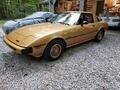
I'm doing some repairs on my 1st gen (SA with GSLSE guts), and a lot of that will involve cad modelling and 3D printing parts in abs plastic.
Since I'm going to the effort, I was wondering if you guys have found any particularly hard-to-get or pricey parts I could try my hand at modelling. I'm considering setting up some kind of online store in the longer term - it's taking a while to build up inventory since I have to model, print, and test fit everything.
Here's an example of my literally my 1st try modelling/printing the drivers side dash vent fins, since mine were snapped. No sanding, finishing, or painting here - just took it off the printer and installed it:
- Roland
Definitely will update, especially once I get some testing in! Spent most of yesterday messing with 3D scanning to try to model some more complex stuff, like the defrost vents on an 84-85 car. Lots of subtle curves on a part makes it really hard to model manually.
My poor graphics card was at 100% all afternoon...
Great Effort. Kudos for having a Go at it. This sort of Tech could be the lifeline for trim bits for us, since Mazda can't be bothered...
We of the RX7 salute you-
Do you have the GSL-SE interior to model parts for? I've been looking for steering column surround for the S3 cars ('84 & '85). These are long NLA and the only reproductions I can find are for left hand drive cars.
Yes that, but for an '84 / '85. The S1, S2 and S3 versions of the 1st gen each use a different surround. The one in your pic is either an S1 or S2 (not sure). The S3 has a large bottom half and smallish top half. Also needs to be for LHD US cars.
Ah gotcha. Yeah that was just the first pic that came up from a google search. I spent all weekend trying to scan a bunch of plastic parts just like that, so hopefully I'll figure something out soon.
Just a quick update... I've been trying to scan the front defrost vent cover using photogrammetry, and I wasn't able to get anything that didn't look like a long piece of charcoal. Dropped a grand on a 3d scanner, so once that arrives hopefully I'll have more luck.
Just a quick update... I've been trying to scan the front defrost vent cover using photogrammetry, and I wasn't able to get anything that didn't look like a long piece of charcoal. Dropped a grand on a 3d scanner, so once that arrives hopefully I'll have more luck.
That'll be a stellar tool to have on tap. I tried photogrammetry a while back as well and had a similar experience. For small parts setting up a turntable can work pretty well, and the newer iPhones with their lidar setup have a real edge when it comes to that.
I'm pretty sure you'll be the first (in the first gen section at least) to start implementing 3D scanning for reproduction plastic parts - that I know of. That'll be some cool stuff and I look forward to seeing how it works out for you. Pretty sure the rest of us are all just using hand tools .
Not to **** post but how does someone get into 3d printing but as it relates directly to developing/reproducing car parts? I'd love to see a sub-forum here on the topic as I'm 3d printing curious but have put no effort into actually looking into it outside of this post.
Not to **** post but how does someone get into 3d printing but as it relates directly to developing/reproducing car parts? I'd love to see a sub-forum here on the topic as I'm 3d printing curious but have put no effort into actually looking into it outside of this post.
I'll try to keep this brief to avoid crashing the thread, but it's not a terribly difficult thing to get into so long as you have a good bit of time and patience. If you want to continue this thought-train it might be worth making a dedicated thread or sending a pm. Also a 3D printing sub-forum would definitely be cool since I'm sure we'll see more of it as time goes on.
Anyway, for automotive parts you'll need an enclosed printer of some sort capable of running materials in the temp range of 240-270C. For me this is a couple rather modified Ender 3 Pros in a cabinet. There are tons of printers available with price and quality ranging drastically. As for reproducing the parts, I have a set of calipers, a compass, a fillet gauge, some metric rulers, and that's about it. I've used Fusion360, SolidWorks, AutoCAD, etc. for models, but these days I solely use Fusion360 since it's freely available.
The more you spend on a printer, generally the less tinkering you'll have to do. $800+ and you're starting to leave tinker territory for machines like Prusa's, and then $1-5k for solid pre-builts from reputable companies, and it still goes up from there quite a ways. I don't mind the tinkering so I've made a couple sub $300 machines work quite well, but I also have multiple times the cost of the original machines into them in parts. The beginning of end-use capable materials will start around $30-40/kg. My main materials are $40-60/kg with my newest addition being $160/kg.
When buying 3D printed parts the majority of the cost doesn't come from the material (until you're looking at Ultem/PEEK, continuous fiber, etc.), rather you're paying for the development, print time, post-processing, and machine maintenance. Small parts can take a couple hours to print, with larger ones (think only 6x6x4") being able to exceed 48 hours. That will vary greatly depending on the geometry and how fast you're printing, but you get the idea.
I've skipped over a lot to try and keep this brief, but just know that 3D printing has a lot of routes available with most of it depending on what you want from your machine and how much effort/time you want to allot. Hope that helps some.
Benjamin4456 has it pretty bang on - just gotta pick somewhere to start and dive in. You find a way to make it work - I don't even have an enclosed printer, but I put the printer in the closet with the door closed when I'm printing abs to keep the environment warmer. There are also a lot of resources online.
One thing that might also be helpful is the general workflow of making a 3d print:
1. Get a model. This can be CAD designed by you, or downloaded (see thingiverse.com for example). I also use Fusion360.
2. Once you're happy with the CAD model, you have to use "slicer" software to turn that model into gcode (layer-by-layer instructions for the printer). Lots of free options.
3. Send the gcode file to the printer.
There are also endless things to tinker with like layer height, print speed, bed/nozzle temperature, and filament material which will affect your print quality. You can also get into other stuff like octoprint, which runs on a raspberry pi and acts as a user interface and queue for your prints, so you can view printer status anywhere over the internet and queue up multiple prints. Not required but super cool.
Two things have happened:
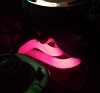
1. My scanner arrived. I've been messing with it and it's decent. I think I can use it to model weird curvy bits, like this vent I scanned today:
2. I bought a house, so I'll have a garage again in a month! That means I can scan bits off my car (it's in storage currently since I'm in an apartment). Hopefully can start working on some of the above requests.



 3D Printed Replacement Parts















 .
.


