


Howard Coleman's FD Chassis/Setup



Some parts you can retrofit yes, and we can bump your spring rate up. Shoot us an email... we have floating front and lower mounts, as well as various spring rates.
If you're looking for the Grand Touring setup you'll need the FPSpec Long Stroke.
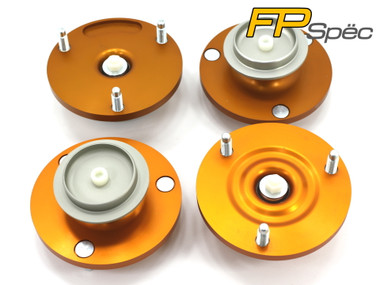
https://www.sakebombgarage.com/fpspe...top-hats-fd3s/
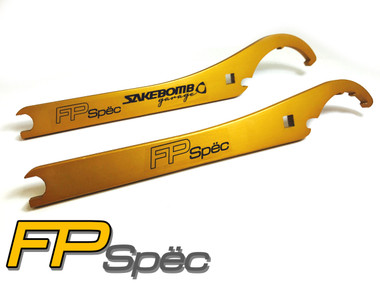
https://www.sakebombgarage.com/fpspe...ment-wrenches/
info@sakebombgarage.com
If you're looking for the Grand Touring setup you'll need the FPSpec Long Stroke.
https://www.sakebombgarage.com/fpspe...top-hats-fd3s/
https://www.sakebombgarage.com/fpspe...ment-wrenches/
info@sakebombgarage.com
Last edited by MaD^94Rx7; Dec 28, 2019 at 10:47 AM.


For anyone who is reading this for the first time, as someone who followed the majority of the advice, the only popular cars I cant keep up with are Corvettes and faster Porsche. They just have too much power down the straights compared to my 300whp.



Bringing an old thread back to get some much needed updated info. I have gone through this thread trying to find out which aftermarket rear toe link was best. I did read a few post stating they were using the rotary extreme one but those are no longer available. I have seen some on Pettit Racing website but I dont know anyone using them. Please chime in if you are familiar with a good set of toe links. My car is a weekend warrior, mostly street use with occasional roadcourse trackdays.
Junior Member
Joined: Feb 2020
Posts: 45
Likes: 26
From: San Diego, CA
Bringing an old thread back to get some much needed updated info. I have gone through this thread trying to find out which aftermarket rear toe link was best. I did read a few post stating they were using the rotary extreme one but those are no longer available. I have seen some on Pettit Racing website but I dont know anyone using them. Please chime in if you are familiar with a good set of toe links. My car is a weekend warrior, mostly street use with occasional roadcourse trackdays.


Just passing through to thank the OP for the education. My car has Apexi N1 EXV coilovers installed by my builder and they were dead center (16 clicks every corner). The car always felt manic and ready to kill me. I decided to simply adjust them 8 clicks from softest on the front and 6 clicks from softest on the rear. I just got back from a 125 mile drive and it felt like a whole different car. Never thought adjusting the damping could change it that much. I know they're not an ideal coilover choice, but at least I was able to make it more liveable and enjoyable to drive.


Full Member

Joined: May 2021
Posts: 51
Likes: 1
From: QLD
I've been through this thread a few times. I don't recall seeing chassis stiffness addressed. Does anyone have any advice on how important or is to address. Don't want a full cage as compliance is not possible (currently road registered , doing time attack , tarmac rally) are a half cage, fender bars, sub frame braces etc helpful for the suspension setup / chassis performance? Or less important? (Obviously a half cage might be a good idea re safety anyway) but I just wondered how much it's effecting potential. Those GR86 for example, very rigid chassis, corner very fast.

Junior Member

Joined: Sep 2013
Posts: 27
Likes: 2
From: New Zealand
We are building a full FD race car at the moment and one of the weak points is the PPF which I assume you are retaining? We ended up on our first car to have a chrome moly PPF frame made with spherical rod ends to attach to the transmission (Sequential Gearbox)
The floorpan is weak in tront of the rear crossmember and there are pickup points in the later chassis as I recall.
THis build is fully seam welded (bare shell rebuild) with full cage picking up front towers as well as rear crossmember (No PPF) as we are now running an 8.8" rear differential.
The floorpan is weak in tront of the rear crossmember and there are pickup points in the later chassis as I recall.
THis build is fully seam welded (bare shell rebuild) with full cage picking up front towers as well as rear crossmember (No PPF) as we are now running an 8.8" rear differential.
Full Member
Joined: May 2021
Posts: 51
Likes: 1
From: QLD
We are building a full FD race car at the moment and one of the weak points is the PPF which I assume you are retaining? We ended up on our first car to have a chrome moly PPF frame made with spherical rod ends to attach to the transmission (Sequential Gearbox)
The floorpan is weak in tront of the rear crossmember and there are pickup points in the later chassis as I recall.
THis build is fully seam welded (bare shell rebuild) with full cage picking up front towers as well as rear crossmember (No PPF) as we are now running an 8.8" rear differential.
The floorpan is weak in tront of the rear crossmember and there are pickup points in the later chassis as I recall.
THis build is fully seam welded (bare shell rebuild) with full cage picking up front towers as well as rear crossmember (No PPF) as we are now running an 8.8" rear differential.
@TIMOMO
Roll bar aka half cage, fender braces and under-car bracing like those from autoexe all help add some rigidity. Same for the factory upper shock braces front and rear.
The diff and trans braces generally are beneficial to reduce powertrain movement under load not necessarily to stiffen the body structure as I understand it.
Roll bar aka half cage, fender braces and under-car bracing like those from autoexe all help add some rigidity. Same for the factory upper shock braces front and rear.
The diff and trans braces generally are beneficial to reduce powertrain movement under load not necessarily to stiffen the body structure as I understand it.
Full Member
Joined: May 2021
Posts: 51
Likes: 1
From: QLD
@TIMOMO
Roll bar aka half cage, fender braces and under-car bracing like those from autoexe all help add some rigidity. Same for the factory upper shock braces front and rear.
The diff and trans braces generally are beneficial to reduce powertrain movement under load not necessarily to stiffen the body structure as I understand it.
Roll bar aka half cage, fender braces and under-car bracing like those from autoexe all help add some rigidity. Same for the factory upper shock braces front and rear.
The diff and trans braces generally are beneficial to reduce powertrain movement under load not necessarily to stiffen the body structure as I understand it.

Thread Starter
Joined: Oct 2001
Posts: 6,279
Likes: 728
From: Florence, Alabama
the single most important add to the chassis as far as stiffness is the front lateral engine bay brace across the shock towers. Mazda recognized this w the R1. of course the rear lateral bar needs to be in place as well.
the large amount of negative camber gain on bump makes the FD a killer on a road course. a true racecar suspension. set it up right and be a hero without breaking a sweat. BTW, i am expecting a brand new set of coil overs next week that might be as good as the chassis. stay tuned.
the large amount of negative camber gain on bump makes the FD a killer on a road course. a true racecar suspension. set it up right and be a hero without breaking a sweat. BTW, i am expecting a brand new set of coil overs next week that might be as good as the chassis. stay tuned.

Full Member
Joined: May 2021
Posts: 51
Likes: 1
From: QLD
the single most important add to the chassis as far as stiffness is the front lateral engine bay brace across the shock towers. Mazda recognized this w the R1. of course the rear lateral bar needs to be in place as well.
the large amount of negative camber gain on bump makes the FD a killer on a road course. a true racecar suspension. set it up right and be a hero without breaking a sweat. BTW, i am expecting a brand new set of coil overs next week that might be as good as the chassis. stay tuned.
the large amount of negative camber gain on bump makes the FD a killer on a road course. a true racecar suspension. set it up right and be a hero without breaking a sweat. BTW, i am expecting a brand new set of coil overs next week that might be as good as the chassis. stay tuned.

Sponsor


Joined: Jan 2025
Posts: 190
Likes: 117
From: Alabama
wow, lots of weirdness going on at your alignment shop.
perhaps the guy was confusing your FD w a strut car. struts have no camber gain so when the body leans 3 degrees the TIRE leans 3 degrees... so you have to set a lot of static camber as an offset. the FD is a double A arm suspension and is engineered to gain negative camber as the body rolls. (racers refer to this as "negative camber gain on bump").
since the FD has an aggressive camber (gain) curve it does not need much in the way of static neg camber... start around 1.5.
of course if you are actually serious about going fast, time attack or racing, the pyrometer and tire pressure gauge will tell you everything you need to know. you will need to do a few laps to get your tires up to temp and then start tuning.i believe the process is on my website and somewhere in the thread.. caster isn't a significant factor. less is better as caster jacks ride height.
perhaps the guy was confusing your FD w a strut car. struts have no camber gain so when the body leans 3 degrees the TIRE leans 3 degrees... so you have to set a lot of static camber as an offset. the FD is a double A arm suspension and is engineered to gain negative camber as the body rolls. (racers refer to this as "negative camber gain on bump").
since the FD has an aggressive camber (gain) curve it does not need much in the way of static neg camber... start around 1.5.
of course if you are actually serious about going fast, time attack or racing, the pyrometer and tire pressure gauge will tell you everything you need to know. you will need to do a few laps to get your tires up to temp and then start tuning.i believe the process is on my website and somewhere in the thread.. caster isn't a significant factor. less is better as caster jacks ride height.
