


long vs short runner manifolds


Ahhh good ole rice if it aint HKS or from Japan it sucks  Just bustin *****. Enzo hit it on the head.
Mono4lamar touched on something important as well.
Monkman33 this is the manifold you would be getting below.
Just bustin *****. Enzo hit it on the head.Mono4lamar touched on something important as well.
Monkman33 this is the manifold you would be getting below.

Full Member
Joined: Apr 2008
Posts: 162
Likes: 0
From: san fransisco
Long runners will help spool.
It's not as simple as saying short runners for high rpm and long runners for low rpm.
An proper header need a specific length according to the application..
There's many variables involved.
Let's take a Small block chevy as an example.
One engine has a rpm range of lets say 5500~9000
This engine will probably need a header with 26~28" headers.
The same engine with a rpm range of 3500~6500
would probably need a header with 32~34" headers..
Now another example would be Formula 1..
There upwards of 19,000 rpms..
Their headers don't look to have short runners do they?
It's not as simple as saying short runners for high rpm and long runners for low rpm.
An proper header need a specific length according to the application..
There's many variables involved.
Let's take a Small block chevy as an example.
One engine has a rpm range of lets say 5500~9000
This engine will probably need a header with 26~28" headers.
The same engine with a rpm range of 3500~6500
would probably need a header with 32~34" headers..
Now another example would be Formula 1..
There upwards of 19,000 rpms..
Their headers don't look to have short runners do they?

Calculating exhaust runner length from formulas is VERY difficult, if not impossible. It is much different than calculating intake length. You have to take the temperature of the gases inside the tubing into account. This is the same reason that equal length runners are not as important as most people think unless you could build the runners symmetrical. In other words if you had a 20" runner manifold with two 90 degree bends on one runner and only one 45 degree bend in the other the pulse in the runner with the 45 degree bend would reach the end of the tube faster than the one with the 90 degree bend. Every time the gases hit a bend they slow slightly and the slower gases also loose a bit of temperature causing them to slow even more. Get it 

Banned. I got OWNED!!!
Joined: Apr 2008
Posts: 114
Likes: 0
From: Australia
Having the manifold, equal and timing the pulse energy is important as is also not diminishing this energy by sending down a stupid length of pipe or putting it through multiple bends, also heat loss is reduced.
#1 rule is keep it as short as possible
#2 rule use a divided housing
#3 rule make it as low restriction as possible
Sometimes you need to drop some of these rules to FIT your chosen turbo, dont confuse this with some kind of superior manifold design
 it is simply that the ideal turbo manifold could not be used for packaging reasons only in most cases

Banned. I got OWNED!!!
Joined: Apr 2008
Posts: 114
Likes: 0
From: Australia
Heat loss and energy loss are to be avoided at all costs, it does not get any simpler, look at the HKS manifold and learn




Joined: May 2005
Posts: 3,243
Likes: 42
From: Kennewick, Washington
Well, you know my goals of maximum spool. I will trust you on your experience and judgment.

Ok I have done a tone of searching, and found several threads on this subject. It would appear that their was a shift some time ago from larger runners to shorter ones. Reading these threads it seems as debatable as running synthetic or regular oil.
Obviously things change, and so do peoples opinions but I was wondering if the community still recommends short manifolds over long?
Obviously things change, and so do peoples opinions but I was wondering if the community still recommends short manifolds over long?

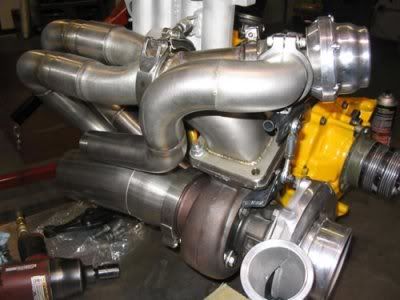
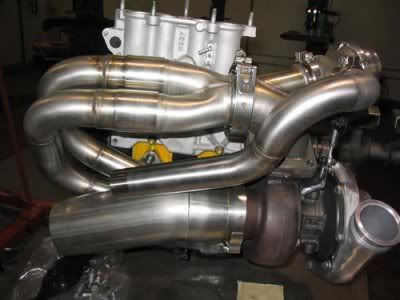
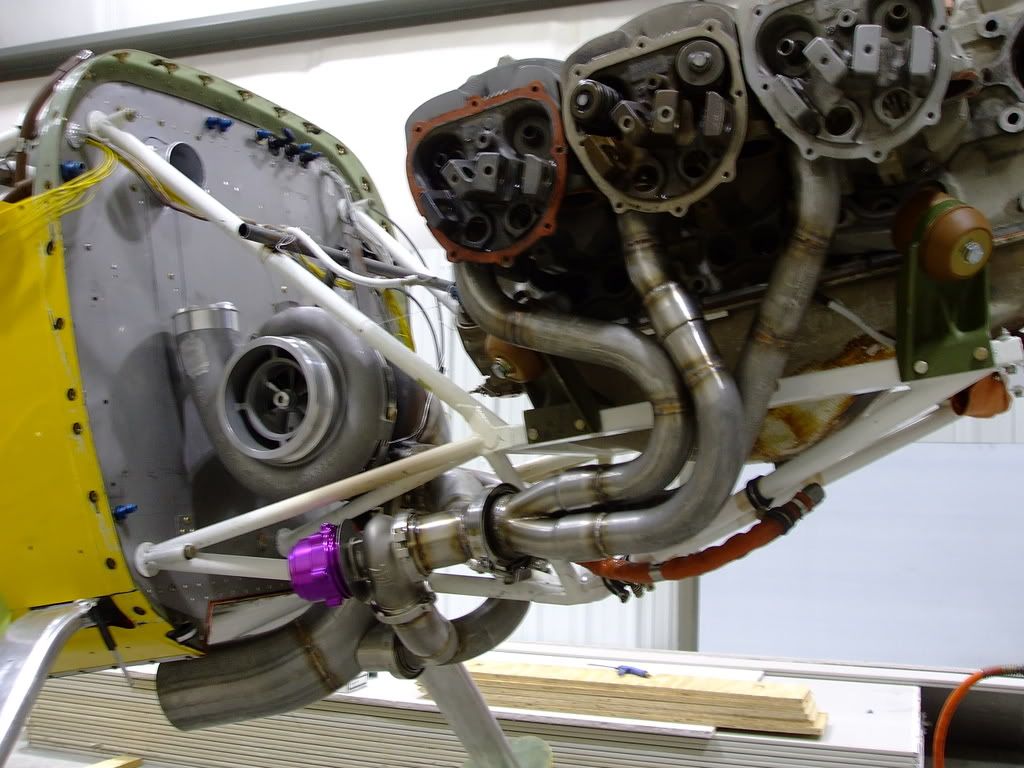


Thank you for taking the time out of your busy schedule to post useless and nonfactual information about turbo charger exhaust design in the community. I see that you have only half the amount of post as I do, so I understand your a novice . I would like to inform you that it is not fair to the community to post garbage, and secondly to use profanity when referring to engines is unbecoming. I can clearly see your lack of knowledge on the subject, please not the Red Bull Racing Plane. Note! Length is no substitute when it come to the bedroom or to turbo manifold design.
JEROME!
Any Mechanical Engineer, who knows something *UNLIKE YOURSELF!!!!*
Will tell you exhaust tuning theory does not apply to turbocharged machinery!!! I strongly suggest you get some basic education on this topic before blessing me with your dribble again
Post total does not equal knowledge, however research, education, and results does when you equal what I know feel free to open up your hole and pass wind again
Anyone in doubt, please go refer to any credible source and you will find that what I say as always is correct, factual, and backed up by the highest minds at the cutting edge of technology.
Do not confuse yourself with packaging constraints (as I outlined) and think you are correct in your view when you dont even understand what your talking about
You only need to look at F1 cars to see that heat and turbine efficiency take #1 precedents over a FALSE misunderstanding of "pulse tuning" for turbo machinery....... the concept DOES NOT EXIST in reality, but it does in some peoples minds so do UFO's and the Devil LOL !!!
Any Mechanical Engineer, who knows something *UNLIKE YOURSELF!!!!*
Will tell you exhaust tuning theory does not apply to turbocharged machinery!!! I strongly suggest you get some basic education on this topic before blessing me with your dribble again
Post total does not equal knowledge, however research, education, and results does
when you equal what I know feel free to open up your hole and pass wind again Anyone in doubt, please go refer to any credible source and you will find that what I say as always is correct, factual, and backed up by the highest minds at the cutting edge of technology.
Do not confuse yourself with packaging constraints (as I outlined) and think you are correct in your view when you dont even understand what your talking about
You only need to look at F1 cars to see that heat and turbine efficiency take #1 precedents over a FALSE misunderstanding of "pulse tuning" for turbo machinery....... the concept DOES NOT EXIST in reality, but it does in some peoples minds
so do UFO's and the Devil LOL !!!good Stuff

^ Curious as well. I have a non divided short runner turbo manifold in my shop right now that has 2 1/4" inner diameter runners that came off the 600+ rwhp 13b set-up. I don't understand why it's enginnered this way because the runners are larger in diameter than the exhaust port exit. Seems to me this would only slow down the flow because of the turbulance and filling the larger volume space?
Pipe id was discussed in the link posted earlier...
https://www.rx7club.com/showthread.p...=header+length
Post number 44
~S~
https://www.rx7club.com/showthread.p...=header+length
Post number 44
~S~

Ok I have done a tone of searching, and found several threads on this subject. It would appear that their was a shift some time ago from larger runners to shorter ones. Reading these threads it seems as debatable as running synthetic or regular oil.
Obviously things change, and so do peoples opinions but I was wondering if the community still recommends short manifolds over long?
Obviously things change, and so do peoples opinions but I was wondering if the community still recommends short manifolds over long?
Personally, (from the information I've taken in), I believe short is the way to go due to the longer runner length way of thought coming from the scavenging effect that many N/A tuners design exhaust systems by. But I don't believe it applies to turbos in the same way or if it does, it isn't as significant as the principle of energy transfer/loss in the short runner way of thought.
Everything we read on this board is a load of crap, you can't really trust anything you read unless you've seen it first hand, people may say "x is better because when I compared it to my previous setup/version of X my results were better" but are you getting all the information?
Take everything (including this) with a grain of salt. Don't believe everything you read on the internet.
Seems that experience and research are what one would want to go with.. Thats why i believe that Short runners are the best in most situations for a turbo application..
Plus if you think about it logically the longer the runner the longer it takes the exhaust to get to the turbo to spool it also you are losing heat which is about 85 percent of what drives the turbo.
Its almost thinking that increasing your intercooler piping length will make your turbo spool faster.
Plus if you think about it logically the longer the runner the longer it takes the exhaust to get to the turbo to spool it also you are losing heat which is about 85 percent of what drives the turbo.
Its almost thinking that increasing your intercooler piping length will make your turbo spool faster.

Thread
Thread Starter
Forum
Replies
Last Post
Jeff20B
1st Generation Specific (1979-1985)
4
Jun 26, 2016 10:21 AM
Turblown
Vendor Classifieds
0
Aug 18, 2015 10:01 PM
4sfeedit
3rd Generation Specific (1993-2002)
10
Aug 16, 2015 01:42 PM
