Catch can, inform me.


Catch can, inform me.
How do you properly install a non vented catch can, to a 93 fd, with a single turbo.
I've searched and came up with PCV elimination threads, and most threads talk about vented catch cans.

Now is this correct then?
Blue like to top nipple on oil neck.
Red line to nipple on the UIM (where the pcv used to be)
Thanks for help.
I've searched and came up with PCV elimination threads, and most threads talk about vented catch cans.
Now is this correct then?
Blue like to top nipple on oil neck.
Red line to nipple on the UIM (where the pcv used to be)
Thanks for help.




Yeah that's my car, and thanks i do know about the clamp missing, also missing the TB, and spark plug wires belts, and the catch can itself 
BTW: smitter thanks for the idler pulley i. dimension.
BTW: smitter thanks for the idler pulley i. dimension.


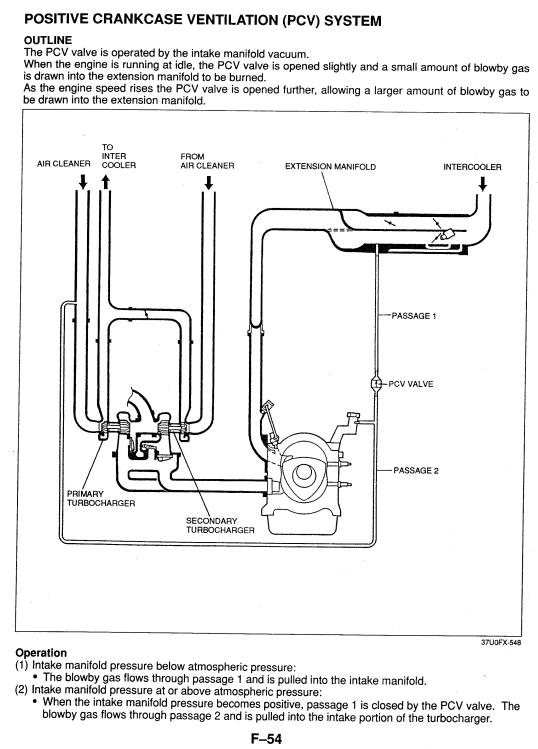
if you do it the was described in the OP you will pressurize the crankcase with boost. That routing will only work if the PCV valve is left in line.
If i were to run a non vented catch can i would run oil filter neck -> catch can -> pre turbo inlet. When doing it this way you need to fill the can with something to act as a demister.
If i were to run a non vented catch can i would run oil filter neck -> catch can -> pre turbo inlet. When doing it this way you need to fill the can with something to act as a demister.


Trending Topics

I don't see why you're not going to have a vent in the top. Releasing the pressure and not blowing out your oil pan gasket was the main reason to having a catch can.
Oh and you're missing the lower line from the radiator that runs to the filler neck
Oh and you're missing the lower line from the radiator that runs to the filler neck
just running a line from the filler neck to a catch can or just straight atmosphere is better than anything the whole idea is to make sure the crank case can release the pressure so it does no build up a pcv valve does not have to be in the picture. have ran any boosted motors with a hose to the ground with no problems ever
Can some one make up a simplified pic.
Thanks.
ok so i have a catch can it has two fittings one inlet and one outlet. well all you need is one line preferably the highest point on the filler neck taping the cap is the best and then take that line and put it to a vented catch can so it catches the oil and moisture
It'll survive. Every turbo car I know of recirculates the PCV from the factory, and some people don't want to have to deal with a catch can filling up in a road racing situation. I run a vented catch can, but I have an FC which has less of a problem of puking oil out than the FD. Presumably that's because it has a crankcase vent on the middle iron as well, and I'm sure my oil pan baffle doesn't hurt.

if you have ideas post them. i have seen many ways i have seen one line hooked to the filler neck to the catch can and the other line pre turbo to catch can so it vacumes the pressure out but that causes a problem in a hard right turn as the passage can get blocked off and wont vent so another way is to run a line from filler neck to catch can well that solves the venting for hard left turns but to fix the hard right turns you need a line coming off the other side of the block like the rear turbo drain to the catch can again thats what i have seen and worked and any other suggestions help. DReg100 you have any ideas?

I've found running as large of a line directly off the top of the filler cap helps a lot with oil being pushed out of the oil filler neck. The problem is the oil gets pushed up into the hose (even worse on long corners) and the only way for the crankcase pressure to escape is to push the oil out too. With a larger hose it takes more oil to create a blockage and the crankcase fumes will follow the path of least resistance and go around the oil. This is the same idea with running a second vent from the rear turbo drain if available, and other places people have tapped lines into.
The problem is most catch cans have a particular size nipple coming out of them and your limited to that size unless you make your own or modify one.
I run my catch can vented. Hose comes from top of oil cap into catch can and vents to atmosphere.
Options for non vented would be: just like stock with the pcv valve and catch can in between. The advantage is your still getting rid of any fumes, but your not burning the oil and other crap that the catch can grabs. Disadvantage is: if the pcv fails you have pressure buildup in your crankcase, and you have an extra hose to run/deal with during UIM removal.
You shouldn't run this type of system without the PCV because you would then have direct boost pressure going from the UIM to the catch can and back into the oil pan.
You could also run the catch can like stock with the PCV AND a filter on the catch can. You wont get a vacuum in the crankcase, but it should suck most of the fumes out of the catch can. If the PCV fails you still have a vent.
Another option is to run the catch can with a line going to the front of the turbo, this will create a vacuum without requiring a PCV.
There are many other variants and additional options with additional vent lines. but this covers the main ideas.
The problem is most catch cans have a particular size nipple coming out of them and your limited to that size unless you make your own or modify one.
I run my catch can vented. Hose comes from top of oil cap into catch can and vents to atmosphere.
Options for non vented would be: just like stock with the pcv valve and catch can in between. The advantage is your still getting rid of any fumes, but your not burning the oil and other crap that the catch can grabs. Disadvantage is: if the pcv fails you have pressure buildup in your crankcase, and you have an extra hose to run/deal with during UIM removal.
You shouldn't run this type of system without the PCV because you would then have direct boost pressure going from the UIM to the catch can and back into the oil pan.
You could also run the catch can like stock with the PCV AND a filter on the catch can. You wont get a vacuum in the crankcase, but it should suck most of the fumes out of the catch can. If the PCV fails you still have a vent.
Another option is to run the catch can with a line going to the front of the turbo, this will create a vacuum without requiring a PCV.
There are many other variants and additional options with additional vent lines. but this covers the main ideas.

ON my FC I just have a vented can hooked up as follows:
Oil filler capped tapped with a 90* brass fitting. Line from there to one fitting on the can.
Vent on the middle iron runs to the other fitting on the can.
Don't get any ACTUAL oil in the can unless you're beating the **** out of the car on hard right hand corners. If you just drive around, or beat it up in a straight line, it gathers a little bit of milky/oily moisture.
Works great IMO.
You can see most of the important stuff here.
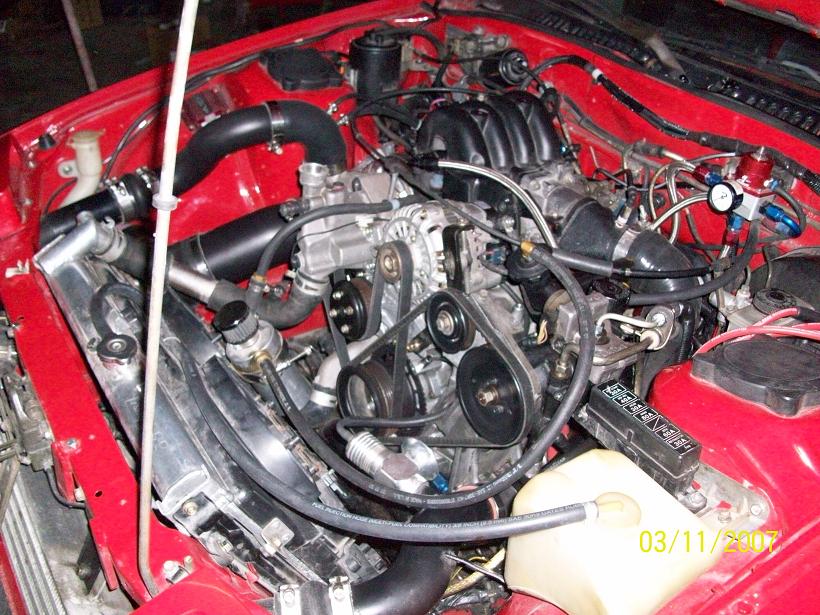
I believe one key to making it work well is to have no major up hill sections in the lines. My line that runs to the middle iron currently goes over my water pump (new setup....) but that may change if the catch can's functionality is less now then before.
Oil filler capped tapped with a 90* brass fitting. Line from there to one fitting on the can.
Vent on the middle iron runs to the other fitting on the can.
Don't get any ACTUAL oil in the can unless you're beating the **** out of the car on hard right hand corners. If you just drive around, or beat it up in a straight line, it gathers a little bit of milky/oily moisture.
Works great IMO.
You can see most of the important stuff here.
I believe one key to making it work well is to have no major up hill sections in the lines. My line that runs to the middle iron currently goes over my water pump (new setup....) but that may change if the catch can's functionality is less now then before.
I've found running as large of a line directly off the top of the filler cap helps a lot with oil being pushed out of the oil filler neck. The problem is the oil gets pushed up into the hose (even worse on long corners) and the only way for the crankcase pressure to escape is to push the oil out too. With a larger hose it takes more oil to create a blockage and the crankcase fumes will follow the path of least resistance and go around the oil. This is the same idea with running a second vent from the rear turbo drain if available, and other places people have tapped lines into.
The problem is most catch cans have a particular size nipple coming out of them and your limited to that size unless you make your own or modify one.
I run my catch can vented. Hose comes from top of oil cap into catch can and vents to atmosphere.
Options for non vented would be: just like stock with the pcv valve and catch can in between. The advantage is your still getting rid of any fumes, but your not burning the oil and other crap that the catch can grabs. Disadvantage is: if the pcv fails you have pressure buildup in your crankcase, and you have an extra hose to run/deal with during UIM removal.
You shouldn't run this type of system without the PCV because you would then have direct boost pressure going from the UIM to the catch can and back into the oil pan.
You could also run the catch can like stock with the PCV AND a filter on the catch can. You wont get a vacuum in the crankcase, but it should suck most of the fumes out of the catch can. If the PCV fails you still have a vent.
Another option is to run the catch can with a line going to the front of the turbo, this will create a vacuum without requiring a PCV.
There are many other variants and additional options with additional vent lines. but this covers the main ideas.
The problem is most catch cans have a particular size nipple coming out of them and your limited to that size unless you make your own or modify one.
I run my catch can vented. Hose comes from top of oil cap into catch can and vents to atmosphere.
Options for non vented would be: just like stock with the pcv valve and catch can in between. The advantage is your still getting rid of any fumes, but your not burning the oil and other crap that the catch can grabs. Disadvantage is: if the pcv fails you have pressure buildup in your crankcase, and you have an extra hose to run/deal with during UIM removal.
You shouldn't run this type of system without the PCV because you would then have direct boost pressure going from the UIM to the catch can and back into the oil pan.
You could also run the catch can like stock with the PCV AND a filter on the catch can. You wont get a vacuum in the crankcase, but it should suck most of the fumes out of the catch can. If the PCV fails you still have a vent.
Another option is to run the catch can with a line going to the front of the turbo, this will create a vacuum without requiring a PCV.
There are many other variants and additional options with additional vent lines. but this covers the main ideas.
I have both my nipples capped on my filler neck.
If you put a filter on there oil will probably start seeping from it. You could cap the bottom nipple and use the top nipple and see how it works for you (without tapping the filler cap). If you get excess oil coming out of it, you can either use a second vent at the rear turbo drain, or tap into some of the other spots people use, or drill the filler cap out and use a 90* brass fitting. The larger the better IMO
If you want to add a filter it would be best to add it on the catch can. At which point you can decide whether you want to run it back to the PCV system/front of turbo, or just leave it vented at the can..
If you put a filter on there oil will probably start seeping from it. You could cap the bottom nipple and use the top nipple and see how it works for you (without tapping the filler cap). If you get excess oil coming out of it, you can either use a second vent at the rear turbo drain, or tap into some of the other spots people use, or drill the filler cap out and use a 90* brass fitting. The larger the better IMO
If you want to add a filter it would be best to add it on the catch can. At which point you can decide whether you want to run it back to the PCV system/front of turbo, or just leave it vented at the can..

ON my FC I just have a vented can hooked up as follows:
Oil filler capped tapped with a 90* brass fitting. Line from there to one fitting on the can.
Vent on the middle iron runs to the other fitting on the can.
Don't get any ACTUAL oil in the can unless you're beating the **** out of the car on hard right hand corners. If you just drive around, or beat it up in a straight line, it gathers a little bit of milky/oily moisture.
Works great IMO.
You can see most of the important stuff here.
I believe one key to making it work well is to have no major up hill sections in the lines. My line that runs to the middle iron currently goes over my water pump (new setup....) but that may change if the catch can's functionality is less now then before.
Oil filler capped tapped with a 90* brass fitting. Line from there to one fitting on the can.
Vent on the middle iron runs to the other fitting on the can.
Don't get any ACTUAL oil in the can unless you're beating the **** out of the car on hard right hand corners. If you just drive around, or beat it up in a straight line, it gathers a little bit of milky/oily moisture.
Works great IMO.
You can see most of the important stuff here.
I believe one key to making it work well is to have no major up hill sections in the lines. My line that runs to the middle iron currently goes over my water pump (new setup....) but that may change if the catch can's functionality is less now then before.
i had mines the same way (except i used the hole on the filler neck). but i changed it to leaving the middle iron with a hose running underneath car now. idk y ha
btw where/how is ur intake ran?

Will work for horsepower

Joined: Mar 2006
Posts: 1,865
Likes: 1
From: Springfield, MO
I pipe one line into a check valve downstream from the turbo and get a venture effect when the exhaust is flowing, and i added a vented catch can on the top of the oil cap and it vacumns but does not put oil in the overflow! 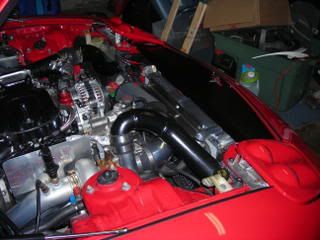
Air / Oil Separator Design
I have a catch can on my 13B-RE that collects blow-by from the oil fill tube via a 3/8" line. After running the car hard, the can sometimes fills with oil and eventually overflows. I haven't put the car on a road course with the turbo engine yet, but that is a goal once the bugs are all worked out.
I did some research on air / oil separators, and the general aviation community offers some that are installed on the firewall. The idea is to separate the oil from the other vapors and allow it to return to the sump via a check valve. The check valve is there to avoid high pressure crankcase gasses from pushing oil back up the drain tube.
I vent the output to a K&N style breather that will hang below the car to minimize underhood oil and associated fire risk.
I welcome any comments.
I did some research on air / oil separators, and the general aviation community offers some that are installed on the firewall. The idea is to separate the oil from the other vapors and allow it to return to the sump via a check valve. The check valve is there to avoid high pressure crankcase gasses from pushing oil back up the drain tube.
I vent the output to a K&N style breather that will hang below the car to minimize underhood oil and associated fire risk.
I welcome any comments.
if vented correctly the only thing in the can will be blow by. If you haven't been racing the car on a track you shouldn't be seeing oil in your can like that.
How does the separator remove the oil from the gasses anyways?
How does the separator remove the oil from the gasses anyways?