When you click on links to various merchants on this site and make a purchase, this can result in this site earning a commission. Affiliate programs and affiliations include, but are not limited to, the eBay Partner Network.
Hello,
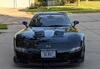
After years of having the 1JZ in my car and getting the most out of it, I decided to restore my RX7 FD ground up. It has taken me 4-5 years to get to the point in finally starting the engine build. Over the years I have been collecting parts and slowly restoring my RX7 along the way.
What started out as simple repaint and restoration turned into a full Fujita Engineering build. Each and every single part, nut, bolt, clips etc have been replaced, restored or bought new.
I have been able to do everything on my own but since it's the first engine I'll be building I do need some guidance.
I plan on doing a Half Bridge 13B with a Series 4/Turbo II rotating assembly. (Lightened, cleareanced and balanced by Chip's) 10mm studs, solid dowels and rx parts apex seals.
Haltech Elite 2500, Gleaseman T4 Manifold, Tial 38mm WG x2, PSR 7170G / G40-1150 1.06A/R T51R Mod & ID 1000 & ID 2000 w/ Full Function Rails/
There are no rotary shops or mech's in Pakistan so have to do everything myself. Also the reason we have the most JZ Swapped RX7's here!!
First few questions!
Has anyone used the Haltech Wire-in Premium Harness to wire their car with all oe things working? I also have a Ry-Wire Ign Sub Harness that I plan to use with it.
I'm doing the porting myself. Using the Pineapple Racing Bridgeport template with their Stage 4 Exhaust Port template. I can cut the street port and polish it very easily on practice irons but the bridge is very hard to do. The carbide tool I'm using either doesn't cut or breaks. Where and which tool should I get for cutting the bridge.
How do you prep used irons and housings for rebuild. I can't get them lapped here but I was reading the forums and some say sand with 320 wet with a straight block and finish with 400-600grit.
I'll post pictures of the irons and housings later also the practice irons to show my port work.
a bridgeport fits 5% of most apps as it is a big give up early. if you are interested in power above 9000 go for it. if you want to win races think power under the curve. i just finished a new section that relates...
as to lapping the irons. if they need to be lapped, and most don't, use another set. i have built over 160 13 BREWs to a 600 spec and never have lapped an iron. respect the complex factory heat treating. re the rotor housings : lots of people offer honing, very few do it correctly. PM me for further details.
Welcome mate....no idea you could drive an RX7 FD in Pakistan. I only say this cus the roads in India along with the traffic are soo ****! Even 200hp cars cant be driven properly.
The last super car meet when i was in Delhi was great but you could never hit redline haha!!
If u need any help tuning the car....happy to help should u need it.
two 38 mm wastegates will not provide enough flow to manage a 500 rw rotary hp turbo let alone a 700+ turbo. you will get big boost creep.
as to the Gleason manifold... he is very good w metal but made a number of manifolds that used tubing/pipe that was too small. check the inside diameter of the runners. they need to be 50 mm or 2 inches. if they are smaller you will be limited to significantly less than 500 rwhp and will have high exhaust manifold back pressure.
if you want to say there’s a certain whp point where the larger 2” piping is better then that’s fine, but you went off the rails a bit on the gleaseman manifold imo
first, he did also sell a larger piping Big R manifold
.
as compared to the 1.5” version you’re referring to
.
but even on the 1.5” version I saw plenty of good results exceeding 500 whp, in particular remember mannykiller making 400 whp and 400 ft-lbs at 4000 rpm with an EFR 9174 and the 1.5” gleason manifold at 20 psi boost. I do agree that 600 whp plus is 2” piping range for sure and I get that you’re big on using 2” only, but it wasn’t necessary to malign the other because there are plenty of good results that counter such a claim.
You’re not a spool up kind of guy so to speak which is fine for 1 mile WOT speed runs, but your bias in that regard shows through at times. So sorry to bring it up, but only for the purpose of offering a counter point for some balance.
.
"made a number of manifolds that used tubing/pipe that was too small"
"he did also sell a larger piping Big R manifold"
exactly where did i say that he did not make larger manifolds?
the larger manifolds, BTW, were after a lengthy conversation between us.
then you go on to set out my mind set re mid range etc. really?
since the vast majority of Gleason's manifolds have small runners, and since the OP is going to run a G40-1150 i merely advised him to check as the small runner would be a disaster w that turbo.
of course there are other dealbreakers on the manifolds such as the location of the wastegate runners.
The carbide tool I'm using either doesn't cut or breaks. Where and which tool should I get for cutting the bridge.
You don't say what diameter stem or type of burr you're using in the die grinder....ones used for porting rotor housings won't go too well on the plates.....if that's what you're attempting. Generally found this mob to sell excellent stuff, if you're currently using crap quality carbide https://www.ruffstuff.com/, of course they don't make it easy purchasing from O/S!
Aside from manifold dick measuring here, possibly sounds like parts have already been procured with all the pics? If not, I do know of a brand new full race 2" system available locally, if you want a big schedule 40 pipe manifold, weighs a metric shittonne though. I think fabricated manifolds on rotaries, especially with bolt flanges are endless trouble and all need a 10' pole.
We use metric sizes here so I do get a bit confused when the sizes are in inches. 3mm burr to cut the bridge, that's the only tool I am facing a problem with. I can't find the good quality burrs here and the ones I am getting here are the $17 20pcs set which is also available on Amazon. To port I have a few tools DeWalt Die Grinder, Pencil/Mini Air Grinder and a Dremel.
I'll have a look at the site you linked.
I had a few options for the manifold, Turboblown and a new Full Race Turbo Kit but since I was kind of on a budget too, I found a good deal on a gleaseman manifold, tial mv-r 38mm wg x2 and the dump tubes.
I even have a HKS T51R SPL BB that I wanted to use on the car but decided to go for something newer. The PSR 7170G I got for a killer deal too off facebook marketplace.
I looked at the Artech Manifold's and they seem to be reps of the HKS Cast Manifolds?
Originally Posted by billyboy
You don't say what diameter stem or type of burr you're using in the die grinder....ones used for porting rotor housings won't go too well on the plates.....if that's what you're attempting. Generally found this mob to sell excellent stuff, if you're currently using crap quality carbide https://www.ruffstuff.com/, of course they don't make it easy purchasing from O/S!
Aside from manifold dick measuring here, possibly sounds like parts have already been procured with all the pics? If not, I do know of a brand new full race 2" system available locally, if you want a big schedule 40 pipe manifold, weighs a metric shittonne though. I think fabricated manifolds on rotaries, especially with bolt flanges are endless trouble and all need a 10' pole.
We use metric sizes here so I do get a bit confused when the sizes are in inches.
Also a trap, some die grinders don't take kindly to imperial shanks in metric collets or vice-versa!
Originally Posted by fzkhan7
3mm burr to cut the bridge, that's the only tool I am facing a problem with. I can't find the good quality burrs here and the ones I am getting here are the $17 20pcs set which is also available on Amazon. To port I have a few tools DeWalt Die Grinder, Pencil/Mini Air Grinder and a Dremel. I'll have a look at the site you linked.
Yeah, I wouldn't expect much at that price point.The DeWalt would be a bit of a dexterity challenge - assuming it's the same as the types available here - flex shaft if you want to run electric, is a much more ergonomic and controllable option if you repeat this process at any time in the future. Dremel or similar, would be very hard yakka with 3mm tools, patience of Job required .....generally most people who do this use 6mm or 1/4" shank burrs in something with a bit of grunt.
Originally Posted by fzkhan7
I looked at the Artech Manifold's and they seem to be reps of the HKS Cast Manifolds?
Look similar. Wastegate passageway appears significantly bigger and possibly better priority. Have my doubts a single 50mm WG would do the trick, maybe the 60mm on the T4 will stop the creep....and do love a shorty manifold if turbos will clear everything.
It’s going from two 2” pipes down to a single one, except it also has the added cast divider making it less than 2” flow area
which you’ll find claims on here that a T3 is too small, but a 2” Sch 10 pipe opening; which is what the v-band inlet is (2.157”/55mm ID) will be equal or less flow area than a T3 with that cast divider in there.
I agreed with that too at one point, and am sure there are situations where a larger opening is an advantage such as bending flow into it within limited space, but after looking at it more realized that even within a divided T4 scroll housing the cavities reduce quite a bit smaller internally before reaching the point the flow can begin escaping to the turbine impeller.
There are variations involved as well, I know the G30/G35 V-band housing inlet is shorter than the divided T4 inlet (70mm vs 88.5mm to C-L, 18.5mm shorter). Sort of concluded it just depends how the flow tapers on the manifold from the two feed pipes into the V-band inlet. Because in that sense it can mimic overall what occurs internally within other housings that may seem to have a larger opening. However, it is going to expand entering the housing and then contract into the housing again, there are likely some energy losses occurring from it.
It is an interesting manifold and it seems they did all the right things within the parameters of a single scroll v-band turbine inlet and single WG.
it’s all been run through the ringer on this forum though; pipe size large or small, length long vs short, WG position near engine or at turbo flange and in the end a lot of it could easily power a single 5000 whp turbo because there are successful variations of most ways it can possibly be done; all that arguing, fussing, and counter theorizing is mostly just a bunch of hot air, including my own.
Simply put, there’s more than one way to skin a cat, but every parakeet in the pet store cage is loudly squawking that their way is the best and only way.
.
First attempt on the secondary port and the bridge. The main port is a lot easier then doing the bridge, I did center punch the holes, but without a drill press the drill machine still tends to skip over so on the next iron I plan on doing it with a drill press once I get the 3mm carbide burrs.
You don't say what diameter stem or type of burr you're using in the die grinder....ones used for porting rotor housings won't go too well on the plates.....if that's what you're attempting. Generally found this mob to sell excellent stuff, if you're currently using crap quality carbide https://www.ruffstuff.com/, of course they don't make it easy purchasing from O/S!
Aside from manifold dick measuring here, possibly sounds like parts have already been procured with all the pics? If not, I do know of a brand new full race 2" system available locally, if you want a big schedule 40 pipe manifold, weighs a metric shittonne though. I think fabricated manifolds on rotaries, especially with bolt flanges are endless trouble and all need a 10' pole.
I was actually speaking with Artec about sponsoring me one of their manifolds, but I ultimately decided to decline. Because it is not divided and not equal length separated runners. I am shooting for 600rwp goal, so my needs are different than someone going for 400rwp range.
I was actually speaking with Artec about sponsoring me one of their manifolds, but I ultimately decided to decline. Because it is not divided and not equal length separated runners. I am shooting for 600rwp goal, so my needs are different than someone going for 400rwp range.
Still haven't heard of anybody locally running one which is surprising, closest I've seen was in Canada, must be at the start of the year. They have an offshore presence in several countries - you'd think that would produce something tangible.....zip.
They're quite popular with the piston crowd here though.
Still haven't heard of anybody locally running one which is surprising, closest I've seen was in Canada, must be at the start of the year. They have an offshore presence in several countries - you'd think that would produce something tangible.....zip.
They're quite popular with the piston crowd here though.
we tested one. it was significantly slower to spool than the Turblown ewg manifold. We did a back to back with a G40-1150 on a Bridgeport. Peak power was similar but torque under 5000rpm was significantly lower. It was noticeable in normal driving, much less transient boost etc.
Rotor Housings refinished by Colum/Garage Reg (from UK) and then ported too!
I didn't do the exhaust ports myself because they are actually harder to do then the intake ports, chrome is hard and the burrs like to skip over and takes ages to port! Tried a few practice housings before giving up and letting professionals do the thing!











 I'd like to see someone be the guinea pig with one of these https://artecperformance.com.au/collections/mazda/13B