


New V-mount setup


Thread Starter

Joined: Oct 2006
Posts: 6,603
Likes: 15
From: Toronto, Canada
New V-mount setup
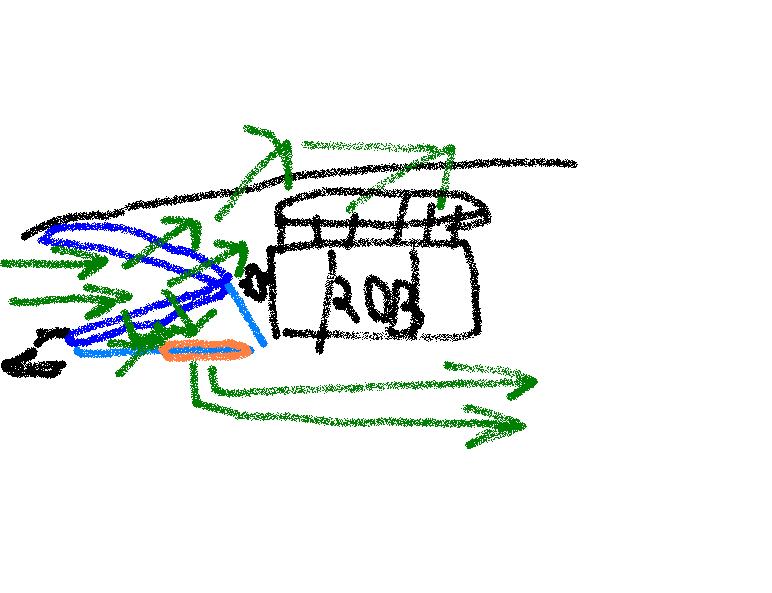
I'm designing the new v-mount for my 20b and due to space I am a little limited. I'm thinking of making an airbox for the fan's and having them sit parallel to the floor but I am not sure how this will work efficiency wise. Has anyone ever tried something like this or have an idea if it will work well? My previous setup had the stock fans on the rad so it still had an angle but with this setup the air now has to make a 90 degree turn underneath the car to get out. Do you think this will work? I put the terrible drawing of the engine to show just how close the pulley bolt is to the intercooler, its like half a finger LOL. The orange circle is the fans.
thewird
thewird


Thread Starter
Joined: Oct 2006
Posts: 6,603
Likes: 15
From: Toronto, Canada
thewird


Some stock cars like the FC RX-7 that use an engine clutch fan have a good sized duct/shroud between the radiator and the fan and it works well.
You will just have to take care that the duct is well sealed.
You will just have to take care that the duct is well sealed.
I am not an engineer, but-
With they dynamics of the moving road under the car and the relatively low pressure area I think it will exhaust very well.
I would focus on ducting the inlet so the high velocity air is directed more perpendicular to each core. As in, getting the airflow to change direction before it hits the core.
Otherwise the V-mounts rely on the turbulence in airflow to change direction and penetrate the cores. The turbulence occurs as the airflow hits the cores, so you are basically building a boundry layer over the front of the cores which inhibits flow through the core.
With they dynamics of the moving road under the car and the relatively low pressure area I think it will exhaust very well.
I would focus on ducting the inlet so the high velocity air is directed more perpendicular to each core. As in, getting the airflow to change direction before it hits the core.
Otherwise the V-mounts rely on the turbulence in airflow to change direction and penetrate the cores. The turbulence occurs as the airflow hits the cores, so you are basically building a boundry layer over the front of the cores which inhibits flow through the core.

Thread
Thread Starter
Forum
Replies
Last Post
eplusz
General Rotary Tech Support
15
Oct 7, 2015 04:04 PM

