When you click on links to various merchants on this site and make a purchase, this can result in this site earning a commission. Affiliate programs and affiliations include, but are not limited to, the eBay Partner Network.
Hi guys, 1st of all I have no clue what I got into or what I'm doing, 2nd I have NO experience what so ever when it comes to restoration, and 3rd I could use all the help I can get.....So here it goes.
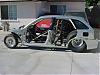
I found this gem abandoned in a barn outside of Raleigh NC. According to records the last time the REPU was registered and on the roads was in 1990. The owner parked it and for the past 15 yrs. she has been sitting inside the barn untouched, we used a winch to get it out of the barn since the weeds were growing all over.
After pulling her out of the weeds and loading her unto the trailer we head home, once I got home I got some soap and water and WALAH!!!!! HUGE DIFFRENCE!!!!!!!! ALL ORIGINAL too
I use a block of aluminum to prevent mig blowout when welding patches. Works great. Gives the molten weld metal support, controls heat and keeps the wire under control.
I use a block of aluminum to prevent mig blowout when welding patches. Works great. Gives the molten weld metal support, controls heat and keeps the wire under control.
Thank you for the advise. What do you mean an aluminum block? Do you have a picture on how to use it?
Last edited by Medevack1; Jul 15, 2015 at 05:17 AM.
You didn't cut enough metal out , you burned through because the metal is thin from rust on the back side,I wish the first time I did rust repair it look that good
You didn't cut enough metal out , you burned through because the metal is thin from rust on the back side,I wish the first time I did rust repair it look that good
Thank you, I will note that. Ill make sure I cut more next time.. thank you again for the advise.
You should cut the piece of steel slightly bigger than the hole and hold it up under. The heat will be more spread out.
Also get some weld through paint which will prevent lots of the balling up on the surface.
Use a lower or lowest heat setting and .30 wire. As for wire speed, that is up to your skill and your machine.
Maybe get a thicker piece of steel as well. Bend the edge 90 degrees so it can fit up in there easier and be stronger. Then once it's in place, maybe weld a new piece of thin stuff above it to bring the height up to the original fender. Then you'll require less mud.
Keep the welds and heat spread out so they don't shrink the area down too much. Do a little at a time.
Thank you for the advise. What do you mean an aluminum block? Do you have a picture on how to use it?
Sorry no picture. The aluminum I've used was 1/8" or thicker.
You just place the aluminum flat against the weld zone. Aluminum is conductive, but won't stick to steel, so it makes filling air gaps no problem too. For your fender weld you would need a helper to hold the block or plate, wearing welding gloves, spanning the joint pressed firmly against the backside of the edge of the body hole and patch plate.
Sorry no picture. The aluminum I've used was 1/8" or thicker.
You just place the aluminum flat against the weld zone. Aluminum is conductive, but won't stick to steel, so it makes filling air gaps no problem too. For your fender weld you would need a helper to hold the block or plate, wearing welding gloves, spanning the joint pressed firmly against the backside of the edge of the body hole and patch plate.
You could also use brass, also you could get a welding spoon, I believe they are brass, the weld doesn't stick to it and also helps desipate the heat.harbor freight has them for like 10$
You could also use brass, also you could get a welding spoon, I believe they are brass, the weld doesn't stick to it and also helps desipate the heat.harbor freight has them for like 10$
Yes, brass works great too.
Try a few test pieces with a brass or aluminum backer. You will be amazed with how good your welds turn out.
That repair will crack the bondo out and fail. You need to cut it out correctly size your patch piece to an exact fit and properly set your welder for the material. If you do that you should not need a backer. Do it right or you will be doing it again.
Its copper you use as a backer and normally used in welding spoons.