When you click on links to various merchants on this site and make a purchase, this can result in this site earning a commission. Affiliate programs and affiliations include, but are not limited to, the eBay Partner Network.
Naturally Aspirated Performance ForumDiscussion of naturally-aspirated rotary performance. No Power Adders, only pure rotary power!
From the "12A" to the "RENESIS" and beyond.
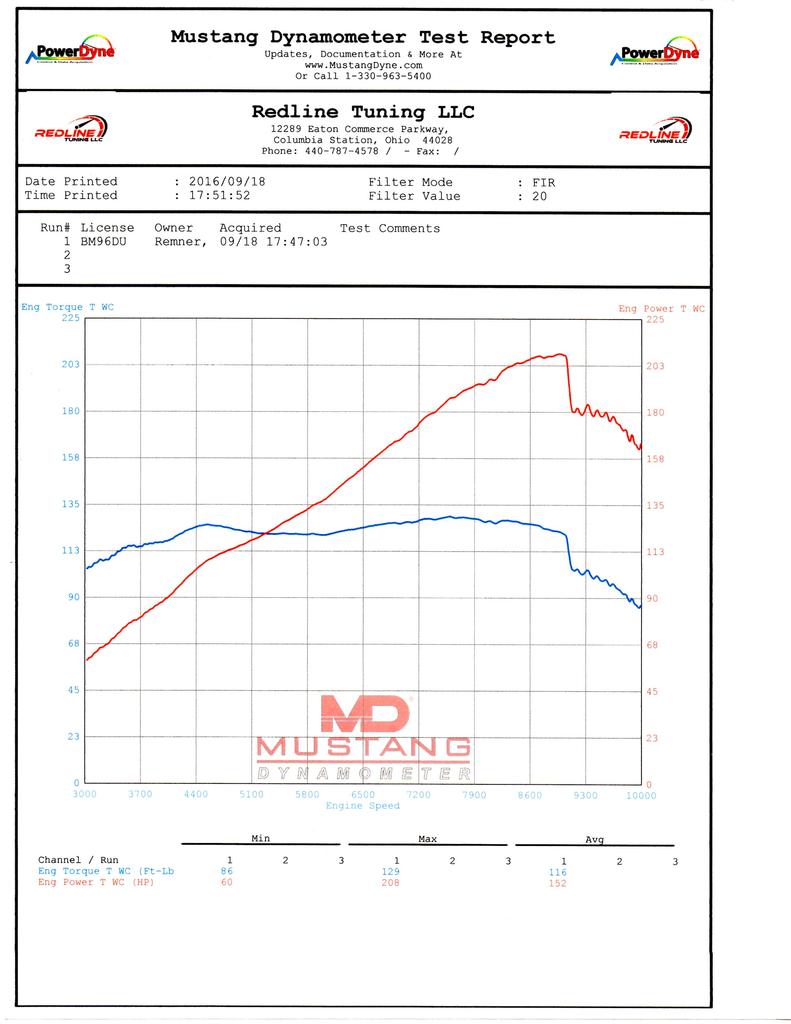
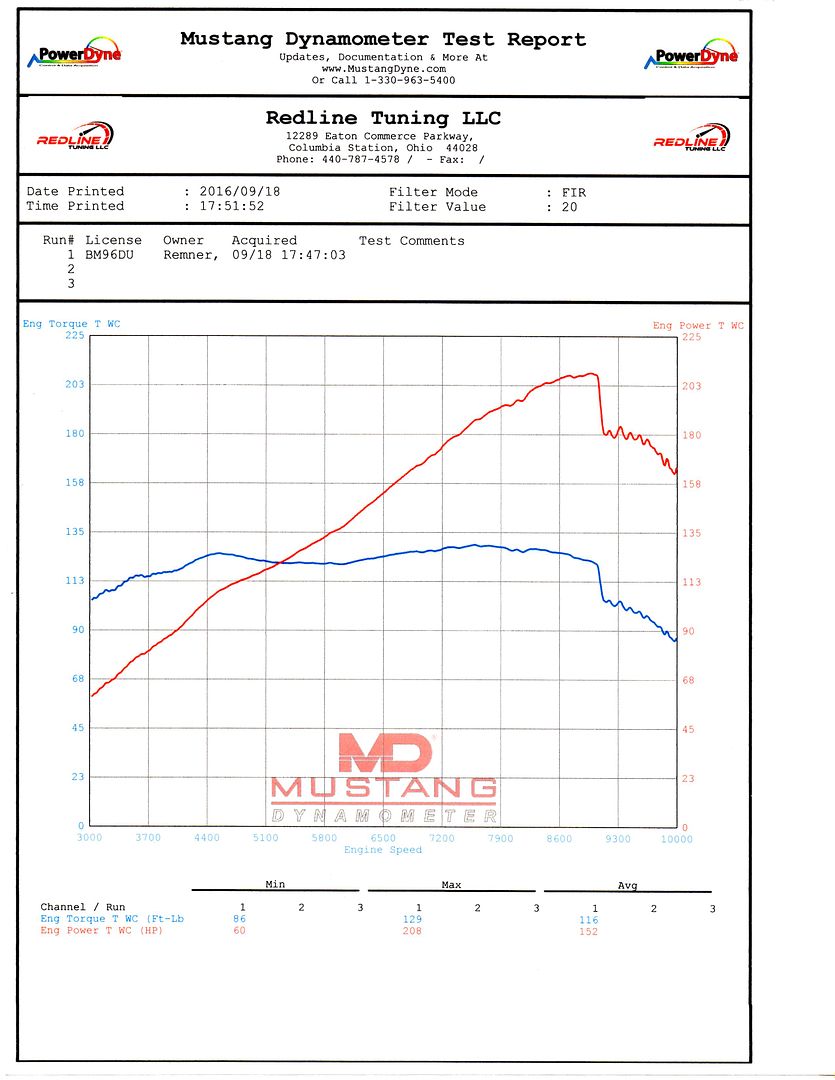
After having the engine in my car for four years this month, I finally had an opportunity to dyno it. Anybody want to hazard a guess as to what the RWHP numbers were?
Salient points:
Bridge ported 4-port 13B, 12A end and GSL-SE center housings, ported to Mazda Group A spec ports on the exhausts, ends, and as close as I could get with the metal available on the center
Racing Beat street port exhaust system and Holley intake manifold, Holley 750 carb, 4" $30 parts-store cone air filter on a blower carb hat
Runs made in 3rd gear, with a 4.78 final, on a Mustang dyno. Torque figure was 130. (Peak torque was double, something like 4400rpm and again at over 7k)
Peak HP was at 8900, then the soft rev limiter starts dumping all kinds of fuel.
Contest ends when my friend who was taking video posts it online, so maybe a day or two?
Bear in mind that the car was quieter than the RB26-engined 240SX (~260whp), the very clean MkIII Supra (~440hp when it got a clean pull, had breakup issues sadly), and the 6.4l Challenger that got a bazillion pulls because of nitrous issues they were trying to debug.
Yeah, I'm giving up, it's on a smartphone so he'd probably just post it on Facebook instead of on the internet...
The answer is: 208whp:
Engine feels "stronger" than the engines I've had on that recorded more torque at the wheels on a Dynojet, so who knows? By the time I can get this engine on a Dynojet again, it will be running through a Ford 9" instead of a Mazda 7" so that won't be good for direct comparison.
Yeah, I'm giving up, it's on a smartphone so he'd probably just post it on Facebook instead of on the internet...
The answer is: 208whp:
Engine feels "stronger" than the engines I've had on that recorded more torque at the wheels on a Dynojet, so who knows? By the time I can get this engine on a Dynojet again, it will be running through a Ford 9" instead of a Mazda 7" so that won't be good for direct comparison.
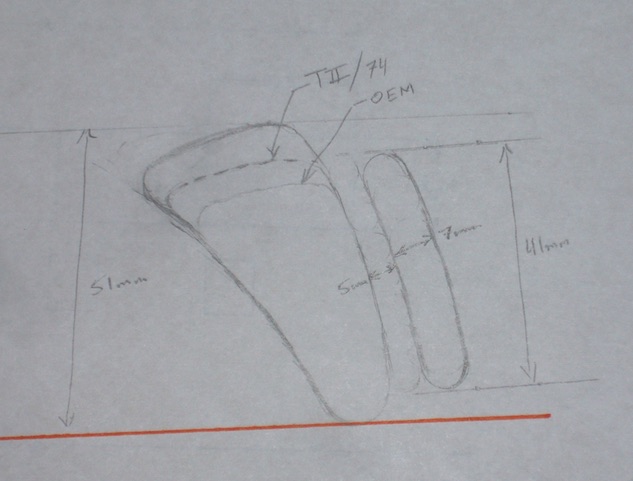
Peejay, is this how big the Group A port goes? The starting point is an original '79 12A port and I used the measurements from homologation drawings. I'm just wondering why the eyebrow doesn't extend the whole length of the port.
Yeah, I'm giving up, it's on a smartphone so he'd probably just post it on Facebook instead of on the internet...
The answer is: 208whp:
Engine feels "stronger" than the engines I've had on that recorded more torque at the wheels on a Dynojet, so who knows? By the time I can get this engine on a Dynojet again, it will be running through a Ford 9" instead of a Mazda 7" so that won't be good for direct comparison.
I'm just wondering why the eyebrow doesn't extend the whole length of the port.
My guess is you choose if you want the rotor to close the main port last or the bridge port last or close both together (look at shape of rotor on closing line).
If you close the main port last you do have a larger air column and a more direct push into the compression stroke.
The bridge is a branched off tributary on this baby bridge style port.
If you close the main port first then the airflow has a more tortured route into the compression stroke through the bridge.
Ideally, I would think you would want to close the "snout" (area near the oil seal track) of the main port last (reverse scissor port).
You might be able to get away with this on a bridge since you do not open the main port earlier, so both side seals ride on the bridge or it still might eat your side seals- IDK.
Not sure why the port you pictured is so extremely scissored.
I would think something like this would be more ideal-
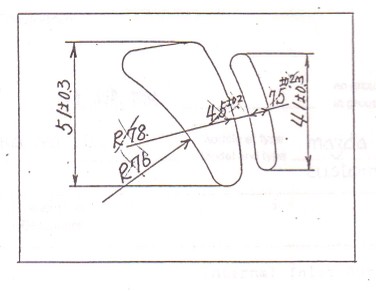
I was guesstimated it off this drawing from the FISA homologation book (it's on foxed.ca):
I wasn't sure about the angle or where the eyebrow started. The drawings are for scrutineers so I referenced the measurements and didn't take them for templates.
That is the port that I used, actually. I took the scan, printed it out, measured the print vs. the dimensions called out, then altered the print so it would print "1:1". I do remember that the bridge width is not drawn to scale, so you can't make a "template" from this drawing but it is still quite useful.
If you accept that the inner curve does not move relative to stock, and that the opening line has to have a curve following the corner seal track, its placement on the side housing becomes obvious. Actually it appears that the main port's opening line stays stock relative to 12A. It also appears that this Group A main port opening is identical to a Racing Beat street port template, assuming that my Turbo II engine was street ported to an RB template. It matched exactly.