


Why arent Rotors made with ball bearings?


Thread Starter
90RXHeaven

Joined: Mar 2005
Posts: 284
Likes: 0
From: Geneseo, NY
Why arent Rotors made with ball bearings?
It occurred to me, after studying RotaryRessurections' Big Daddy DIY thread (awesome, BTW) and looking at the inner workings of the block and combustion chamber, that Rotors could benefit from ball bearings. Is there a reason why they aren't? Do the standard bearings provide more reliable wear? I'm just curious and it seems like to could be a neat topic for some gurus like Aaroncake and Rot. Ressur. to explain.



The OE bearings are simple and very reliable, as long as they get a steady supply of clean oil.
I am not positive, but the ball bearings may not be able to hold the same tolerances when centrifugal forces are applied
I am not positive, but the ball bearings may not be able to hold the same tolerances when centrifugal forces are applied

Ball bearings would hammer grooves and pockets in the mating surfaces. Needle bearings would be a better option, but they still have the denting problem. The journal/babbet bearings provide a larger running surface that in the end is smoother and wears slower. Often the main bearings do not need replacement during a 1st rebuild. Try that with a piston engine.

for there size needle bearings are stronger. being they have more surface area. same reason they put needle bearing in the driveshaft U-Joint as as apposed to ball bearing.

Ball bearings would hammer grooves and pockets in the mating surfaces. Needle bearings would be a better option, but they still have the denting problem. The journal/babbet bearings provide a larger running surface that in the end is smoother and wears slower. Often the main bearings do not need replacement during a 1st rebuild. Try that with a piston engine.
Trending Topics

Joined: Dec 2003
Posts: 6,598
Likes: 10
From: Temple, Texas (Central)
Thread Starter
90RXHeaven
Joined: Mar 2005
Posts: 284
Likes: 0
From: Geneseo, NY
What about different bearings in terms of reducing friction and resistance to turn? Roller type bearings can offer less resistance than oil based friction bearings. And then there are these bearings called "foil bearings" that are oil free. Except for the initial rub from a dead stop, air is drawn through the bearing and the matter essentially floats above the journal. I've never tried any of this but it sounds like their could be some hp to gain going with a lighter bearing with less resistance. They do this with turbos to reduce lag time, why shouldn't this kind of improvement be applied to rotors?

Senior Member
Joined: Oct 2006
Posts: 467
Likes: 0
From: Reno
the main reason is because of reliablity. The more moving pieces there are the higher likely hood of failure. Typical needle bearing locations dont recieve lubrication. They are greased when installed and that is it. They also tend to go through grease faster when under extreme heat such as inside an engine close to combustion.
Quote:
Originally Posted by trochoid
Ball bearings would hammer grooves and pockets in the mating surfaces. Needle bearings would be a better option, but they still have the denting problem. The journal/babbet bearings provide a larger running surface that in the end is smoother and wears slower. Often the main bearings do not need replacement during a 1st rebuild. Try that with a piston engine.
The other reason that they last so long is because the RPM's are read off of the E shaft rotation speed, and the rotors turn at 1/3 the speed of the e shaft due to the stat gears.
Quote:
Originally Posted by trochoid
Ball bearings would hammer grooves and pockets in the mating surfaces. Needle bearings would be a better option, but they still have the denting problem. The journal/babbet bearings provide a larger running surface that in the end is smoother and wears slower. Often the main bearings do not need replacement during a 1st rebuild. Try that with a piston engine.
The other reason that they last so long is because the RPM's are read off of the E shaft rotation speed, and the rotors turn at 1/3 the speed of the e shaft due to the stat gears.
Senior Member
Joined: Oct 2006
Posts: 467
Likes: 0
From: Reno
What about different bearings in terms of reducing friction and resistance to turn? Roller type bearings can offer less resistance than oil based friction bearings. And then there are these bearings called "foil bearings" that are oil free. Except for the initial rub from a dead stop, air is drawn through the bearing and the matter essentially floats above the journal. I've never tried any of this but it sounds like their could be some hp to gain going with a lighter bearing with less resistance. They do this with turbos to reduce lag time, why shouldn't this kind of improvement be applied to rotors?

Joined: Apr 2002
Posts: 4,232
Likes: 0
From: Rotaryland, New Hampshire
Ive got pictures of needle barring main barrings, but not rotor barrings. They used the factory oil system to recieve lubercation, i dont know however if they lowered the pressure for them or not.

Lives on the Forum

Joined: Feb 2001
Posts: 26,664
Likes: 23
From: n
More complexity...
Added cost...
Less reliability...
Very little gains when looking at the target performance goals that Mazda engineered for the car *stock*...
If we take that mentality, why not put roller bearings on crankshafts and camshafts on piston engines???
-Ted
Added cost...
Less reliability...
Very little gains when looking at the target performance goals that Mazda engineered for the car *stock*...
If we take that mentality, why not put roller bearings on crankshafts and camshafts on piston engines???
-Ted

There's a very rare Porsche flat 4 used in the late 50's 356 called a "Twin Cam" that used all roller bearings.
I wonder why Guru uses a needle bearing in their two-piece eccentric shaft if they don't wear as well as a standard "journal" bearing. Any ideas?
I wonder why Guru uses a needle bearing in their two-piece eccentric shaft if they don't wear as well as a standard "journal" bearing. Any ideas?

I make Russia fun
Joined: Dec 2006
Posts: 16
Likes: 0
From: Michigan
On a very small rotary, I think it would work, but it still wouldn't be as reliable as the standard bearings. I'm in agreeance with most everything I've read so far, but another consideration is noise. Maybe not for most of us here who hack off mufflers and converters (who said that?!), but for an engineer making a streetable car, any little noise could lead to a glut of warranty calls, or even the loss of a sale off the lot. "Too noisy" has gotten Saturn many complaints, especially in magazines like Car and Driver.

Joined: Dec 2002
Posts: 3,791
Likes: 3
From: Kitchener Ontario Canada
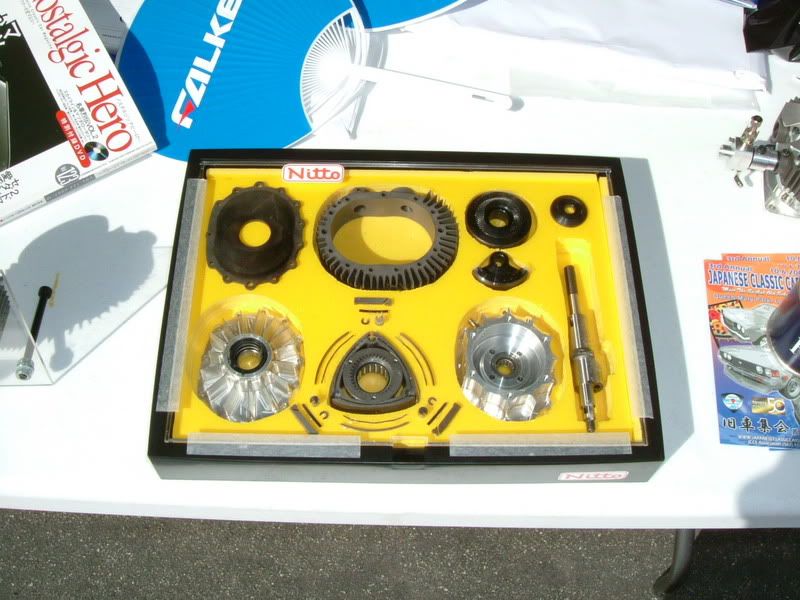
Saw this at Sevenstock this year, these little guys dont produce much power and aren't under much load.
Check this out too:
https://www.rx7club.com/rotary-car-performance-77/interesting-bearing-thought-main-bearings-705067/

^Aww thats cute.
Per wiki:
Plain bearings are relatively simple and hence inexpensive. They are also compact, light weight, straightforward to repair and have high load-carrying capacity.
Ball bearings tend to have lower load capacity for their size than other kinds of rolling-element bearings due to the smaller contact area that spherical shapes provide.
http://en.wikipedia.org/wiki/Bushing
Per wiki:
Plain bearings are relatively simple and hence inexpensive. They are also compact, light weight, straightforward to repair and have high load-carrying capacity.
Ball bearings tend to have lower load capacity for their size than other kinds of rolling-element bearings due to the smaller contact area that spherical shapes provide.
http://en.wikipedia.org/wiki/Bushing


wow thats a cool little kit engine where can i get one and what could you put it in hahaha.
etc
Saw this at Sevenstock this year, these little guys dont produce much power and aren't under much load.
Check this out too:
https://www.rx7club.com/showthread.php?t=705067
etc
Saw this at Sevenstock this year, these little guys dont produce much power and aren't under much load.
Check this out too:
https://www.rx7club.com/showthread.php?t=705067

Savanna Rx-7


Joined: Jun 2004
Posts: 1,577
Likes: 12
From: yokosuka japan
Trochoid and RETed p[retty much summed up the general answers, if you want a detailed explanation it goes like this: A sleave bearing like the ones used in most engines, have a thin oil film that cushions and SPREADS the load out over the entire bearing surface, whereas a roller or ball bearing must put all of that force in the contact patch of the ball, or roller. rollers carry a higher load rating over ball bearings because they spread that same force out over their length but cannot spread the force out over the voids created by the roller itself. Ball bearings are even lower becaseu they put all of the shock and stress over a fraction of the space of the roller.
sleave bearing = 360 deg 100% contact via a thin film of oil which also acts as a cushion to protect surfaces
roller bearings = 360 deg at approximately 15~20% contact (depends on size of rollers)with a much thinner film of oil, (or useually greese)
ball bearings = 360 deg at approximately 1~5 percent depending upon ball sizewith almost no cushion of oil
the less surface area you have the less oil film it will support, the less surface area you have the more pressure will force the oil film out and attempt to cause the bearings to "crash"
now this can be compensated to a degree with a high viscosity/higher pressure on your oil feed to the bearings, but it is also harder to maintain pressure on a ball or roller bearing setup.
a ball or roller is better when you cannot supply the needed oil pressure, and instead rely upon a heavy grease IE drive shafts, or when the ball or roller bearing itself is totally immersed in oil.
kenn
sleave bearing = 360 deg 100% contact via a thin film of oil which also acts as a cushion to protect surfaces
roller bearings = 360 deg at approximately 15~20% contact (depends on size of rollers)with a much thinner film of oil, (or useually greese)
ball bearings = 360 deg at approximately 1~5 percent depending upon ball sizewith almost no cushion of oil
the less surface area you have the less oil film it will support, the less surface area you have the more pressure will force the oil film out and attempt to cause the bearings to "crash"
now this can be compensated to a degree with a high viscosity/higher pressure on your oil feed to the bearings, but it is also harder to maintain pressure on a ball or roller bearing setup.
a ball or roller is better when you cannot supply the needed oil pressure, and instead rely upon a heavy grease IE drive shafts, or when the ball or roller bearing itself is totally immersed in oil.
kenn

Thread
Thread Starter
Forum
Replies
Last Post
