When you click on links to various merchants on this site and make a purchase, this can result in this site earning a commission. Affiliate programs and affiliations include, but are not limited to, the eBay Partner Network.
Had to ID some 13B E-shafts for a friend.. Turns out the “interchangeability”, although possible, might be a bit misleading, since they are not all exactly the same.
I would be interested in seeing everyone else’s experience, as tearing down so many motors, who knows what shaft got thrown in where.
After investigating some tech/info on E-shafts, digging through limited and non-informative posts from years ago, and google, figured I would make a post with what I found.
’85 GSL-SE (I assume all early 13B engines)- Dimensionally similar to the other 13B, with the main giveaway being no thermal pellet ports on the snout. The distance to the front stat bearing hole is longer.
‘86-‘89 N/A- Dimensionally similar, but has a through-hole and thermal pellet opening at the snout. Two are pictured here. Similar to the GSL-SE in dimensions.
‘87-‘89 Turbo- Similar dimensions as the N/A, but with a thermal pellet port at the snout, but not a through-hole, just a hole on one side. Typically you will see an oil shadow/imprint on the other side, similar to the REW. This is seen on another post that compares it to a cosmo shaft.
13B-REW- shorter distance from the stationary bearing holes to the snout. Larger check ***** under the jets. Thermal pellet opening, but no through hole on the snout, just like the 13BT and Cosmo. Typically stamped with a double letter, above two numbers, like “4 square” i.e, BB/37.
13B-RE- From the Cosmo. Nearly identical to the REW, bearing ports, etc. Stamped with two letters, next to two numbers, “xx 34”. Based on the “cosmo” motor I have disassembled in the garage.. Pics shown here.
Renesis- dimensionally similar, but
the giveaway is it has 4 weight holes on each lobe versus 3. Didn’t measure the bearing port distances on my last disassembly..
That is it for now. Can add info as needed. See ya club. Left to Right- FC NA shaft, FC NA shaft, Cosmo Shaft
Front stat gear port Cosmo; note the oil shadow, has a hole opposite this shadow Front Stat Gear NA; Note the through hole above the tiny port on the snout, you can even see the thermal pellet spring.
I’m about googled out trying to find an actual e-shaft weight;
the RX8 eshaft weighing 0.4 lbs less has to be the most polly wanna cracker parrotted phrase on the entire intrawebz, but the actual weight of anything is never listed, and of course I don’t have a loose one laying around
13B-REW- shorter distance from the stationary bearing holes to the snout. Larger check ***** under the jets. Thermal pellet opening, but no through hole on the snout, just like the 13BT and Cosmo. Typically stamped with a double letter, above two numbers, like “4 square” i.e, BB/37.
13B-RE- From the Cosmo. Nearly identical to the REW, bearing ports, etc. Stamped with two letters, next to two numbers, “xx 34”.
there was an old video of Mazda building the REW's and you can see them stamp those marks, after measuring for bearing clearance.
essentially it tells you what bearing they used
I’m about googled out trying to find an actual e-shaft weight;
the RX8 eshaft weighing 0.4 lbs less has to be the most polly wanna cracker parrotted phrase on the entire intrawebz, but the actual weight of anything is never listed, and of course I don’t have a loose one laying around
anyone, anyone; Bueller?
.
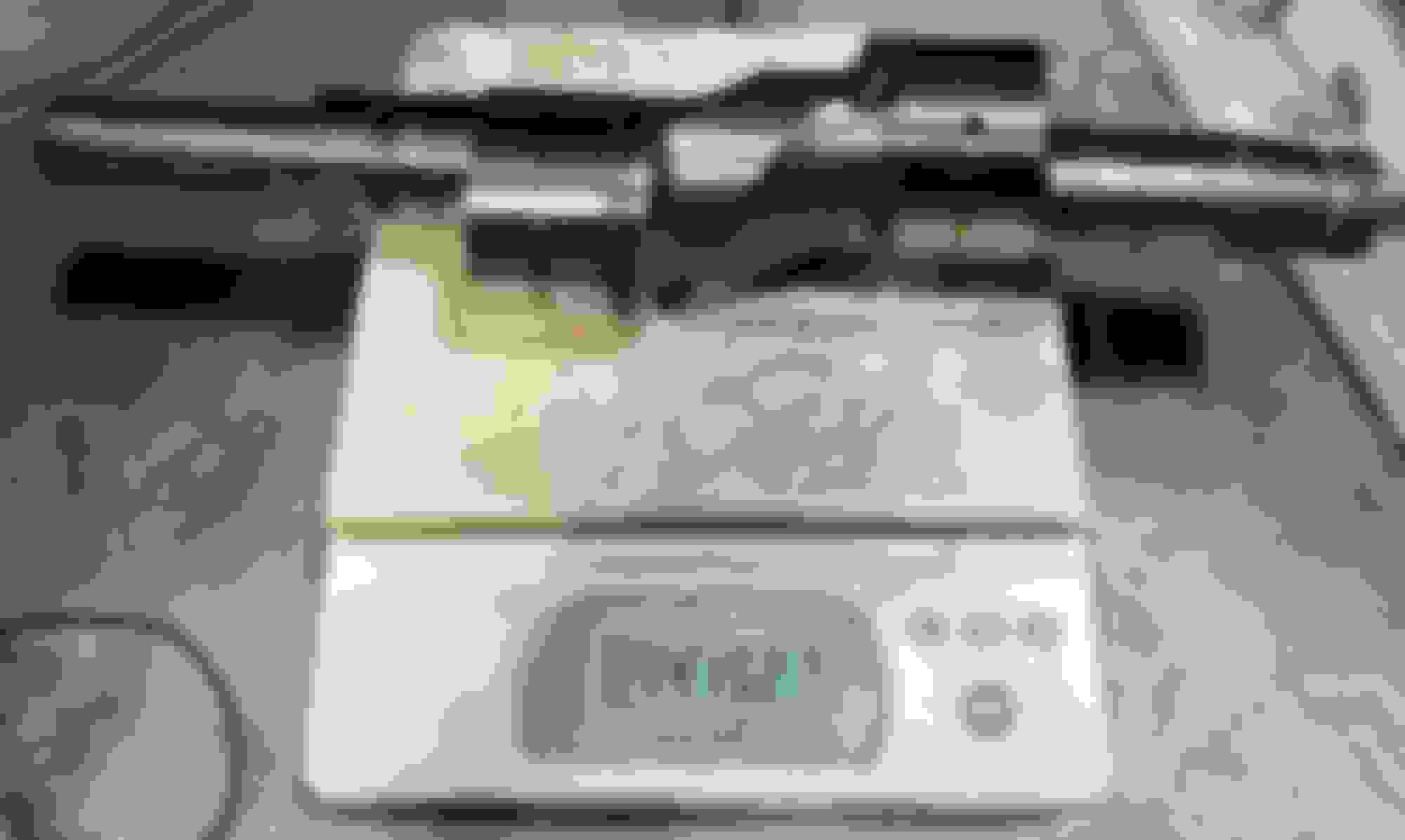
so my scale only goes to 5000g (11lbs), and the eshaft is more than that. maybe 5500?
the one i've got loose is an FC without the big oil hole
I’m about googled out trying to find an actual e-shaft weight;
the RX8 eshaft weighing 0.4 lbs less has to be the most polly wanna cracker parrotted phrase on the entire intrawebz, but the actual weight of anything is never listed, and of course I don’t have a loose one laying around
anyone, anyone; Bueller?
.
I have several, and yes its probably about that much lighter however it also bends out of 'later' model spec - FD through RX8 - if you look at it wrong. The weight savings is just the extra lightening hole in the lobe, the bending is more than likely heat treatment.
I get that, but am looking for just a general idea. Though an REW would be preferred if possible.
only asking for a comparison against an aftermarket one, which is 6.6 kg (~14.5 lbs) according to the manufacturer.
given the short eccentric throw the MOI is not critical at all imo as compared to stiffness, straightness, and other etc. etc. factors. Which again just never saw the weight listed for a factory one and am curious.
A buddy has an RX8 one he intends to weigh, so at least posting that number will help serve the purpose of knowing what the polly parrot 0.4 lbs lighter reference is. Which I believe was posted by Dan Chadwick on this forum (or maybe rotarycarclub) many years ago wrt using those RX8 parts in an earlier 13B engine.
.
given the short eccentric throw the MOI is not critical at all imo as compared to stiffness, straightness, and other etc. etc. factors. Which again just never saw the weight listed for a factory one and am curious.
.
if you'd like me to go down the rabbit hole, i can link the post.
but apparently the nose bends rather easily and that is the weak point, which is a bit odd.
it’s a known issue, which it is long and narrower on that end
any way, without further ado; credit to forum member Warrior777 for the photos/weights:
FD3 shaft 14lbs 15.2 oz - 14.95 lbs - 6.80 kg
RX8 shaft 14 lbs 9.4 oz - 14.59 lbs - 6.63 kg
so the aftermarket 1-pc 4340 billet e-shaft referenced in a prior post is about the same weight as the RX8 shaft, but it’s hard to qualify the 10x higher price relative to what might be the more positive qualities it can offer.
.
i weighed one of the Rx-8 shafts that i have and i got 15 pounds when i weighed it by itself, and i got 14.6 when i weighed it with me. i used a regular scale because my parts scale maxes out at 11 pounds.
i guess i need to find one like your friend's scale.
Adding some Renesis info to this thread since it looks the most recent.
I'm considering using an e-shaft I've had on the shelf pulled from an 04-08 6 port engine with S4 rotors and weights (to be shipped to Mazdatrix for balancing).
Previous threads said there was a difference with bearing clearances, which is what I was most concerned about.
Renesis shafts appear to be like the REW, the outer main bearing journals are .001" smaller than the inner, at least that's what I'm measuring.
RX-8 FSM calculates the clearance with the inner bearing and the outer shaft journal measurements, while the FD FSM gives clearances for them separately, see below.
Rotor bearing clearances are the same for all generations: .06-.08mm (.0024-.0031"), max .10mm (.0039")
Originally Posted by TeamRX8
the Renesis e-shaft stationary oiling hole position is slightly different
.
I measured both holes for the stationary gears 3mm further away from the center compared to an S4 e-shaft.
you’ll need more clearance for high rpm track type performance though
if you go to the Maxdatrix site for a modified RX8 rear stat gear it provides a link to alternate bearings they sell there and the IDs along with general advice
which I recognize the cost for an aftermarket shaft seems steep, but it’s widely under appreciated imo
clearancing rotor faces to account for shaft flexure results in what would be considered less squish height (more volume outside the combustion chamber) in a piston engine, and thus a decrease in mixture turbulence within the combustion chamber, higher bsfc of unburnt fuel both outside and inside the combustion chamber, and so on.
so an RX8 shaft is slightly lighter than the billet shaft shown a few posts up, but is flopping all about under various operating conditions … even more so in a high output turbo engine.
.
I assume this is the Mazdatrix gear. "The bearing in this gear is the one supplied with the gear. See our “MAINBEARINGS 93-11” so it is strongly recommended for use ONLY with FD and RX8 eccentric shafts. The 93-2011 main bearings can sometimes be too tight with pre-93 eccentric shaft."
My plan is the opposite: pre-93 bearings with an RX-8 shaft, my measurements fall in line with the REW's clearances, .003" on the inside and .004" on the outside. I figured that extra on the outside was desirable for the flopping you describe.
if you're starting with an FD or later shaft, that was used in an engine built in Japan, they stamp the bearings they used in the shaft, which gives you a starting point
the older engines only had the one bearing, so it wasn't needed, and if it wasn't built into an engine by Mazda i'm not sure they would bother stamping it
you are on your own to decode the thing
The letter code is interesting. I've checked the FSMs and parts catalogs for the RX-8 and FD, but haven't found anything. Am I looking in the right places?
Only thing I've found is that the bearings are color coded for size, but they don't indicate what shaft they go to.
Mazdatrix in the link above says there's only a .001" difference between the biggest and smallest, so they just use the biggest for a race engine and the smallest for a street engine.
when they speak of the loosest race bearing for race clearance; “yellow” as I recall, that likely includes using heavy weight sump oil, increased oil pressure, etc.
.
The letter code is interesting. I've checked the FSMs and parts catalogs for the RX-8 and FD, but haven't found anything. Am I looking in the right places?.
i would think its like the wiring, L = bLue and b = Black, but i don't know
and then two of those are the rotor bearings...
when they speak of the loosest race bearing for race clearance; “yellow” as I recall, that likely includes using heavy weight sump oil, increased oil pressure, etc.
.
Not so much as you'd think.
If anything the increased clearances may allow for lower oil pressure, if it allows the bearings to run cooler.
Most of the reason for high oil pressure is to keep the rotor bearings and oil squirters fed. It takes a lot of pressure to overcome the centrifugal force keeping the oil from wanting to go into the eccentric shaft. Piston engines get by because they have a nice long rod throw that can pull the oil through (assuming it isn't foamy) but rotaries don't get that design feature.
Lynn Hannover measured the oil pressure inside the eccentric shaft at some high RPM and found it to be only 7psi, with 100psi from the oil pump.
After learning that, I teardrop the oil holes in every eccentric shaft that I touch, to scoop the oil in. Seems to help.
I just did a calc... it's over 1800G at the oil hole at 8000rpm, fighting any pressure in the stat bearing journal.
Comp bearings are still available, I'll never understand why people advocate trying to save $200 when rebuilding an engine. These seem to be the same people who suggest using loose FD bearings AS WELL AS pay for deepening to the groove...to Comp bearing specs.