


Want to save some money on gas? read...


Want to save some money on gas? read...
Well I thought I would start a thread on how to save some money on gas since it is becoming ridiculous and so many people are complaining (gas is high this, gas is high that, blah blah...).
Here is the best method thing I have found:
Canadian Tire.
method 1)
-> Purchase Canadian Tire gift cards from www.gcr.ca, that site gives you a 3.33% cash back rebate on online CT purchases.
-> Use the gift cards to pay for gas (yes you can use them for that), and since gift cards are considered cash you can get CT money. use those multiplier coupons to get more CT money!
-> when you have saved up enough CT money you can go get a gift card to use to get more gas (and more CT money).
method 2)
-> Get the Canadian Tire Options mastercard and use that to pay for gas, which gives you CT money automatically.
-> the CT money on the card can be used to help purchase gift cards online, so use it to buy from gcr.ca and, again, that gives 3.33% cash back
optional)
-> Canadian Tire also has the Advantage credit card which is tiered as follows:
monthly expenditure (doesn't have to be gas),
$2000+ = 10c/L discount
$1000 - $1999.99 = 8c/L
$500 - $999.99 = 5c/L
$0-$499.99 = 2c/L off
The problem with this card is you have to spend at least $1000 a month for it to be worth it really.
Here is the best method thing I have found:
Canadian Tire.
method 1)
-> Purchase Canadian Tire gift cards from www.gcr.ca, that site gives you a 3.33% cash back rebate on online CT purchases.
-> Use the gift cards to pay for gas (yes you can use them for that), and since gift cards are considered cash you can get CT money. use those multiplier coupons to get more CT money!
-> when you have saved up enough CT money you can go get a gift card to use to get more gas (and more CT money).
method 2)
-> Get the Canadian Tire Options mastercard and use that to pay for gas, which gives you CT money automatically.
-> the CT money on the card can be used to help purchase gift cards online, so use it to buy from gcr.ca and, again, that gives 3.33% cash back
optional)
-> Canadian Tire also has the Advantage credit card which is tiered as follows:
monthly expenditure (doesn't have to be gas),
$2000+ = 10c/L discount
$1000 - $1999.99 = 8c/L
$500 - $999.99 = 5c/L
$0-$499.99 = 2c/L off
The problem with this card is you have to spend at least $1000 a month for it to be worth it really.
Last edited by coldfire; Jun 12, 2008 at 10:27 PM.


haha, seriously it works. i will use math to prove it:
let's say i buy 10 litres of gas. assume the price is $1.30 / litre.
so normally i would be paying $13.00.
buying a gift card from gcr.ca (free shipping by the way!) and using that to pay effectively lowers the price to $12.57, on top of which you then receive $0.05 minimum CT money, and so let's say with a 10x multiplier that is $0.50.
so the $13.00 of gas now costs $12.07. the $1.30 / litre is now $1.21. that is about a %7.15 savings and is more than any other gas rewards program i can think of, and you didn't really have to do anything!
the savings can actually work out more than %8 because you can technically use the CT money to get more CT money.
if you go spend $3000 on gas a year that is $240 saved. 10 cases of really bad beer!
oh if anyone else has gas purchase saving schemes that are good please post, haha.
let's say i buy 10 litres of gas. assume the price is $1.30 / litre.
so normally i would be paying $13.00.
buying a gift card from gcr.ca (free shipping by the way!) and using that to pay effectively lowers the price to $12.57, on top of which you then receive $0.05 minimum CT money, and so let's say with a 10x multiplier that is $0.50.
so the $13.00 of gas now costs $12.07. the $1.30 / litre is now $1.21. that is about a %7.15 savings and is more than any other gas rewards program i can think of, and you didn't really have to do anything!
the savings can actually work out more than %8 because you can technically use the CT money to get more CT money.
if you go spend $3000 on gas a year that is $240 saved. 10 cases of really bad beer!
oh if anyone else has gas purchase saving schemes that are good please post, haha.
Last edited by coldfire; Jun 12, 2008 at 10:34 PM.


Grey-Bruce Rotorhead

Joined: Apr 2002
Posts: 1,484
Likes: 0
From: Chesley, Ontario, Canada
Here are some tips that were sent to me the other day:
"Here at the Kinder Morgan Pipeline where I work in San Jose , CA we
deliver about 4 million gallons in a 24-hour period thru the pipeline.. One day
is diesel the next da y is jet fuel, and gasoline, regular and premium
grades. We have 34-storage tanks here with a total capacity of 16,800,000 gallons.
Only buy or fill up your car or truck in the early morning when the
ground temperature is still cold. Remember that all service stations have their
storage tanks buried below ground. The colder the ground the more dense
the gasoline, when it gets warmer gasoline expands, so buying in the
afternoon or in the evening....your gallon is not exactly a gallon. In the petroleum
business, the specific gravity and the temperature of the gasoline,
diesel and jet fuel, ethanol and other petroleum products plays an important role.
A 1-degree rise in temperature is a big deal for this business. But the
service stations do not have temperature compensation at the pumps.
When you're filling up do not squeeze the trigger of the nozzle to a fast
mode. If you look you will see that the trigger has three (3) stages:
low, middle, and high. You should be pumping on low mode, thereby minimizing
the vapors that are created while you are pumping. All hoses at the pump have
a vapor return If you are pumping on the fast rate, some of the liquid that
goes to your tank becomes vapor. Those vapors are being sucked up back into the underground storage tank so you're getting less worth for your money.
One of the most important tips is to fill up when your gas tank is HALF
FULL. The reason for this is the more gas you have in your tank the less
air occupying its empty space. Gasoline evaporates faster than you can
imagine.
Gasoline storage tanks have an internal floating roof. This roof serves
as zero clearance between the gas and the atmosphere, so it minimizes the evaporation.
Unlike service stations, here where I work, every truck that we load is
temperature compensated so that every gallon is actually the exact
amount.
Another reminder, if there is a gasoline truck pumping into the storage
tanks when you stop to buy gas, DO NOT fill up; most likely the gasoline
is being stirred up as the gas is being delivered, and you might pick up
some of the dirt that normally settles on the bottom."
"Here at the Kinder Morgan Pipeline where I work in San Jose , CA we
deliver about 4 million gallons in a 24-hour period thru the pipeline.. One day
is diesel the next da y is jet fuel, and gasoline, regular and premium
grades. We have 34-storage tanks here with a total capacity of 16,800,000 gallons.
Only buy or fill up your car or truck in the early morning when the
ground temperature is still cold. Remember that all service stations have their
storage tanks buried below ground. The colder the ground the more dense
the gasoline, when it gets warmer gasoline expands, so buying in the
afternoon or in the evening....your gallon is not exactly a gallon. In the petroleum
business, the specific gravity and the temperature of the gasoline,
diesel and jet fuel, ethanol and other petroleum products plays an important role.
A 1-degree rise in temperature is a big deal for this business. But the
service stations do not have temperature compensation at the pumps.
When you're filling up do not squeeze the trigger of the nozzle to a fast
mode. If you look you will see that the trigger has three (3) stages:
low, middle, and high. You should be pumping on low mode, thereby minimizing
the vapors that are created while you are pumping. All hoses at the pump have
a vapor return If you are pumping on the fast rate, some of the liquid that
goes to your tank becomes vapor. Those vapors are being sucked up back into the underground storage tank so you're getting less worth for your money.
One of the most important tips is to fill up when your gas tank is HALF
FULL. The reason for this is the more gas you have in your tank the less
air occupying its empty space. Gasoline evaporates faster than you can
imagine.
Gasoline storage tanks have an internal floating roof. This roof serves
as zero clearance between the gas and the atmosphere, so it minimizes the evaporation.
Unlike service stations, here where I work, every truck that we load is
temperature compensated so that every gallon is actually the exact
amount.
Another reminder, if there is a gasoline truck pumping into the storage
tanks when you stop to buy gas, DO NOT fill up; most likely the gasoline
is being stirred up as the gas is being delivered, and you might pick up
some of the dirt that normally settles on the bottom."
i was referring more to rewards programs and what not but those are definitely valid suggestions ^. especially the temperature of gasoline factor, i think that is a big one.
and of course people should keep on top of usual things like tire pressure and keeping the vehicle well tuned. spending $30 on a set of spark plugs could save you that money back in a month.
some sort of aftermarket fuel controller or engine management might also save people money.
on my RX7 putting a SAFC fuel controller has actually saved me money in the long term because i was able to lean out my rich stock mixtures, especially for cruise. the $300 it cost i probably made back in fuel savings after 10k km.
and of course people should keep on top of usual things like tire pressure and keeping the vehicle well tuned. spending $30 on a set of spark plugs could save you that money back in a month.
some sort of aftermarket fuel controller or engine management might also save people money.
on my RX7 putting a SAFC fuel controller has actually saved me money in the long term because i was able to lean out my rich stock mixtures, especially for cruise. the $300 it cost i probably made back in fuel savings after 10k km.
Last edited by coldfire; Jun 12, 2008 at 11:27 PM.
Trending Topics
hmmm, Bass's post mentions not having too much air in the tank to reduce evaporation.
do you guys think having less weight or less air in the tank is better for fuel consumption? half a tank can be more than 50lbs in most cars, but at the same time if you have less than half a tank then maybe the gas will evaporate quickly...although i have left cars sitting for weeks and never noticed much change in the gas level. having to accelerate another 60+ lbs of gas seems like it would consume more.
do you guys think having less weight or less air in the tank is better for fuel consumption? half a tank can be more than 50lbs in most cars, but at the same time if you have less than half a tank then maybe the gas will evaporate quickly...although i have left cars sitting for weeks and never noticed much change in the gas level. having to accelerate another 60+ lbs of gas seems like it would consume more.



EliteHardcoreCannuckSquad

Joined: Apr 2001
Posts: 3,081
Likes: 0
From: Montréal, Québec, Canada
I prefer to use dealguild.com, since they give 3.5% cashback and right now until fathers' day have upped it to 4.5%, I just ordered a few hundred dollars gift cards.
But, yes, that's the right approach (o:
Also, I buy my giftcards with my cashback credit card, so I get another 1.25% cashback.
My credit card also gives me cashback at Ultramar for gas.
But, yes, that's the right approach (o:
Also, I buy my giftcards with my cashback credit card, so I get another 1.25% cashback.
My credit card also gives me cashback at Ultramar for gas.


got paint?

Joined: Oct 2004
Posts: 590
Likes: 0
From: Ottawa, Canada
As far at the early morning fill-ups thing. All gas has to legally (in Canada anyways) be temperature corrected to 15C. I'm sure you've seen it on the pump at every gas station you've been to. Otherwise with the extreme variation in temperature we would get cheaper gas in winter, and in turn be ripped off in the summer...

Joined: Feb 2006
Posts: 3,162
Likes: 1
From: London, Ontario, Canada
^ Thats exactly what I was about to say. It's different for the US, although I heard something about them trying to get the pumps retrofitted to temperature controlled units. In Canada it's no problem.
I however firmly believe that if your going to drive a sports car you have no reason to complain about gas. Of course gas prices weren't this bad when I got my 7 a couple years ago, but I'm lucky enough to be a trucker that only drives my cars a couple days per week, so naturally I beat the hell out of her when I can.
I however firmly believe that if your going to drive a sports car you have no reason to complain about gas. Of course gas prices weren't this bad when I got my 7 a couple years ago, but I'm lucky enough to be a trucker that only drives my cars a couple days per week, so naturally I beat the hell out of her when I can.
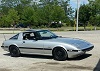

haha, don't avoid driving. just save some money while you are doing it!
WHO, thanks for letting me know about dealguild.com, 4.5% cashback is awesome!
edit: dealguild.com seems like they only use Paypal for payments. this is an issue because Paypal charges me a small fee for any payment i receive, so 4.5% becomes less
WHO, thanks for letting me know about dealguild.com, 4.5% cashback is awesome!
edit: dealguild.com seems like they only use Paypal for payments. this is an issue because Paypal charges me a small fee for any payment i receive, so 4.5% becomes less
Last edited by coldfire; Jun 13, 2008 at 09:44 PM.



Here are some tips that were sent to me the other day:
"Here at the Kinder Morgan Pipeline where I work in San Jose , CA we
deliver about 4 million gallons in a 24-hour period thru the pipeline.. One day
is diesel the next da y is jet fuel, and gasoline, regular and premium
grades. We have 34-storage tanks here with a total capacity of 16,800,000 gallons.
Only buy or fill up your car or truck in the early morning when the
ground temperature is still cold. Remember that all service stations have their
storage tanks buried below ground. The colder the ground the more dense
the gasoline, when it gets warmer gasoline expands, so buying in the
afternoon or in the evening....your gallon is not exactly a gallon. In the petroleum
business, the specific gravity and the temperature of the gasoline,
diesel and jet fuel, ethanol and other petroleum products plays an important role.
A 1-degree rise in temperature is a big deal for this business. But the
service stations do not have temperature compensation at the pumps.
When you're filling up do not squeeze the trigger of the nozzle to a fast
mode. If you look you will see that the trigger has three (3) stages:
low, middle, and high. You should be pumping on low mode, thereby minimizing
the vapors that are created while you are pumping. All hoses at the pump have
a vapor return If you are pumping on the fast rate, some of the liquid that
goes to your tank becomes vapor. Those vapors are being sucked up back into the underground storage tank so you're getting less worth for your money.
One of the most important tips is to fill up when your gas tank is HALF
FULL. The reason for this is the more gas you have in your tank the less
air occupying its empty space. Gasoline evaporates faster than you can
imagine.
Gasoline storage tanks have an internal floating roof. This roof serves
as zero clearance between the gas and the atmosphere, so it minimizes the evaporation.
Unlike service stations, here where I work, every truck that we load is
temperature compensated so that every gallon is actually the exact
amount.
Another reminder, if there is a gasoline truck pumping into the storage
tanks when you stop to buy gas, DO NOT fill up; most likely the gasoline
is being stirred up as the gas is being delivered, and you might pick up
some of the dirt that normally settles on the bottom."
"Here at the Kinder Morgan Pipeline where I work in San Jose , CA we
deliver about 4 million gallons in a 24-hour period thru the pipeline.. One day
is diesel the next da y is jet fuel, and gasoline, regular and premium
grades. We have 34-storage tanks here with a total capacity of 16,800,000 gallons.
Only buy or fill up your car or truck in the early morning when the
ground temperature is still cold. Remember that all service stations have their
storage tanks buried below ground. The colder the ground the more dense
the gasoline, when it gets warmer gasoline expands, so buying in the
afternoon or in the evening....your gallon is not exactly a gallon. In the petroleum
business, the specific gravity and the temperature of the gasoline,
diesel and jet fuel, ethanol and other petroleum products plays an important role.
A 1-degree rise in temperature is a big deal for this business. But the
service stations do not have temperature compensation at the pumps.
When you're filling up do not squeeze the trigger of the nozzle to a fast
mode. If you look you will see that the trigger has three (3) stages:
low, middle, and high. You should be pumping on low mode, thereby minimizing
the vapors that are created while you are pumping. All hoses at the pump have
a vapor return If you are pumping on the fast rate, some of the liquid that
goes to your tank becomes vapor. Those vapors are being sucked up back into the underground storage tank so you're getting less worth for your money.
One of the most important tips is to fill up when your gas tank is HALF
FULL. The reason for this is the more gas you have in your tank the less
air occupying its empty space. Gasoline evaporates faster than you can
imagine.
Gasoline storage tanks have an internal floating roof. This roof serves
as zero clearance between the gas and the atmosphere, so it minimizes the evaporation.
Unlike service stations, here where I work, every truck that we load is
temperature compensated so that every gallon is actually the exact
amount.
Another reminder, if there is a gasoline truck pumping into the storage
tanks when you stop to buy gas, DO NOT fill up; most likely the gasoline
is being stirred up as the gas is being delivered, and you might pick up
some of the dirt that normally settles on the bottom."
There is a very minimal loss prevention to be had in pumping the fuel at the lowest setting. I doubt the difference is measurable without some pretty precise equipment, but it does help cut down on unburned fuel vapours being released to the atmosphere, which are both a pollutant and a greenhouse gas.

ok so the ambient temperature thing is false, haha.
my RX-7 gets the same mileage as my parent's huge Honda van. a van that is 4000+ lbs and has a 3.5 liter V6! lol...
my RX-7 gets the same mileage as my parent's huge Honda van. a van that is 4000+ lbs and has a 3.5 liter V6! lol...

Too true - lol. If you have a rotary, you just about have to have a fuel efficient daily driver alternative. Which would be why the car that gets the most use in our family is the '99 Saturn SL2 (40+mpg city), followed by the VR6 Passat (30mpg city, if I don't spend too much time enjoying the torque and BMW-like exhaust note), and a distant third is the RX-7 (22-24mpg city, and that's mostly freeway driving). Of course, the order of driving pleasure is inversely related to the fuel efficiency
So now I can cruise at 135 on the highway, at lower revs (and noise) and better fuel economy than I used to get driving 115-120.
Driven at around 115, it can get 52-53 mpg! First and second are pretty close to the same ratios, so it doesn't make it feel like a slug in city driving, but the high 5th does guarantee a downshift is needed for any passing on the highway, or steep grades, which wasn't really the case before. While the Saturn is a pretty cheap feeling car (GM-standard gaps in the interior trim, lousy driver's seat until I took it apart and added bolstering - it's actually a pretty fun car to drive. Lightness, and relatively huge sway bars front and rear (30mm front - probably hollow, 17mm rear, iirc) give it a surprising sense of agility, and make the cornering pretty flat. I was impressed when I had the motor out that it only weighed 200lbs (no accessories, but with intake and exhaust, flywheel, etc still on). Only 274lb with the transmission. Too bad there's not much in the way of performance cams, etc for these cars - although apparently people do turbo them - a good rotary answer
I have similar mileage, automatic though, which I am very happy with. Cheap to drive, and as for the seats, I added foam and sheepskin seat covers so they are great now. And it does drive very very well for what it really is.
Full Member
Joined: Nov 2007
Posts: 74
Likes: 0
From: Barrie
I have some thoughts. Try putting acetone in your gas. I was doing it for a bit and went from 35mpg to 42-44mpg in a honda civic. Other option i tried was HHO gas. Another big thing is how you drive, not using the brakes as much as possible, everytime you use your brakes your wasting gas that got you to that speed. But hey who wants to drive like a fricken granny anyways right?!! lol
Quality of gas is another big thing, 87 octane is CRAP GAS. try a higher octane like 89 unless your tuned to a higher octane. i've found there's a huge difference from 87 to 89 for mpg. I know poeple are going to bring the whole wasting money on octane you don't need thing, but i do truly believe 87 octane is junk. Anyone hearing about a 6 stroke engine?. Pretty cool idea, i've read and seen some videos of a few, adding a extra power or compression stroke and an extra exhaust sroke, therefore eliminating the need for a cooling system and a 80% fuel savings. gas companys will never have any of that though. I've also seen those O2 Sensor extenders, but weather those work or not i don't know, basically leaning the engine. I've also even seen a guy lowering his rev's at the top gear to around 1000rpm, just enough to keep the car going, not sure how he was doing that real time, probably some kind of computer tickering or maybe increasing,decreasing resistance on one of the sensors when he got to highway speed and top gear. One last one, I seen a guy running all of his engine accesory's off of his exhaust, alternator, P/S pump etc... with turbine's similar to a turbo's but geared down probably.
Someone remind me why were talking about saving gas in a RX7 forum? lol i guess people have other cars then rotary's.
Quality of gas is another big thing, 87 octane is CRAP GAS. try a higher octane like 89 unless your tuned to a higher octane. i've found there's a huge difference from 87 to 89 for mpg. I know poeple are going to bring the whole wasting money on octane you don't need thing, but i do truly believe 87 octane is junk. Anyone hearing about a 6 stroke engine?. Pretty cool idea, i've read and seen some videos of a few, adding a extra power or compression stroke and an extra exhaust sroke, therefore eliminating the need for a cooling system and a 80% fuel savings. gas companys will never have any of that though. I've also seen those O2 Sensor extenders, but weather those work or not i don't know, basically leaning the engine. I've also even seen a guy lowering his rev's at the top gear to around 1000rpm, just enough to keep the car going, not sure how he was doing that real time, probably some kind of computer tickering or maybe increasing,decreasing resistance on one of the sensors when he got to highway speed and top gear. One last one, I seen a guy running all of his engine accesory's off of his exhaust, alternator, P/S pump etc... with turbine's similar to a turbo's but geared down probably.
Someone remind me why were talking about saving gas in a RX7 forum? lol i guess people have other cars then rotary's.
Last edited by Rotaryphil; Jun 20, 2008 at 09:45 PM.