Juanma's S5 TII GT35R start to dyno tuning


Thread Starter

Joined: Oct 2003
Posts: 5,107
Likes: 50
From: Central Florida
Juanma's S5 TII GT35R start to dyno tuning
this will be a little long winded but it has been a several year project that has taken on many phases until just yesterday, so you can just skip to the pics and video or enjoy reading the story.
to begin with the customer came to me about 5 years ago after another rather well known shop had done a bit of work including rebuilding the engine and installing a stage 4 hybrid turbo and piggyback engine management system. the engine mounts were loose and the turbo was puking oil all over the engine bay from the blow off valve.
so first thing is first, we yanked off the faulty turbo and went with something different. he was put onto master power from one of his friends and i went along with that as master power had a decent rep at the time for high horsepower turbos for a decent price, we installed an HKS log manifold at the same time and a power FC as well as revamped the fuel system in addition to a Greddy FMIC kit.
later that setup went in for tuning from a third party and on the dyno it had a fuel system issue, the pressure was dropping in the later RPM ranges so with some digging i found the fuel pump was losing voltage. a quick rewire of the fuel pump and it tuned out to about 350WHP @14psi with the tiny .69 A/R turbine housing to assist with spooling.
a while passed but that engine wound up eating a seal. now in my hands i tore down the engine and found it ate a rotor and housing so we went with a similar setup but this time went with a full bridge port on the engine, replaced the bad housing and rotor and upgraded the turbine housing to a more suitable .96 A/R housing.
after break-in we went to the dyno local to him and got everything sorted out, the most dramatic issue was a broken spark plug wire clip which we patched together from a local auto parts store with a new clip, as i was changing the spark plugs prior to the tune. during that session the car made 449WHP@18psi on the master power T70 turbo, tuned by yours truly.
several years later the dreaded call came in again, blown rotor on the front housing. the car was trailered to me(since i had then moved to vegas where before i was located in norther california) and the engine torn down, found the front rotor blown and had the injectors serviced- front secondary 15% low on output- problem found and fixed by RC engineering who had serviced the injectors.
this time around i wanted to build the most bulletproof engine i could possibly imagine. enter Goopy racing whom i called after seeing testimonials from others on their seals and the raw figures they have put down on their seals. seeing how a few of the rotor slots were worn from this engine now, having been pushing over 400whp for over 30k miles now it also suited our needs for good tolerances in this motor, seeing how the seal slots are already 3mm.
for the internals i lapped the housings to get rid of the majority of the step wear that the now 150k mile irons that have seen higher HP levels for some time had accumulated.
the rotor housing was replaced with a good quality used replacement from a low mile REW that sacrificed itself for the cause, as well as the replacement rotor that i had milled for the 3mm seals.
for durability we went with dowel pinning the engine so that there is no room for flex in the engine to possibly twist if he wants to go bigger later.
the transmission had also been getting sticky so he wanted me to refresh the transmission. since he also picked up an exedy twin disc for it that was set up for an REW pull type transmission i built a hybrid series 5/6 setup with an REW front half and the S5 tail section to mount to the FC frame. since the transmissions are virtually identical in the mid section it was just a matter of rebuilding the S6 core transmission and slapping the FC tail section on and using the FD hydraulics adapted to the FC lines from the clutch master, yes it is an FC with a pull type clutch now.
so that setup was completed and picked up, driven for 4k miles and trailered back to me to be finished up this last week after the engine was broken in.
after fixing some minor issues we ran it over to the dyno facility, first runs were promising showing 445 whp at 15psi. while turning up the boost i was noticing AFRs progressively flatlining no matter how much correction was made, i had the owner watch the fuel pressure and, well, 22psi while trying to maintain 490+whp is no good.... we pulled the car off the dyno and called it a night.
next day i went over the whole fuel system with a fine tooth comb, replaced the fuel pump submersible hose, rewired the pump inside the tank, checked voltage to the pump(17+ volts from the boost-a-pump still), replaced the injector seals(they were leaking a little bit at higher boost levels) and pressure tested the system to 90psi, all seemed well.
that night we went back to the dyno for another stab at it. it didn't take long to notice the issue was still persisting, so i turned the boost down to rule out fuel pump or injector issue.. at 73% duty cycle still was losing pressure... supra TT pump was dying. we asked around and found a shop open late that had a suitable replacement pump(the only replacement 290LPH or higher) and i sent him off to pick up the walbro 400lph new pump. we couldn't find anything else that would work for our needs so walbro it was(the original walbro 255 he had in it lasted several years pushing 450whp but he opted for the 290lph supra pump when we built this current motor, mistake apparently).
so while he was getting the pump i pulled out the old beat up brand spanking new supra pump, he arrived and i slapped in the new walbro super pump. again the car was strapped back to the dyno, first run- no pressure drop! walbro doing it's job i turned the boost-a-pump back down in order to save the pump as it was already overkill.
low boost now set to 15 psi showed 446WHP, high boost at 20psi showed 481whp. the previous night the peak was 494WHP, difference being the second night i could smell the tires losing traction so the figures were being skewed by the tires being in a different location on the rollers. i didn't think to get a few guys into the trunk for a peak run but it wasn't super important as the car isn't a dyno queen looking for raw numbers but to be a kick in the pants daily driver, might have been over 500, we won't really know, also doesn't matter that much to either of us, it is plenty fast as it is.
during some of the runs when the fuel pump was crapping out the AFRs were peaking in the higher 13's, while figuring out an issue with the reversed setup on the Apexi AVCR boost controller the boost was spiking up to 23.7psi(boost cut set to kick in at 24psi). keep in mind this is running 91 octane and i installed a Devil's Own auxiliary injection system along with the master power turbo setup a number of years ago. the AI is spraying 600cc/min of 50/50 water/methanol. never heard a peep from the motor nor did it ever skip a beat. Goopy seals and pinning= mission accomplished.
i know there is plenty of little bits i missed, like how we have had to redo the black magic wiring and fan assembly half a dozen times over the years but they are minor in comparison to everything else that was done and the progression level.
yes, the numbers aren't groundbreaking or even super impressive these days but my goal with this setup was to last. he is moving across the US and i likely will never see the car again and i wanted this setup to be as reliable as a stock car yet produce 3-4 times the horsepower. i also get attached to the cars i work on, and this car has always been our path to building a bigger, better and more reliable car.
in retrospect, i usually have am nervous tuning any rotary. this is the first car i have tuned feeling 100% calm during the whole process. we went run after run, beating the pure snot out of this motor for a full tank of fuel over 2 nights while sorting out the fuel issues.


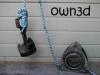
increasing the cooling surface area around the spark plugs to prevent overheating of that area and allow hotter plugs to be used more reliably:


take it easy Juan, and don't keel yourself...
to begin with the customer came to me about 5 years ago after another rather well known shop had done a bit of work including rebuilding the engine and installing a stage 4 hybrid turbo and piggyback engine management system. the engine mounts were loose and the turbo was puking oil all over the engine bay from the blow off valve.
so first thing is first, we yanked off the faulty turbo and went with something different. he was put onto master power from one of his friends and i went along with that as master power had a decent rep at the time for high horsepower turbos for a decent price, we installed an HKS log manifold at the same time and a power FC as well as revamped the fuel system in addition to a Greddy FMIC kit.
later that setup went in for tuning from a third party and on the dyno it had a fuel system issue, the pressure was dropping in the later RPM ranges so with some digging i found the fuel pump was losing voltage. a quick rewire of the fuel pump and it tuned out to about 350WHP @14psi with the tiny .69 A/R turbine housing to assist with spooling.
a while passed but that engine wound up eating a seal. now in my hands i tore down the engine and found it ate a rotor and housing so we went with a similar setup but this time went with a full bridge port on the engine, replaced the bad housing and rotor and upgraded the turbine housing to a more suitable .96 A/R housing.
after break-in we went to the dyno local to him and got everything sorted out, the most dramatic issue was a broken spark plug wire clip which we patched together from a local auto parts store with a new clip, as i was changing the spark plugs prior to the tune. during that session the car made 449WHP@18psi on the master power T70 turbo, tuned by yours truly.
several years later the dreaded call came in again, blown rotor on the front housing. the car was trailered to me(since i had then moved to vegas where before i was located in norther california) and the engine torn down, found the front rotor blown and had the injectors serviced- front secondary 15% low on output- problem found and fixed by RC engineering who had serviced the injectors.
this time around i wanted to build the most bulletproof engine i could possibly imagine. enter Goopy racing whom i called after seeing testimonials from others on their seals and the raw figures they have put down on their seals. seeing how a few of the rotor slots were worn from this engine now, having been pushing over 400whp for over 30k miles now it also suited our needs for good tolerances in this motor, seeing how the seal slots are already 3mm.
for the internals i lapped the housings to get rid of the majority of the step wear that the now 150k mile irons that have seen higher HP levels for some time had accumulated.
the rotor housing was replaced with a good quality used replacement from a low mile REW that sacrificed itself for the cause, as well as the replacement rotor that i had milled for the 3mm seals.
for durability we went with dowel pinning the engine so that there is no room for flex in the engine to possibly twist if he wants to go bigger later.
the transmission had also been getting sticky so he wanted me to refresh the transmission. since he also picked up an exedy twin disc for it that was set up for an REW pull type transmission i built a hybrid series 5/6 setup with an REW front half and the S5 tail section to mount to the FC frame. since the transmissions are virtually identical in the mid section it was just a matter of rebuilding the S6 core transmission and slapping the FC tail section on and using the FD hydraulics adapted to the FC lines from the clutch master, yes it is an FC with a pull type clutch now.
so that setup was completed and picked up, driven for 4k miles and trailered back to me to be finished up this last week after the engine was broken in.
after fixing some minor issues we ran it over to the dyno facility, first runs were promising showing 445 whp at 15psi. while turning up the boost i was noticing AFRs progressively flatlining no matter how much correction was made, i had the owner watch the fuel pressure and, well, 22psi while trying to maintain 490+whp is no good.... we pulled the car off the dyno and called it a night.
next day i went over the whole fuel system with a fine tooth comb, replaced the fuel pump submersible hose, rewired the pump inside the tank, checked voltage to the pump(17+ volts from the boost-a-pump still), replaced the injector seals(they were leaking a little bit at higher boost levels) and pressure tested the system to 90psi, all seemed well.
that night we went back to the dyno for another stab at it. it didn't take long to notice the issue was still persisting, so i turned the boost down to rule out fuel pump or injector issue.. at 73% duty cycle still was losing pressure... supra TT pump was dying. we asked around and found a shop open late that had a suitable replacement pump(the only replacement 290LPH or higher) and i sent him off to pick up the walbro 400lph new pump. we couldn't find anything else that would work for our needs so walbro it was(the original walbro 255 he had in it lasted several years pushing 450whp but he opted for the 290lph supra pump when we built this current motor, mistake apparently).
so while he was getting the pump i pulled out the old beat up brand spanking new supra pump, he arrived and i slapped in the new walbro super pump. again the car was strapped back to the dyno, first run- no pressure drop! walbro doing it's job i turned the boost-a-pump back down in order to save the pump as it was already overkill.
low boost now set to 15 psi showed 446WHP, high boost at 20psi showed 481whp. the previous night the peak was 494WHP, difference being the second night i could smell the tires losing traction so the figures were being skewed by the tires being in a different location on the rollers. i didn't think to get a few guys into the trunk for a peak run but it wasn't super important as the car isn't a dyno queen looking for raw numbers but to be a kick in the pants daily driver, might have been over 500, we won't really know, also doesn't matter that much to either of us, it is plenty fast as it is.
during some of the runs when the fuel pump was crapping out the AFRs were peaking in the higher 13's, while figuring out an issue with the reversed setup on the Apexi AVCR boost controller the boost was spiking up to 23.7psi(boost cut set to kick in at 24psi). keep in mind this is running 91 octane and i installed a Devil's Own auxiliary injection system along with the master power turbo setup a number of years ago. the AI is spraying 600cc/min of 50/50 water/methanol. never heard a peep from the motor nor did it ever skip a beat. Goopy seals and pinning= mission accomplished.
i know there is plenty of little bits i missed, like how we have had to redo the black magic wiring and fan assembly half a dozen times over the years but they are minor in comparison to everything else that was done and the progression level.
yes, the numbers aren't groundbreaking or even super impressive these days but my goal with this setup was to last. he is moving across the US and i likely will never see the car again and i wanted this setup to be as reliable as a stock car yet produce 3-4 times the horsepower. i also get attached to the cars i work on, and this car has always been our path to building a bigger, better and more reliable car.
in retrospect, i usually have am nervous tuning any rotary. this is the first car i have tuned feeling 100% calm during the whole process. we went run after run, beating the pure snot out of this motor for a full tank of fuel over 2 nights while sorting out the fuel issues.
increasing the cooling surface area around the spark plugs to prevent overheating of that area and allow hotter plugs to be used more reliably:
take it easy Juan, and don't keel yourself...
Last edited by RotaryEvolution; Jan 13, 2012 at 12:23 AM.







Thread Starter
Joined: Oct 2003
Posts: 5,107
Likes: 50
From: Central Florida
thanks for the compliments
400 probably wouldn't need pinning but it really isn't a bad idea on any 2nd gen engine that you eventually plan to push any higher than that, so i'll keep that in the price. the full bridge also isn't necessary as a streetport will still get you very similar results.
TII basic engine rebuild $1500-1550
full bridge porting $425
or streetporting $285
dowel pinning $375
3mm Goopy racing seal upgrade/rotor milling(if the rotors are 2mm) $450
the water jacket porting took me far too long so the housings can be sent to racing beat and i believe they can do a similar mod for about $100 per housing, they do not recommend it for street driven cars but i honestly cannot think of why it would be harmful. just be sure to flush the cooling system regularly to avoid electrolysis.
all in all with a good condition core motor the built short block capable of easily handling 400WHP is about $2800. if the housings need to be lapped and housings resurfaced then that adds about $400.
the only oil modifications to this motor is a thermal pellet and OMP block off/premix with racing castor 2 stroke oil, never has it shown any sign of oil starvation which is also why i hate shops that push oil mods with their rebuilds because they're BS for most practical purposes.
most people can get by with a basic rebuild but for reliability this is what i went with. when i need to rebuild my TII engine again i plan on doing it after this model and add in my coolant seal savers(not in production yet), as this is likely going to be about as durable of a setup as one could hope for.
TII basic engine rebuild $1500-1550
full bridge porting $425
or streetporting $285
dowel pinning $375
3mm Goopy racing seal upgrade/rotor milling(if the rotors are 2mm) $450
the water jacket porting took me far too long so the housings can be sent to racing beat and i believe they can do a similar mod for about $100 per housing, they do not recommend it for street driven cars but i honestly cannot think of why it would be harmful. just be sure to flush the cooling system regularly to avoid electrolysis.
all in all with a good condition core motor the built short block capable of easily handling 400WHP is about $2800. if the housings need to be lapped and housings resurfaced then that adds about $400.
the only oil modifications to this motor is a thermal pellet and OMP block off/premix with racing castor 2 stroke oil, never has it shown any sign of oil starvation which is also why i hate shops that push oil mods with their rebuilds because they're BS for most practical purposes.
most people can get by with a basic rebuild but for reliability this is what i went with. when i need to rebuild my TII engine again i plan on doing it after this model and add in my coolant seal savers(not in production yet), as this is likely going to be about as durable of a setup as one could hope for.
Last edited by RotaryEvolution; Jan 13, 2012 at 01:31 PM.


Trending Topics

Wow. LOVE this. I've seen so many great numbers from GT35R's. Rising RPM fuel rails are the ****! Definitely getting a set of those... Eventually.
Awesome build, for sure. How exactly did you do the water jacket porting? A Dremel and a steady hand??
Awesome build, for sure. How exactly did you do the water jacket porting? A Dremel and a steady hand??


This is exactlyyy what im workin on myself althought my fuel system/electronics is a bit more up to snuff. Very Nice Ben, keep us update on this car as to how long it lasts, the mileage ect. Nice job!
Thread Starter
Joined: Oct 2003
Posts: 5,107
Likes: 50
From: Central Florida
i'm sure i will hear when/if it ever gives it up. i referred him to goopy since he will be on the east coast now but knowing him he will likely trailer it all the way back here if it does quit again. 
as for the water jacket porting, i did it by hand with a dremel and i tell you it was a total pain in the ***! racing beat does it with a CNC mill so it's a much simpler task for them than for me. the pictures don't do the job justice, it is very difficult to get any sort of porting bit into those passages.
this turbo was actually a step sideways from the previous T70, the T70 had more potential but the 35R has much better response and better power at the lower and mid boost levels but runs out of air sooner. overall the car is much more responsive and quicker with the 35R.
as for the water jacket porting, i did it by hand with a dremel and i tell you it was a total pain in the ***! racing beat does it with a CNC mill so it's a much simpler task for them than for me. the pictures don't do the job justice, it is very difficult to get any sort of porting bit into those passages.
this turbo was actually a step sideways from the previous T70, the T70 had more potential but the 35R has much better response and better power at the lower and mid boost levels but runs out of air sooner. overall the car is much more responsive and quicker with the 35R.
Last edited by RotaryEvolution; Jan 14, 2012 at 03:12 PM.

as for the water jacket porting, i did it by hand with a dremel and i tell you it was a total pain in the ***! racing beat does it with a CNC mill so it's a much simpler task for them than for me. the pictures don't do the job justice, it is very difficult to get any sort of porting bit into those passages.

Thread Starter
Joined: Oct 2003
Posts: 5,107
Likes: 50
From: Central Florida
unfortunately they couldn't get an accurate RPM signal off any of the thick magnecor wires so they had to run it based off of wheel speed, so i really have no idea how much torque it was making but it does have a very smooth power band.
Thread Starter
Joined: Oct 2003
Posts: 5,107
Likes: 50
From: Central Florida
we don't know, the car is back home now and we never got a good RPM signal off the coils to ever know.
the response is more than most people will ever need for a street car without sticky drag radials. anything over 4k RPMs and 3rd gear or lower at even partial throttle it is difficult to keep the car planted to the ground. driving back from the dyno when i drove it WOT as soon as i hit ~4200 RPM the tach just would shoot to redline before you actually could look down(if you even had the nerve to try), keeping the car straight was already a chore.
at the start of the 2nd video you can hear second gear, it is completely useless now at anything above 35% throttle.
the response is more than most people will ever need for a street car without sticky drag radials. anything over 4k RPMs and 3rd gear or lower at even partial throttle it is difficult to keep the car planted to the ground. driving back from the dyno when i drove it WOT as soon as i hit ~4200 RPM the tach just would shoot to redline before you actually could look down(if you even had the nerve to try), keeping the car straight was already a chore.
at the start of the 2nd video you can hear second gear, it is completely useless now at anything above 35% throttle.
Last edited by RotaryEvolution; Jan 26, 2012 at 12:19 PM.