


running over 15 PSI? you need to know this.



1. 2nd gens had both an airflow sensor and a MAP sensor from the factory (and EFI 1st gens had just an airflow meter). It has nothing to do with how modern or un-modern the car is.
2. running just a MAP sensor in speed density configuration cut down the cost on a car that was already really expensive and complex.
3. Mazda does not design their cars with hardcore aftermarket tuners in mind, nor should they have to.
2. running just a MAP sensor in speed density configuration cut down the cost on a car that was already really expensive and complex.
3. Mazda does not design their cars with hardcore aftermarket tuners in mind, nor should they have to.
Who says anything about hardcore tuners, that was not my implication. Even in stock trim, one can argue that the car is thermally mismanaged! I know that competing factors like performance, cost, weight, etc. all had something to do with the final product... but that doesn't mean anything to us, the consumers of the product, when we all know that the car is truly a thermal mess in stock trim. Heat is essentially a way to accelerate aging processes. Given that the rotary is a very good heat producing engine (and not a good heat rejecting one!), it doesn't do us any good when you put a turbocharger on it. I would like to think Mazda had their best guys on this project, but there's no denying that there were too many competing factors that led them to the car we all know and love, and sometimes are frustrated with. Any high performance motor is all about keeping heat in check... keep it cool as they say.
I personally feel the motor has enormous potential, it just needs the TLC the Mazda engineers couldn't afford to give us. Even if you're at 300 whp, you could probably use water injection or really high octane fuel if you're pushing it on a 100F day. Never did the calcs, but from my anecdotal type recollections that is about right. But what do I know?


A couple years ago you would rarely if ever find me defending Mazda or OEMs in general. But after being exposed to design principles in an engineering curriculum and doing some minor work with GM designers on a project, I have a new found understanding and respect for the difficult choices that factory engineers make.
I think Mazda made a lot of mistakes too, especially in terms of the reliability of a 100% factory vehicle. That's the main type of reliability you have to judge here. Even though it would be nice to have added safety margin and more overall easy modability, you can't blame a cost-conscious OEM because its car doesn't do what you want it to do when it is operated far outside its design parameters. It's not like Mazda was going to change its manufacturing process. It would have to use different barbs/nipples on the manifold and MAP sensor, adding cost to the car while providing zero benefit in reliability to anyone who operates the vehicle the way it was intended to be operated.
How many 100% factory Rx-7's, even poorly maintained ones, suffer engine damage from a MAP sensor hose blowing off (without the owner/mechanic screwing something up)? It just doesn't happen. Even though plenty of other different types of failures occur to these vehicles when stock, that's about as idiot-proof of a MAP sensor design as it needs to be. How often do you even hear of stock cars with MAP sensor related problems at all?
How many factory cars detonate because the stock ECU is speed density (no MAF sensor) and isn't mapped for breathing mods? That's what the fuel cut is for, to save the motor in case of some kind of freak accident on a stock vehicle. The car was expensive enough as it is, adding those features (better hose connections or a MAF sensor) would neither increase sales nor reduce warranty claims. We can go open season all day on the heat problems of a stock car, but the speed density issue and the MAP sensor plumbing are IMO beyond reproach from the perspective of a factory engineer.
In your defense however: Mazda went with a MAF sensor on the Rx-8, streamlined the emissions systems and eliminated many of the associated vacuum hoses, eliminated most of the idle problems with the drive-by-wire system, and drastically improved the life of the catalytic converter as well. So they recognized their mistakes, except for the Rx-8 OMP oil injector issue which was then corrected in the 09 models.
I think Mazda made a lot of mistakes too, especially in terms of the reliability of a 100% factory vehicle. That's the main type of reliability you have to judge here. Even though it would be nice to have added safety margin and more overall easy modability, you can't blame a cost-conscious OEM because its car doesn't do what you want it to do when it is operated far outside its design parameters. It's not like Mazda was going to change its manufacturing process. It would have to use different barbs/nipples on the manifold and MAP sensor, adding cost to the car while providing zero benefit in reliability to anyone who operates the vehicle the way it was intended to be operated.
How many 100% factory Rx-7's, even poorly maintained ones, suffer engine damage from a MAP sensor hose blowing off (without the owner/mechanic screwing something up)? It just doesn't happen. Even though plenty of other different types of failures occur to these vehicles when stock, that's about as idiot-proof of a MAP sensor design as it needs to be. How often do you even hear of stock cars with MAP sensor related problems at all?
How many factory cars detonate because the stock ECU is speed density (no MAF sensor) and isn't mapped for breathing mods? That's what the fuel cut is for, to save the motor in case of some kind of freak accident on a stock vehicle. The car was expensive enough as it is, adding those features (better hose connections or a MAF sensor) would neither increase sales nor reduce warranty claims. We can go open season all day on the heat problems of a stock car, but the speed density issue and the MAP sensor plumbing are IMO beyond reproach from the perspective of a factory engineer.
In your defense however: Mazda went with a MAF sensor on the Rx-8, streamlined the emissions systems and eliminated many of the associated vacuum hoses, eliminated most of the idle problems with the drive-by-wire system, and drastically improved the life of the catalytic converter as well. So they recognized their mistakes, except for the Rx-8 OMP oil injector issue which was then corrected in the 09 models.


can anyone please help me out regarding my post on the first page? I would really appreciate it, i just don't want to have to take it apart again after i button it all up. thanks 
Again, agreed on all counts; you're preaching to the choir on this one
Back to the OP topic: make sure your air & fuel lines are tight and right. Use good gas and make sure to at least run a good IC or WI (or both) if you're running 15+ PSI boost, stock turbos (especially!) or "effecient" single. Don't run crazy timing. Keep your fueling rich. Bingo. Reliable motor
Back to the OP topic: make sure your air & fuel lines are tight and right. Use good gas and make sure to at least run a good IC or WI (or both) if you're running 15+ PSI boost, stock turbos (especially!) or "effecient" single. Don't run crazy timing. Keep your fueling rich. Bingo. Reliable motor
A couple years ago you would rarely if ever find me defending Mazda or OEMs in general. But after being exposed to design principles in an engineering curriculum and doing some minor work with GM designers on a project, I have a new found understanding and respect for the difficult choices that factory engineers make.
I think Mazda made a lot of mistakes too, especially in terms of the reliability of a 100% factory vehicle. That's the main type of reliability you have to judge here. Even though it would be nice to have added safety margin and more overall easy modability, you can't blame a cost-conscious OEM because its car doesn't do what you want it to do when it is operated far outside its design parameters. It's not like Mazda was going to change its manufacturing process. It would have to use different barbs/nipples on the manifold and MAP sensor, adding cost to the car while providing zero benefit in reliability to anyone who operates the vehicle the way it was intended to be operated.
How many 100% factory Rx-7's, even poorly maintained ones, suffer engine damage from a MAP sensor hose blowing off (without the owner/mechanic screwing something up)? It just doesn't happen. Even though plenty of other different types of failures occur to these vehicles when stock, that's about as idiot-proof of a MAP sensor design as it needs to be. How often do you even hear of stock cars with MAP sensor related problems at all?
How many factory cars detonate because the stock ECU is speed density (no MAF sensor) and isn't mapped for breathing mods? That's what the fuel cut is for, to save the motor in case of some kind of freak accident on a stock vehicle. The car was expensive enough as it is, adding those features (better hose connections or a MAF sensor) would neither increase sales nor reduce warranty claims.
We can go open season all day on the heat problems of a stock car, but the speed density issue and the MAP sensor plumbing are IMO beyond reproach from the perspective of a factory engineer.
I think Mazda made a lot of mistakes too, especially in terms of the reliability of a 100% factory vehicle. That's the main type of reliability you have to judge here. Even though it would be nice to have added safety margin and more overall easy modability, you can't blame a cost-conscious OEM because its car doesn't do what you want it to do when it is operated far outside its design parameters. It's not like Mazda was going to change its manufacturing process. It would have to use different barbs/nipples on the manifold and MAP sensor, adding cost to the car while providing zero benefit in reliability to anyone who operates the vehicle the way it was intended to be operated.
How many 100% factory Rx-7's, even poorly maintained ones, suffer engine damage from a MAP sensor hose blowing off (without the owner/mechanic screwing something up)? It just doesn't happen. Even though plenty of other different types of failures occur to these vehicles when stock, that's about as idiot-proof of a MAP sensor design as it needs to be. How often do you even hear of stock cars with MAP sensor related problems at all?
How many factory cars detonate because the stock ECU is speed density (no MAF sensor) and isn't mapped for breathing mods? That's what the fuel cut is for, to save the motor in case of some kind of freak accident on a stock vehicle. The car was expensive enough as it is, adding those features (better hose connections or a MAF sensor) would neither increase sales nor reduce warranty claims.
We can go open season all day on the heat problems of a stock car, but the speed density issue and the MAP sensor plumbing are IMO beyond reproach from the perspective of a factory engineer.

Banned. I got OWNED!!!
Joined: Mar 2009
Posts: 1,045
Likes: 0
From: NC
- NEVER NEVER NEVER use plastic vacuum tees. I personally know of 2 people who lost motors due to these failing. The heat under the hood is just too much. They're fine on Grandma's Buick, not an FD. If you have to use a tee, use BRASS. For small size tees, you can find brass ones at the aquarium section of most pet stores for cheap, and they hold up and work/fit great. For larger size, like wastegate hoses (6mm), some parts stores might have them, but McMaster-Carr is a great source, they have really good ones for cheap.
Dale
Dale
Last edited by GoodfellaFD3S; Mar 23, 2009 at 11:34 PM.

I think it was mentioned before, but without comment: use a vacuum manifold.
Comments on that by someone that has used them?
It appears to be a cheap solution to the problem of sourcing vacuum.
Here's one example: http://www.maperformance.com/vibrant...ion-block.html
Comments on that by someone that has used them?
It appears to be a cheap solution to the problem of sourcing vacuum.
Here's one example: http://www.maperformance.com/vibrant...ion-block.html

Yes, it is a critical connection, I value that. There are many critical connections on the car.
Notice that a .1" diameter hose at 30psi only generates .25lb of force to pop itself loose. That's four ounces, for 30psi of boost.
With stock hoses the rubber tends to harden, and the thermal expansion/contraction causes the hardened hose to fit loosely. Obviously this is unacceptable, which is why everyone should have a better material already in place.
A good silicone or viton hose on a clean plain metal nipple requires several pounds of force to pull off. There is ample holding power available. Burnishing the finish of the nipple or using an adhesive will make this even more secure. In my mind, it's as simple as noting how secure the grip is when I'm working in that area.
If you want mechanical retention, flare the end of the nipple or tap and install a barbed hose fitting. A zip-tie with a barb is extremely robust.
I have no problem with people going to extra lengths, belt-and-suspenders engineering, etc. But to say that a proper silicone hose is insufficient is going a bit far in my opinion.
Dave
Last edited by dgeesaman; Mar 4, 2009 at 11:34 AM.
I think it was mentioned before, but without comment: use a vacuum manifold.
Comments on that by someone that has used them?
It appears to be a cheap solution to the problem of sourcing vacuum.
Here's one example: http://www.maperformance.com/vibrant...ion-block.html
Comments on that by someone that has used them?
It appears to be a cheap solution to the problem of sourcing vacuum.
Here's one example: http://www.maperformance.com/vibrant...ion-block.html
One thought that comes to mind regarding this is that it would simplify removing, installing the UIM, and also make it simple to see if all the vacuum hoses are connected properly.
When you get much over about 17-18psi, all your silicone or basic rubber hoses expand a bit. Keep that in mind.
I got my 5/32" vacuum caps from McMaster-Carr (part # 6448K74 ) in today:
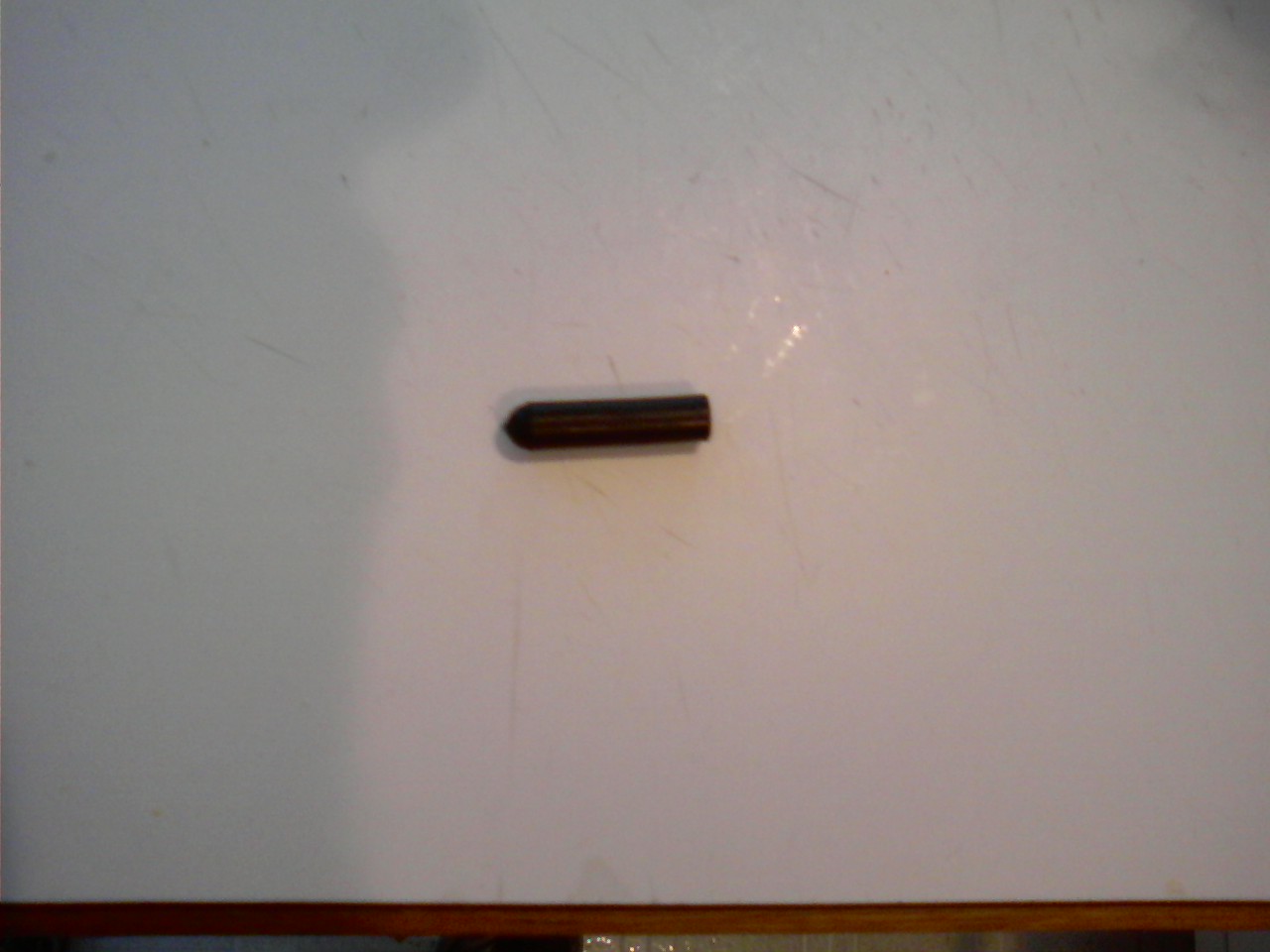
You can see they're a little bit longer than the autozone ones you typicall buy. I'm going to cut a little bit off one end, it shouldn't be a big deal.
These are actually a high temp rubber, rated to 450 F according to the McMaster-Carr site. The silicone ones are rated at a higher temperature but they only come in oddball sizes. These fit nice and snug on the OEM vacuum nipples. I will secure them further with a bit of Krazy Glue.
I got my 5/32" vacuum caps from McMaster-Carr (part # 6448K74 ) in today:
You can see they're a little bit longer than the autozone ones you typicall buy. I'm going to cut a little bit off one end, it shouldn't be a big deal.
These are actually a high temp rubber, rated to 450 F according to the McMaster-Carr site. The silicone ones are rated at a higher temperature but they only come in oddball sizes. These fit nice and snug on the OEM vacuum nipples. I will secure them further with a bit of Krazy Glue.
Notice that a .1" diameter hose at 30psi only generates .25lb of force to pop itself loose. That's four ounces, for 30psi of boost.
With stock hoses the rubber tends to harden, and the thermal expansion/contraction causes the hardened hose to fit loosely. Obviously this is unacceptable, which is why everyone should have a better material already in place.
Dave
It seems the factors against us are not that great. However over time and heat cycling material performance begins to degrade, as we all know. Of course some materials like silicone handle these factors much better than others.
All and all I'd have to say if the risk is great (like when a hose pops of the MAP sensor) then why not take the time to make sure the certainty of that risk is reduced.

Great catch on securing these two critical lines.
Years ago I hooked my boost gauge MAP sensor into a tee off the ECU MAP sensor line. I used a forged brass tee, Hi-temp silicone sealant etc. and was thinking I wanted to measure boost exactly where the ECU measures it and that a failure in boost line would thus indicate on my gauge. I did not think about the consequence of me added an additional failure mode.
Years ago I hooked my boost gauge MAP sensor into a tee off the ECU MAP sensor line. I used a forged brass tee, Hi-temp silicone sealant etc. and was thinking I wanted to measure boost exactly where the ECU measures it and that a failure in boost line would thus indicate on my gauge. I did not think about the consequence of me added an additional failure mode.



Joined: Mar 2001
Posts: 30,818
Likes: 656
From: FL-->NJ/NYC again!
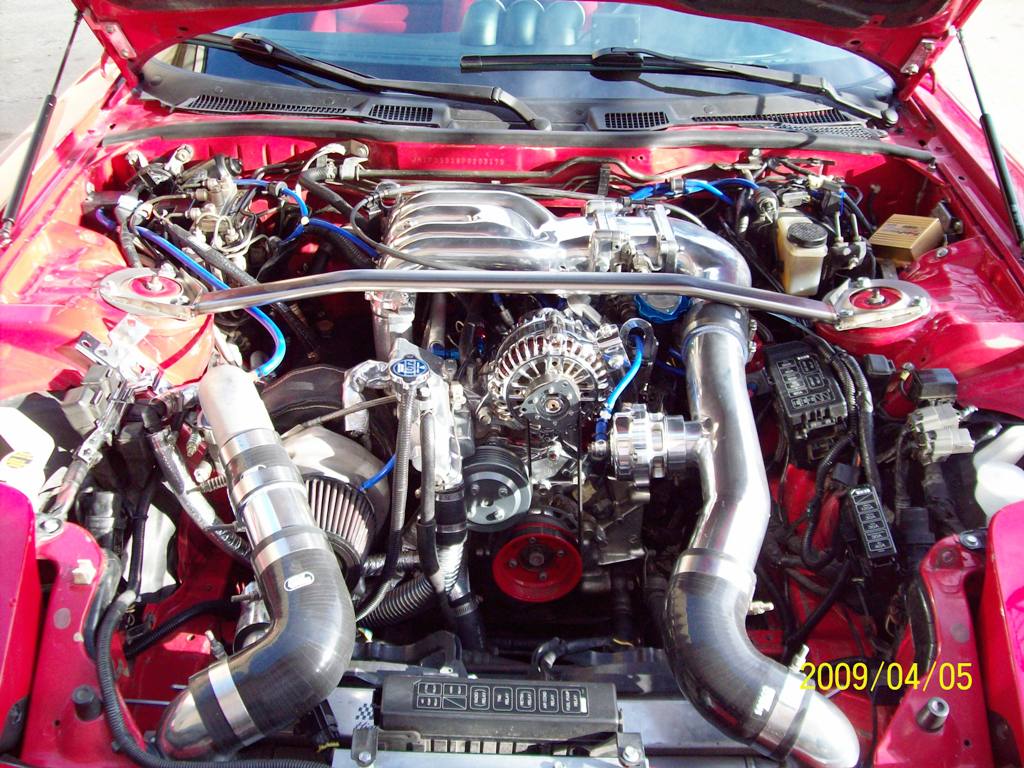
In preparation for the trip down to Deals Gap I performed a lot of maintenance this past weekend. This included cleaning up my engine bay, using this thread as inspiration
I deep-sixed three plastic vacuum tees (y's really) and gave all the important connections their own dedicated vacuum/boost source. This included the FPR, MAP sensor, and water injection boost solenoid, which were previously T'ed.
Now there is one sole vacuum Y, for the boost gauge and boost controller. It's a robust stainless steel piece. There is one plastic vacuum fitting, to connect the 6mm BOV nipple to 4mm hose to connect to the UIM. I plan to switch that out when I have the proper fitting.
I'm using Sard vacuum hoses, and I'm extremely happy with them. They're over 2 years old and are still in extremely good condition, they also firmly attach to all the nipples on the UIM.
As stated I performed a lot of maintenance at once (new plugs, new NGK race wires, Amsoil tranny/diff fluid, fresh idemitsu engine oil) so hard to say if this directly affected driveability at all. I will say that the car definitely seems smoother, a result of all of the aforementioned I think
Edit: Also installed the Rotary Extreme hood struts, which I freaking LOVE
I deep-sixed three plastic vacuum tees (y's really) and gave all the important connections their own dedicated vacuum/boost source. This included the FPR, MAP sensor, and water injection boost solenoid, which were previously T'ed.
Now there is one sole vacuum Y, for the boost gauge and boost controller. It's a robust stainless steel piece. There is one plastic vacuum fitting, to connect the 6mm BOV nipple to 4mm hose to connect to the UIM. I plan to switch that out when I have the proper fitting.
I'm using Sard vacuum hoses, and I'm extremely happy with them. They're over 2 years old and are still in extremely good condition, they also firmly attach to all the nipples on the UIM.
As stated I performed a lot of maintenance at once (new plugs, new NGK race wires, Amsoil tranny/diff fluid, fresh idemitsu engine oil) so hard to say if this directly affected driveability at all. I will say that the car definitely seems smoother, a result of all of the aforementioned I think
Edit: Also installed the Rotary Extreme hood struts, which I freaking LOVE
Last edited by GoodfellaFD3S; Apr 7, 2009 at 08:08 PM.


Joined: Mar 2001
Posts: 30,818
Likes: 656
From: FL-->NJ/NYC again!




This is a really important point. On my 2nd gen my OMP air bleed hose blew off the back of the UIM. For some bizarre reason that distorted my GM 3 bar MAP sensor reading, which was hooked to a port on the front of the UIM. So I was boosting 21psi (race fuel), but my power FC only read 10psi! The timing was advanced too far by about 8 degrees, and the AFR leaned out to 15:1 at 21 psi!
The result was INSANE detonation. The porcelain separated from 3 of my 10 heat range spark plugs! I cracked a corner seal. But RA super seals survived and I am actually reusing them on my next motor as they look brand new almost and passed every FSM test.
One soluton: A small bit of Krazy Glue. Seriously. you will have to cut the hose off to remove it (MAP sensor hose isn't so bad to replace), but it will NEVER blow off. Good to 25+psi . For my actual MAP sensor, I actually use a 3/16" fuel line hose from autozone on my FC, I have it clamped with a small hose clamp on a nipple on the front of my 2nd gen UIM (smallest size clamp you can get there). The 3/16" hose will fit very very tightly on the GM 3 bar sensor (b/c of the lip on the nipple), nothing extra needed.
The result was INSANE detonation. The porcelain separated from 3 of my 10 heat range spark plugs! I cracked a corner seal. But RA super seals survived and I am actually reusing them on my next motor as they look brand new almost and passed every FSM test.
One soluton: A small bit of Krazy Glue. Seriously. you will have to cut the hose off to remove it (MAP sensor hose isn't so bad to replace), but it will NEVER blow off. Good to 25+psi . For my actual MAP sensor, I actually use a 3/16" fuel line hose from autozone on my FC, I have it clamped with a small hose clamp on a nipple on the front of my 2nd gen UIM (smallest size clamp you can get there). The 3/16" hose will fit very very tightly on the GM 3 bar sensor (b/c of the lip on the nipple), nothing extra needed.
Same exact thing happened to me. My hose blew off doing a quater mile pass and I ended up loosing 3 corner seals. However, my RA Super Seals lasted.
I now use clamps on all hoses and super glue.





Joined: Mar 2001
Posts: 31,857
Likes: 3,243
From: https://www2.mazda.com/en/100th/
A couple years ago you would rarely if ever find me defending Mazda or OEMs in general. But after being exposed to design principles in an engineering curriculum and doing some minor work with GM designers on a project, I have a new found understanding and respect for the difficult choices that factory engineers make.
and drastically improved the life of the catalytic converter as well.
and drastically improved the life of the catalytic converter as well.
i do recall back in the day, the techs would occasionally bump the MAP hose off doing an oil change, but we never lost an engine from that. why? the car starts, but doesnt run well enough to drive!
the FD main cat is like the strongest one ever built, its a tank, you can blow the engine @100,000miles and drive with 1 rotor for another 50,000miles (like BATMAN), and its not dead. those things are TOUGH.
with the Rx8, the cat got tested during the (42006? 40206?) recall, the one that we checked the engines in late 06? the procedure was to test the engine, and then the cat. our dealership had about 150 rx8's in service, and out of those we replaced 0 engines (better than the FD) but many main cats (20 something? they weren't ordered thru the normal parts channel, so its harder to tell), about 1 in 5 rx8's had a bad (plugged) main cat.
i think looking back both cars are still probably better than the V6 mazda 6... we did more engines, transmissions and cats on those things, than either the FD or the Rx8, in the warranty period
anyways, always interesting to correlate perceptions with some kind of metrics

I have accidentally gotten Krazy Glue on silicone hose and had the hose crack open very easily around the area with the hard cured glue on it.
I use a flexible adhesive like weatherstripping glue and a zip tie and so far no failures.
I agree removing the stock nipple and drilling/tapping for barbed nipple is a really good idea.
I always thought it would be really cool to use something like a Swagelok SS-6M0-1-2 fitting swagged onto the nipples and braided AN vacuum lines.
I use a flexible adhesive like weatherstripping glue and a zip tie and so far no failures.
I agree removing the stock nipple and drilling/tapping for barbed nipple is a really good idea.
I always thought it would be really cool to use something like a Swagelok SS-6M0-1-2 fitting swagged onto the nipples and braided AN vacuum lines.

I have been interested in these 3.5bar map sensors Zeitronix sells, but not sure if it's way overkill, that plus I really don't want my engine to be the guinea pig to test one. Anyone happen to have PFC scale/offset numbers for a 3.5bar handy? http://www.zeitronix.com/installatio...stallation.htm
Can use either screw on the the hose barb fitting or use a 1/8NPT bung and mount it directly on the intake.

Can use either screw on the the hose barb fitting or use a 1/8NPT bung and mount it directly on the intake.

Howard, you talked about drilling and tapping the UIM for the MAP, why not go another step further and tap for the FPR? And for the hell of it, couldn't a dedicated tap for the wastegate(s) be added as well? Seems to me, It wouldn't be a bad idea to at least do the MAP & FPR.
I have an idea Howard. For the squemish, couldn't you drill and tap the block off plate for the, AWS solenoid and Pipe? That wouldn't be all that difficult to remove and tap. Wouldn't be a bad location for the source either, I wouldn't think.
I have an idea Howard. For the squemish, couldn't you drill and tap the block off plate for the, AWS solenoid and Pipe? That wouldn't be all that difficult to remove and tap. Wouldn't be a bad location for the source either, I wouldn't think.

