


New to the forum:Noob questions


Thread Starter
Newbie
Joined: Jul 2006
Posts: 3
Likes: 0
From: Bradenton, Florida
New to the forum:Noob questions
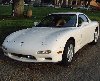
hey im new to the forum and i just baught a 1994 rx-7 twin turbo completely stock with a new motor only 8000 miles on the motor.
Right now im looking just to do some basic upgrades and want some opinions on parts.
what are 3 basic upgrades that i should start with? Exhaust, airintake, and whatelse?
Also, what is a good rx-7 site to buy parts from i cant find any?
thanks, Matt
Right now im looking just to do some basic upgrades and want some opinions on parts.
what are 3 basic upgrades that i should start with? Exhaust, airintake, and whatelse?
Also, what is a good rx-7 site to buy parts from i cant find any?
thanks, Matt

Cheese

Joined: May 2001
Posts: 452
Likes: 0
From: Australia
have a thorough read through this thread https://www.rx7club.com/3rd-generation-specific-1993-2002-16/faq-3rd-gen-other-useful-links-68640/




Hi Matt~
if the car is completely stock, here are some things to consider
- aftermarket gauges: boost gauge, water temp gauge
- downpipe
- aluminum AST
- Silicone Vaccum Hose upgrade
- Bigger Radiator
Try looking in the Sticky on the top for 3rd gen FAQS~ Look for Reliability Mods~ That should get you started!
Some websites I know for parts are:
www.rx7store.net
www.rotaryextreme.com
www.rx7.com
www.racingbeat.com
Sorry I am fairly new myself~ hope these info are helpful~
if the car is completely stock, here are some things to consider
- aftermarket gauges: boost gauge, water temp gauge
- downpipe
- aluminum AST
- Silicone Vaccum Hose upgrade
- Bigger Radiator
Try looking in the Sticky on the top for 3rd gen FAQS~ Look for Reliability Mods~ That should get you started!
Some websites I know for parts are:
www.rx7store.net
www.rotaryextreme.com
www.rx7.com
www.racingbeat.com
Sorry I am fairly new myself~ hope these info are helpful~

I'd like to add a few suggestions.
1) Don't mod anything now. Spend your time doing the maintenance and just driving it and getting to know the car. Doing maintenance work will give you time to absorb the information that you'll want to know inside and out, plus develop a baseline understanding of the car. This 'shakedown' period will allow you to learn the nuances of your car and the rotary/turbo setup in general, as well as allow some time for reliability issues to appear. Get a compression test done after a few months if you don't have the results of one already in hand.
2) Next do some reliability mods. Install a boost gauge, water temp gauge, and downpipe. Make sure the cooling system and boost control system is working well. Replace the AST or eliminate it. Install an aluminum radiator or a newer stock rad. Consider doing the hose job.
3) By this time you will know the car mechanically and generally enough that installing mods will be most rewarding and least stressful. Not to mention, this time you can be watching the classified and score some great deals. Because you'll know the car well, when you install the mods *one at a time* you can recognize if there are any ill side effects with that change. Vitally important is the 10psi rule, which says that bolt-on mods are safe for an FD with a stock ecu/stock fuel system/stock turbos, as long as the maximum boost runs at 10psi. For many, this is about 3 mods: intake, downpipe, and cat-back exhaust. Those are probably the best 3 power mods to start with, but like I said you should have the boost gauge there first to be *sure*.
Note that installing "an exhaust" on an FD is a little different from other cars. On most cars, reducing backpressure is generally a good thing for power, on an FD too little backpressure will cause the stock wastegate to be overwhelmed. The boost will not be stable under at full throttle, no matter what kind of boost control is installed. So don't install a full exhaust (you can replace the stock muffler and downpipe, but leave the stock cat) unless you also plan to modify the wastegate.
Dave
1) Don't mod anything now. Spend your time doing the maintenance and just driving it and getting to know the car. Doing maintenance work will give you time to absorb the information that you'll want to know inside and out, plus develop a baseline understanding of the car. This 'shakedown' period will allow you to learn the nuances of your car and the rotary/turbo setup in general, as well as allow some time for reliability issues to appear. Get a compression test done after a few months if you don't have the results of one already in hand.
2) Next do some reliability mods. Install a boost gauge, water temp gauge, and downpipe. Make sure the cooling system and boost control system is working well. Replace the AST or eliminate it. Install an aluminum radiator or a newer stock rad. Consider doing the hose job.
3) By this time you will know the car mechanically and generally enough that installing mods will be most rewarding and least stressful. Not to mention, this time you can be watching the classified and score some great deals. Because you'll know the car well, when you install the mods *one at a time* you can recognize if there are any ill side effects with that change. Vitally important is the 10psi rule, which says that bolt-on mods are safe for an FD with a stock ecu/stock fuel system/stock turbos, as long as the maximum boost runs at 10psi. For many, this is about 3 mods: intake, downpipe, and cat-back exhaust. Those are probably the best 3 power mods to start with, but like I said you should have the boost gauge there first to be *sure*.
Note that installing "an exhaust" on an FD is a little different from other cars. On most cars, reducing backpressure is generally a good thing for power, on an FD too little backpressure will cause the stock wastegate to be overwhelmed. The boost will not be stable under at full throttle, no matter what kind of boost control is installed. So don't install a full exhaust (you can replace the stock muffler and downpipe, but leave the stock cat) unless you also plan to modify the wastegate.
Dave
Last edited by dgeesaman; Jul 10, 2006 at 05:31 PM.

Trending Topics

Full Member

Joined: Mar 2006
Posts: 51
Likes: 0
From: Australia
Originally Posted by dgeesaman
Don't mod anything now. Spend your time doing the maintenance and just driving it and getting to know the car. Doing maintenance work will give you time to absorb the information that you'll want to know inside and out, plus develop a baseline understanding of the car. This 'shakedown' period will allow you to learn the nuances of your car and the rotary/turbo setup in general, as well as allow some time for reliability issues to appear.


Rotary Enthusiast
Joined: Apr 2006
Posts: 849
Likes: 0
From: Grovetown, Ga
you can learn an aweful lot about the car by replacing all the vacuum lines and downpipe, and eliminate the aws, egr, and double throttle... then put it all back together. that's what i did 

Thread
Thread Starter
Forum
Replies
Last Post
Adaptronic S5 Turbo PNP Unit questions
_Tones_
Adaptronic Engine Mgmt - AUS
10
May 25, 2021 05:37 AM
Nosferatu
2nd Generation Specific (1986-1992)
7
Sep 5, 2015 02:13 PM