When you click on links to various merchants on this site and make a purchase, this can result in this site earning a commission. Affiliate programs and affiliations include, but are not limited to, the eBay Partner Network.
@spintowinrx7 Not sure if you have come up with a solution for piping from your intercooler to throttle body yet, but I faced the same issue and wasn't too happy with my options. I came up with a solution if you are interested:
I have a Bosch 82 mm throttle body on my car (0280750473), and didn't like the current set of options available to adapt to the intercooler.
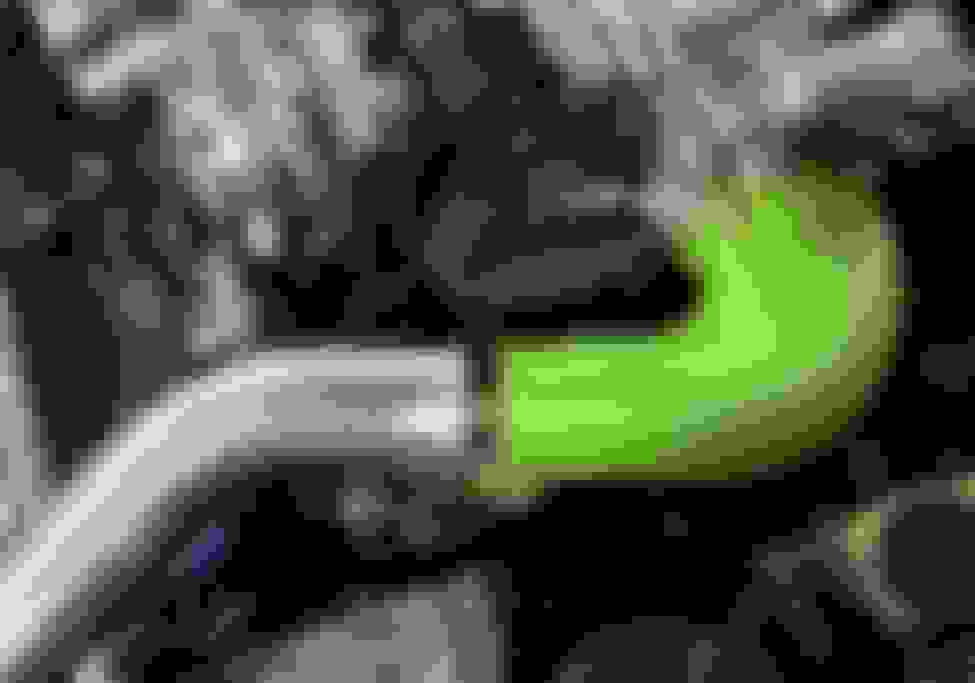
I designed a new "elbow" that will adapt from my current Greddy V-mount intercooler piping to the Bosch 82 mm throttle body. It uses 2X o-rings around the reduced diameter groove of the throttle body that interfaces with the inner diameter of the elbow flange to create a "piston" seal and uses commercially available o-rings.
The drive by wire adapter on my car is approximately 40 mm thick (this drives where the free end of the "elbow" sits). I used 70 mm socket head cap screws; there is roughly 10 mm of thread engagement into the throttle body adapter (with a ~3 mm thick washer, will be using M6 Nord-Locks). The current green elbow in there is just some 3D printed ABS for those who are curious.
I am planning on having this part CNC milled (5-axis) at a machine shop. Due to the nature of CNC programming, there is not much of a cost-quantity price break for just 1 part; I am looking to see if anyone else would be interested in this part for their car. I am going to be purchasing this elbow for my car regardless if others are interested, but me ordering several of these at a time will result in a much lower piece price (and would help me save a buck).
Please check out the pictures and let me know if there is any interest! Thanks!
I am planning on having this part CNC milled (5-axis) at a machine shop.
That looks very expensive. Have you considered a much smaller machined adapter piece that bolts to the throttle, and then welding that to a piece of pre-bent aluminum pipe? You can find mandrel-bent pipe from shops like https://hpsperformanceproducts.com/ or Vibrant.
That looks very expensive. Have you considered a much smaller machined adapter piece that bolts to the throttle, and then welding that to a piece of pre-bent aluminum pipe? You can find mandrel-bent pipe from shops like https://hpsperformanceproducts.com/ or Vibrant.
Yes, definitely not the cheapest or most cost effective solution. I guess I should have stated that from the start; I am okay with spending more money on something that I think looks nicer.
Currently, the cheapest quote for the part made from 6061-T6 and hardcoat anodized (type III, black) is as follows based on my step file:
QTY 1 is $770
QTY 5 is $477
I still have to send the official part drawing which may slightly alter the quote, but for a 5-axis part, I am relatively impressed with the price (mostly at the QTY 5). Doing it this way also allows for a smooth, lofted transition from the smaller diameter to the larger.
That's a part you could have cast. It would be way cheaper, and I'm sure you'd sell a run of 50 of them in a reasonable amount of time. It's a good product and worth investigating. If you need help with a foundry, I have a friend who has sculptures cast regularly (5-10 at a time) and they might be able to do a small run of elbows.
You could even do it sand cast back-yard style. It would cost about the same for the first one to get set up, after that you'd be casting money. There's quite a few online guides. And an old thread on VW Vortex where the guy sand cast a bunch of old plastic parts that aren't available anymore.
All the comically available elbows are sand cast, it's a much better process for this part.
That's a part you could have cast. It would be way cheaper, and I'm sure you'd sell a run of 50 of them in a reasonable amount of time. It's a good product and worth investigating. If you need help with a foundry, I have a friend who has sculptures cast regularly (5-10 at a time) and they might be able to do a small run of elbows.
You could even do it sand cast back-yard style. It would cost about the same for the first one to get set up, after that you'd be casting money. There's quite a few online guides. And an old thread on VW Vortex where the guy sand cast a bunch of old plastic parts that aren't available anymore.
All the comically available elbows are sand cast, it's a much better process for this part.
Yes, I agree this part could be cast as well. At some quantity it would make a lot more sense to cast it compared with CNC machining, not denying that at all.
At this time though, I am just looking for anyone else who wants to buy this billet intake elbow at the machine shop's cost + shipping (to help me get a price break, and to help someone who could use this part). Just trying to get my car together and running sooner than later; maybe I can start a side gig selling cast versions of these for a profit once the car is running (if there are enough potential buyers out there).
it probably would be better to have an elbow adapter directly on the UIM, which is going to allow for a smoother, higher flowing C-L radius and then the DBW TB on the elbow end facing toward the front with the IC pipe coming straight into it. That’s one advantage of it being electronic rather than messing with a cable relocation.
had meant to mention that an alternative to the above photo would be to cut several inches of the straight middle section of the UIM out and then weld it back together to allow more room for a proper elbow.
.
I went w one of the available throttle body adapters for my Bosch DBW setup. However, had your solution been available prior to my conversion, I would've been down w that. Nicely done!
Last edited by Topolino; Oct 17, 2024 at 06:15 PM.
For those of us with shallower pockets, I would highly recommend trying 3D printing in aluminum. you can get the proper transition with whatever bend radius you want for fairly cheap. I think I paid less than $150 for this one. Granted it did require welding some fittings on afterward, but your design may vary.
Also, for anyone wanting to use a 90mm GM TB, I have designed an adapter that (i think) has better transitions than most of the other adapters out there. Here's the free download: https://www.printables.com/model/707...e-body-adapter
Sorry for the late bump, but a big thank you @need-a-t2 for sharing the STEP file for the adapter! I'm in the process of designing an adapter plate for 13BREW upper intake onto my particular throttle body (as there is nothing available in the aftermarket for my unique application) and this will save me a heap of time modelling in Fusion360.
This really was an interesting read particularly the arguments around larger vs smaller throttle body. Where I think the reasoning behind an RX8 throttle body being too small is incomplete is that it fails to factor in the effects of forced induction.
When the intake charge is compressed, you can force greater mass of air through a given pipe size than you could if the air was at atmospheric pressure. CFM is a measure of volume passing through a certain point of time. The greater the intake air pressure, the greater the mass of air fitting into the same physical volume of space. Ergo, the more air is passing through the throttle body without ever increasing its size. It is no different to a fuel injector and the effect increasing fuel pressure has on the amount of fuel flowing through the injector with a particular size (ignoring effect on injector dead time). This is the analogy drawn in the HP Academy video linked above.
Now, part of the problem is that when people talk about "flow rate" they are not being specific and there are multiple ways of defining flow rate. "Actual flow rate" disregards the temperature and pressure of gas, but if we want a meaning figure that actually tells us how much air is going into an engine (to therefore determine how much power it will make) we need to know the standard or normal flow rate, which factors in air temperature and pressure. Lower the temperature or increase the pressure and you increase the normal flow rate for a given pipe size. Alternatively, we could talk about flow in terms of the mass of air entering the engine, rather than actual flow rates or CFM.
The air mass requirements between a Renesis and high power 13BREW cannot be compared without factoring in intake air pressure. A stock port 13BREW with single turbo likely has less need for flow at the throttle body than an RX8, especially when the RX8 has much larger intake ports and volumetric efficiency at higher rpm, but it can make much more power due to cramming greater mass of air through the same space.
Furthermore, this whole idea that 70mm throttle body is going to kill all your power makes no sense at all when you consider the internal cross sectional area of your turbo compressor outlet, intercooling piping, intercooler etc. An EFR8374 has a 2.5" (63.5mm diameter) compressor outlet. Mate 2.5" ID intercooler pipes on that and guess what....your maximum intake airflow is only going to be as good as the restriction on the 2.5" intercooler piping. A single throttle 70mm RX8 throttle body is likely going to flow every bit of air the rest of the intake system can throw at it. If you get a much bigger turbo and size up your intercooler pipes, then sure the throttle body may present a restriction, but sizing up will always come at the cost of intake air velocity, and that could hurt you off-boost and off full throttle where airflow rates are much lower and you want maximum intake air velocity to fill the engine. Looking upstream, if you were to size your throttle body and intercooling piping according to the compressor housing outlet diameter you are minimising lag without sacrificing any maximum, because the choke point of the system (the turbo compressor housing) is unchanged but it takes less volume of air to fill up the piping downstream.
Piping diameter and flow out of the compressor is an interesting quandry - it's not completely 1:1 under pressure and with an intercooled setup (of any kind - chemical or 'passive'). Given that the speed of sound increases with temperature, you CAN get increase velocity without stalling your air charge using smaller tubing out of the compressor -> into the intercooler and then increase in diameter out of the intercooler -> into the throttle body and net gains.
This isn't to say that it's wrong to suggest a 70mm throttle is sufficient for whatever it is you need, just to say that declaring that because a compressor outlet may be 2.5" so there are no gains to to be had going larger isn't completely accurate and that sort of language is insidious in tuning culture.
Last edited by dguy; Oct 17, 2024 at 07:58 PM.
Reason: Apparently I accidentally'd a few words.
Piping diameter and flow out of the compressor is an interesting quandry - it's not completely 1:1 under pressure and with an intercooled setup (of any kind - chemical or 'passive') given that the speed of sound increases with temperature, you CAN get increase velocity without stalling your air charge using smaller tubing out of the compressor -> into the intercooler and then increase in diameter out of the intercooler -> into the throttle body and net gains.
This isn't to say that it's wrong to say a 70mm throttle is sufficient for whatever it is you need, just to say that declaring that because a compressor outlet may be 2.5" so there are no gains to larger isn't completely accurate and that sort of language is insidious in tuning culture.
I agree and I overly simplified it, but it kind of illustrates my point. This a complex system and it is wrong to isolate any one component without considering how it interacts with the system as a whole. That applies downstream of the throttle body as well (intake manifold, intake running, port timing and size, exhaust flow etc.
I've been running my setup on an EmTron ECU, I'm very happy with the strategies but don't know how they stack up against Haltec, I played a little bit with MoTec but that was on LS engines and didn't get a whole lot of time with it.
The only thing I need to change is the dumb *** GM pedal I got because it was what I knew, it's big and dumb and has a pivot point on it. I have a Volvo pedal I plan on using but don't remember what the signal type on it was.
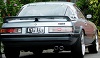
Wanted to share my RX8 DBW to 13B REW setup that I've been running for a while now.
Performance with the RX8 TB is excellent. Response is super-fast.
I'm running this combo with Haltech R3 and BMW DCT 7spd. trans and its drives great.
Very street-able just cruising around town and when ripping on it, it performs flat shifts and throttle blips at all with ease.
So, starting this, one of the main goals was to have a kind-of stock-ish look, so I went with adding a RX8 TB to the Greddy Elbow.
I picked up a used Greddy elbow, used FD TB and RX8 TB spacer.
Cut down the elbow to where I wanted the TB to sit and clear the strut tower brace.
Had my buddy weld the RX8 TB spacer and Greddy ellbow. Bolted together for test fitting.
Gutted the FD TB and later I sealed up the holes
Stock FD TB
Before .......
After........
Happy with the results!!!!
UIM - Gutted FD TB - Modded Greddy elbow - RX8 TB... all polished to match.
*Note had to move the stock oil fill away from the RX8 TB about an inch for clearance.
More pics in my build thread too
I have been learning how to use Fusion and have been practising on the design of my own adapter plate.
In my case, I need to fit a propane mixer throttle body with single throttle plate onto the FD upper intake manifold. This is a mechanical throttle body that incorporates a metering rod and jets to mechanically mix propane gas into the intake stream. Propane is an excellent fuel for rotaries, with similar benefits to E85 but some additional pros and cons.
The throttle body will in turn be driven by a stepper motor actuator from the BWM E46 engine (designed for implementing DBW on multiple throttle bodies). A similar setup can be used to implement DBW onto a factory FD throttle body so you retain primary vs secondary staging.
So I need a custom adapter plate for the throttle body as well as a custom bracket to mount the E46 DBW actuator.
By throttle adapter design was inspired by @need-a-t2 who I must give special thanks for making his STEP file public. It was designed for a 20B throttle body and there are actually some minor differences (albeit his design will fit an FD). I had to design mine from scratch but his design gave me a lot of tips on how to go about it, so thanks!
My design incorporates o-ring grooves as specified for 2.0mm cross section metric o-rings on each side. Due to the channel in the UIM flange for supply air to the idle control valve, there is only a small bridge of metal over which the o-ring can seal against without squeezing out or allowing air/vacuum to escape (not good with propane!!). I did a photo scan of the UIM flange with a steel ruler and imported it into Fusion as a canvas, calibrated it and then used this to trace the profiles of the flange and ensure the o-ring can be supported and properly seal against the UIM. My UIM is hogged out with the double throttle plates removed, which I have then port-matched to the adapter. The transition from the single aperture is contoured to the individual runners and filleted which I think is a superior design than other plates on the market for existing DBW throttle bodies:
I have printed some scale drawings onto card and it all looks like it will fit nicely. So next step is a 3D print!
So, anybody got any real world experience about their idle control and stability with electronic throttle? Please let us know what ECU you have, what your base idle speed is with no accessories (porting as well), what accessory loads you have, and any problems you've had with stalling or sticking idle. Would like to see how that aspect is progressing as it seems like there's a lot of movement on the "making it bolt up" and "flowing air to make power" part.
it'd be great if we could keep the secondary throttle on the UIM and somehow make it part of the DBW logic to stage the primary and secondary port flow... specially helpful for those with secondary bridge or semipp.
So, anybody got any real world experience about their idle control and stability with electronic throttle? Please let us know what ECU you have, what your base idle speed is with no accessories (porting as well), what accessory loads you have, and any problems you've had with stalling or sticking idle. Would like to see how that aspect is progressing as it seems like there's a lot of movement on the "making it bolt up" and "flowing air to make power" part.
I can share my experience as I just went thru setting it up and troubleshooting it. I have a Link G4+ running a GM 90mm on a 20B. No idle air controller valve and stock ports. The car idles at 1100 RPM pretty good and I intend on dropping that down as I get things tweaked in. When I first fired the motor I had 2 "lessons learned". The first is that in the Link ECU when you set-up DBW, it still uses the idle air control settings to control the TB. So a duty cycle of 45% on an idle control valve translates to 45% open TB plate. Scared the heck out of me when it first fired up and the RPM instantly skyrocketed. Got that addressed and I still had a heck of a time getting it to idle under 2500. Turns out when I took the TB apart to powder coat it I did not center the plate well enough before I bolted it down and it was not able to close all the way. Learn from my mistake and hold the throttle plate closed all the way as you tighten everything down! After that the closed loop idle control made it fairly easy to get the idle right where I wanted it. I did have an issue with the car stalling on overrun, ie rev the engine and let it rev down with no load. Increasing fuel and increasing the dashpot dwell time has helped, but it still stalls every once in a while when I coast to a stop. The only "shock load" I have right now is the electric fans, and the Link has an idle adjustment for that that seems to work well. I have not had any issues when the fans (stock FD fans) kick on.
All in all, it's been a learning experience for me, but I feel the ECU has the tools to make it work well.
If you feel like sharing, post screenshots of your idle air settings from the Link software and we can talk about what you're running into and how you could possible tune it better. Also, have you tuned spark timing for idle and accessory load at all? I'm not sure if the link has spark control for idle stability.
it'd be great if we could keep the secondary throttle on the UIM and somehow make it part of the DBW logic to stage the primary and secondary port flow... specially helpful for those with secondary bridge or semipp.
The problem is that the secondary throttle is designed for basic open vs closed position only and so you need a means of physically controlling the throttle, which would require a secondary DBW actuator and 2 throttle position sensors. Not many ECUs have enough I/Os for controlling two DBW actuators.
You may be able to rig up mechanical linkage between the DBW and secondary throttle plates in the IUM so that the secondaries begin to open at a fixed throttle primary throttle angle (similar to how it works in a factory throttle body).
If you want a staged primary and secondary port flow and DBW, the way to do this is to keep the factory throttle body and use an external throttle actuator designed for ITBs and have that physically control the factory throttle wheel instead of a cable. There are a few aftermarket actuators for this purpose and in the OEM world there is a E46/S54 actuator from the 6 cylinder BMW M series with individual throttle bodies. I'm actually using the latter and using that to control a conventional mechanical throttle. Yet to get it rigged up and working but HP Academy did the same thing on their FD RX-7 and it works well.
Another factor of course is selecting the right size single throttle. Most are going too big to maintain nice airflow velocity off-boost and in low throttle positions.
I think it could be used with a vacuum chamber and the factory solenoid and map the on/off points along the rpm range with a switched output. Or even use the secondary injector signal to trigger the opening of the secondaries as they'll need the air.
Mazda does on-off for the 6-port actuators on all NA including the RX-8. I'm not sure but I think the secondaries are also on-off on the RX-8 with a single TBW.
The gradual primary/secondary transition of the stock throttle body is good for stock power but I think the transition point will be different with the increased flow when modded so the secondary could be closed longer.
It'd be an interesting experiment to tune the car on the primaries only and then on all ports open and find out optimal transition points at different throttle position, boost, engine load, etc
Last edited by neit_jnf; Nov 12, 2024 at 11:27 AM.





















 RX8 DBW set-up on 13B REW