


RX7 Prototype at the Petersen Museum


RX7 Prototype at the Petersen Museum
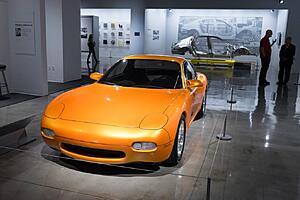
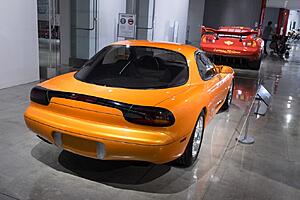
On a visit to Los Angeles last weekend, I went to the Petersen Museum and when I got to the 2nd floor I saw this car sitting behind Lightning McQueen. From a further glance I wasn't 100% sure if it was an RX7 but once I got closer the sign for it said it was an RX7 prototype, the only one ever made.
It seemed like it was little smaller than the final version, had some BBS mesh wheels and the interior wasn't complete. I should've taken more pictures, but I got side tracked easily.
Sorry if this has been posted before, I tried searching and didn't find anything. Just thought it was pretty cool to see.
It seemed like it was little smaller than the final version, had some BBS mesh wheels and the interior wasn't complete. I should've taken more pictures, but I got side tracked easily.
Sorry if this has been posted before, I tried searching and didn't find anything. Just thought it was pretty cool to see.
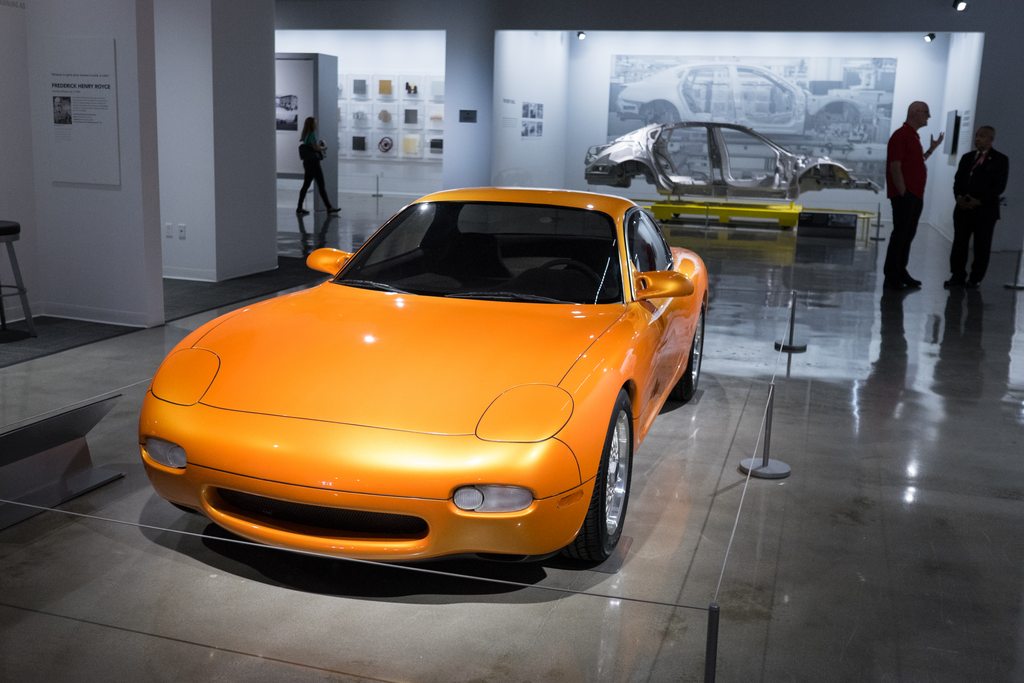




Here is what the Yamaguchi 3rd gen RX-7 book says about it.
Paraphrase-
April 1st 1987 Yoichi Sato was assigned to head the design of the next (3rd gen) RX-7 in Hiroshima.
There were four design studios contributing each with their own vision-
Hiroshima main headquarters (MC)
Yokohama R&D center (MRY)
Mazda Research of America Irvine, CA (MRA)
Mazda R&D Oberusel, Germany (MRE) which was under construction and so British consultants International Automotive Design (IAD) took over their duties.
Mazda Corporate, Mazda Yokohama, Mazda Research America, Mazda Research Europe- if that helps.
The overall design criteria were-
Front end and hood height 100mm lower than FC RX-7
Front overhang shortened 200mm over FC RX-7
Overall height below 1,150mm
Front windshield should be sharply raked and compound curved
Sept 29 1987 the design evaluation meeting was held with models and full size drawings and the MC and MRA were chosen to proceed in design.
Two months later they were windtunnel testing models of the MC and MRA evolved designs. This testing influenced the further evolution of the designs with the MRA model losing its short curved rear and adopting something that worked similar to MCs rear.
Full size clay models of MC and MRA designs were build for further wind tunnel testing at Mazda's Miyoshi facility.
Another refined MRA full clay scale model is made April 1988 and a plastic shell is made off that.
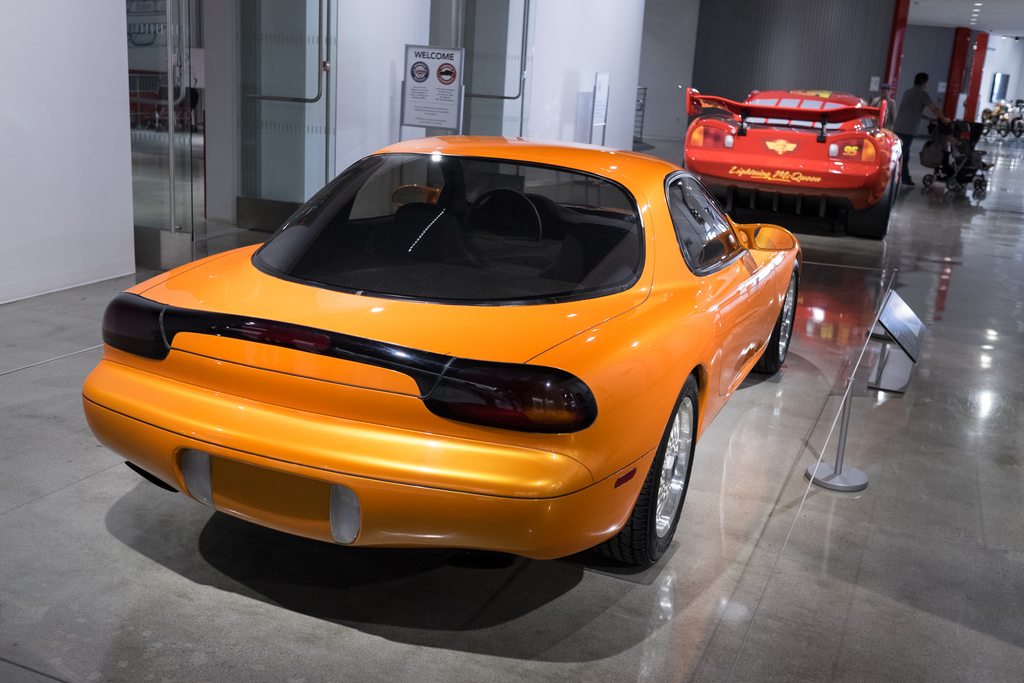
The above pictured prototype is that model. It has the fender vent on the LHD side and a plain fender on the RHD side and the belt line cut around all panels except the door, door mounted mirrors as well as those distinctive front combination lights.
A meeting was held May 1988 at the MRA facility and Wu-Huang Chin's MRA model was chosen as the RX-7 successor with the stipulation that it include some of the MC models features.
Another full size model is build June 1988 to incorporate MC features (it has no fender vents).
Another full size model is build Oct 1988 (also no fender vents, it has a more faint belt line line and front indicators and intakes look like production).
Another full size plastic model is made March 1989 (this one with fender vents on both sides, incorporated with fenders- not inserts, the tail lights don't look like production model and the headlights are round like Miata).
Another full size model is made June 1989 with the production style rectangular headlights.
Another final full size model is made December 1989 with no belt line and looking very much like the production version except the vent is still one piece with the fender.
So, you can say that is the 1988 FD 6 models back from the production design.
Paraphrase-
April 1st 1987 Yoichi Sato was assigned to head the design of the next (3rd gen) RX-7 in Hiroshima.
There were four design studios contributing each with their own vision-
Hiroshima main headquarters (MC)
Yokohama R&D center (MRY)
Mazda Research of America Irvine, CA (MRA)
Mazda R&D Oberusel, Germany (MRE) which was under construction and so British consultants International Automotive Design (IAD) took over their duties.
Mazda Corporate, Mazda Yokohama, Mazda Research America, Mazda Research Europe- if that helps.
The overall design criteria were-
Front end and hood height 100mm lower than FC RX-7
Front overhang shortened 200mm over FC RX-7
Overall height below 1,150mm
Front windshield should be sharply raked and compound curved
Sept 29 1987 the design evaluation meeting was held with models and full size drawings and the MC and MRA were chosen to proceed in design.
Two months later they were windtunnel testing models of the MC and MRA evolved designs. This testing influenced the further evolution of the designs with the MRA model losing its short curved rear and adopting something that worked similar to MCs rear.
Full size clay models of MC and MRA designs were build for further wind tunnel testing at Mazda's Miyoshi facility.
Another refined MRA full clay scale model is made April 1988 and a plastic shell is made off that.
The above pictured prototype is that model. It has the fender vent on the LHD side and a plain fender on the RHD side and the belt line cut around all panels except the door, door mounted mirrors as well as those distinctive front combination lights.
A meeting was held May 1988 at the MRA facility and Wu-Huang Chin's MRA model was chosen as the RX-7 successor with the stipulation that it include some of the MC models features.
Another full size model is build June 1988 to incorporate MC features (it has no fender vents).
Another full size model is build Oct 1988 (also no fender vents, it has a more faint belt line line and front indicators and intakes look like production).
Another full size plastic model is made March 1989 (this one with fender vents on both sides, incorporated with fenders- not inserts, the tail lights don't look like production model and the headlights are round like Miata).
Another full size model is made June 1989 with the production style rectangular headlights.
Another final full size model is made December 1989 with no belt line and looking very much like the production version except the vent is still one piece with the fender.
So, you can say that is the 1988 FD 6 models back from the production design.

I'd seen pictures of this prototype in a magazine from the time, had no idea that it was still around! Thanks for sharing, would definitely be interested to see more pictures  .
.
.
Trending Topics
Here is what the Yamaguchi 3rd gen RX-7 book says about it.
Paraphrase-
April 1st 1987 Yoichi Sato was assigned to head the design of the next (3rd gen) RX-7 in Hiroshima.
There were four design studios contributing each with their own vision-
Hiroshima main headquarters (MC)
Yokohama R&D center (MRY)
Mazda Research of America Irvine, CA (MRA)
Mazda R&D Oberusel, Germany (MRE) which was under construction and so British consultants International Automotive Design (IAD) took over their duties.
Mazda Corporate, Mazda Yokohama, Mazda Research America, Mazda Research Europe- if that helps.
The overall design criteria were-
Front end and hood height 100mm lower than FC RX-7
Front overhang shortened 200mm over FC RX-7
Overall height below 1,150mm
Front windshield should be sharply raked and compound curved
Sept 29 1987 the design evaluation meeting was held with models and full size drawings and the MC and MRA were chosen to proceed in design.
Two months later they were windtunnel testing models of the MC and MRA evolved designs. This testing influenced the further evolution of the designs with the MRA model losing its short curved rear and adopting something that worked similar to MCs rear.
Full size clay models of MC and MRA designs were build for further wind tunnel testing at Mazda's Miyoshi facility.
Another refined MRA full clay scale model is made April 1988 and a plastic shell is made off that.
The above pictured prototype is that model. It has the fender vent on the LHD side and a plain fender on the RHD side and the belt line cut around all panels except the door, door mounted mirrors as well as those distinctive front combination lights.
A meeting was held May 1988 at the MRA facility and Wu-Huang Chin's MRA model was chosen as the RX-7 successor with the stipulation that it include some of the MC models features.
Another full size model is build June 1988 to incorporate MC features (it has no fender vents).
Another full size model is build Oct 1988 (also no fender vents, it has a more faint belt line line and front indicators and intakes look like production).
Another full size plastic model is made March 1989 (this one with fender vents on both sides, incorporated with fenders- not inserts, the tail lights don't look like production model and the headlights are round like Miata).
Another full size model is made June 1989 with the production style rectangular headlights.
Another final full size model is made December 1989 with no belt line and looking very much like the production version except the vent is still one piece with the fender.
So, you can say that is the 1988 FD 6 models back from the production design.
Paraphrase-
April 1st 1987 Yoichi Sato was assigned to head the design of the next (3rd gen) RX-7 in Hiroshima.
There were four design studios contributing each with their own vision-
Hiroshima main headquarters (MC)
Yokohama R&D center (MRY)
Mazda Research of America Irvine, CA (MRA)
Mazda R&D Oberusel, Germany (MRE) which was under construction and so British consultants International Automotive Design (IAD) took over their duties.
Mazda Corporate, Mazda Yokohama, Mazda Research America, Mazda Research Europe- if that helps.
The overall design criteria were-
Front end and hood height 100mm lower than FC RX-7
Front overhang shortened 200mm over FC RX-7
Overall height below 1,150mm
Front windshield should be sharply raked and compound curved
Sept 29 1987 the design evaluation meeting was held with models and full size drawings and the MC and MRA were chosen to proceed in design.
Two months later they were windtunnel testing models of the MC and MRA evolved designs. This testing influenced the further evolution of the designs with the MRA model losing its short curved rear and adopting something that worked similar to MCs rear.
Full size clay models of MC and MRA designs were build for further wind tunnel testing at Mazda's Miyoshi facility.
Another refined MRA full clay scale model is made April 1988 and a plastic shell is made off that.
The above pictured prototype is that model. It has the fender vent on the LHD side and a plain fender on the RHD side and the belt line cut around all panels except the door, door mounted mirrors as well as those distinctive front combination lights.
A meeting was held May 1988 at the MRA facility and Wu-Huang Chin's MRA model was chosen as the RX-7 successor with the stipulation that it include some of the MC models features.
Another full size model is build June 1988 to incorporate MC features (it has no fender vents).
Another full size model is build Oct 1988 (also no fender vents, it has a more faint belt line line and front indicators and intakes look like production).
Another full size plastic model is made March 1989 (this one with fender vents on both sides, incorporated with fenders- not inserts, the tail lights don't look like production model and the headlights are round like Miata).
Another full size model is made June 1989 with the production style rectangular headlights.
Another final full size model is made December 1989 with no belt line and looking very much like the production version except the vent is still one piece with the fender.
So, you can say that is the 1988 FD 6 models back from the production design.
Awesome! Such a shame that I didn't take more. I think they probably rotate the car in and out of the vault, which doesn't allow any pictures in there.
Speedhunters has had a couple articles on the vault, you can see it in the vault back in 2014: Petersen-Museum-Vault-26 copy - Speedhunters
2015 Article (No FD) - The Vault At The Petersen: An Exclusive Inside Look - Speedhunters






Junior Member
Joined: Oct 2016
Posts: 14
Likes: 1
From: Southern California
I was going to say the same thing. The prototype sports the classic miata "smile" in the front. Pretty cool to see what the car evolved from during the design phase.
So today I spent a few hours at the museum and no luck. They most likely put the FD concept back into the vault. I asked a buch of people that worked there about this prototype and no one seemed to know much about it.
They shuffle cars around all the time, so its just a question of luck if you stumble upon this piece.
They have about 400 cars in the vault, and the extra "vault tour" only displays a hundred of them at a time...so even if you pay extra for the guided vault tour, you have no guarantee you will see it.
It was still a very cool place to visit. Best $12 I spent in LA!
They shuffle cars around all the time, so its just a question of luck if you stumble upon this piece.
They have about 400 cars in the vault, and the extra "vault tour" only displays a hundred of them at a time...so even if you pay extra for the guided vault tour, you have no guarantee you will see it.
It was still a very cool place to visit. Best $12 I spent in LA!
Last edited by Spalato; Dec 4, 2016 at 01:46 AM.


Joined: Aug 2004
Posts: 4,498
Likes: 1,487
From: West Coast
At 1st I thought, "oh, that's kinda cool." and kept scrolling, but I keep finding myself coming back to this thread and gawking at that FD concept.
Were the back up lights designed to be in the license plate cut out? Were the famous-and-beloved two humps on the roof missing? That front end looks almost 1st gen Miata, but more...I dunno, Jaguar-y. The wheels have that same feel goin' on.
It's almost like a Miata's British big brother or something.
It also lost one of it's Ganadors in that last pic.
Were the back up lights designed to be in the license plate cut out? Were the famous-and-beloved two humps on the roof missing? That front end looks almost 1st gen Miata, but more...I dunno, Jaguar-y. The wheels have that same feel goin' on.
It's almost like a Miata's British big brother or something.
It also lost one of it's Ganadors in that last pic.
Yes, the double bubble roof was added after the May 1988 meeting where MC features were to be added to the MA concept.
Wind tunnel testing showed the double bubble roof helped keep the flow attached to the rear hatch glass for better aero.
Wind tunnel testing showed the double bubble roof helped keep the flow attached to the rear hatch glass for better aero.

Rotary Freak

Joined: Jul 2001
Posts: 1,817
Likes: 16
From: South Carolina