


removing old caked on gaskets

 removing old caked on gaskets



Joined: Oct 2003
Posts: 11,576
Likes: 27
From: Morristown, TN (east of Knoxville)
I usually start by using vise grips or a stud puller to remove the studs. Then I take a razor knife and try to get under the gasket in one spot and pull off what I can. Sometimes it will come off in chunks, up until a certain point where it is firmly bonded to the metal. Then you can continue scraping until you get most of the gasket off and metal starts showing. At that point you want to stop scraping (so you don't gouge up the metal) and switch to a wire wheel mounted on an angle grinder or a drill. That will usually take off the remaining gasket material without doing damage to the metal...just don't hold it in one spot more than 2-3 seconds at a time.
The other method I use, after pulling off whatever large chunks that are loose, is to sandblast the gasket off. IF you use this method you do not have to remove the studs. This leaves the metal perfectly unharmed and is much easier, but also most people do not have access to a sandblaster either. If you use this method you also have to be meticulous with rinsing and blowing out with compressed air to get ALL of the media out of the various passages before you can install it.
The other method I use, after pulling off whatever large chunks that are loose, is to sandblast the gasket off. IF you use this method you do not have to remove the studs. This leaves the metal perfectly unharmed and is much easier, but also most people do not have access to a sandblaster either. If you use this method you also have to be meticulous with rinsing and blowing out with compressed air to get ALL of the media out of the various passages before you can install it.
Joined: Oct 2003
Posts: 11,576
Likes: 27
From: Morristown, TN (east of Knoxville)

Thread Starter
Full Member
Joined: May 2012
Posts: 153
Likes: 0
From: douglasville ga
any adhesive remover? i tried bug and tar, i cant even get much off with a pick tool, i have new gaskets but it would so irresponsible if to just put them on top of the old ones and slap everything together



the multicultural garage
Joined: Feb 2011
Posts: 133
Likes: 0
From: Everett, WA
Not really. I went through 3 from start to finish. Polished the intake nicely without taking off the metal.
Trending Topics

Joined: Sep 2005
Posts: 25,581
Likes: 136
From: Smiths Falls.(near Ottawa!.Mapquest IT!)
They make a "scrubby" wheel..
That is what I call it anyways..looks like a 3m scouring pad on a drill assembly.
I use it for paint,etc,but it works for gaskets,when the wire wheel is a little too uncomfortable for the area in question.
I actually got one at Walmart in the tool section.
If you clean the surface area up,use a good gasket RTV like "the Right STUFF" between the gasket and surfaces,that thing will not leak..gaddamn guarantee it!
That is what I call it anyways..looks like a 3m scouring pad on a drill assembly.
I use it for paint,etc,but it works for gaskets,when the wire wheel is a little too uncomfortable for the area in question.
I actually got one at Walmart in the tool section.
If you clean the surface area up,use a good gasket RTV like "the Right STUFF" between the gasket and surfaces,that thing will not leak..gaddamn guarantee it!


Joined: Oct 2003
Posts: 11,576
Likes: 27
From: Morristown, TN (east of Knoxville)
The "polishing" bits I know of are either a gray chalky material, or a cloth buffing wheel.
Post up a part number or pic of what bit you are talking about using.
Dragons' Breath

Joined: Sep 2010
Posts: 1,129
Likes: 2
From: Pump Handle, SK. Canada
buy a can of gasket remover spray it on let sit and scrape off . should get 80% off the first go ..
use caution with wire or buffing wheels ,, you might think it is not removing metal but you will find it rounds off all the square corners and edges .. A little elbow grease and patience will do the job
use caution with wire or buffing wheels ,, you might think it is not removing metal but you will find it rounds off all the square corners and edges .. A little elbow grease and patience will do the job
Last edited by gerald m; Oct 28, 2013 at 08:28 AM.

I'd endorse most methods described here, except wire wheel on aluminum parts will do damage. Even in less than a couple seconds. Use 3M scotchbrite pads. The rust red color is the right grade for this application.
The Scotchbrite red roloc is what i always use.
The Scotchbrite red roloc is what i always use.
Joined: Oct 2003
Posts: 11,576
Likes: 27
From: Morristown, TN (east of Knoxville)
buy a can of gasket remover spray it on let sit and scrape off . should get 80% off the first go ..
use caution with wire or buffing wheels ,, you might think it is not removing metal but you will find it rounds off all the square corners and edges .. A little elbow grease and patience will do the job
use caution with wire or buffing wheels ,, you might think it is not removing metal but you will find it rounds off all the square corners and edges .. A little elbow grease and patience will do the job
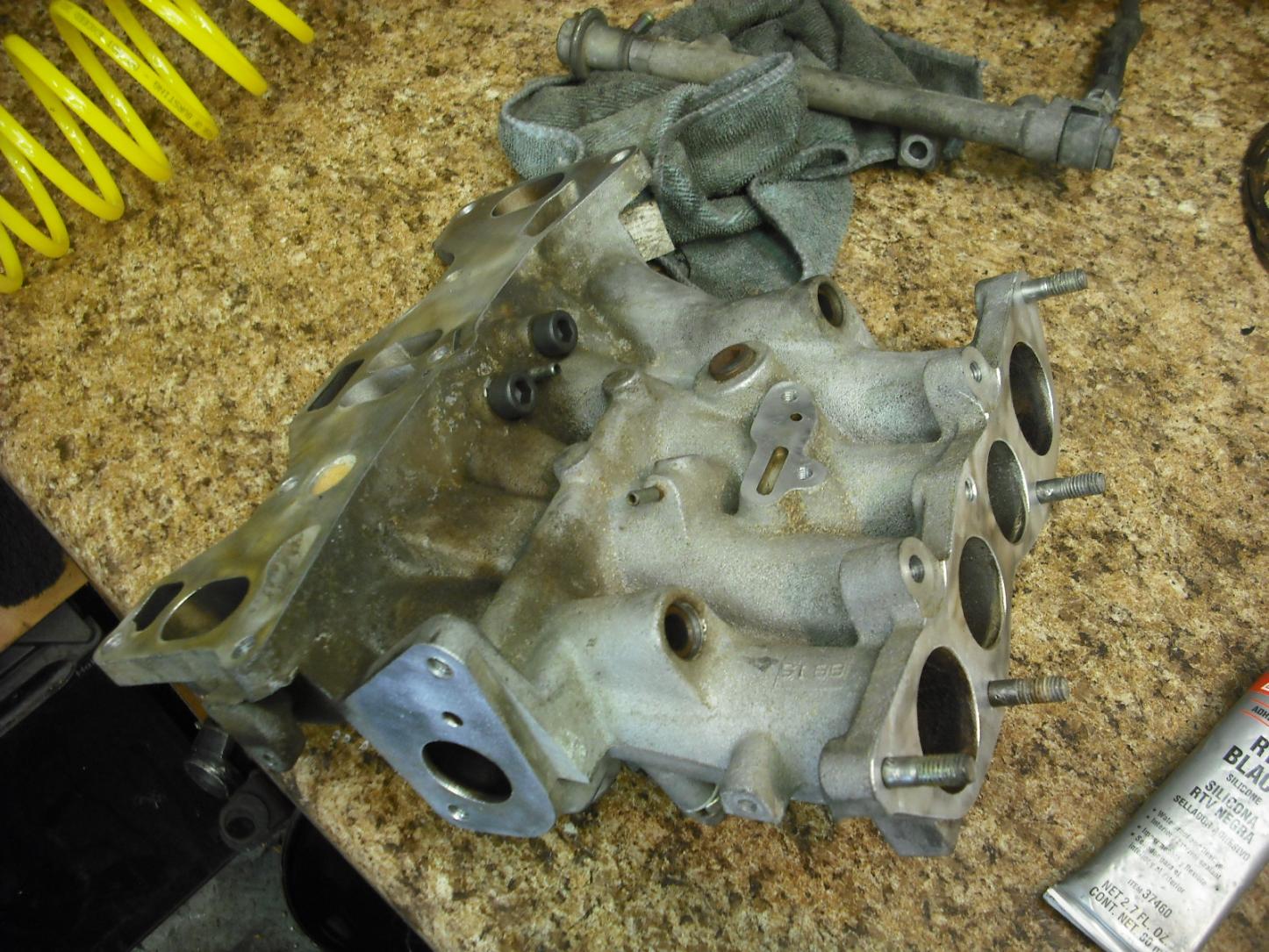
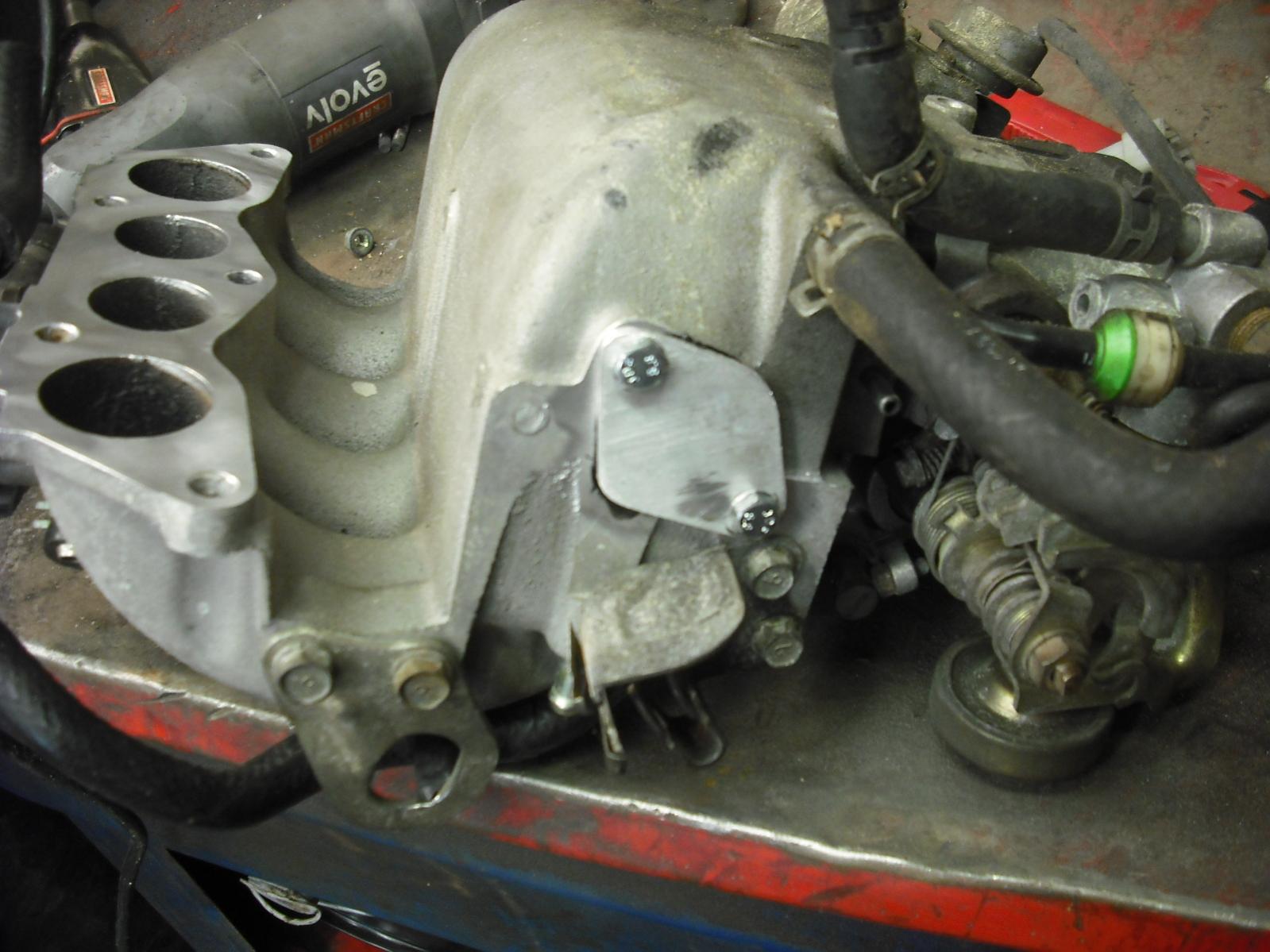
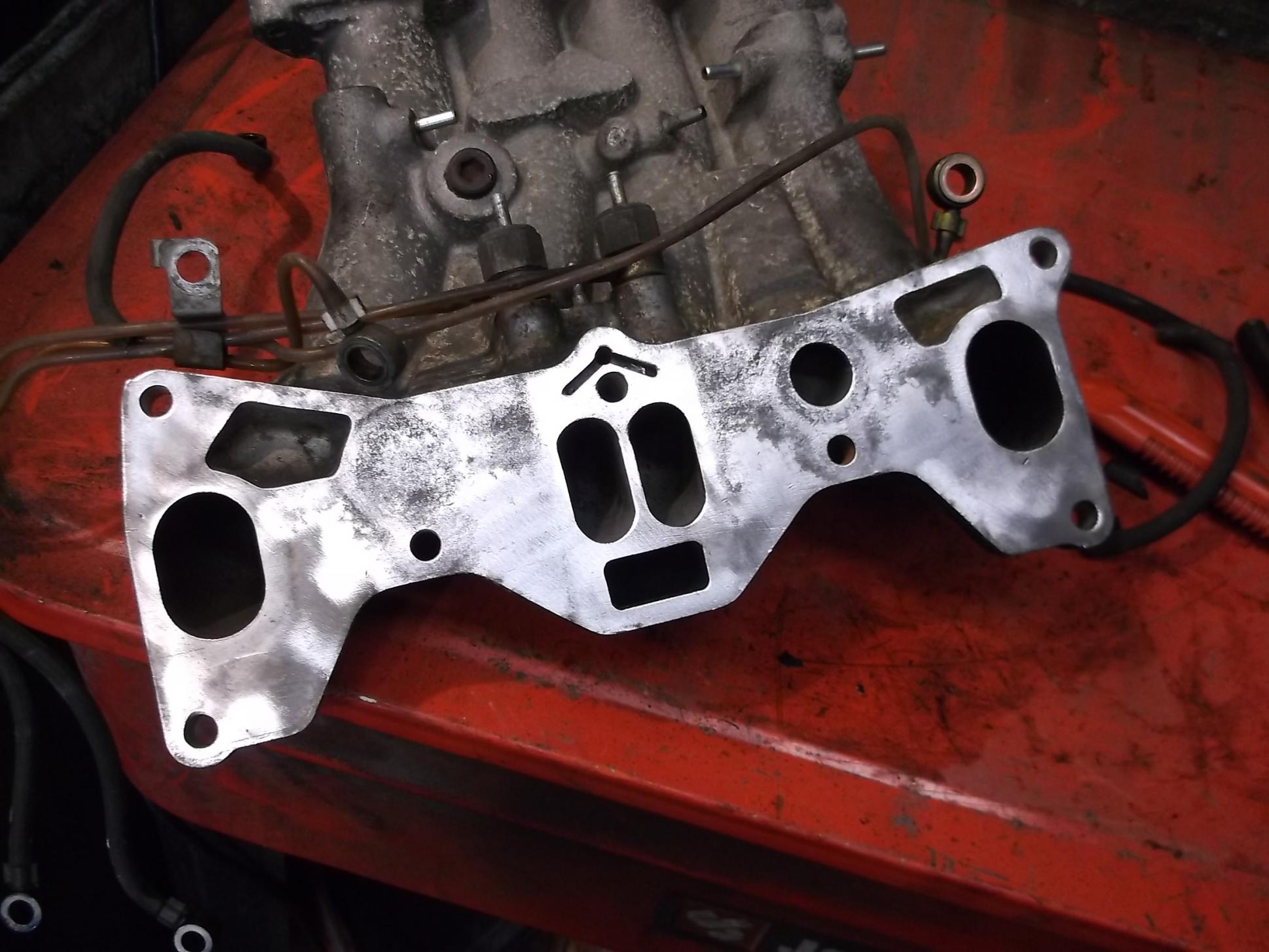
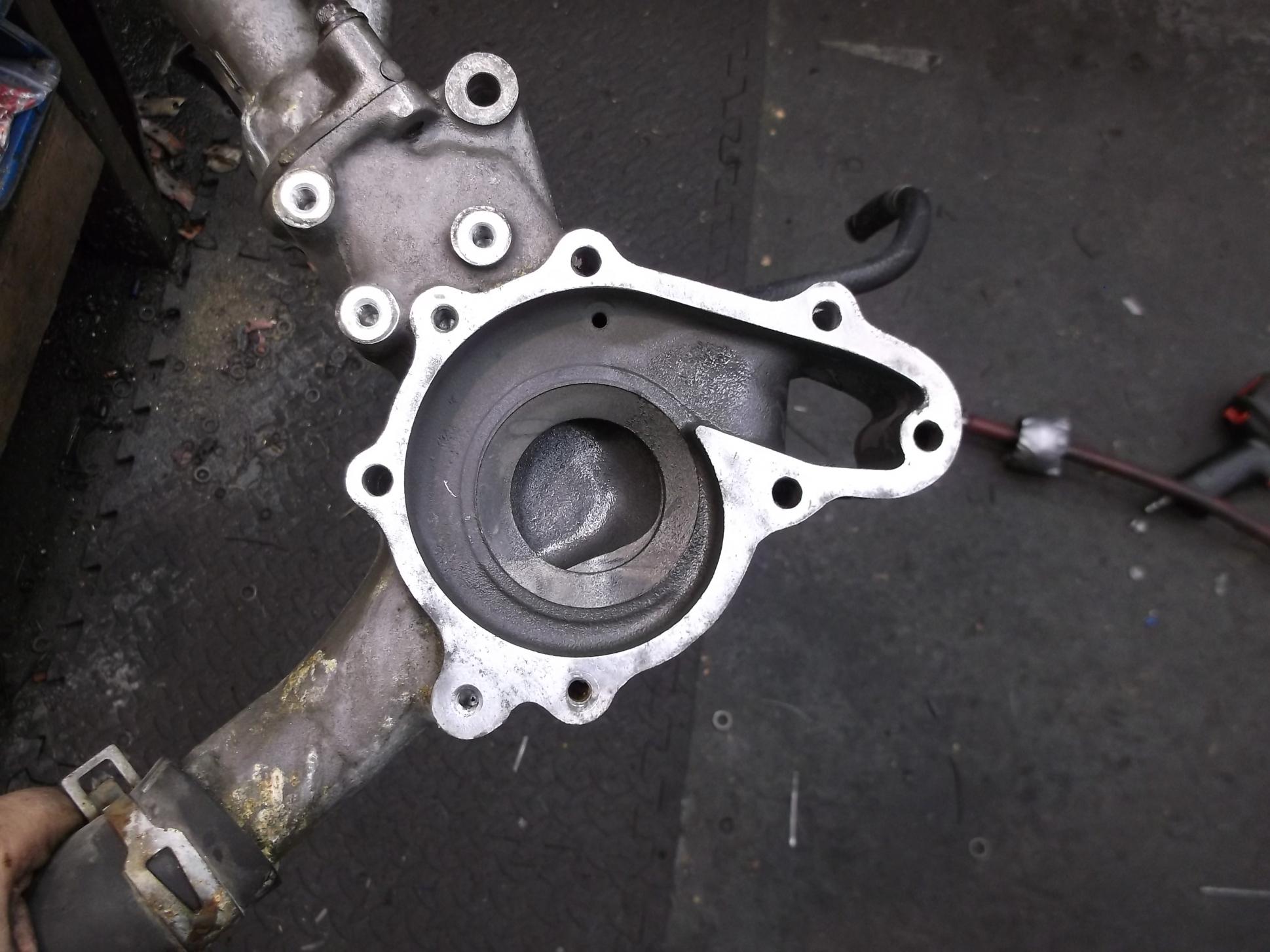
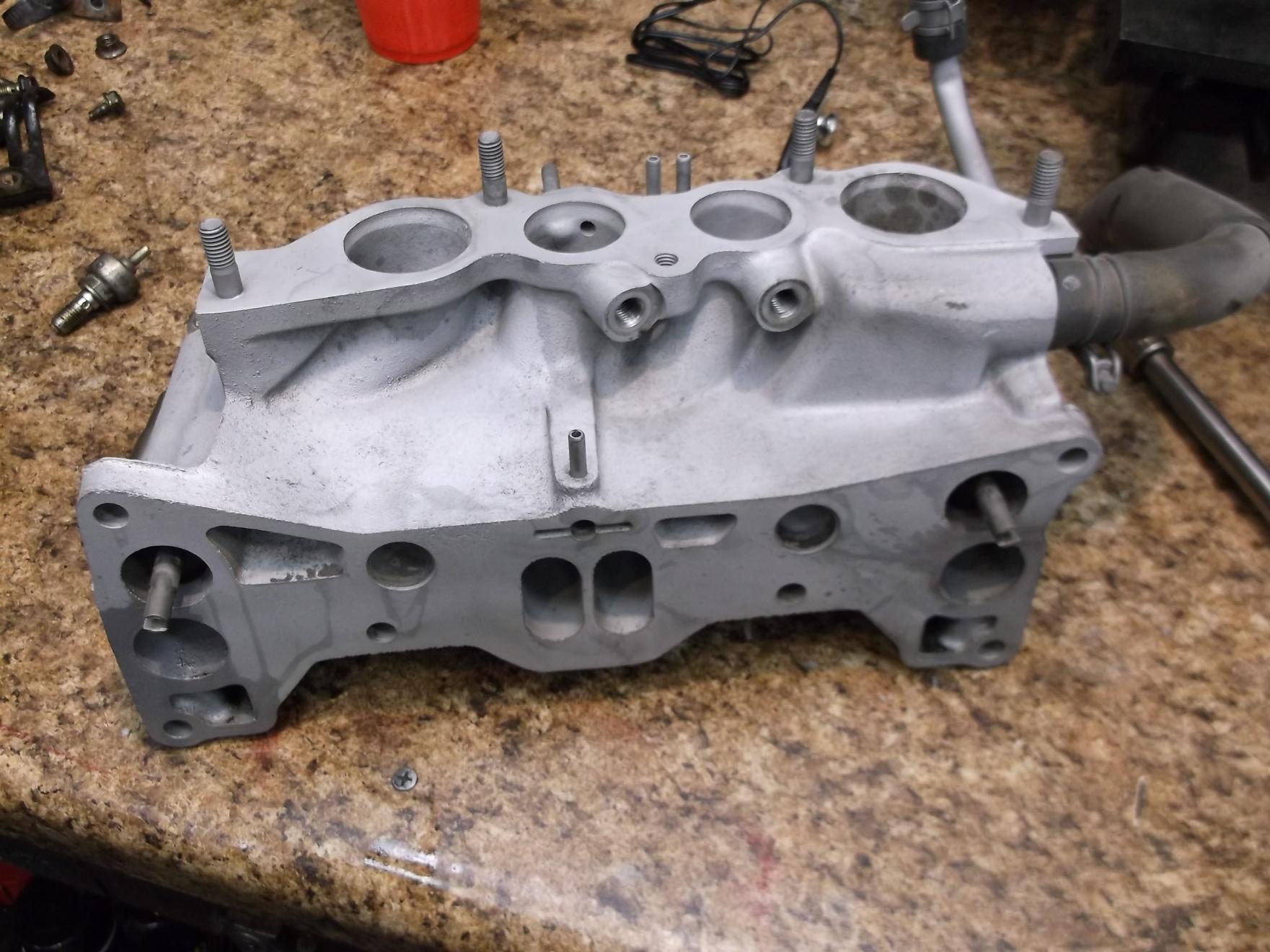
 Just think of all those screwed up mating surfaces I've caused.
Here's a good one now...will you look at those rough, uneven, rounded off mating surfaces.
Last edited by RotaryResurrection; Oct 28, 2013 at 12:08 PM.
Dragons' Breath
Joined: Sep 2010
Posts: 1,129
Likes: 2
From: Pump Handle, SK. Canada
no one is trying to poke holes in your experience , with all due respect I don't think a side grinder is the proper tool for gasket removing especially in the hands of a lot of learning people ... I prefer the sandblasted part to the others I use fine glass beads but both due a nice job . I've been cleaning gaskets for 5 decades and don't think it really matters so I guess I've been doing it wrong for 5 times as long ..  Have a good one .
Have a good one .
Joined: Oct 2003
Posts: 11,576
Likes: 27
From: Morristown, TN (east of Knoxville)
no one is trying to poke holes in your experience , with all due respect I don't think a side grinder is the proper tool for gasket removing especially in the hands of a lot of learning people ... I prefer the sandblasted part to the others I use fine glass beads but both due a nice job . I've been cleaning gaskets for 5 decades and don't think it really matters so I guess I've been doing it wrong for 5 times as long .. Have a good one .
Have a good one .Any tool or method can be dangerous or damaging in the wrong hands. I can't believe you guys are so worried about the possible damaging effects of a wire cup wheel mounted on an angle grinder, yet we have people on this forum advocating doing their own porting work for the first time and thinking they're actually going to have it come out decent.
Those 3m "rust removal" pads do work well but they also seem to take a lot longer in my experience so that is why I've settled on the wire brush method. It is not nearly as intrusive as you think, unless you are willfully neglectful in your approach. IF you're doing one single job for yourself, then the 3m discs may be fine...if you're trying to get 4 jobs per month done, ain't nobody got time for that.
ok, we get it.
i also tend to avoid hard steel bristle wire wheels though, it's too easy to start pushing the aluminum into acne spots.
everyone has their preferred choice and some are better at one type than others.
even the soft bristle 3m pads i use will take chunks out of cast iron if you keep them on one spot for too long, rubber>hard metal. i have to constantly move the pad and go very easy on it. i've even seen some shops use the 3m pads to clean rotor housings, destroying them but on manifolds imperfections won't turn a part into garbage. i start with a razor blade and remove as much material as possible, chisel off chunks with a scraper then finish with the roloc disc and then sand the surfaces flat with 120 grit, which also allows the gaskets to grab/seal better.
i also tend to avoid hard steel bristle wire wheels though, it's too easy to start pushing the aluminum into acne spots.
everyone has their preferred choice and some are better at one type than others.
even the soft bristle 3m pads i use will take chunks out of cast iron if you keep them on one spot for too long, rubber>hard metal. i have to constantly move the pad and go very easy on it. i've even seen some shops use the 3m pads to clean rotor housings, destroying them but on manifolds imperfections won't turn a part into garbage. i start with a razor blade and remove as much material as possible, chisel off chunks with a scraper then finish with the roloc disc and then sand the surfaces flat with 120 grit, which also allows the gaskets to grab/seal better.
Last edited by RotaryEvolution; Oct 28, 2013 at 01:12 PM.


Thread
Thread Starter
Forum
Replies
Last Post
Jeff20B
1st Generation Specific (1979-1985)
73
Sep 16, 2018 07:16 PM
BLK 93
3rd Generation Specific (1993-2002)
11
Sep 9, 2015 10:56 AM
alemmons
3rd Generation Specific (1993-2002)
3
Sep 4, 2015 09:34 AM
