


lawd Jesus it's a fire


Thread Starter
Full Member
Joined: Jul 2014
Posts: 62
Likes: 1
lawd Jesus it's a fire
Okayyy my car is a1989 mazda rx7 vert N/A. I want to know how everyone is shooting massive flames without a two step? I know I'm probably gonna get a lot of hateful things said to me but it looks awesome. Is revving the engine enough to make it blow fire bad for it? My setup is completely straight piped to stock mufflers. Is there a technique to it? Lol. I'm not a ricer by any means but people at car meets assume since its a rotary it automatically shots fire and it's nice to have people pull out there cameras and scream and shout lol.

CC of L-Squared Shots

Joined: Oct 2003
Posts: 644
Likes: 0
From: Columbus, Ohio
Enrich the mixture, unburnt fuel gets burnt in the exhaust gas, flames go shooting through your exhaust is how it works. Rotaries usually run slightly rich to begin with, although a little too much some will say (Everyone's car is different).
I'll pose you this question then, so you want your exhaust extra hot and to burn more fuel than you're supposed to outside of the chamber. Would you trade looks and praise at a meet for burnt bumper or an exhaust fire?
I'll pose you this question then, so you want your exhaust extra hot and to burn more fuel than you're supposed to outside of the chamber. Would you trade looks and praise at a meet for burnt bumper or an exhaust fire?
Thread Starter
Full Member
Joined: Jul 2014
Posts: 62
Likes: 1
Enrich the mixture, unburnt fuel gets burnt in the exhaust gas, flames go shooting through your exhaust is how it works. Rotaries usually run slightly rich to begin with, although a little too much some will say (Everyone's car is different).
I'll pose you this question then, so you want your exhaust extra hot and to burn more fuel than you're supposed to outside of the chamber. Would you trade looks and praise at a meet for burnt bumper or an exhaust fire?
I'll pose you this question then, so you want your exhaust extra hot and to burn more fuel than you're supposed to outside of the chamber. Would you trade looks and praise at a meet for burnt bumper or an exhaust fire?

MECP Certified Installer

Joined: Feb 2009
Posts: 3,176
Likes: 3
From: Mesquite, TX-DFW
From wikipedia:
"However, as gas pressure participates in seal efficiency, racing a Wankel engine at high rpm under no load conditions can destroy the engine."
The term "racing" means revving the engine to redline.

MECP Certified Installer
Joined: Feb 2009
Posts: 3,176
Likes: 3
From: Mesquite, TX-DFW

Play Well
Joined: Feb 2005
Posts: 4,218
Likes: 0
From: We're all fine here now, thank you. How are you?
Idleing any engine is actual bad for it. We are actualky having problems with the trucks at work due to this. They have a lot of ifdle time and are sooting up. I just put back together a 2008 volvo with an isx that was so plugged up it would barly run and was getting 3.9mpg. It is always a good idea to have an engine under load
Trending Topics
MECP Certified Installer
Joined: Feb 2009
Posts: 3,176
Likes: 3
From: Mesquite, TX-DFW
Idleing any engine is actual bad for it. We are actualky having problems with the trucks at work due to this. They have a lot of ifdle time and are sooting up. I just put back together a 2008 volvo with an isx that was so plugged up it would barly run and was getting 3.9mpg. It is always a good idea to have an engine under load
Let me try to explain this a bit firther (not the idle issue, but the revving the engine with no load).
Centrifugal force, if you know what that is, keep it fresh on your brain for a second.
When you rev the rotary engine to very high rpm during a no load condition, it does not take much throttle opening to do it. When you do this, intake manifold vacuum skyrockets.
Now let's think about what is happening to the apex seals when this occurs. Try and picture it in your head as this will help.
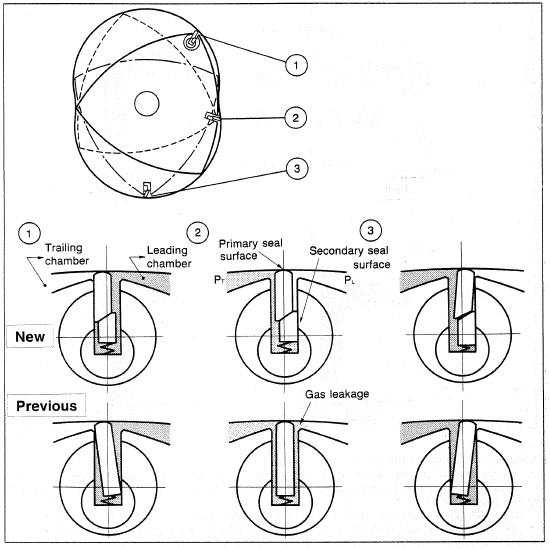
So you have incredibly high vacuum on the intake side. Picture the apex seal between the intake and compression stroke. It is being pushed toward the intake side by this pressure difference and being also pulled toward the intake side due to the vacuum. Centrifugal force (remember, I mentioned this earlier!) is trying to push the apex seal out of its slot. All of these forces combined can actually deform the apex seal groove and force the apex seal out of its little comfy spot. So then, if any further explanation at this point is needed, you now have an apex seal either jammed between the rotor apex and the rotor housing or you have one kicking around and find its exit at the exhaust port.
Drive it like you stole it and you'll get flames.
Feel free to rev the **** out of it..
JJ, if you think reving will destroy a rotary, watch this..
..the only thing that killed it was overheating.
Feel free to rev the **** out of it..
JJ, if you think reving will destroy a rotary, watch this..
MECP Certified Installer
Joined: Feb 2009
Posts: 3,176
Likes: 3
From: Mesquite, TX-DFW
Drive it like you stole it and you'll get flames.
Feel free to rev the **** out of it..
JJ, if you think reving will destroy a rotary, watch this..
RX7 Rotary 9000 rpm, engine blows, fire - YouTube
..the only thing that killed it was overheating.
Feel free to rev the **** out of it..
JJ, if you think reving will destroy a rotary, watch this..
RX7 Rotary 9000 rpm, engine blows, fire - YouTube
..the only thing that killed it was overheating.
I dont even know why I am even engaging this idiotic conversation at this point.

Either contribute something useful or get out. A basic understanding of thermodynamics and physics will help you

This, although a fleet vehicle idling can be excessive at times.
Let me try to explain this a bit firther (not the idle issue, but the revving the engine with no load).
Centrifugal force, if you know what that is, keep it fresh on your brain for a second.
When you rev the rotary engine to very high rpm during a no load condition, it does not take much throttle opening to do it. When you do this, intake manifold vacuum skyrockets.
Now let's think about what is happening to the apex seals when this occurs. Try and picture it in your head as this will help.
So you have incredibly high vacuum on the intake side. Picture the apex seal between the intake and compression stroke. It is being pushed toward the intake side by this pressure difference and being also pulled toward the intake side due to the vacuum. Centrifugal force (remember, I mentioned this earlier!) is trying to push the apex seal out of its slot. All of these forces combined can actually deform the apex seal groove and force the apex seal out of its little comfy spot. So then, if any further explanation at this point is needed, you now have an apex seal either jammed between the rotor apex and the rotor housing or you have one kicking around and find its exit at the exhaust port.
Let me try to explain this a bit firther (not the idle issue, but the revving the engine with no load).
Centrifugal force, if you know what that is, keep it fresh on your brain for a second.
When you rev the rotary engine to very high rpm during a no load condition, it does not take much throttle opening to do it. When you do this, intake manifold vacuum skyrockets.
Now let's think about what is happening to the apex seals when this occurs. Try and picture it in your head as this will help.
So you have incredibly high vacuum on the intake side. Picture the apex seal between the intake and compression stroke. It is being pushed toward the intake side by this pressure difference and being also pulled toward the intake side due to the vacuum. Centrifugal force (remember, I mentioned this earlier!) is trying to push the apex seal out of its slot. All of these forces combined can actually deform the apex seal groove and force the apex seal out of its little comfy spot. So then, if any further explanation at this point is needed, you now have an apex seal either jammed between the rotor apex and the rotor housing or you have one kicking around and find its exit at the exhaust port.
The jacking around of the seals happens whether load or no load. The seal passing the intake ports is both pulled to one side of the groove by vacuum and pushed by compression. The seal passing the exhaust port is pushed by combustion gasses but also pulled by the intake vacuum due to overlap.
The jacking back and for in the slot is due to combustion and compression being opposing forces as seen by the apex seal. It's the power stroke that forces it the other way.
Thread Starter
Full Member
Joined: Jul 2014
Posts: 62
Likes: 1
Well this got a little out of hand. I did not want to start an argument and have 90 billion different answers. I rev my engine in neutral a lot and it never hurt it. But I press the pedal to the floor where the throttle is completely open and let off at redline. So not really reliant on vacuum anyways. Which anyways I don't personally believe vacuum will hurt the engine unless I took what you said the wrong way, JJ.



CC of L-Squared Shots
Joined: Oct 2003
Posts: 644
Likes: 0
From: Columbus, Ohio

Aww yeah boy!!! I hear tell authentic JDM stickers add 5 hp per sticker!! Though to be honest, I don't know what the conversion rate is for JDM stickers on a USDM vehicle. Not sure the output you'll get on your truck.
Either way, this thing has gotta be putting out about a gagillion hp!!

Either way, this thing has gotta be putting out about a gagillion hp!!
MECP Certified Installer
Joined: Feb 2009
Posts: 3,176
Likes: 3
From: Mesquite, TX-DFW
Aww yeah boy!!! I hear tell authentic JDM stickers add 5 hp per sticker!! Though to be honest, I don't know what the conversion rate is for JDM stickers on a USDM vehicle. Not sure the output you'll get on your truck.
Either way, this thing has gotta be putting out about a gagillion hp!!
Either way, this thing has gotta be putting out about a gagillion hp!!

MECP Certified Installer
Joined: Feb 2009
Posts: 3,176
Likes: 3
From: Mesquite, TX-DFW
I was sitting here drinking coffee and remembered an lol moment from several years ago...
The original owner of the car put these nsty cherry bomb glasspacks on the car and about a year after I bought it, they where toast. I had straight piped welded up temporarily until I could find something more appropriate. Believe it or not, the straight pipes sounded better than the cooked glass packs.
anywho...
I told some buddies at work what i had done and they wanted to hear how loud it was. We went out to the parking lot and one of them was standing behind the car but off to the side while the other guy was standing about 5 feet directly behind the driver side exhaust pipe.
I am revving and the guy directly behind the car says "Rev it to redline!!!" and so i do. As soon as I let off the gas I hear this...
*BAANG!* "AAAHHHHH!!!!"
I get out of the car and see the guy directly behind the car laying in the fetal position holding his crotch and the other guy laughing his *** off.
The shockwave from the afterburn hit him directly in the *****.
The original owner of the car put these nsty cherry bomb glasspacks on the car and about a year after I bought it, they where toast. I had straight piped welded up temporarily until I could find something more appropriate. Believe it or not, the straight pipes sounded better than the cooked glass packs.
anywho...
I told some buddies at work what i had done and they wanted to hear how loud it was. We went out to the parking lot and one of them was standing behind the car but off to the side while the other guy was standing about 5 feet directly behind the driver side exhaust pipe.
I am revving and the guy directly behind the car says "Rev it to redline!!!" and so i do. As soon as I let off the gas I hear this...
*BAANG!* "AAAHHHHH!!!!"
I get out of the car and see the guy directly behind the car laying in the fetal position holding his crotch and the other guy laughing his *** off.
The shockwave from the afterburn hit him directly in the *****.
So you have incredibly high vacuum on the intake side. Picture the apex seal between the intake and compression stroke. It is being pushed toward the intake side by this pressure difference and being also pulled toward the intake side due to the vacuum. Centrifugal force (remember, I mentioned this earlier!) is trying to push the apex seal out of its slot. All of these forces combined can actually deform the apex seal groove and force the apex seal out of its little comfy spot. So then, if any further explanation at this point is needed, you now have an apex seal either jammed between the rotor apex and the rotor housing or you have one kicking around and find its exit at the exhaust port.
"However, as gas pressure participates in seal efficiency, racing a Wankel engine at high rpm under no load conditions can destroy the engine."
And as Tony pointed out
If it's flames you want, rev the **** out of it and drive it like you stole it.
Or rock a bad *** 4 rotor and rip it up!
Thread Starter
Full Member
Joined: Jul 2014
Posts: 62
Likes: 1
The Apex seal spring works against centripetal forces and keeps the apex seal tight against the housing. If the seal has nowhere to go, the centrifugal forces only help keep it tight against the housing surface. The apex seal slides up a down in it's slot to keep a seal against the housing and maintain a gas tight chamber. A free revving an engine would have low chamber pressures acting as you say by the combustion/compression/intake vacuum. A high boosted rotary running at high load would have the largest pressures.
And as Tony pointed out
If it's flames you want, rev the **** out of it and drive it like you stole it.
Video Link: https://www.youtube.com/watch?v=8-41A0jMmrc
Or rock a bad *** 4 rotor and rip it up!
Video Link: https://www.youtube.com/watch?v=5NZmUkA5rGQ

Information Regurgitator


Joined: Feb 2001
Posts: 1,994
Likes: 208
From: Sparta TN. United States
You need to ditch those stock mufflers to shoot flames. You need straight thru mufflers. The stock ones are chambered similar to the turbo mufflers in the hot rod world so the flames don't get out.
Thread Starter
Full Member
Joined: Jul 2014
Posts: 62
Likes: 1
I'm seriously considering just ditching the mufflers entirely and running pipes to the back. How bad would you think it'd sound?
MECP Certified Installer
Joined: Feb 2009
Posts: 3,176
Likes: 3
From: Mesquite, TX-DFW
Did I say chainsaw?
Chainsaw....
MECP Certified Installer
Joined: Feb 2009
Posts: 3,176
Likes: 3
From: Mesquite, TX-DFW
The Apex seal spring works against centripetal forces and keeps the apex seal tight against the housing. If the seal has nowhere to go, the centrifugal forces only help keep it tight against the housing surface. The apex seal slides up a down in it's slot to keep a seal against the housing and maintain a gas tight chamber. A free revving an engine would have low chamber pressures acting as you say by the combustion/compression/intake vacuum. A high boosted rotary running at high load would have the largest pressures.
And as Tony pointed out
If it's flames you want, rev the **** out of it and drive it like you stole it.
rotary flames - YouTube
Or rock a bad *** 4 rotor and rip it up!
Mad Mike RedBull RX7 - Spitting Flames - Team NZ Promo 2012 - YouTube
And as Tony pointed out
If it's flames you want, rev the **** out of it and drive it like you stole it.
rotary flames - YouTube
Or rock a bad *** 4 rotor and rip it up!
Mad Mike RedBull RX7 - Spitting Flames - Team NZ Promo 2012 - YouTube