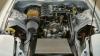
is there anything truly special about tuning a 3 rotor?


is there anything truly special about tuning a 3 rotor?
First of all, I really want Steve Kan to tune my car. BUT it isn't that easy to have Steve tune the car when he lives over 1000 miles away (there also isn't enough local interests to fly him here). His tuning cost isn't the issue. For me, it is because like any 3 rotor, it is always a work in a progress. Once I figure one thing out, it is another issue. I just can't repeatedly take time off from work to drive to Texas (1400 miles) only to find out my fuel pressure isn't up to par in boost (installed a swirl pot then another Bosch 044), my engine oil pressure is no longer holding in high rpm (o-ring between front housing & front cover blew out), AFR is reading too lean (had v-band leak before o2 sensor), or who knows what else once I get to Texas?
This brings me to my local tuner. He's not a rotary guy, but he does tons of piston engines and has done a couple RX7's in the past. He has never done Microtech which is what I'm using. I'm not looking to make 1000whp. I only need about 500whp with GT42 3 rotor with street drivability at about 8-10psi. Once I get this basic tuning and work out all the kinks, only then I would want to drive over to Kan tuning for the final tune.
Can someone who is familiar with tuning both piston & rotary engine reply? Popular and easy answer is obviously take it to Steve or any rotary tuner, but I seek an informed answer. If informed answer is that it must be done by a rotary tuner, that's fine, just very inconvenient and time consuming. Thanks!
This brings me to my local tuner. He's not a rotary guy, but he does tons of piston engines and has done a couple RX7's in the past. He has never done Microtech which is what I'm using. I'm not looking to make 1000whp. I only need about 500whp with GT42 3 rotor with street drivability at about 8-10psi. Once I get this basic tuning and work out all the kinks, only then I would want to drive over to Kan tuning for the final tune.
Can someone who is familiar with tuning both piston & rotary engine reply? Popular and easy answer is obviously take it to Steve or any rotary tuner, but I seek an informed answer. If informed answer is that it must be done by a rotary tuner, that's fine, just very inconvenient and time consuming. Thanks!
or what could also be very helpful would be some specific parameters or guidelines I can relay that will make an experienced piston tuner safe to tune a 3 rotor with Microtech. thanks again.
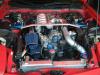

Timing, timing, timing. Piston guys love to make power with timing. Rotaries don't like too much of it. I would advise him not to add too much of it, rotaries will make power without that much timing when turboed. I would suggest not much more than 15 degree at full boost and keep a decent split too. Fuel tuning should be similar to a piston.
Thanks for your feedback. so max timing = 15 deg at 8 psi (my set limit for this tune). By split do you mean t-gap (timing between leading & trailing spark plugs)? I have mine 15 deg at idle and around 10 deg at max rpm @ about 7000rpm. Does that sound ok?

You can go a little higher if only running 8psi, but you are definitely safe there.
As far as Idle you can go as far as the 20's. You wont break anything at idle, it just depends how the engine reacts to it, and you may even get better gas mileage! (Unless you are always on boost LOL!)
As far as your split you are good with those numbers.
After that let your tuner do his magic with the fuel maps. just watch out for lean conditions.
As far as Idle you can go as far as the 20's. You wont break anything at idle, it just depends how the engine reacts to it, and you may even get better gas mileage! (Unless you are always on boost LOL!)
As far as your split you are good with those numbers.
After that let your tuner do his magic with the fuel maps. just watch out for lean conditions.


Trending Topics

Tuning a 20b is no different then tuning a 13b, its just more expensive to fix if you break it and the center bank tends to get more airflow. Using a fixed timing value suggestion isn't the best idea, especially if the motor is stock. It's ok as a general guideline but around peak torque timing needs to be conservative to be safe. Also rotaries generally like richer AFR's, think low 11's. Though at 8-10 psi, probably mid 11's would still be ok. 10 split is also ok for that boost level but if you raise the boost, I prefer a greater split.
thewird
thewird


Just tuned my first 3 rotor, it's a full peripheral port NA, dry sumped, GT2 engine using Racing Beats aluminum intermediate plates where applicable. After I got over the fact that it was a $50,000+ engine it felt just like I was tuning the 2 rotor I had worked on for the same chassis the season earlier. The main issue is just use software that you're comfortable with.