


20b Exhaust port inserts.


Thread Starter
Junior Member

Joined: Dec 2008
Posts: 29
Likes: 0
From: Queens NY
20b Exhaust port inserts.
Ok, the inserts in a 20b are significantly smaller than those of the 13b. I understand this is done for noise reduction. My question is, with a goal of 600 HP, how much will these inserts affect torque? Please keep in mind that torque will be this engine's primary goal. Please understand, I love the sound of this motor but would Hate to have to add 200lbs of mufflers later. Honestly the more quiet my FD became, the harder I drove it!

Ok, the inserts in a 20b are significantly smaller than those of the 13b. I understand this is done for noise reduction. My question is, with a goal of 600 HP, how much will these inserts affect torque? Please keep in mind that torque will be this engine's primary goal. Please understand, I love the sound of this motor but would Hate to have to add 200lbs of mufflers later. Honestly the more quiet my FD became, the harder I drove it!
Regardless of the sleeves, it's gonna be hard to keep the engine quiet at that power level. The sleeves mainly affect top end more than anything because they are a flow restriction to the turbos. What are you using the car for?
Thread Starter
Junior Member
Joined: Dec 2008
Posts: 29
Likes: 0
From: Queens NY
This is gonna be a street car. In NYC !!!!! Here we have the Bloomberg regime which tends to frown on anything loud. The last thing I want is to baby the damn thing for fear of tickets co loud exhaust. Do not plan on revving past 7500rpm anyway.
Thread Starter
Junior Member
Joined: Dec 2008
Posts: 29
Likes: 0
From: Queens NY
Maybe some more info will help. Mild street port, hd water seals andoem apex seals. The only thing exotic will be a costom dry sump system. The turbo is a gtx42 with long tune manifold. The intake however is gonna be a costom affair of my own design. ( lord help me.)

Junior Member

Joined: Feb 2007
Posts: 37
Likes: 0
From: VA
Do U mean illegally loud , like open exhaust loud? Even with the proper exhaust..


Ok, the inserts in a 20b are significantly smaller than those of the 13b. I understand this is done for noise reduction. My question is, with a goal of 600 HP, how much will these inserts affect torque? Please keep in mind that torque will be this engine's primary goal. Please understand, I love the sound of this motor but would Hate to have to add 200lbs of mufflers later. Honestly the more quiet my FD became, the harder I drove it!
~S~

Trending Topics

if you are porting the intakes, you will almost have to change the exhaust ports to avoid a huge flow mismatch. The inserts are pretty restrictive, you will lose top end and more importantly spool time will suffer if you keep them.


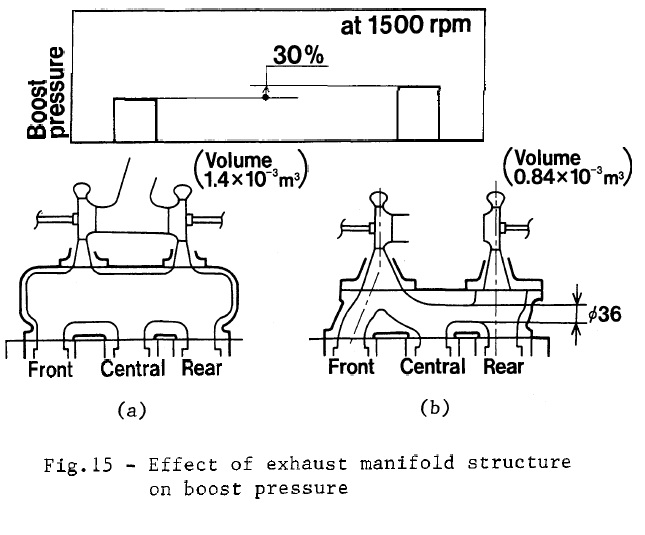
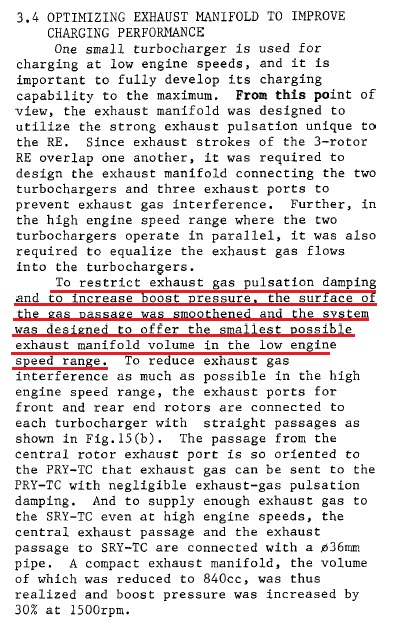
It is highly likely that the 20B exhaust inserts are small because of, surprisingly enough, performance reasons. They are meant to be used with the factory exhaust manifold and turbos. The factory exhaust manifold was carefully designed to be as narrow as possible to improve spool, while still reaching Mazda's goals for gently tapering top end power.
Thread Starter
Junior Member
Joined: Dec 2008
Posts: 29
Likes: 0
From: Queens NY
Thanks arghx for the effort and insight. For now I will be sticking to the stock exhaust ports with appropriate sized manifold tubing, port matching and cleaning up the intake side should suffice. I'm not gonna try turning this build into some high strung monster. I want torque down low where I can have fun on the street, "STREET CAR." Now argax, having digested your post I have another question. Does it make any sense to use unequal length runners for my exhaust manifold. should the middle runner be longer? "TO RESTRICT EXHAUST GAS PULSE DAMPING" Has anyone ever considered using a two runner exhaust manifold to the turbo to prevent said damping. something like a single side turbo on a v motor?
"TO RESTRICT EXHAUST GAS PULSE DAMPING" Has anyone ever considered using a two runner exhaust manifold to the turbo to prevent said damping. something like a single side turbo on a v motor?

also, you have PM
series 5 (fully divided twin scroll single turbo) and series 6 (sequential twin turbo) torque curves:
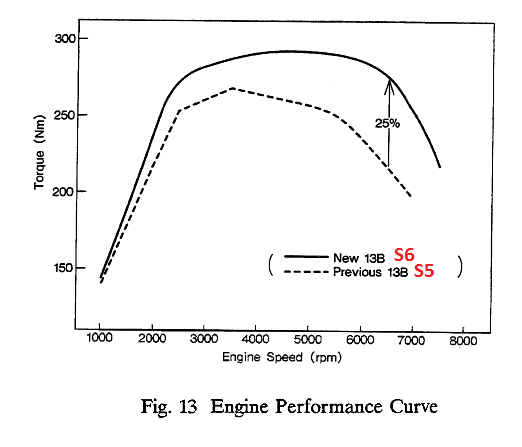
20B sequential twin turbo (solid line) torque curve:
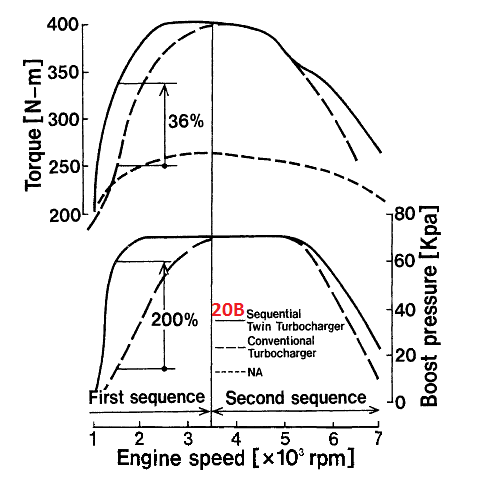
Even though the 20B nominally had about 25 more hp than the 13B-REW, at 2500rpm the 20B had about 45% more torque than the series 6 REW. on the 13B-REW you have about 275NM and on the 20B-REW you have about 400NM. Sure it's got an extra rotor, but it also has the narrow exhaust manifold and narrow exhaust sleeves. Because of the extra displacement, Mazda could achieve their peak power goals and still be able to use the small diameter preturbo exhaust piping for that low end, part throttle torque you would expect from a V8 or twin turbo V6. The 20B is nowhere near as high strung as a 13B.
20B sequential twin turbo (solid line) torque curve:
Even though the 20B nominally had about 25 more hp than the 13B-REW, at 2500rpm the 20B had about 45% more torque than the series 6 REW. on the 13B-REW you have about 275NM and on the 20B-REW you have about 400NM. Sure it's got an extra rotor, but it also has the narrow exhaust manifold and narrow exhaust sleeves. Because of the extra displacement, Mazda could achieve their peak power goals and still be able to use the small diameter preturbo exhaust piping for that low end, part throttle torque you would expect from a V8 or twin turbo V6. The 20B is nowhere near as high strung as a 13B.


Arghx,
Sharing all this amazing technical info and insight in anything rotary, greatly appreciated.
VES-System is poplular option these days.
As long as you dont open it up on the streets and make use of the pressure based actuator it sounds promising.
Sharing all this amazing technical info and insight in anything rotary, greatly appreciated.
VES-System is poplular option these days.
As long as you dont open it up on the streets and make use of the pressure based actuator it sounds promising.
Last edited by Polak Graphics; Dec 12, 2010 at 01:37 AM.
that VES system is more designed as a boost-activated cutout. The sound performance quick spool valve is this:
http://www.youtube.com/watch?v=_KNLKVgg8po
it is very similar to the system used on series 4 87-88 T2 engines. Those were vacuum operated instead of pressure operated.
http://www.youtube.com/watch?v=_KNLKVgg8po
it is very similar to the system used on series 4 87-88 T2 engines. Those were vacuum operated instead of pressure operated.
if you look at the turbo engines with the most torque, they tend to pick a turbo(s) they can wind up down low (15-20psi by say 3000rpm) and then let the boost fall off. You'll see that a lot on STi's and Syclones. People don't do this so much with rotaries because they are looking for the top end power. So you have turbos, manifolds, etc all sized for that with resulting poor part throttle and low end torque characteristics.
Also, the concept of intentional boost spikes or intentional boost taper isn't normally employed on rotaries, but it's a pretty standard way of getting low and mid range torque.
Also, the concept of intentional boost spikes or intentional boost taper isn't normally employed on rotaries, but it's a pretty standard way of getting low and mid range torque.
I looked more into the VES system and it isn't as popular as i thought. Kinda looks like the idea flopped.
The quick spool on the other hand ive seen videos of people using it on a lot of piston turbo cars but nothing rotary yet.
Last time i brought up the quick spool valve in conversation with rotary guys i got the "way to restrictive" comment,but now it seems like the best option now for a quieter and faster street car.
"Intentional boost spikes/taper", i first saw it refereed as a boost scrambler, of course you would need a proper ecu/tune to use it.
The quick spool on the other hand ive seen videos of people using it on a lot of piston turbo cars but nothing rotary yet.
Last time i brought up the quick spool valve in conversation with rotary guys i got the "way to restrictive" comment,but now it seems like the best option now for a quieter and faster street car.
"Intentional boost spikes/taper", i first saw it refereed as a boost scrambler, of course you would need a proper ecu/tune to use it.
The quick spool on the other hand ive seen videos of people using it on a lot of piston turbo cars but nothing rotary yet.
Last time i brought up the quick spool valve in conversation with rotary guys i got the "way to restrictive" comment,but now it seems like the best option now for a quieter and faster street car.
Last time i brought up the quick spool valve in conversation with rotary guys i got the "way to restrictive" comment,but now it seems like the best option now for a quieter and faster street car.
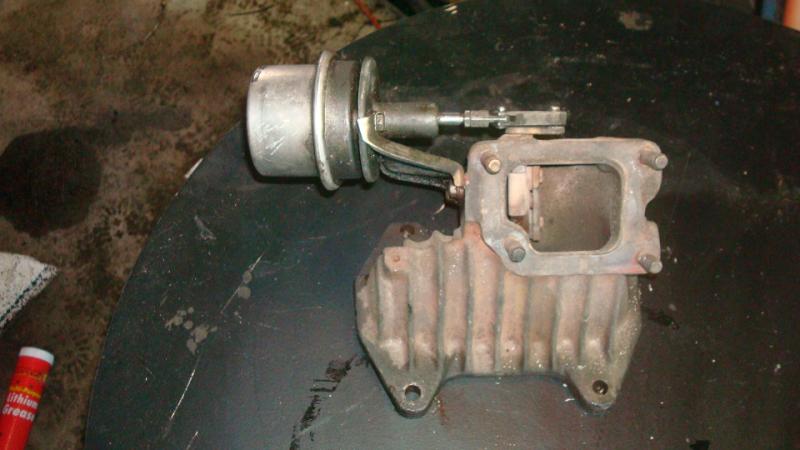
Restrictive is all relative to your goals. The OEM 20B exhaust manifold was restrictive in a sense, but it allowed them to make torque comparable to a V8 of the time.
"Intentional boost spikes/taper", i first saw it refereed as a boost scrambler, of course you would need a proper ecu/tune to use it.
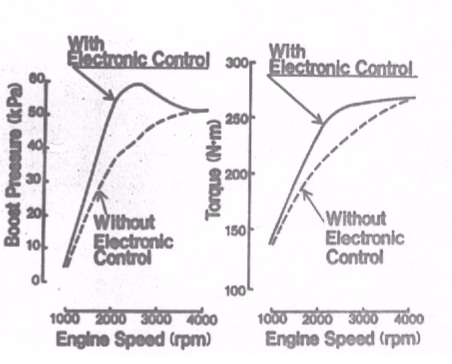
Boost quickly peaks at about 8.5psi for low and mid range torque and then falls off. We would deride that as a turbo that is "too small" or a setup that is "too restrictive" but it was very much intentional. Most normal drivers want boost at 2000rpm. For an extreme example of this, check out this boost curve on a bone stock Evo X:
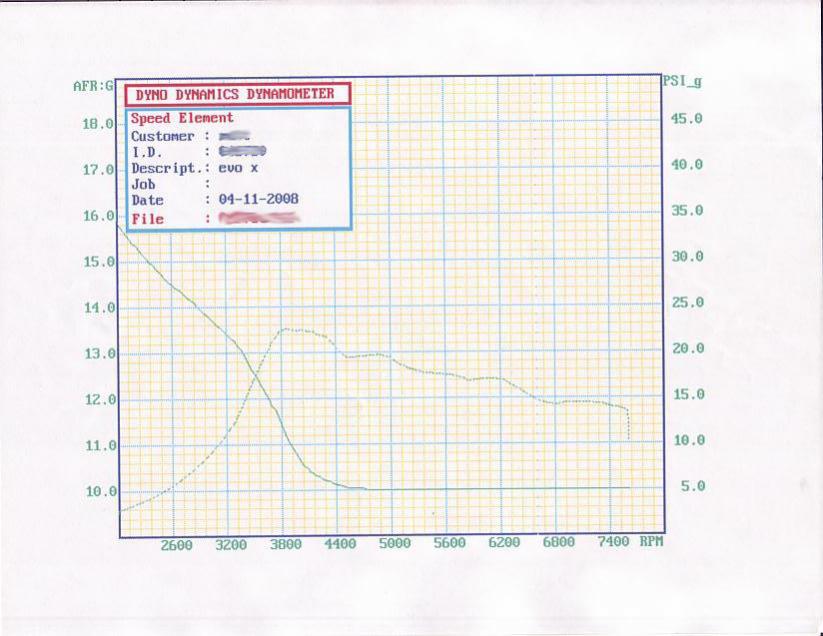
You can see it peaks at over 22psi and then slowly falls off. There are two boost control bleeder solenoids plumbed into the wastegate and a target engine load table in the computer used for controlling them. The boost looks "ugly" to people with a certain internet forum influenced "dynosheet aesthetic" but it does what it was engineered to do, which was take a 291 horsepower 2.0 liter 4 cylinder and give it decent response and broad midrange torque.

Thread
Thread Starter
Forum
Replies
Last Post
msilvia
3rd Generation Specific (1993-2002)
28
Apr 14, 2016 12:58 PM
