When you click on links to various merchants on this site and make a purchase, this can result in this site earning a commission. Affiliate programs and affiliations include, but are not limited to, the eBay Partner Network.
I de-flooded it the way you described, but I used a premix syringe for a 2-stroke to put the oil directly into the spark plug holes and then spun it over by hand. Hooked all of the ignition back up, plugs back in, distributor in the center then a little counter-clockwise.
Cranked it and it didn't even sputter and try to run like it was. I didn't check for spark, because everything was hooked up how it was when I last checked for spark. I fiddled with the distributor position, first back to where it had kind of run before. No matter where I put the distributor, it didn't even sputter. I did check the voltage on the battery and it was reading about 12.4v, so that didn't help. I've got it on a charger, but it's only a trickle charger from my bike.
Pulled the plugs again, and they were soaked. Deflooded it again, and now it's sitting there, disrespecting me.
I only removed the plugs from the engine and the plug wires and moved the plug wires out of the way. Didn't turn off the fuel pump because the carb would have still been full of gas.
How long were you cranking the engine to start it,if not long,has to be a reason why so much fuel is getting into engine.
With that in mind,take air filter off carb,turn key on to run pump and look down venturies of carb for fuel dribbling/running out and into engine
Reason I instructed you to disconnect one of primary wire on each coil was to eliminate spark being generated at wires,also doing this eliminates the trigger for fuel pump relay which gets its signal from trailing coil and also feeds tachometer with signal it needs to operate.
All the atomized fuel being expelled from engine is highly igniteable,explosive. Even the fumes coming in contact with an errant spark is enough to ignite the fuel and it happens fast.
Not a lecture,strong suggestion.
Have seen cars catch fire and burn to the ground from things like this. I know a guy that was working on his car in the garage and this happened to him. Burned his garage down and seriously damaged his house.
Tty to have patience,the engine ran before,it will run again,need to work thru whatever is causing the no start.
I cranked it for a while. I pumped the pedal a time or two when I first cranked it. That was probably why it was flooded, but that's what people normally do to start their weber-carbed sevens. I'm certain I'm the reason it was flooded, but normally 2 pumps and it'll at least sputter, not instantly flood again.
There's no fuel pump relay on the 79 cars as far as I know. There isn't one on mine, again, as far as I know.
Cranking it for a "while" is pulling in more gas each revolution the engine makes. Pumping gas a couple times won't introduce as much fuel as steady cranking.Next time you deflood,put some oil down each carb venturi as well as some into plug holes.
Been a long time since i jetted a Weber on a 12A,i looked back thru notes i kept for different setups. Following is what i generally ended up with for a stockport engine. I will assume this is what you have.
Idle jet-60 f9
Aux choke-3.5 mm
Main choke-40 mm
Accel jet-45
Main jet-180
Air corrector-150
Emulsion tube-f 11
The jet selection you listed earlier,was this what came in carb initially? Did you change jetting,do you have a selection of jets? Possible the 65 slow jet is a bit large for what you need and could be a contributor to excess fuel in engine. Pull dipstick and smell oil for presence of gas.
Do you know choke sizes,Accel jet size? f9-f11 tubes good choice for stockport and 180 main also about right.
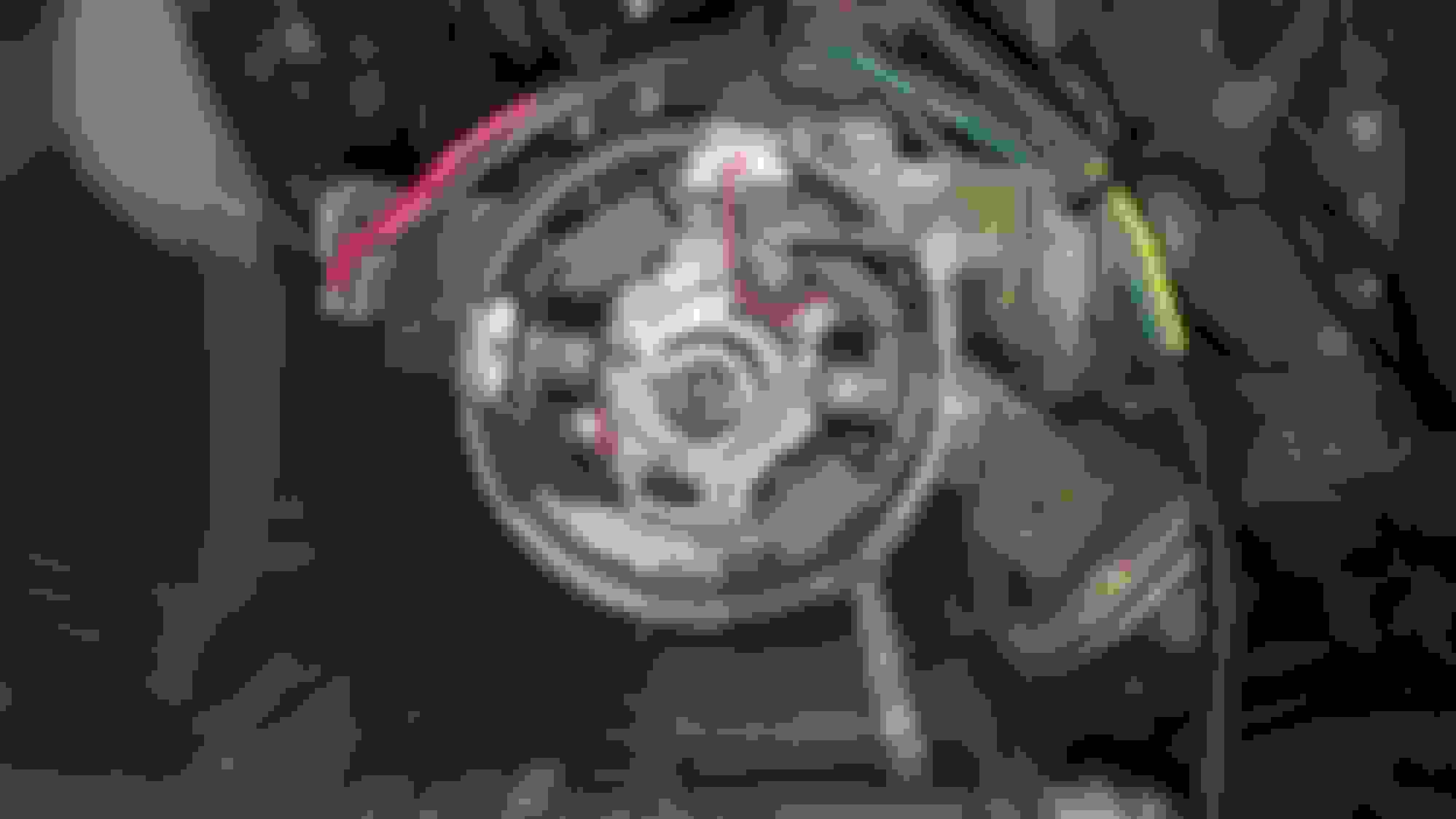
Go back and look at pic you posted of dist and rotor position when lined up with L1 terminal in cap. Take note of the arrow on rotor and compare to pic here of rotor position with engine set to TDC and rotor lined up with L1 position in cap.
After you have dried the engine out,oiled it,consider putting a fresh set of plugs in engine. Have seen on many occasions gas fouled plugs not able to light off an engine that won't startand installing a fresh set made the difference and engine started right up
This jet selection is from a Weber 45 I had purchased earlier. Unfortunately, for full price, and with mushroomed mixture screw holes, and a ruined throttle spindle thread.
I purchased a brand new weber 45, which is the currently installed carb, and swapped all of the jets and venturi over.
My setup is the same as what you have listed besides a 65f9 idle and an air corrector of 175. Probably lean me out a lot in the top end and I figured I'd have to go down several sizes, but I wasn't worried about it.
They're pointing the opposite direction. What causes it to be backwards like that? And if it's symmetrical, would that even cause a problem?
After a while of research and contact with the previous owner, I've decided it's best to just find a diagram and make sure the ignition system is set up as it needs to be. Looked around for a bit and I can't find any forum posts on this specific swap.
Would an 81-85 wiring diagram work? or if anyone could point me to a thread that has what I'm looking for.
I can see the wiring at the distributor. Post clear pictures of how distributor wiring harness terminates at ignition coils. Also a picture looking down on dist. with engine at TDC with dist. rotor removed to see reluctor/pickup relationship.
Just pull it straight up. Shouldn't take much effort assuming it hasn't seized to the shaft.
Once you have off the rotor you can also remove the reluctor wheel easily with a Phillips driver, although I don't know if that something you need to do (I haven't read through the recent posts).
Figured I'd pull the dizzy and see where it's at. Turns out it's 180 degrees out. Alignment mark on the gear and the dizzy body were exactly opposite of each other.
I am utterly baffled at it even running at all. Apparently, if you install the dizzy 180 degrees out and swap the coil wires. It'll actually run pretty well if you can get it started.
I ran mine with leading only and it was 90 deg out and ran just great due to it being DFIS setup. Ran this way for a couple years until I did the trailing and found out it screwed up the trailing completely. LOL Live and learn.
So,does it start and run? The arrow on your rotor not being in position as in pic i posted was a giveaway dist installed backwards as rotor can only install one way.
Are you certain the engine is at TDC,have you checked to see if flywheel flat spot is in correct position,and leading timing mark is under pin on cover?
You can find posts about putting a piece of wire into spark plug holes to feel apex seals on rotor to Find TDC to line up pulley marks to install dist correctly.
This is the method i have used for many years: go to passenger side of engine and look at area right behind exhaust manifold. There will(should)be an an inspection plate held in place with 6 mm bolt(10 mm)bolt. Remove plate and you will see the opening behind that lets you see the flywheel.
Turn the engine by hand until section of flywheel you see in pics is centered in the opening. This is TDC on #1 rotor. Timing mark on pulley should be lined up with pin on front cover. Marks on dist body and gear should be aligned and installed into engine and arrow on rotor should be in same position as seen in pic.Distributor body should be centered in adjustment slot where you see holdown bolt in pic.This will have the ignition timing very close and the engine can be started and fine adjustments can be made with a timing light. Most engines will have dist body about center in adjustment slot with ignition timing properly set with timing light.
If the dist drive gear on e shaft has been installed backwards during engine work/overhaul this can throw off the actual dist TDC about 1.5 teeth. This can be compensated for enough by moving distributor in its slot til leading ignition reluctor and pickup are closely aligned.
Start engine and set timing,it will be close,but not perfect,likely have dist body rotated close to end of adjustment slot to get timing marks where needed.
Hope this helps put static timing questions to rest.
Took off the inspection plate and put the engine on leading timing mark. Flywheel is centered in the inspection hole as it should be. Going to reinstall distributor, deflood, and see what happens.
Installed the distributor, deflooded, and added some oil down the spark plug holes and the intake. Turned it by hand 6ish rotations. Reinstalled the spark plugs and plug wires and hooked the ignitors back up.
Apparently, I put too much oil, because the first few cranks coated the plugs in oil. So I cleaned them off and reinstalled. Third crank and it started and ran. It doesn't want to run below about 1200, but I'm pretty sure that's because the carb isn't even close to properly tuned.
My throttle setup keeps catching, as well. I'm using the throttle wheel off of the old carb that was on the car. What throttle setup have you all used on your webers? Is there a wheel out there that's designed for a 45 Weber? I know of the 48 linkage, but I'd basically be doing the same ghetto setup that's on it.
Progress! Oil fouling plugs happens,means you put enough in👍. Let car get up to temp before you shut it down, Set idle mixture 1st and see if engine responds to adjustments. If you find mixture screw needs to be near closed for best idle,consider #60 slo jet
1200 rpm,is that holding throttle open to idle or will engine idle on its own?. Before you start making jet changes,be very sure you do not have a vacuum leak.
It'll idle on its own above 1500 perfect, below that it gets exponentially more rough and sputtery the lower it goes. It'll slowly drop in revs until it dies, but working the throttle quickly can save it and bring it back up as long as it was still slightly running.
The throttle wheel itself catches on the body of the carb, opening the throttle more than a quarter of the way causes it to catch at about 3000 rpm. Push the throttle wheel gently back closed, and it'll hold it at about 1300ish just fine, if I push it until it hits the throttle speed screw, it'll die. I'll wait until I've got a helper in a couple of hours and try tuning the mixture.
It's difficult with the throttle wheel catching, but we'll see. The hole in the wheel for the throttle shaft is too large for the Weber. Tightening down the spindle nut is the only way to stop the play, but then it catches on the casting.
I know not being able to get below 1000 rpms is generally a big arrow to a vacuum leak, but the intake gasket is new, and I've got clamps on every connection to the intake, so there shouldn't be any vacuum leaks. My mixture screws are about 2.5 turns out, so the extra fuel could be causing my high idle as well.
Progress! Yay!
Last edited by Ta-Aikah; May 22, 2019 at 02:42 PM.
Started it again today and tried to tune the carb down so it'd sit more at a standard idle instead of 1500-1800 rpms. Still wants to die if it's idling below 1500 even all the way warmed up. Though, today I noticed some things I thought were weird. It developed a pretty noticeable misfire.
The video I've recorded doesn't really do it justice, but maybe it'll help identify anyway.
My dad who was helping me noticed the exhaust headers were a dull red from a little out of the exhaust port almost to the firewall. We wanted to make sure that was normal. It doesn't seem normal, though rotaries do have hotter exhausts in relation to their piston counterparts.
Another thing we noticed was when I turned the mixture screws in a quarter turn at a time, down to 2 turns out on each screw from 2 and a half. The intake manifold stopped being cold and producing condensation. The engine also didn't sound very happy with me turning the screws in. Again sounds like I'm leaning it out due to a vacuum leak. I simplified my vacuum system off of the manifold, so maybe the vacuum leak is gone.