


Rate my 1st port job






I cannot give much feedback but I am interested as I will soon do my first port job. Looking to do a 1/2 bridge . Will you have to do anything to the rotor housings to provide clearance for the bridge ports? What technique did you use to open the bridge port? Did you drill through the housing or did you do it all with the grinder? Look good to me!!!!

Thread Starter
Joined: Jan 2008
Posts: 1,300
Likes: 60
From: Southfield, MI
yea i used the racing beat template
yea the housing need to have a notch were the eyebrow of the prot goes. if you get the rb template it tells you the exact dimensions to cut. i used a jewelers dremel with the rb carbide bits (dremel was $40 at harbor freight) what i did to open the port was hold the dremel steady and drill threw a couple of times then just finish it off.
i was told by a local builder that i could extend the big port not the bridge more inside to gain about 30 to 40hp more but i rather not risk it with good irons. maybe ill try it later.
I cannot give much feedback but I am interested as I will soon do my first port job. Looking to do a 1/2 bridge . Will you have to do anything to the rotor housings to provide clearance for the bridge ports? What technique did you use to open the bridge port? Did you drill through the housing or did you do it all with the grinder? Look good to me!!!!
i was told by a local builder that i could extend the big port not the bridge more inside to gain about 30 to 40hp more but i rather not risk it with good irons. maybe ill try it later.
Trending Topics


Not too bad. Me personally, I NEVER widen the primary port. The more material between the primary port and the bridgeport, the better. This is my own design bridgport that the last 12A bridge that I ported made 216 rwhp with C16 fuel. N rotation assembly.
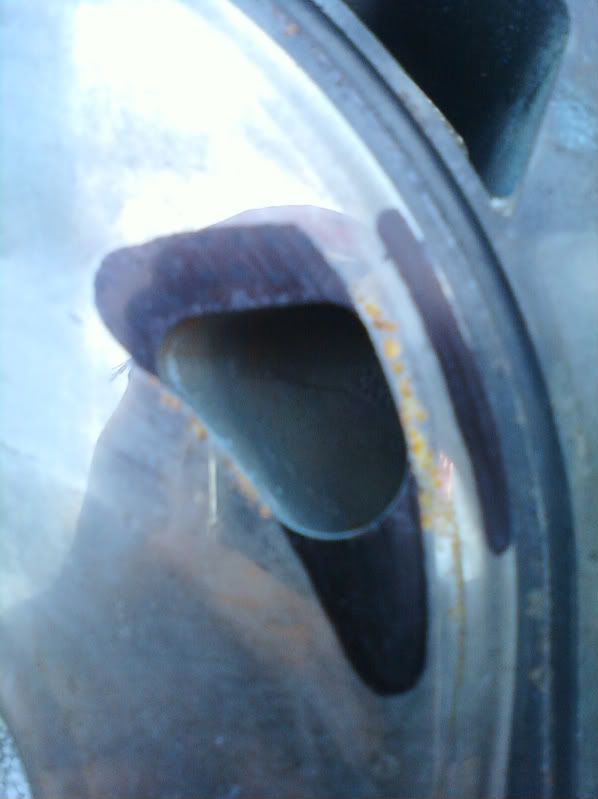
Always remember to chamfer the edges of the ports to prevent the possibility of the corner seal from getting snagged. Also, remember that the corner seal needs to have at least half of its diameter supported by the iron face.
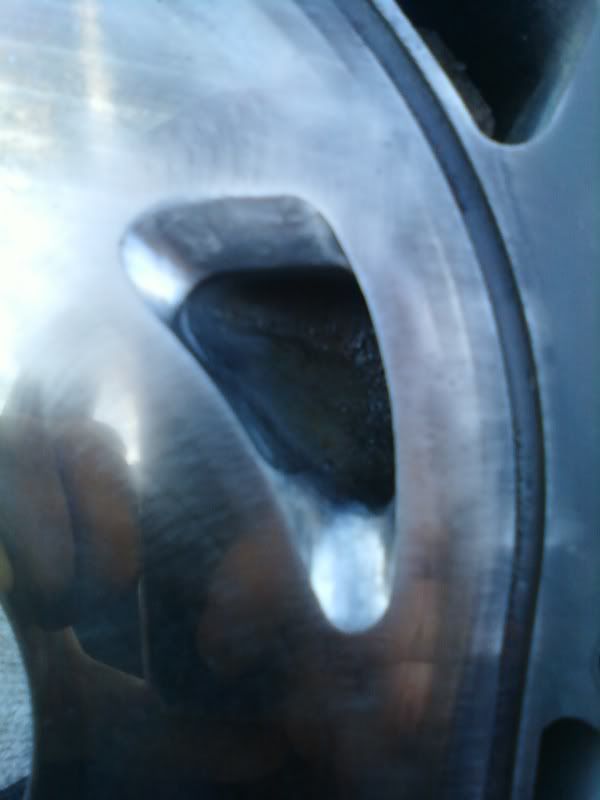
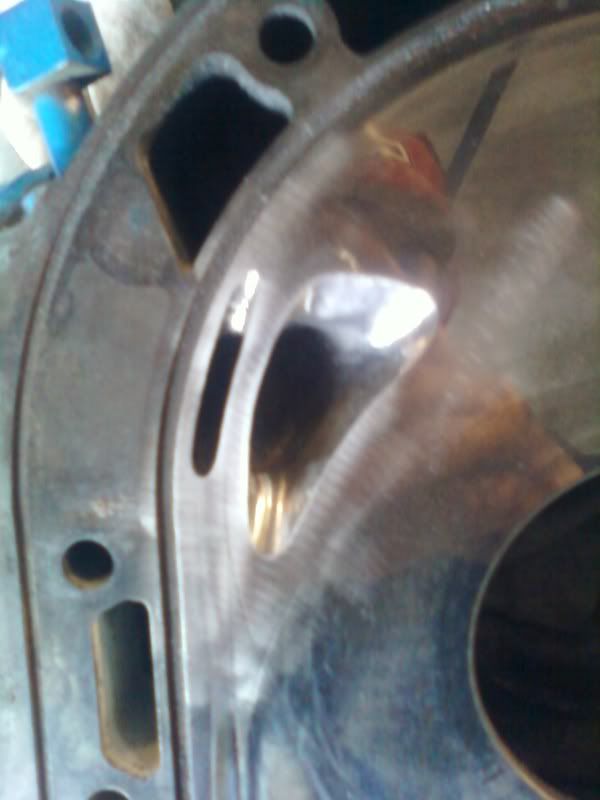
Always remember to chamfer the edges of the ports to prevent the possibility of the corner seal from getting snagged. Also, remember that the corner seal needs to have at least half of its diameter supported by the iron face.
Thread Starter
Joined: Jan 2008
Posts: 1,300
Likes: 60
From: Southfield, MI
Not too bad. Me personally, I NEVER widen the primary port. The more material between the primary port and the bridgeport, the better. This is my own design bridgport that the last 12A bridge that I ported made 216 rwhp with C16 fuel. N rotation assembly.
Always remember to chamfer the edges of the ports to prevent the possibility of the corner seal from getting snagged. Also, remember that the corner seal needs to have at least half of its diameter supported by the iron face.
Always remember to chamfer the edges of the ports to prevent the possibility of the corner seal from getting snagged. Also, remember that the corner seal needs to have at least half of its diameter supported by the iron face.
thanks for the tip on that, very nice bridge, nice and wide. this local builder he showed me a bridge that was extremely thin on top but it widened at the bottom, he said that type would get any were from 270 to 300, but its a risky one because its a super thin bridge and a very big eyebrow port going in slightly into the water seals. that was too extreme for me i want my motor to at least last me 2 race season.

old dog

Joined: Jun 2009
Posts: 209
Likes: 1
From: wpg man can
I noticed that you did not port the intake Port or open up(enlarge the intake port on the Irons,this will hinder the porting you have,because it will tend to restrict the porting effect you should always do both as you are trying to increase the volume of the air as well as fuel supply, a larger hole will flow much better if the port is the same size throughout its length slowly tapering to the Opening in the cast plate, check out Racing Beat for some tech tips........ps check out my pictures as well see, 959595rotor Engine builders...
Thread Starter
Joined: Jan 2008
Posts: 1,300
Likes: 60
From: Southfield, MI

I noticed that you did not port the intake Port or open up(enlarge the intake port on the Irons,this will hinder the porting you have,because it will tend to restrict the porting effect you should always do both as you are trying to increase the volume of the air as well as fuel supply, a larger hole will flow much better if the port is the same size throughout its length slowly tapering to the Opening in the cast plate, check out Racing Beat for some tech tips........ps check out my pictures as well see, 959595rotor Engine builders...

He's talking about porting the actual runner. For a first time... they look good.
But you need to open up the runners to match your port. You're trying to increase CFM with porting, but also Laminar flow. If you leave the intake runners stock, and they open into a big port you lose alot of air velocity which kinda defeats the purpose of porting. The idea is to cram as much are into the engine as possible each time the rotor face passes over the port. The best way to do that is to keep the path of the incoming air as smooth and straight as possible you should have a smooth transition from the port runner to the closing edge of your ports, and everything else should flow from the runner outward.
Of course this really only applies to NA engines.... turbos are a whole other story.
But you need to open up the runners to match your port. You're trying to increase CFM with porting, but also Laminar flow. If you leave the intake runners stock, and they open into a big port you lose alot of air velocity which kinda defeats the purpose of porting. The idea is to cram as much are into the engine as possible each time the rotor face passes over the port. The best way to do that is to keep the path of the incoming air as smooth and straight as possible you should have a smooth transition from the port runner to the closing edge of your ports, and everything else should flow from the runner outward.
Of course this really only applies to NA engines.... turbos are a whole other story.
I forgot to mention that that. Thanks. Most of the port work that I do is for boosted applications. But I have dabdled a little bit in the NA world 
The last 12A PP that I did.
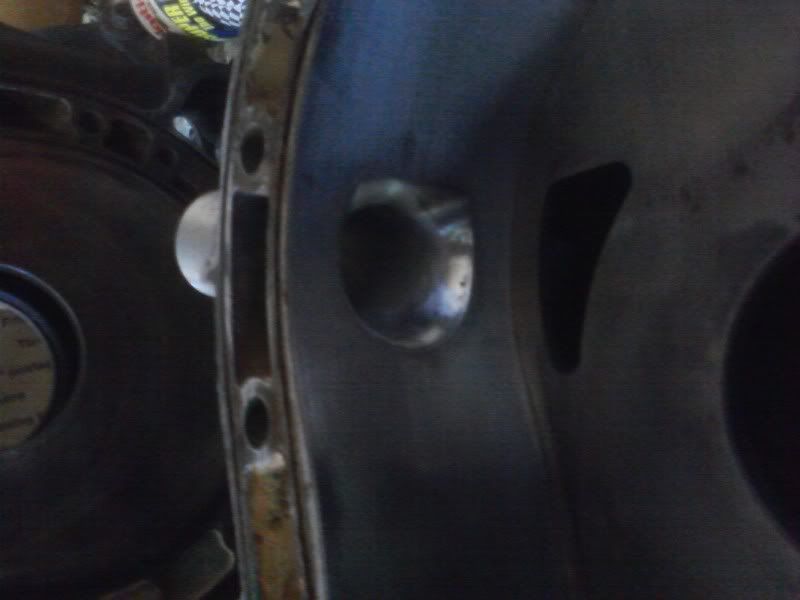
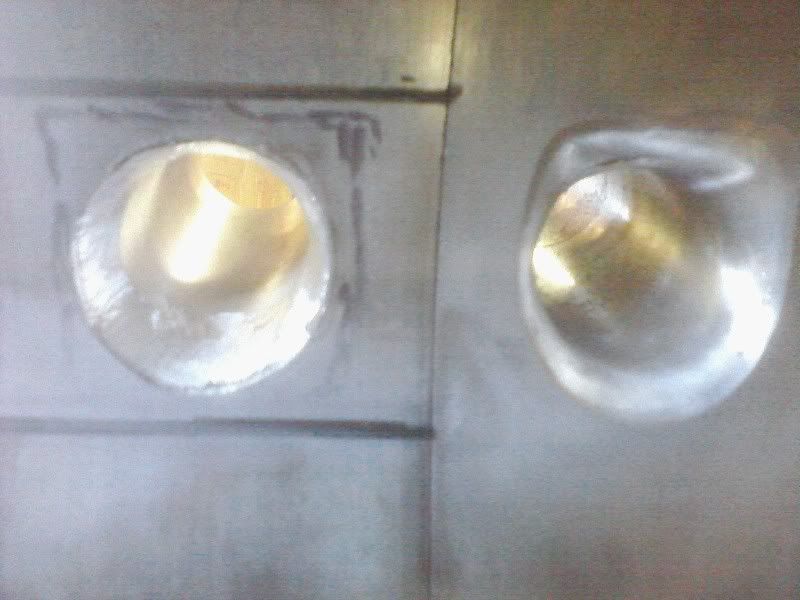
The last 12A PP that I did.
He's talking about porting the actual runner. For a first time... they look good.
But you need to open up the runners to match your port. You're trying to increase CFM with porting, but also Laminar flow. If you leave the intake runners stock, and they open into a big port you lose alot of air velocity which kinda defeats the purpose of porting. The idea is to cram as much are into the engine as possible each time the rotor face passes over the port. The best way to do that is to keep the path of the incoming air as smooth and straight as possible you should have a smooth transition from the port runner to the closing edge of your ports, and everything else should flow from the runner outward.
Of course this really only applies to NA engines.... turbos are a whole other story.
But you need to open up the runners to match your port. You're trying to increase CFM with porting, but also Laminar flow. If you leave the intake runners stock, and they open into a big port you lose alot of air velocity which kinda defeats the purpose of porting. The idea is to cram as much are into the engine as possible each time the rotor face passes over the port. The best way to do that is to keep the path of the incoming air as smooth and straight as possible you should have a smooth transition from the port runner to the closing edge of your ports, and everything else should flow from the runner outward.
Of course this really only applies to NA engines.... turbos are a whole other story.
Do any of the porting gurus use a flow bench to optimize the port runners?
Thread Starter
Joined: Jan 2008
Posts: 1,300
Likes: 60
From: Southfield, MI
well i port matched the runners to a kyokuto ida manifold i bought, but i widened the front to match the intake but then it smoothly tapers inward. is that how it needs to be or do you mean to just have it straight with no tapering inward all the way?


NA = power is in the ports
turbo = power is in the boost
For NA to make big power, it needs big ports and lots of RPM. It becomes peaky and looses some of its low end making day to day driving less fun if RPMs are always kept low. Kind of a compromise.
For a turbo to make big power, the ports don't have to be big. This keeps your low end; drives similar to an unported NA while off-boost. For big power, just turn up the boost, which works really well up to the limits of the fuel ie about 14 psi on pump gas without extra things like aux injection (water meth etc). Something that is boosted less than 14 psi with a large safety margin is best for a DD. Don't tune it within an inch of its life for max power and expect long term reliability. It's kind of a compromise.
You can also port a boosted engine for quicker spooling and more power without hurting the low end as much as a strictly NA engine with the same size porting. You get back your low end that porting takes away. This seems like less of a compromise. More like a win win.
turbo = power is in the boost
For NA to make big power, it needs big ports and lots of RPM. It becomes peaky and looses some of its low end making day to day driving less fun if RPMs are always kept low. Kind of a compromise.
For a turbo to make big power, the ports don't have to be big. This keeps your low end; drives similar to an unported NA while off-boost. For big power, just turn up the boost, which works really well up to the limits of the fuel ie about 14 psi on pump gas without extra things like aux injection (water meth etc). Something that is boosted less than 14 psi with a large safety margin is best for a DD. Don't tune it within an inch of its life for max power and expect long term reliability. It's kind of a compromise.
You can also port a boosted engine for quicker spooling and more power without hurting the low end as much as a strictly NA engine with the same size porting. You get back your low end that porting takes away. This seems like less of a compromise. More like a win win.
old dog
Joined: Jun 2009
Posts: 209
Likes: 1
From: wpg man can
The BIG difference in porting a turbo is that the exhaust is not ported on the bottom of the Port only cleaned up till the bottom is level with the exhaust ring, as well as wider and taller ,unlike NA race ports I have seen which have been ported a lot lower , as well most Turbo's use a LARGE Street port and can do that because they have huge turbos to ram in the extra air required ,by cranking up the boost as much as needed ,and supply huge amounts of forced fuel as well(by matching the boost with increased fuel pressure or by increasing the injector on time) because NA,s cannot increase their intake with boost pressure the have to increase the time the Ports stay open ,or Increase the Intake Port size(street port, bridge port ,or Side Port

Thread Starter
Joined: Jan 2008
Posts: 1,300
Likes: 60
From: Southfield, MI
well i port matched the runners to a kyokuto ida manifold i bought, but i widened the front to match the intake but then it smoothly tapers inward. is that how it needs to be or do you mean to just have it straight with no tapering inward all the way?
Conversely, piston engines use port sizes and dimensions that remain constant. Valve sizes are the same, runners are the same, valve opens at the same point of the piston's intake stroke, etc... So, flowbenches can be used with fairly accurate results.
Ultimately your runner design should match your port design and you port design should match the engine's intended use. So a street car/driver would benefit from a slightly tapered port design, but not so much that it chokes your port openings.
As Jeff mentioned, porting on turbo motors is really more of a way to shift the powerband of the engine and not necessarily to produce more power. If you are running a huge HX52 or one of the Borg Warner turbos the T2 and FD guys love, then you're going to need an engine that can continue to breath once the turbo comes online at 5k rpm or so. This, in my opinion, would be the only need for bridge porting, or anything larger than a street port for that matter, on a turbo motor. Obviously this will make for an engine that offers little in the way of street driveability and power that comes on like a light switch. Not my idea of fun. For a turbo engine you want to increase over all CFM and you're not worried about port velocity as the turbo will offset any velocity issues. So, big straight intake runners and large square shaped or D-sahped exhaust ports are the way to go. Also, anything more than a medium to largish street port will really hurt low end and turbo spool, sot should be avoided for street driven cars, in my opinion.
So this again goes back to choosing the right ports for your application. If you're not building a race car, then don't port your engine like one.
old dog
Joined: Jun 2009
Posts: 209
Likes: 1
From: wpg man can
One more thing to produce a good street engine NA,or Turbo do not port the Primary ports to Large
just clean the port runners up and do not raise the primary port too much over 3mm this way you can still drive normally, at cruise speed (low fuel consumption) yet, have lots of secondary port to use for high speed
just clean the port runners up and do not raise the primary port too much over 3mm this way you can still drive normally, at cruise speed (low fuel consumption) yet, have lots of secondary port to use for high speed
old dog
Joined: Jun 2009
Posts: 209
Likes: 1
From: wpg man can
One more thing when I port Engines I place my fingers inside the water Jacket next to the port I am working on and can tell how much(removable) material is there to work with ,so I can port the hole without fear that I am going to cut trough the Casting,and destroy it by cutting into the water Jacket, I do this because every Cast plate is slightly different because sand castings can shift slightly
Thread Starter
Joined: Jan 2008
Posts: 1,300
Likes: 60
From: Southfield, MI
[QUOTE=Ideally you'd like to have them as straight as possible with good flow. But this too can drop port velocity, causing a more severe loss in low end with a slight improvement on the top end. Having a runner that tapers in as it nears the port opening will help to increase port velocity which would help low end and mid-range but probably reduce peak HP. So it really depends on what the intended purpose of the engine is.
Ultimately your runner design should match your port design and you port design should match the engine's intended use. So a street car/driver would benefit from a slightly tapered port design, but not so much that it chokes your port openings.[/QUOTE]
its a race car only for track it wont see the street, so you think i should make it as straight as possible for the high end or should i have a slight taper to have some mid end for coming out of slow corners or so. what do you think?
Ultimately your runner design should match your port design and you port design should match the engine's intended use. So a street car/driver would benefit from a slightly tapered port design, but not so much that it chokes your port openings.[/QUOTE]
its a race car only for track it wont see the street, so you think i should make it as straight as possible for the high end or should i have a slight taper to have some mid end for coming out of slow corners or so. what do you think?
So I'd leave the taper. Looking at your ports though it looks like you could stand opening up the ports a bit more near the top/closing edge of the ports. You should have a little more of a bowl shape leading up to the closing edge of the port. I'll grab one of your pics and circle the area in paint in a few mins.