


porting questions


Thread Starter
Senior Member

Joined: Oct 2008
Posts: 380
Likes: 3
From: palmetto
porting questions
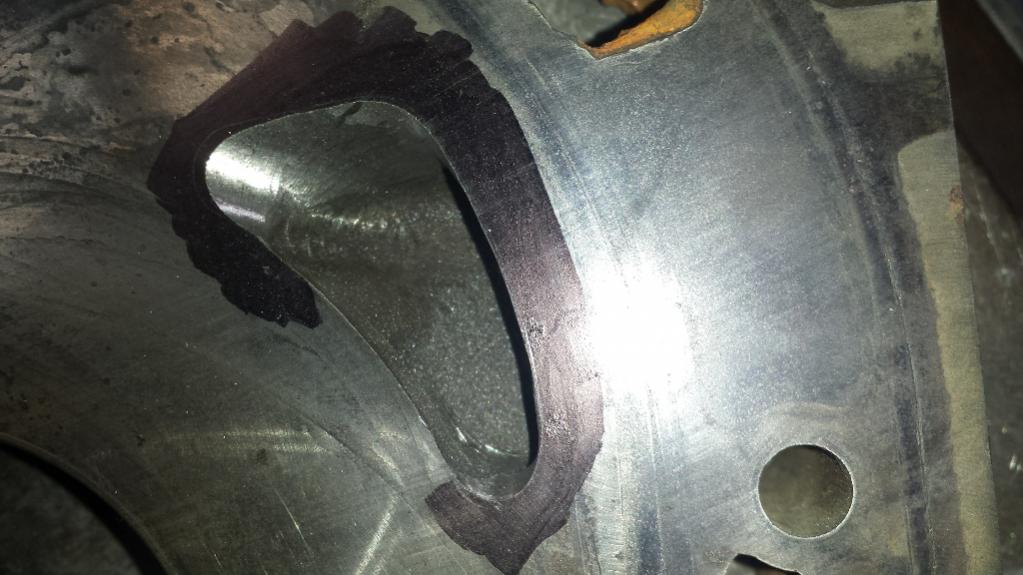
I started doing a large streetport to my 12a and was wondering should i polish it to a mirror finish or jus keep it grinded out by removing the casting from it?
Include reasons with your answers please,so we can all learn from this
Sent from my gs4 using RX7Club app
Include reasons with your answers please,so we can all learn from this
Sent from my gs4 using RX7Club app





Trending Topics

Joined: Mar 2001
Posts: 31,851
Likes: 3,240
From: https://www2.mazda.com/en/100th/
i have a friend who gets really good results, and all he does is put the template on the iron, and open up the port, he doesn't touch the runner at all.
the best one was an S5 T2, it got a small street port, on 5 new housings, 2 new rotors, HKS log manifold, 60-1, and an RB turbo back, it did 392rwhp@12psi, and it had lots of low end grunt too. turbo had ~1psi around 2000rpm. ecu was an E6k, plugged into a stock Mazda harness (in 2001 that was cool), and 1600 secondaries, maybe in a stock fuel rail.
actually as a cautionary tale, his own car, similar build, 20K FD engine, got a bigger street port, but makes less power, the whole combination of parts (engine health, port, intake, exhaust, turbo) all need to work together. generally you want the smallest port that will do the job.
the best one was an S5 T2, it got a small street port, on 5 new housings, 2 new rotors, HKS log manifold, 60-1, and an RB turbo back, it did 392rwhp@12psi, and it had lots of low end grunt too. turbo had ~1psi around 2000rpm. ecu was an E6k, plugged into a stock Mazda harness (in 2001 that was cool), and 1600 secondaries, maybe in a stock fuel rail.
actually as a cautionary tale, his own car, similar build, 20K FD engine, got a bigger street port, but makes less power, the whole combination of parts (engine health, port, intake, exhaust, turbo) all need to work together. generally you want the smallest port that will do the job.
Last edited by j9fd3s; May 15, 2015 at 10:33 AM.
I've had better success with 74 ported 12A irons than I've ever had with streetports.
Edit: for anyone wondering how big a 74 spec port is, it's the same open and close timing as any T2 or FD secondary. So if you don't have an old school 3B iron to make a paper template on, just grab a non-ported T2 or FD end plate and a really good blade like an x-acto knife.
By the way, you'll notice the bottom of the port is really low and deep on all 86 and later irons. Don't try to match this on your 85 and earlier irons because there is no flow down there and you run the risk of cutting into the water jacket. It was just a minor update from Mazda that doesn't need to be ported. I've never done it.
Edit: for anyone wondering how big a 74 spec port is, it's the same open and close timing as any T2 or FD secondary. So if you don't have an old school 3B iron to make a paper template on, just grab a non-ported T2 or FD end plate and a really good blade like an x-acto knife.
By the way, you'll notice the bottom of the port is really low and deep on all 86 and later irons. Don't try to match this on your 85 and earlier irons because there is no flow down there and you run the risk of cutting into the water jacket. It was just a minor update from Mazda that doesn't need to be ported. I've never done it.
Last edited by Jeff20B; May 15, 2015 at 01:12 PM.
Joined: Mar 2001
Posts: 31,851
Likes: 3,240
From: https://www2.mazda.com/en/100th/
Thread Starter
Senior Member
Joined: Oct 2008
Posts: 380
Likes: 3
From: palmetto
Too late for me to go back lol, wait ill weld the port back to stock and start over.
J/k. Your right all the parts have to blend together, we will see what numbers i get from this porting.
Any better than stock is good for me.
I am going to clean up the factory casting in the runners, but ill keep it rough and mirror finish the exhaust.
Ill post more pics up when i get to that stage.
And as far as 74 spec ports, did that stay na or got turbo?
Sent from my gs4 using RX7Club app
J/k. Your right all the parts have to blend together, we will see what numbers i get from this porting.
Any better than stock is good for me.
I am going to clean up the factory casting in the runners, but ill keep it rough and mirror finish the exhaust.
Ill post more pics up when i get to that stage.
And as far as 74 spec ports, did that stay na or got turbo?
Sent from my gs4 using RX7Club app
Last edited by rotaryjunkee; May 15, 2015 at 02:25 PM.
Joined: Mar 2001
Posts: 31,851
Likes: 3,240
From: https://www2.mazda.com/en/100th/
not sure i understand the question, but a factory turbo car is basically 74 spec ports on the secondaries. the turbo primaries are a little smaller to reduce overlap, and with a turbo this is actually pretty optimal.
Thread Starter
Senior Member
Joined: Oct 2008
Posts: 380
Likes: 3
From: palmetto
Was just wondering why a few of you like the 74 spec port.
Correct me if im wrong, isnt the 74 spec a small street port?
What are the pros and cons of the 74 spec?
Is it better for na or turbo?
Sent from my gs4 using RX7Club app
Correct me if im wrong, isnt the 74 spec a small street port?
What are the pros and cons of the 74 spec?
Is it better for na or turbo?
Sent from my gs4 using RX7Club app
Last edited by rotaryjunkee; May 15, 2015 at 03:28 PM.
compared to everything 1976+ (Jeff, keep me honest here ), yes, it is pretty much a factory streetport because it was primary and secondary, big runners, too. the appeal is basically it's good all around. it idles without drama, it's got good grunt and it breathes upstairs as well. to put it another way, streetporting has a point of diminishing returns and the 74 spec seems to sit on the cusp of that point, but on the good side of it. Jeff20B has documented it in this forum, so you can look at past discussions for more because i'm basically regurgitating what he has said and at times proven.
the turbo vs. N/A question you asked is a little hard to answer outright because i'm not sure what you mean. it was used N/A from the factory, and as Jeff20B and J9fd3s stated, it was also the factory secondary port for the turbo engines. so it gave good results in both situations.
), yes, it is pretty much a factory streetport because it was primary and secondary, big runners, too. the appeal is basically it's good all around. it idles without drama, it's got good grunt and it breathes upstairs as well. to put it another way, streetporting has a point of diminishing returns and the 74 spec seems to sit on the cusp of that point, but on the good side of it. Jeff20B has documented it in this forum, so you can look at past discussions for more because i'm basically regurgitating what he has said and at times proven.the turbo vs. N/A question you asked is a little hard to answer outright because i'm not sure what you mean. it was used N/A from the factory, and as Jeff20B and J9fd3s stated, it was also the factory secondary port for the turbo engines. so it gave good results in both situations.
Last edited by diabolical1; May 15, 2015 at 08:34 PM.
Sounds accurate so far. And I can add more info now that I have some turbo and supercharger under my belt as well as plenty of NA experience.
It turned out to be the perfect port size for the Atkins Camden superchargers. It made my REPU fuel like it had a V8 in it, if that helps you. But of course now that the turbo bug has bitten, I must go turbo now!
As for turbo with 74 spec, yes it is the best port size as far as I can tell. I have a little over a year of testing and tuning and I have to say it's the perfect port size. Low end grunt is there when the turbo isn't spooled up and the engine is running in vacuum, which is pretty important for good drivability, and they are big enough to not really be a restriction at higher RPM/load when the turbo is spooled and making boost.
Of course a streetport would be less of a restriciton and possibly spool the turbo faster, but then you run into low end torque problems and the whole car is slower coming out of corners. Do you want to be slower every time you launch from a stop sign? You perform that maneuver like every time you drive on the street, right? Just little things to think about.
Same for aluminum flywheels vs light steel vs stock. I like light steel in a 1st gen with a turbo, but I can see how stock (if one of the medium weight ones) could benefit spool. But stay away from aluminum with turbos because the engine drops in RPM too fast between shifts and you lose all your boost. It also fails to load the engine well enough so it spools the turbo slower etc.
It turned out to be the perfect port size for the Atkins Camden superchargers. It made my REPU fuel like it had a V8 in it, if that helps you. But of course now that the turbo bug has bitten, I must go turbo now!
As for turbo with 74 spec, yes it is the best port size as far as I can tell. I have a little over a year of testing and tuning and I have to say it's the perfect port size. Low end grunt is there when the turbo isn't spooled up and the engine is running in vacuum, which is pretty important for good drivability, and they are big enough to not really be a restriction at higher RPM/load when the turbo is spooled and making boost.
Of course a streetport would be less of a restriciton and possibly spool the turbo faster, but then you run into low end torque problems and the whole car is slower coming out of corners. Do you want to be slower every time you launch from a stop sign? You perform that maneuver like every time you drive on the street, right? Just little things to think about.
Same for aluminum flywheels vs light steel vs stock. I like light steel in a 1st gen with a turbo, but I can see how stock (if one of the medium weight ones) could benefit spool. But stay away from aluminum with turbos because the engine drops in RPM too fast between shifts and you lose all your boost. It also fails to load the engine well enough so it spools the turbo slower etc.

Thread
Thread Starter
Forum
Replies
Last Post