Porting a 12a



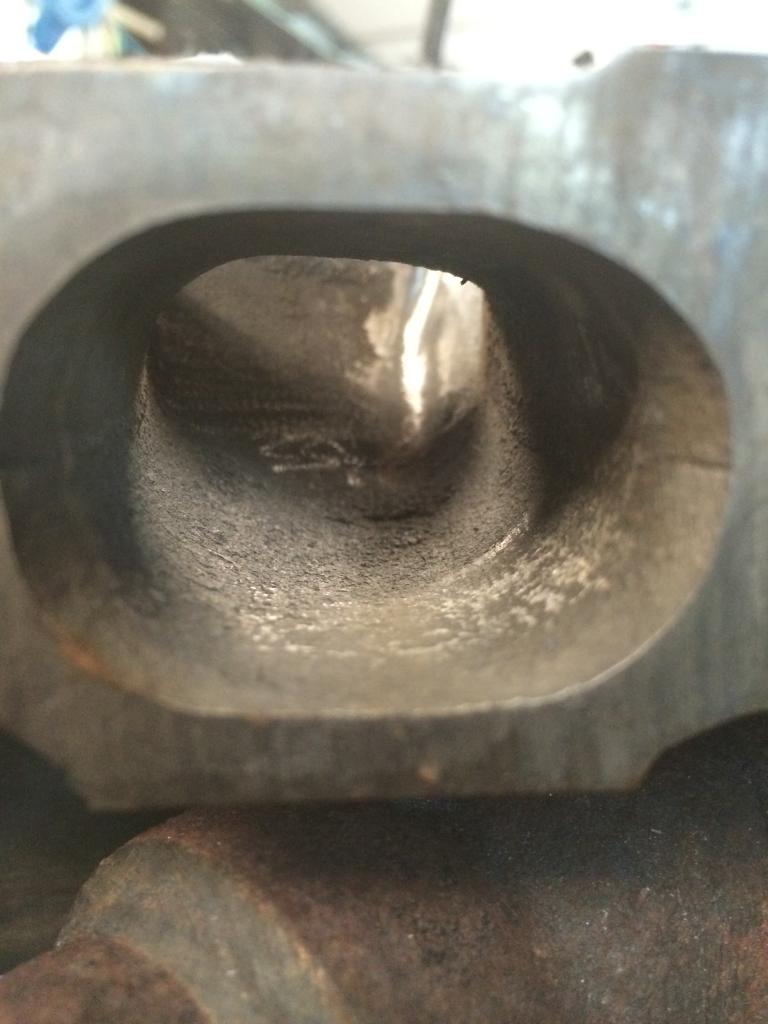
Has anyone used the aluminum epoxy stuff they sell at racingbeat.com. I am curious to know if it would work for my first botched up intake port job...
Attachment 533153
Attachment 533153

Has anyone used the aluminum epoxy stuff they sell at racingbeat.com. I am curious to know if it would work for my first botched up intake port job...
Attachment 533153
Attachment 533153

You shouldn't port it at all. You lose the anti-reversion lip.
Go to a local auto parts store. Ask for quicksteel. Clean the ACV port really well. Mix per instructions and push it in so a little buldges up through the holes. Trim it down with your porting tool. Done.
Go to a local auto parts store. Ask for quicksteel. Clean the ACV port really well. Mix per instructions and push it in so a little buldges up through the holes. Trim it down with your porting tool. Done.

Thread Starter
Anti piston
Joined: Feb 2013
Posts: 318
Likes: 0
From: Iowa
Jeff I thought the anti reversion was for the exhaust only? I was just trying to get more flow and I have a few extra intakes to play around with.
There's another anti-reversion lip under the carb. Compare the size of the carb to the phenolic spacer (and its directional shape) and the top of the manifold. A couple of size differences there. You can picture what happens when you sit and study these parts.
Good thing you have another manifold. Oh and about the quicksteel, get some and put it into the ACV port in the engine. It reduces exhaust heat which pulses up into the manifold. You see all the carbon, right? Where there's carbon, there's exhaust. Where there's exhaust, there's heat.
Also get a set of brass or steel freeze plugs in 20mm. I like brass and use a bit of RTV in the coolant holes... in the rotor housings to help seal. I don't bother with the holes in the manifold. The goal is to prevent coolant loss during a manifold swap, and again to reduce heat.
The nice thing about carbs is the venturi effect which EFI doesn't have. This effect cools the incoming a/f mixture which cools the manifold, hence the ACV and coolant circulation through a stock one. Prevents carb icing I suppose, but I've never experienced it on a rotary in this area (pac northwest).
Good thing you have another manifold. Oh and about the quicksteel, get some and put it into the ACV port in the engine. It reduces exhaust heat which pulses up into the manifold. You see all the carbon, right? Where there's carbon, there's exhaust. Where there's exhaust, there's heat.
Also get a set of brass or steel freeze plugs in 20mm. I like brass and use a bit of RTV in the coolant holes... in the rotor housings to help seal. I don't bother with the holes in the manifold. The goal is to prevent coolant loss during a manifold swap, and again to reduce heat.
The nice thing about carbs is the venturi effect which EFI doesn't have. This effect cools the incoming a/f mixture which cools the manifold, hence the ACV and coolant circulation through a stock one. Prevents carb icing I suppose, but I've never experienced it on a rotary in this area (pac northwest).
Originally Posted by Dave.Martin2008
Jeff I thought the anti reversion was for the exhaust only? I was just trying to get more flow and I have a few extra intakes to play around with.
Mazda kept the tall runners in the R5 and Y irons to keep backwards compatability. It also had an interesting anti-reversion effect. This also allowed them to add channels across the top of the manifold so all four ports would pull on the primary circuit thus making it stronger/more robust. I've tried cutting channels in a 74 manifold and the results were actually pretty good if a channeled carb is used. The idle circuit basically needs to be calibrated for channels or separate runners, depending on which type of manifold you're using. A stock FB Nikki obviously wants channels.
Do yourself a favor and cut a matching channel in your next manifold. Then remove weirdness from the runners as best you can. Maybe experiment with quicksteel or better yet DEVCON from RB. I've never messed with DEVCON so I don't know anything about it. I'm actually a little worried about adding a putty material to any intake manifold because if it breaks off for any reason, there goes your engine. If you can find a 79 manifold, it's the better choice. Good luck locating an RX-3 manifold. They are the best designed 12A manifolds I've ever seen.



Joined: Mar 2001
Posts: 31,833
Likes: 3,232
From: https://www2.mazda.com/en/100th/
although conversely, that Venturi is also a restriction, so this is why carbs will make less power than EFI.
I guess that's why you put a big carb on it and it makes more power. 
Or you take a small carb like a Nikki and hog out the venturis to reduce the restriction caused by the venturis. There is like no room for the air to squeeze past the stock 20mm venturis and the stock double boosters. Most of it has to go through the boosters, which I think was the point, for high velocity at low RPM on a stock ported 12A... for emissions! Oh and mileage ratings.
And I understand what Sterling was trying to achive with his enlarged venturis, so as not to reduce the velocity so much that it hurts the vacuum and thus driveability, especially on a stock or maybe even a mildly ported 12A. But I've had a different experience on my 74 ported 13B. It pulls so much more cfm at the same RPM that it doesn't care how big the venturis are. The 26mm racing Nikki is just about at the limit I'd think, as it drives kinda glitchy at the transition circuit (idles perfect though), but I recently discovered it was trying to flood itself due to the previous owner adjusting the float level way high and it was running pig rich. I'm gonna test it some more after the floats are adjusted and I have access to a wideband.
But EFI making more power than a carb just based on a restriction, um, you trade a small restriction with a cooling effect for less or no restriciton and no cooling effect. Hmm... I guess if you did a slide throttle you wouldn't have a restriction at all, but still no cooling effect. So is it cfm vs cfm? Or is some size adjustability allowed? You know, to make up for the venturi's shortcomings?
Or you take a small carb like a Nikki and hog out the venturis to reduce the restriction caused by the venturis. There is like no room for the air to squeeze past the stock 20mm venturis and the stock double boosters. Most of it has to go through the boosters, which I think was the point, for high velocity at low RPM on a stock ported 12A... for emissions! Oh and mileage ratings.
And I understand what Sterling was trying to achive with his enlarged venturis, so as not to reduce the velocity so much that it hurts the vacuum and thus driveability, especially on a stock or maybe even a mildly ported 12A. But I've had a different experience on my 74 ported 13B. It pulls so much more cfm at the same RPM that it doesn't care how big the venturis are. The 26mm racing Nikki is just about at the limit I'd think, as it drives kinda glitchy at the transition circuit (idles perfect though), but I recently discovered it was trying to flood itself due to the previous owner adjusting the float level way high and it was running pig rich. I'm gonna test it some more after the floats are adjusted and I have access to a wideband.
But EFI making more power than a carb just based on a restriction, um, you trade a small restriction with a cooling effect for less or no restriciton and no cooling effect. Hmm... I guess if you did a slide throttle you wouldn't have a restriction at all, but still no cooling effect. So is it cfm vs cfm? Or is some size adjustability allowed? You know, to make up for the venturi's shortcomings?
Thread Starter
Anti piston
Joined: Feb 2013
Posts: 318
Likes: 0
From: Iowa
So Jeff are you against hogging out the ventures to gain more CFM into the engine? This of course would be along side the channeling of the intake and smoothing it out a bit. And of course the spec 74 porting inside the engine as well. I was going to turn my ventures out this afternoon on the lathe.
Thread Starter
Anti piston
Joined: Feb 2013
Posts: 318
Likes: 0
From: Iowa
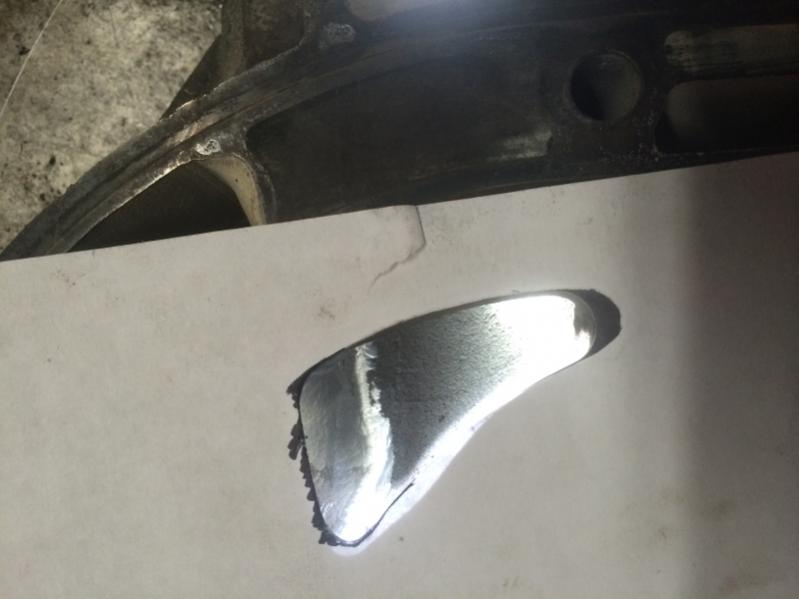
Ok how does that look for a start on the spec 74 porting. I know it's ruff but it's just the first cut on a bad housing so this is practice. Also what kind of angle should I be cutting this at I noticed all the factory cuts are 90 deg off the face of the housing.
Originally Posted by Dave.Martin2008
So Jeff are you against hogging out the ventures to gain more CFM into the engine? This of course would be along side the channeling of the intake and smoothing it out a bit. And of course the spec 74 porting inside the engine as well. I was going to turn my ventures out this afternoon on the lathe.
Originally Posted by Dave.Martin2008
Attachment 533253
Ok how does that look for a start on the spec 74 porting. I know it's ruff but it's just the first cut on a bad housing so this is practice. Also what kind of angle should I be cutting this at I noticed all the factory cuts are 90 deg off the face of the housing.
Ok how does that look for a start on the spec 74 porting. I know it's ruff but it's just the first cut on a bad housing so this is practice. Also what kind of angle should I be cutting this at I noticed all the factory cuts are 90 deg off the face of the housing.
I can't tell whether that's ink from a sharpie or paper tears across the closing edge.
The rough cuts inside look decent so far.
Your observations about the factory doing 90 degree cuts is correct. They mill them out of the basic casting. It's up to you to finesse from the stock runner up into the new later closing timing. Don't go super aggressive and hit the water jacket. Imagine how the incoming a/f mixture wants to flow. Try to use that as your guide. Keep weird or odd shapes to a minimum. Get rid of obvious casting flash. Make stuff smooth. However don't leave it too smooth. You have to leave a final roughish surface. I use a broken tiny dremel stone on the lowest speed as a final surface finish. The goal is to make it like the stock sand casting, kinda. The more broken and imbalanced the stone is, and the slower it spins, the better the result.
I know this is your first porting job and may be a lot to take in, but go slow and keep the bit in the port (don't slip and gouge the nitrided surface, heh). When your hands get tired, stop.
I blasted water through my port yesterday. Be aware you'll have a little surface rust after this.
Hmm, the roughness of the rust might be a good thing here. Nah, it's so miniscule I don't think it will change anything.
Hmm, the roughness of the rust might be a good thing here. Nah, it's so miniscule I don't think it will change anything.
Thread Starter
Anti piston
Joined: Feb 2013
Posts: 318
Likes: 0
From: Iowa
Ok everyone I have my 12a on the engine stand and ready to port the real one. I am thinking I want to possibly turbo this build after I get it ported and put back together. Is there a good place to buy just the gasket set. With out the apex seals included. Racingbeat has one for around $147.00 Is that the best pricing I could get or is there a better source? eBay doesn't really have any deals and the one I did find on eBay had all the gaskets but it was $139.00 so it's not worth the chance of getting junk gaskets for the $8.00 difference. Let me know what you all think.
Thread Starter
Anti piston
Joined: Feb 2013
Posts: 318
Likes: 0
From: Iowa
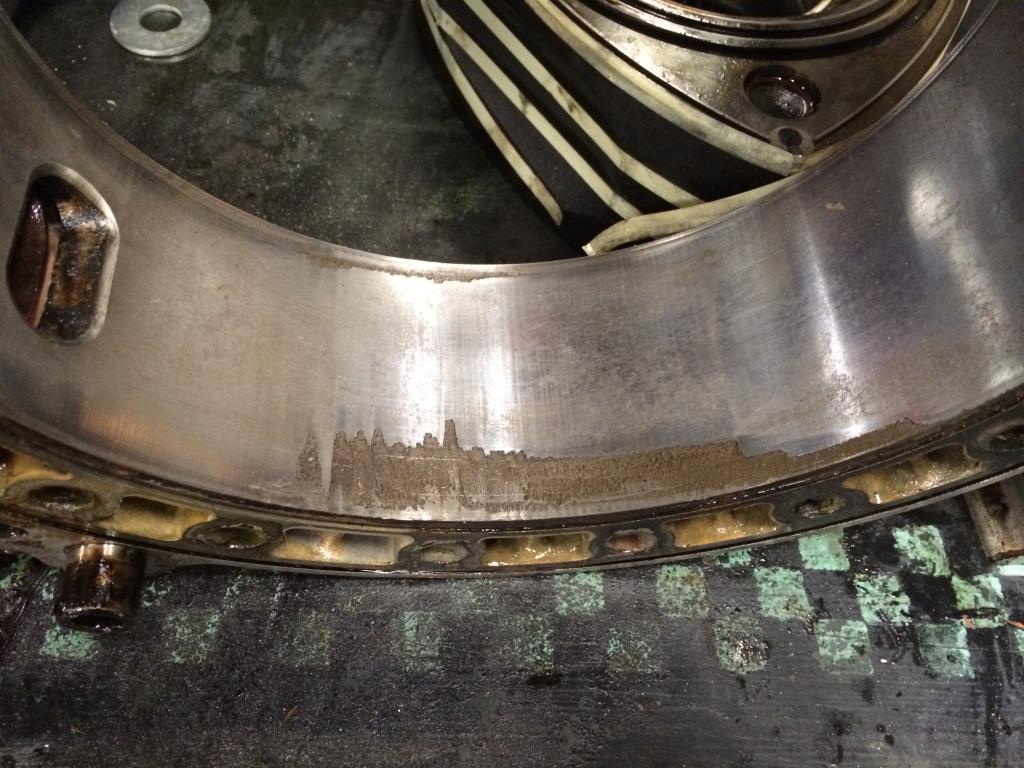
So I found that Atkins rotary has a rebuild kit. Looks like it's all the seals plus the springs no side seals or apex seals. For $300.00 is that a good price for what I need. Going to take the night to disassemble the 12am and see what it all measures out at. I want to make sure the metal seals are still good and check the apex seals to see if they are still good. It has 80-90 psi on the front rotor and the back had one good 70 psi and the other two side were weak. I have a few other irons and apex seals that are still good. I might be robbing them off the other engine. Just can't afford the $1200 master rebuild kit right now.

Rotary Freak

Joined: Aug 2012
Posts: 2,871
Likes: 407
From: MELBOURNE AUSTRALIA
That is just plane worn out ,Very common on older 12a housings. worn apex seals and week springs make them wear more and cause the chatter marks you can see in that housing , Is only good for a book end now.