When you click on links to various merchants on this site and make a purchase, this can result in this site earning a commission. Affiliate programs and affiliations include, but are not limited to, the eBay Partner Network.
I have an '83 GSL that I have been prepping for ChumpCar racing (I know it is Champ now...) and I am going over the last few things before we hit the track in April. A friend suggested I pick up some extra ignitors but I have seen that they are basically NLA as new products. Rather than purchase questionable used units from ebay for an exorbitant amount, I am considering DLIDFIS with GM HEI modules. With that, I have a few questions.
1) I've read as much as I have been able to find regarding this conversion. From what I gather, it will lead to a wasted spark for the lead plugs. I understand how wasted spark works on standard Otto ICEs (wasted spark is on the exhaust, so no risk of detonation), but I do not fully grasp the timing on the rotary to feel comfortable with that prospect. Obviously, I know that tons of you have done this and similar conversions with no issues, I just want to understand for my knowledge.
2) Is the 7 pin HEI module preferred over the 4 pin? I've read the 7 pin handles more amperage, which to me is a better option. Also seems to be more common.
3) I haven't pulled the J-109 igniters, so forgive this question, but would this conversion be easily reversible? I doubt I would go back to the old parts if we had a failure at the track, but I'm just concerned about adding failure points to the car. I have had no issues with the car's ignition system, I am mostly looking to future-proof the system as much as possible.
4) Assuming I will be using stock coils, are they internal or external resistor type? Per the rules, I would only be "charged" points for an additional coil (2 lead, 1 trail) so I would put in new coils for the leads and take one of the current coils as a spare. Just want to make sure I am matching what is there.
Thanks for the help everyone! I'm trying to make sure the car is running as reliably as possible before our race so we only have to worry about the yahoos driving it.
To answer #1, wasted spark works the same way with a rotary.
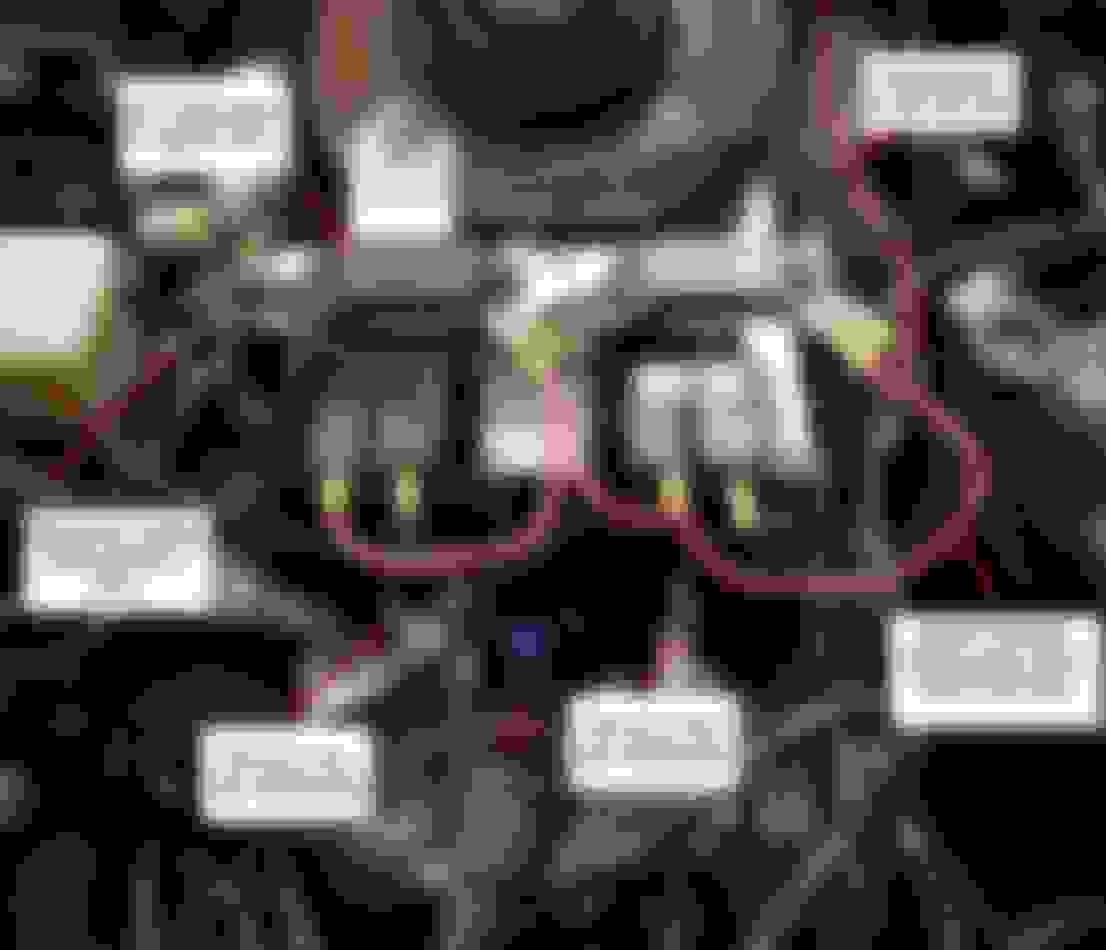
In the image below, the rear rotor is firing and at the same time the leading spark plug on the front rotor is in the expansion/early exhaust stage.
Wasted spark applies only to the leading spark plug. The other chamber on the front rotor is in the compression stage and if the trailing plug fired it would be too advanced which would try to push the rotor the wrong way.
It's completely reversible. Keep the functional J109's! If you have a dead one you can gut the internals and use it like a connector. Take care to retain the polarity of the trigger from the pickup (I'm not sure which way it goes!) the shape of the signal's attack and decay can make a difference in how it triggers the igniter.
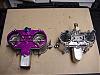
Here's what I did with 4 pin HEI's and GM type coils.
Awesome! Parts were ordered yesterday. I'll be using the stock style coils and 4 pin HEI ignitors. Planning to just do the leading through the HEI ignitors and keep the factory J109s for the trail. Then I will have a spare of each to have at the track.
I dumped the GM igniter setup I did and went with a MSD6A box instead. Way more reliable and much crisper start ups. That one box runs all 3 coils I have.
Eventually I'm probably going to install a second one for just the trailing.
(Edit) I would like to add, my stock tach no longer works. Eventually I'll figure out a way to get a tach put on her. I have an idea, since each RPM is measured by 360° of the crank.
Last edited by Aaron Powell; Feb 13, 2023 at 07:41 AM.
I've been using the 4 pin GM HEIs for many years now and never had one fail.
@jmabarone If you used an FC leading coil would that let you avoid the extra coil penalty? Note the FC coil is not quite as strong as a coil per leading. Something to think about.
I also had the 4-pin GM HEI modules and they worked just fine the few years before I went EFI. Not sure what high RPM in this context is referring to, but a stock motor really should never see 8k or above anyway and I never had an issue. My setup was paired with some MSD high vibration coils which worked great as well.
It is important to keep in mind that the modules need cooling (passive at the least) and run quite hot in general. Mine were mounted a large aluminum plate, and even then I couldn't touch them after running the car without torching myself. Inadequate cooling will most definitely shorten their life. Some folks even go as far as to install fans and use those heatsinks that they sell for the modules.
I've been using the 4 pin GM HEIs for many years now and never had one fail.
@jmabarone If you used an FC leading coil would that let you avoid the extra coil penalty? Note the FC coil is not quite as strong as a coil per leading. Something to think about.
Good idea, but after some more reading, I think it classifies under the "non-OE ignition system", so it should include the coil. I've got some spare ones per my class, so I may declare it just to be safe.
Maybe it's the brand i used. I had pertronx brand gm HEI ignighters and gm type coils as well. Lasted about a week. I figured in wasted spark the didn't have enough time to charge and burnt out. Out of all the ignition modifications I tried still limited to a distributor. I had best results with two stock ignighters and stock ngk coils in direct fire wasted spark for leading. 10° split. Stock ignition works very good when well maintained. OEM Mazda cap and rotor new ngk coils / plugs and new leads is the first thing I install on any customers car. Aftermarket cap and rotor are crap and don't last. OEM are pricey but are good for 6 months to a year or more. My own car I ditched the distributor went EFI crank trigger 4 aem smart coils IGN1a in direct fire. I could be flooded. Plugs soaking wet and it will still fire up.
Maybe it's the brand i used. I had pertronx brand gm HEI ignighters and gm type coils as well. Lasted about a week. I figured in wasted spark the didn't have enough time to charge and burnt out. Out of all the ignition modifications I tried still limited to a distributor. I had best results with two stock ignighters and stock ngk coils in direct fire wasted spark for leading. 10° split. Stock ignition works very good when well maintained. OEM Mazda cap and rotor new ngk coils / plugs and new leads is the first thing I install on any customers car. Aftermarket cap and rotor are crap and don't last. OEM are pricey but are good for 6 months to a year or more. My own car I ditched the distributor went EFI crank trigger 4 aem smart coils IGN1a in direct fire. I could be flooded. Plugs soaking wet and it will still fire up.
Funny that you had issues with the name brand parts - I was using Autozone DR-100 modules and they never failed me. I believe someone did the math once that the modules don't work much above 8k due to diminishing charge time, but below that they should be fine. Don't quote me though, it's been a while since I looked into it.
I have IGN1A coils on my car as well and they truly are amazing. Same experience here where you can be flooded and it'll still crank right up (assuming there's still enough compression). There's certainly a reason everyone is using them these days.
Well, I got it ready to go...just waiting for plug wires. Test day scheduled for tomorrow. Plug wires were supposed to be here yesterday but USPS gonna USPS.
Well, I got it ready to go...just waiting for plug wires. Test day scheduled for tomorrow. Plug wires were supposed to be here yesterday but USPS gonna USPS.
I’ve actually never had a problem with usps its the other postal services that have been crap haha what method are you using to connect to your dizzy? My kit uses gutted J109 modules as the connection if you would want to acquire just the one if needed! You said waiting for plug wires? Like custom made or like ordering a set of do it yourself stuff!
Quick update: I have been running with the 'W' wire disconnected and running to ground for a couple years now. No problems (although it isn't providing any noticeable increase in power, either). This is more done for longevity rather than power though, as the added bias voltage will cause the modules to hit current limiting more often and cause the modules to heat up more.
Funny that you had issues with the name brand parts - I was using Autozone DR-100 modules and they never failed me. I believe someone did the math once that the modules don't work much above 8k due to diminishing charge time, but below that they should be fine. Don't quote me though, it's been a while since I looked into it.
Incidentally I did a bit of a write-up on that in a different post here. Short answer: In a stock GM HEI 4-pin system, spark energy will drop off above 200Hz, which is 3000 rpm on a V8. Since we're firing the coil half as often per rev in a 2 rotor wasted spark, that translates to 6000 rpm (assuming your system is using the same module, coil, and triggering at the same timings as the stock GM system (see the link in the first quote for why the last point is unlikely). You can get more consistent spark energy at higher rpms by using a coil with lower impedance, but that will also lower your spark energy across the rpm band.
Last edited by Joekaistoe; Mar 14, 2023 at 12:10 PM.
Reason: More information added
I’ve actually never had a problem with usps its the other postal services that have been crap haha what method are you using to connect to your dizzy? My kit uses gutted J109 modules as the connection if you would want to acquire just the one if needed! You said waiting for plug wires? Like custom made or like ordering a set of do it yourself stuff!
Wires are just from an FC. Put them on the car after we got back from the track and the car fired right off! Didn't get to log the time on the system at the track to ensure reliability. Worst case scenario, we go back to the original system in the race. Takes 5 minutes to swap back.
Incidentally I did a bit of a write-up on that in a different post here. Short answer: In a stock GM HEI 4-pin system, spark energy will drop off above 200Hz, which is 3000 rpm on a V8. Since we're firing the coil half as often per rev in a 2 rotor wasted spark, that translates to 6000 rpm (assuming your system is using the same module, coil, and triggering at the same timings as the stock GM system (see the link in the first quote for why the last point is unlikely). You can get more consistent spark energy at higher rpms by using a coil with lower impedance, but that will also lower your spark energy across the rpm band.[/QUOTE]
Exactly. You be surprised how well stock ignition new NGK coils OEM Mazda cap and rotor and some good 8mm wires works all the way to 8k rpm. It was designed for a rotary. .I found that even using two OEM ignighter on the leading with two coils in direct fire out preformed even msd 6a to the red line. If you have rat nest delete 10° split for timing
I dumped the GM igniter setup I did and went with a MSD6A box instead. Way more reliable and much crisper start ups. That one box runs all 3 coils I have.
Eventually I'm probably going to install a second one for just the trailing.
(Edit) I would like to add, my stock tach no longer works. Eventually I'll figure out a way to get a tach put on her. I have an idea, since each RPM is measured by 360° of the crank.
The wire for the stock tach can be connected to the trailing coil. I forget what the wire color is. Piggy backs on the feed from the ignitor. I have been running three MSD Blaster-2 coils with three GM style ignitors for several years. No problems. Always buy high quality ignitors of the same brand/model. Also you need to mount the DR100 ignitors on a heat-sink (aluminum plate) using thermal paste (heat transfer compound).