


Rotary newbie with some questions


Thread Starter
Newbie
Joined: Oct 2022
Posts: 3
Likes: 0
From: Oregon
Rotary newbie with some questions
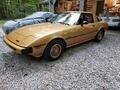
Hello everyone, short time lurker, first time poster. I have a 1984 Rx7 that I am working on for a friend as a friendly helpful thing so I apologize in advanced if I don't say common terms known to the community as I have never touched a rotary before this car. I was a Chrysler and Toyota tech for 5-6 years so I know a little bit around a car. History: the car is relatively low mileage (around 60k miles?) with only 2 related owners. It has the 13b engine. It ran and drove fine before sitting for about 2 years. During those 2 years the battery "exploded" as I was told and covered everything underwood with acid. The owner did her best to clean it with baking soda. The owner did notice one of the fusible links damaged and replaced it When I got to it it had 0 power to anything, no crank no start. After some investigation I found 2 big issues. First, the battery cable clamps were toast, making no connection to the battery so I replaced the clamps and had solid connection. Second, the "main" fusible link with severely corroded and not sending power out. I cleaned all of the links and I finally got the car to crank but no start. Great now what? I never heard the fuel pump turn on with a key on cycle. Using some starter fluid the engine sounded like it wanted to start. My first instinct was to test to relay. After some (a lot) research I found the relay under the metal panel on the passenger side floor board. It clicked on key on and voltage was checked and good. I then went to the fuel pump and found some nice custom wiring "repairs" done. With a light pull the power to fuel pump fell out of the crimp and only had a few wires hanging on. I quick fixed it (promise I'll do it right when this thing zoom zooms) and the fuel pump finally came on. I still am at a crank no start. My battery was a bit dead, currently on a tickle charge. My first thought was to check if fuel was getting to the engine.. with a key on cycle I felt fuel move through the high pressure hose in the engine bay. I have checked for spark at the plugs between the boot and plug and its good. The wires are routed correctly according to the distributor cap. The distributor itself has no witness marks so no suspicion that it has been moved since sitting. I pulled one spark plug (before the fuel pump was alive) and found it gapped well and not flooded with fuel. The MAP sensor (I believe) that lies under the air filter moved freely and easily. I probably did more and am forgetting I've done this all in short periods over the past couple weeks. I have had the owner put a bit more fresh fuel with a stabilzer in it. I dont have any experience with stabilizer so i hope that was the right move. Now I'm here thinking what the heck to do next, this is the first car I have worked on in like 6 years so a lot of knowledge has escaped me. Is there a prime cycle I need to worry about? I'm a bit worried about the old fuel but hopefully mixed with fresh it's at least okay. Thanks for the read if you made it this far. And thanks for any input you may have

Rotary Enthusiast


Joined: Oct 2010
Posts: 1,337
Likes: 378
From: MA USA
I own a carbed 12A so take my thoughts with that in mind. I think it's fuel delivery, given the acid and the possibility that the injector wiring got corroded. Also you've verified decent (enough?) spark at all four plugs.
You've already got fuel flow verified to the injectors, right? I think you need to verify that the injectors are getting power pulses. If that's good, check the injectors by removing them and testing flow through them, there are posts on the forum here that detail how to do that. Important: make sure to note and mark the wire connections/polarity before removing. They can be physically reversed on reconnection and not work because of that.
Don't try to run the engine without lubrication! Make sure the OMP (oil metering pump) is working. It squirts small amounts of oil into the throttle body to mix with the fuel and lubricate the apex and side seals. Again search here for advice on just how to do that.
To test just for start up/signs of life: remove the trailing plugs, squirt a bit of oil in there, like 1/2 Oz in each, reinstall the old plugs, and turn the engine over a few revolutions to circulate it. The use some starting fluid sprayed into the intake and turn it over.
If you get sign of life then you know it's fuel delivery.
Definitely
- drain the old gas out of the tank. sitting partially full for a couple of years it might be fusty in there. I think the 84 tanks have a drain plug.
- check the fuel filter to see how clogged it might be, gives you a sense of the tank's condition too. change it regardless
- you'll definitely want a new set of plugs, the OEM NGK's. The 12A uses BR8EQ14, not sure of the 13B does.
One one editorial comment: try to break up your posts into logical paragraphs or bullets, it's hard to read one long block of text. The easier you make it to read, the more help you'll get.
You've already got fuel flow verified to the injectors, right? I think you need to verify that the injectors are getting power pulses. If that's good, check the injectors by removing them and testing flow through them, there are posts on the forum here that detail how to do that. Important: make sure to note and mark the wire connections/polarity before removing. They can be physically reversed on reconnection and not work because of that.
Don't try to run the engine without lubrication! Make sure the OMP (oil metering pump) is working. It squirts small amounts of oil into the throttle body to mix with the fuel and lubricate the apex and side seals. Again search here for advice on just how to do that.
To test just for start up/signs of life: remove the trailing plugs, squirt a bit of oil in there, like 1/2 Oz in each, reinstall the old plugs, and turn the engine over a few revolutions to circulate it. The use some starting fluid sprayed into the intake and turn it over.
If you get sign of life then you know it's fuel delivery.
Definitely
- drain the old gas out of the tank. sitting partially full for a couple of years it might be fusty in there. I think the 84 tanks have a drain plug.
- check the fuel filter to see how clogged it might be, gives you a sense of the tank's condition too. change it regardless
- you'll definitely want a new set of plugs, the OEM NGK's. The 12A uses BR8EQ14, not sure of the 13B does.
One one editorial comment: try to break up your posts into logical paragraphs or bullets, it's hard to read one long block of text. The easier you make it to read, the more help you'll get.
Thread Starter
Newbie
Joined: Oct 2022
Posts: 3
Likes: 0
From: Oregon
Thanks for the reply, I won't be able to work on it until later but I will check these for sure. I know it's a fuel delivery problem somewhere, starter fluid does make it want to turn over. I'm also a big forum noob, I did format it while typing and it condensed it. More to learn I suppose.

84SE-EGI helpy-helperton

Joined: Oct 2002
Posts: 3,591
Likes: 549
From: Phoenix, AZ
OP; the car you're working on is referred to as a "GSL-SE" with 13b engine and was only produced in this body style in 1984 and 1985. The SE has a number of differences from the 12a powered cars which include Fuel Injection and the different pump and filters, and braking systems, which are larger and vented at the rear. Getting it started is your first task, and searching here will get you good results. Some idiosyncrasies include Fuel I jection test connectors by the air flow meter, and various fuel cut relays (aka Circuit Opening Relay) which may impede your progress.
"gslseforme" "SE" and my username will reply with hundreds of threads covering a slew of topics specific to the car you're working on. Good luck,
"gslseforme" "SE" and my username will reply with hundreds of threads covering a slew of topics specific to the car you're working on. Good luck,
Rotary Enthusiast
Joined: Oct 2010
Posts: 1,337
Likes: 378
From: MA USA

Thread Starter
Newbie
Joined: Oct 2022
Posts: 3
Likes: 0
From: Oregon
- Sorry for annoying bullets but mobile sucks for forum formats lol
- I got to it and it still was a no start with crank.
- My first thought was to pull a spark plug to smell for fuel. I didn't smell any and verified that the fuel lines were still getting filled.
- After that my pathway was "without pulling the intake how much electrical testing can I do to make sure the injectors were firing."
- After testing output from the ecu and going down from there and checking various ground locations I couldn't find a fault.
- I rechecked spark with no issues.
- I decided to give it another crack at starting and without hesitation it fired right up. I don't know exactly what the fix was but my best guess was a bad connection somewhere or corrosion that I loosened up in the wires.
- Upon start up it ran semi rough, nothing worrisome after 2 years of sitting. Exhaust wasn't spitting out any bad fumes or smells other than what's expected after a cold start. About 5 minutes after that the engine smoothed out. I let it run for about 10 minutes, ran through the gears, and turned it off and back on again. Very happy with it at this point.
- I have some minor things to fix up. The fuel pump wiring isn't protected from the elements as it sits right now. There is still a lot of corrosion in the engine bay. And I think it would be nice to change out ignition components but we will see what the owner wants to do.

Thread
Thread Starter
Forum
Replies
Last Post