


12AT turbo size


Thread Starter
Junior Member
Joined: Jul 2020
Posts: 37
Likes: 12
From: Ann Arbor
12AT turbo size
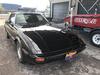
Hello, I have used the search function but no specific details were listed, just that it was smaller than the T2. I recently rebuilt my Nikki, and have a JDM cast iron manifold on the way. I will tear apart the Nikki again to boost prep it once I’m ready to go. This is my first post here, but I’ve been working on this rx7 for a bit now, stock and nearly rust free, with enkei rims



Joined: Mar 2001
Posts: 31,857
Likes: 3,243
From: https://www2.mazda.com/en/100th/
"
Turbocharged and fuel-injected 12A (Japanese models only, produced 1983-1985)
The TURBOCHARGED and fuel-injected 12A has been confined to the Japanese market, powering the first Cosmo and Luce cars starting in late 1982 and (in it's uprated version) the P132 RX7 from September 1983 through to the end of it's model life.
The 12A Turbo was the first production turbocharged and electronically fuel injected rotary engine.
In it's turbo guise the 12A reverted to four side intake ports.
Each bank has one injector, located in the intake port near the port opening in the trochoid chamber.
Because of this location, which is a cross between manifold and direct-injection methods, Mazda engineers call the fuel injection "semi-direct injection".
The injector is actuated by electrical current and satisfactorily meets the rotary's widely varying fuel demands, from a 600-rpm idle to a full 7000-rpm operation.
Air and fuel mixing is promoted at lower speeds by an air bleed to the injector nozzle receptacle, at higher rpm by a mixing plate socket, an open-sided plastic tube with twin perforated plates. The plates splash and squeeze injected fuel, aiding mixture atomisation.
The fuel injection control unit is an analogue type made by Nippon Denso; it works in conjunction with a Mitsubishi Electric digital emission control computer.
Fuel is injected once per intake stroke, simultaneously in both chambers. As there is a 180-degree difference in the two rotors' working phases, one chamber is injected at the beginning of the intake stroke (or more precisely "travel" in the rotary), whereas the one in the other chamber receives fuel when almost two-thirds of that rotor's intake travel are covered.
As the rotary has an "internal" intake ports (each chamber takes in fuel and air on one side of the trochoid-housing and travels to the other side, where combustion occurs) chamber filling and mixture strength become uniform between the two banks, despite the staggered injection timing.
Primary intake-port timing is unchanged from the carburetted 6PI engine: opening at 58degrees ATDC and closes at 40degrees ABDC.
Opening of the secondary intake port is advanced to 32degrees ATDC; closing remains at 40 degrees ABDC.
The single peripheral exhaust port opens at 75degrees BBDC and closes at 48degrees ATDC.
Of interest in the air-only secondary intake port and manifold are dual throttle valves.
A second butterfly is located upstream in the manifold; it opens slightly later than the lower one.
The dual-valve arrangement prevents sudden air-pressure shocks and, together with the semi-direct injection system, allows a smaller plenum chamber.
The 12A Turbo was originally boosted by a Hitachi HT18-BM turbocharger with a 62mm diameter, 11-blade turbine and a 63mm 12-blade compressor supplying a relatively modest maximum boost of 320mm Hg (6.2 psi); Typical for a Japanese Turbo piston engine is about 400mm Hg (7.75 psi).
Conversely, the compression ratio does not need to be lowered as much as that of a piston engine: only to 8.5:1 from the naturally aspirated 12A's 9.4:1
The 1982 12A turbo produced 160 BHP JIS at 6000 rpm, and a maximum torque of 224 Nm (165 lb-ft) at 4000 rpm; 15-20% should be deducted to get the approximate SAE net values.
Later, the engine was given a new turbocharger, Hitachi's HT18S-BM, with a smaller 57mm turbine and a 56mm compressor, it was dubbed an "Impact Turbocharger" by Mazda engineers because it fully exploited the rotary's forceful exhaust-gas impact with it's new turbine blade shape. The new turbo added 5 more horsepower to the engine's output, as well as improving low-end torque characteristics and minimising turbo lag.
The 12A turbo also has a knock-prevention system. Mazda engineers found in developing the engine that knocking would only occur under certain operating conditions: in a 2500-3750 rpm zone when intake temperature exceeds 85 degrees celcius.
The system, comprising of ignition-pulse, intake-temperature and boost sensors, detects this knock-prone zone and feeds a signal to the emission-control and fuel-injection computers, which in turn call for ignition retard and more fuel (in the latest 13B turbo a more usual piezometric knock sensor is used).
Ignition is basically unchanged from that of the 6PI engine, which now employs semi-surface discharge sparkplugs.
As the turbo rotary's performance and consequently the thermal loads have been considerably increased (for the latter some 30%), lubrication of the trochoid sliding surface and turbocharger has become more critical.
A new trochoidal surface treatment, called MCP (micro-channel porous plating) is employed in the turbo rotary.
It is a development of the pinpoint-porous chrome plating of the normal 12A; the pinpoint holes are interconnected by miniscule channels.
Also, in contrast to the carburetted 12A's oil mixing in the carburettor for seal lubrication, the turbo rotary has separate oil injection; per chamber, one nozzle into the primary manifold and another directly into the trochoidal chamber, both fed by a metering pump.
The turbocharger is also amply lubricated, thanks to the rotary's already adequate lubricating capacity (the rotors are oil-cooled too).
The 12A turbo engine (with all manifolds, turbo, fan, alternator, power steering and air-conditioning pumps) is 786mm long, 548mm wide and 638mm tall (30.9 x 21.6 x 25.1 inches) and weighs 162 kg (356 lb)"
from Craig's Rotary Page: Mazda 12A Turbo engine which is about the 14th page on the internet
Mazda's Technical Press release the 12A turbo:
(Note, this information was sent to me from a fellow rotary enthusiast. I think it is from the Yamaguchi book).Turbocharged and fuel-injected 12A (Japanese models only, produced 1983-1985)
The TURBOCHARGED and fuel-injected 12A has been confined to the Japanese market, powering the first Cosmo and Luce cars starting in late 1982 and (in it's uprated version) the P132 RX7 from September 1983 through to the end of it's model life.
The 12A Turbo was the first production turbocharged and electronically fuel injected rotary engine.
In it's turbo guise the 12A reverted to four side intake ports.
Each bank has one injector, located in the intake port near the port opening in the trochoid chamber.
Because of this location, which is a cross between manifold and direct-injection methods, Mazda engineers call the fuel injection "semi-direct injection".
The injector is actuated by electrical current and satisfactorily meets the rotary's widely varying fuel demands, from a 600-rpm idle to a full 7000-rpm operation.
Air and fuel mixing is promoted at lower speeds by an air bleed to the injector nozzle receptacle, at higher rpm by a mixing plate socket, an open-sided plastic tube with twin perforated plates. The plates splash and squeeze injected fuel, aiding mixture atomisation.
The fuel injection control unit is an analogue type made by Nippon Denso; it works in conjunction with a Mitsubishi Electric digital emission control computer.
Fuel is injected once per intake stroke, simultaneously in both chambers. As there is a 180-degree difference in the two rotors' working phases, one chamber is injected at the beginning of the intake stroke (or more precisely "travel" in the rotary), whereas the one in the other chamber receives fuel when almost two-thirds of that rotor's intake travel are covered.
As the rotary has an "internal" intake ports (each chamber takes in fuel and air on one side of the trochoid-housing and travels to the other side, where combustion occurs) chamber filling and mixture strength become uniform between the two banks, despite the staggered injection timing.
Primary intake-port timing is unchanged from the carburetted 6PI engine: opening at 58degrees ATDC and closes at 40degrees ABDC.
Opening of the secondary intake port is advanced to 32degrees ATDC; closing remains at 40 degrees ABDC.
The single peripheral exhaust port opens at 75degrees BBDC and closes at 48degrees ATDC.
Of interest in the air-only secondary intake port and manifold are dual throttle valves.
A second butterfly is located upstream in the manifold; it opens slightly later than the lower one.
The dual-valve arrangement prevents sudden air-pressure shocks and, together with the semi-direct injection system, allows a smaller plenum chamber.
The 12A Turbo was originally boosted by a Hitachi HT18-BM turbocharger with a 62mm diameter, 11-blade turbine and a 63mm 12-blade compressor supplying a relatively modest maximum boost of 320mm Hg (6.2 psi); Typical for a Japanese Turbo piston engine is about 400mm Hg (7.75 psi).
Conversely, the compression ratio does not need to be lowered as much as that of a piston engine: only to 8.5:1 from the naturally aspirated 12A's 9.4:1
The 1982 12A turbo produced 160 BHP JIS at 6000 rpm, and a maximum torque of 224 Nm (165 lb-ft) at 4000 rpm; 15-20% should be deducted to get the approximate SAE net values.
Later, the engine was given a new turbocharger, Hitachi's HT18S-BM, with a smaller 57mm turbine and a 56mm compressor, it was dubbed an "Impact Turbocharger" by Mazda engineers because it fully exploited the rotary's forceful exhaust-gas impact with it's new turbine blade shape. The new turbo added 5 more horsepower to the engine's output, as well as improving low-end torque characteristics and minimising turbo lag.
The 12A turbo also has a knock-prevention system. Mazda engineers found in developing the engine that knocking would only occur under certain operating conditions: in a 2500-3750 rpm zone when intake temperature exceeds 85 degrees celcius.
The system, comprising of ignition-pulse, intake-temperature and boost sensors, detects this knock-prone zone and feeds a signal to the emission-control and fuel-injection computers, which in turn call for ignition retard and more fuel (in the latest 13B turbo a more usual piezometric knock sensor is used).
Ignition is basically unchanged from that of the 6PI engine, which now employs semi-surface discharge sparkplugs.
As the turbo rotary's performance and consequently the thermal loads have been considerably increased (for the latter some 30%), lubrication of the trochoid sliding surface and turbocharger has become more critical.
A new trochoidal surface treatment, called MCP (micro-channel porous plating) is employed in the turbo rotary.
It is a development of the pinpoint-porous chrome plating of the normal 12A; the pinpoint holes are interconnected by miniscule channels.
Also, in contrast to the carburetted 12A's oil mixing in the carburettor for seal lubrication, the turbo rotary has separate oil injection; per chamber, one nozzle into the primary manifold and another directly into the trochoidal chamber, both fed by a metering pump.
The turbocharger is also amply lubricated, thanks to the rotary's already adequate lubricating capacity (the rotors are oil-cooled too).
The 12A turbo engine (with all manifolds, turbo, fan, alternator, power steering and air-conditioning pumps) is 786mm long, 548mm wide and 638mm tall (30.9 x 21.6 x 25.1 inches) and weighs 162 kg (356 lb)"
from Craig's Rotary Page: Mazda 12A Turbo engine which is about the 14th page on the internet
Joined: Mar 2001
Posts: 31,857
Likes: 3,243
From: https://www2.mazda.com/en/100th/
as a side note, Japan had different engines than the US did.
in 1982 Japan got a 6 port 12A, which has the 6 port system like the FC and GSL-SE's but it still has a carb. in 1984 the 6 port engine was joined by the 12A turbo.
so when the article says reverts back to 4 side ports, they are talking about the Japanese market cars
in 1982 Japan got a 6 port 12A, which has the 6 port system like the FC and GSL-SE's but it still has a carb. in 1984 the 6 port engine was joined by the 12A turbo.
so when the article says reverts back to 4 side ports, they are talking about the Japanese market cars





Senior Member
Joined: Dec 2018
Posts: 325
Likes: 28
From: queens ny
Trending Topics

Thread Starter
Junior Member
Joined: Jul 2020
Posts: 37
Likes: 12
From: Ann Arbor
I will also be getting the downpipe, which looks like it bolts up to the stock exhaust hopefully? Not sure, but I’ll find out eventually
Last edited by NikkiEnkei; Jul 24, 2020 at 09:21 AM.
Joined: Mar 2001
Posts: 31,857
Likes: 3,243
From: https://www2.mazda.com/en/100th/
Senior Member
Joined: Dec 2018
Posts: 325
Likes: 28
From: queens ny


Senior Member
Joined: Dec 2018
Posts: 325
Likes: 28
From: queens ny

Thread
Thread Starter
Forum
Replies
Last Post
matts86fc3s
2nd Generation Specific (1986-1992)
1
Jan 27, 2006 10:46 AM
redlinein_rx7s
2nd Generation Specific (1986-1992)
2
Jan 10, 2004 05:05 PM