


13B MFR - Sideplate wear or crack?


Thread Starter
Full Member

Joined: Jun 2003
Posts: 204
Likes: 1
From: Oslo, Norway
13B MFR - Sideplate wear or crack?
Hi all.
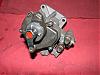
There is a wear or crack in the side plates on this engine.
The engine did run for a few hours on the track after the sideplates were lapped and treated.
Please have a look at the photos and zoom in for details. They are both of the same plate, but all the plates are equal. It looks like a crack, but I cant really determine this. It might also be wear, but I feel the wear pattern is a bit strange? What are your thoughts?
2 engine builders have looked at this, and one is determined it is bechause of sand entering the engine causing them to wear. The other is claiming that the side plate hardening that is insufficient and this is causing the increase in wear. (Nitride treatment)
Is the nitride treatment anything for wear/hardness, or is it just for anti corrosion?
I have an intermidiate plate from a 12A (brand new). Can I use this plate on the MFR? (They look very similar).
What is the best stuff to fill the side port with (they are not in use since this is a Peripheral port engine)?
I look forward to your posts.


There is a wear or crack in the side plates on this engine.
The engine did run for a few hours on the track after the sideplates were lapped and treated.
Please have a look at the photos and zoom in for details. They are both of the same plate, but all the plates are equal. It looks like a crack, but I cant really determine this. It might also be wear, but I feel the wear pattern is a bit strange? What are your thoughts?
2 engine builders have looked at this, and one is determined it is bechause of sand entering the engine causing them to wear. The other is claiming that the side plate hardening that is insufficient and this is causing the increase in wear. (Nitride treatment)
Is the nitride treatment anything for wear/hardness, or is it just for anti corrosion?
I have an intermidiate plate from a 12A (brand new). Can I use this plate on the MFR? (They look very similar).
What is the best stuff to fill the side port with (they are not in use since this is a Peripheral port engine)?
I look forward to your posts.

Thats from seal wear.
How many miles are the motor? I am guessing not many looking at them except for the wear. If that is the case then the coating was junk. New ones are always better than lapping renitrading them.
Thats how they can look once you start getting well over 100K.
How many miles are the motor? I am guessing not many looking at them except for the wear. If that is the case then the coating was junk. New ones are always better than lapping renitrading them.
Thats how they can look once you start getting well over 100K.



.003" I think
from the looks of the iron since you said it was lapped, it looks like they used a surface grinder and had their wheel speed set incorrectly which is why you see the jagged marks on the bottom photo. You can see some discoloration in the metal from heat, like they tried to cut too much at once got the wheel too hot or table speed set incorrectly. (if it was done on a surface grinder)
did the plates look like that (aside from the pointed out step wear) when the engine was assembled?
the wear your pointing at looks like step wear from the seals which is typically from high mileage motor.
from the looks of the iron since you said it was lapped, it looks like they used a surface grinder and had their wheel speed set incorrectly which is why you see the jagged marks on the bottom photo. You can see some discoloration in the metal from heat, like they tried to cut too much at once got the wheel too hot or table speed set incorrectly. (if it was done on a surface grinder)
did the plates look like that (aside from the pointed out step wear) when the engine was assembled?
the wear your pointing at looks like step wear from the seals which is typically from high mileage motor.
Thread Starter
Full Member
Joined: Jun 2003
Posts: 204
Likes: 1
From: Oslo, Norway
Hi Guys.
Thank you for your very valuable info.
The seal wear you are talking about is from the side seals, and not the corner seals right?
I will make another photo of the complete side housing surface. I remember the wear only beeing present on one sector of the plate, and I would like your thoughts on the reasons for this nature.
Could it be uneven nitride treatment, or maybe residue(sand) entering the engine trough the inlet ports?
If in fact sand entered the engine, would it not ruin the rotary housing quickly(especially since these housings are all aluminium and does not have a steel insert like production housings do)?
I will take a few photos of the housing as well and present them tomorrow.
Thank you again for your info.
Thank you for your very valuable info.
The seal wear you are talking about is from the side seals, and not the corner seals right?
I will make another photo of the complete side housing surface. I remember the wear only beeing present on one sector of the plate, and I would like your thoughts on the reasons for this nature.
Could it be uneven nitride treatment, or maybe residue(sand) entering the engine trough the inlet ports?
If in fact sand entered the engine, would it not ruin the rotary housing quickly(especially since these housings are all aluminium and does not have a steel insert like production housings do)?
I will take a few photos of the housing as well and present them tomorrow.
Thank you again for your info.
Thread Starter
Full Member
Joined: Jun 2003
Posts: 204
Likes: 1
From: Oslo, Norway
Hi again.
Here are a few photos of the surface of the rotorhousing. The photos are not that good. I took them with my cellphone trough the inlet port. I will get better ones tomorrow.
Looking at the photos, is it possible to judge:
1. No or little sand has entered the engine?
2. The small, but many, cracks in the surface are normal, and has no practical influence on the durability and performance of the engine. (I was told that this is the nature of housings without steel inserts).


(the photos are all of the same housing. The other housing look exactly the same)
The engine is out of this car: http://mohlin.wankeltrim.se/viewpage.php?page_id=2
Here are a few photos of the surface of the rotorhousing. The photos are not that good. I took them with my cellphone trough the inlet port. I will get better ones tomorrow.
Looking at the photos, is it possible to judge:
1. No or little sand has entered the engine?
2. The small, but many, cracks in the surface are normal, and has no practical influence on the durability and performance of the engine. (I was told that this is the nature of housings without steel inserts).
(the photos are all of the same housing. The other housing look exactly the same)
The engine is out of this car: http://mohlin.wankeltrim.se/viewpage.php?page_id=2

Psalms 37**25
Joined: Jan 2007
Posts: 866
Likes: 0
From: Garnerville N.Y
This is the first thing you need to look at.
Trending Topics
To help your worries. That's not from sand. You would see scaring in multiple places w/ sand. The they guy who lapped them telling you its sand. If so he just doesn't want to stand behind his work. As they would say on Top Gear "It's Rubbish."
I can take pictures and post them of a side plate w/ 150K + on it and you will see very similar wear.
Best of luck.
I can take pictures and post them of a side plate w/ 150K + on it and you will see very similar wear.
Best of luck.
I'm thinking he wasn't exactly honest about re-nitriding the plates.
The depth can vary from .0005" deep treatment that is only in the bath for a few hours to up to .010". .010" takes at least 24 hrs. Maybe longer depending on the material.
I'd pursue him about this. The surface grinding doesn't look the best but is probably good enough. Most guys do some other surface finishing to get rid of the unidirectional grinding marks.
The depth can vary from .0005" deep treatment that is only in the bath for a few hours to up to .010". .010" takes at least 24 hrs. Maybe longer depending on the material.
I'd pursue him about this. The surface grinding doesn't look the best but is probably good enough. Most guys do some other surface finishing to get rid of the unidirectional grinding marks.
Thread Starter
Full Member
Joined: Jun 2003
Posts: 204
Likes: 1
From: Oslo, Norway
hi.
Thanks for the posts guys.
What about point 2, the rotor housing small cracks on the apex contact surface?
I am taking photos of the engine now with th slr. I will upload them tomorrow, bechause i only have the cell now to surf.
Thanks guys. I really appreciate the support.
Thanks for the posts guys.
What about point 2, the rotor housing small cracks on the apex contact surface?
I am taking photos of the engine now with th slr. I will upload them tomorrow, bechause i only have the cell now to surf.
Thanks guys. I really appreciate the support.
Thread Starter
Full Member
Joined: Jun 2003
Posts: 204
Likes: 1
From: Oslo, Norway
Hi all.
I just could not wait, and took the misses laptop, hehe.
The wear on the side plates are mostly on the "hot side", and I think this is natural.
Have a look at the photos, and share your thoughts. One housing has some crome that let go. Is this a big issue?


I just could not wait, and took the misses laptop, hehe.
The wear on the side plates are mostly on the "hot side", and I think this is natural.
Have a look at the photos, and share your thoughts. One housing has some crome that let go. Is this a big issue?






A.K.A. LuisGT
Joined: Feb 2009
Posts: 1,001
Likes: 1
From: Palm Bay, Fl. 32907
The only time I've seen this is when on a friends motor 13bbp the thermostat had been removed and the bypass hole in waterpump housing blocked off and car was used as a daily driver/track(drag strip). It was explained to me that cooling water would pass through motor to quick to allow proper cooling of housings causing this flaking action. I don't know of the validity of what I was told, but in some way it made sense.
those side plates looked like they were on a surface grinder, I experimented with this and was able to change the surface finish by the table speed, wheel speed and wheel depth, very complicated process and hard to get perfect (especially when using shitty machines...)
that is surface grinder wheel burn marks you are seeing.
And well the rotor housing surface finish, well you got me there haha.
that is surface grinder wheel burn marks you are seeing.
And well the rotor housing surface finish, well you got me there haha.
I'll let someone else chime in on the very slight chrome loss at the edge.
We really need someone familiar with earlier rotaries to explain the chrome thing. Those are really early housings with the coolant seal in the housing not the plate, and no steel insert. I believe I have heard of this thing in the earlier housings that don't have a steel insert but I've never seen one :P
We really need someone familiar with earlier rotaries to explain the chrome thing. Those are really early housings with the coolant seal in the housing not the plate, and no steel insert. I believe I have heard of this thing in the earlier housings that don't have a steel insert but I've never seen one :P
What was the end play on the motor?
I would go over to www.nopistons.com and post this in the engine building section. You want Lynn E. Hanover to look at these photos. He has been around rotaries and racing them for quite some time. His opinion would be valuable.
I would go over to www.nopistons.com and post this in the engine building section. You want Lynn E. Hanover to look at these photos. He has been around rotaries and racing them for quite some time. His opinion would be valuable.
Thread Starter
Full Member
Joined: Jun 2003
Posts: 204
Likes: 1
From: Oslo, Norway
Posted on nopistons
straight 7

Joined: Sep 2003
Posts: 79
Likes: 1
From: Little Rock, AR
Some builders I know, not equipped with a dedicated lapping machine, use a blanchard grinder and when "sparked out" produce a flawless finish. Your machinist probably tried to remove too much in one pass and didn't allow it to "spark out".
What process was applied to the rotor housings? It looks as if the process made the chrome brittle by over hardening it. This is why the flaking occured at the edges. Normal chrome stripping is from apex seal end pieces and typically starts and the bottom of the housings... yours is very random and is probably a result of end piece scrubbing but only because of the brittle nature if the (your) chrome.
What seals are you running?
Just my $.02.
What process was applied to the rotor housings? It looks as if the process made the chrome brittle by over hardening it. This is why the flaking occured at the edges. Normal chrome stripping is from apex seal end pieces and typically starts and the bottom of the housings... yours is very random and is probably a result of end piece scrubbing but only because of the brittle nature if the (your) chrome.
What seals are you running?
Just my $.02.

Full Member
Joined: Jun 2009
Posts: 152
Likes: 14
From: 3116
Your housings look fine. That cracked pattern in the chrome is normal for MFR housings, due to the chrome being applied directly to the aluminium. The side plates have obviously been skimmed and have worn again. If they were nitrided originally, they'll now be soft after the skimming, resulting in accelerated wear.
with the new picutures you can see the wheel marks which is why they look so linear, to lap .002" on a grinder I had to make about 5 passes to make the surface I wanted.
those marks left are because the wheel got too hot, ie from trying to remove too much in 1 pass.

Thread
Thread Starter
Forum
Replies
Last Post
Jeff20B
1st Generation Specific (1979-1985)
73
Sep 16, 2018 07:16 PM
