Wheel rivet tightening specs and wheel rivet question


Wheel rivet tightening specs and wheel rivet question
I recently bought 2 piece wheels that were missing some rivets. How tight should rivets be on a wheel? Should i torque it? Im going to be drifting my FC, I wouldnt want my wheels to fall off. Does anyone know where I can get rivets similar to the rivets on BBS wheels? Thanks.
Heres a pic of the wheel rivet.

Heres a pic of the wheel rivet.
Last edited by NatAsRex7; Feb 27, 2011 at 10:02 PM.

Savanna Rx-7


Joined: Jun 2004
Posts: 1,577
Likes: 12
From: yokosuka japan
Nat,
your chances of finding specs for a wheel might be slim. If you can give me the following info, I can provide you a tourqe spec for the nut/bolt combo that would give maximum strength for the combo. provided that all bolts are loosened and then retightend to the same tourqe (with locktite) it should be fine.
pm me with this data:
bolt size in inches, or millimeter ie: 1/4" 5/16" etc or 5mm 6mm etc
thread pitch (count) inch threads per inch, or metric pitch 1.25, 1.5, etc.
bolt material steel, stainless etc.
kenn
your chances of finding specs for a wheel might be slim. If you can give me the following info, I can provide you a tourqe spec for the nut/bolt combo that would give maximum strength for the combo. provided that all bolts are loosened and then retightend to the same tourqe (with locktite) it should be fine.
pm me with this data:
bolt size in inches, or millimeter ie: 1/4" 5/16" etc or 5mm 6mm etc
thread pitch (count) inch threads per inch, or metric pitch 1.25, 1.5, etc.
bolt material steel, stainless etc.
kenn


For those interested in the details:
http://www.rockcrawler.com/techrepor...rque/index.asp
"Where I work, the basic rule we use is that for structural applications, the fastener preload should be 67% of the yield strength. This value was chosen because a fastener (i.e. bolt) has a proof load value for each grade and diameter. The proof load is usually 90 percent of the yield strength. The proof load guarantees that the fastener will not permanently yield or stretch. If it did, you will loose your preload and the fastener will eventually fail or fall out."
http://www.rockcrawler.com/techrepor...rque/index.asp
"Where I work, the basic rule we use is that for structural applications, the fastener preload should be 67% of the yield strength. This value was chosen because a fastener (i.e. bolt) has a proof load value for each grade and diameter. The proof load is usually 90 percent of the yield strength. The proof load guarantees that the fastener will not permanently yield or stretch. If it did, you will loose your preload and the fastener will eventually fail or fall out."
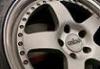
I had my Kinesis 3 piece wheels re-finished and the guy said he torqued the bolts at 14 lbs, I had to re-torque it after a couple hundred miles after driving and did 14lbs again, so far no problems.

Nat,
your chances of finding specs for a wheel might be slim. If you can give me the following info, I can provide you a tourqe spec for the nut/bolt combo that would give maximum strength for the combo. provided that all bolts are loosened and then retightend to the same tourqe (with locktite) it should be fine.
pm me with this data:
bolt size in inches, or millimeter ie: 1/4" 5/16" etc or 5mm 6mm etc
thread pitch (count) inch threads per inch, or metric pitch 1.25, 1.5, etc.
bolt material steel, stainless etc.
kenn
your chances of finding specs for a wheel might be slim. If you can give me the following info, I can provide you a tourqe spec for the nut/bolt combo that would give maximum strength for the combo. provided that all bolts are loosened and then retightend to the same tourqe (with locktite) it should be fine.
pm me with this data:
bolt size in inches, or millimeter ie: 1/4" 5/16" etc or 5mm 6mm etc
thread pitch (count) inch threads per inch, or metric pitch 1.25, 1.5, etc.
bolt material steel, stainless etc.
kenn
thread pitch count in cm 2.5
steel
What kind of material should I be using for maximum strength?
For those interested in the details:
http://www.rockcrawler.com/techrepor...rque/index.asp
"Where I work, the basic rule we use is that for structural applications, the fastener preload should be 67% of the yield strength. This value was chosen because a fastener (i.e. bolt) has a proof load value for each grade and diameter. The proof load is usually 90 percent of the yield strength. The proof load guarantees that the fastener will not permanently yield or stretch. If it did, you will loose your preload and the fastener will eventually fail or fall out."
http://www.rockcrawler.com/techrepor...rque/index.asp
"Where I work, the basic rule we use is that for structural applications, the fastener preload should be 67% of the yield strength. This value was chosen because a fastener (i.e. bolt) has a proof load value for each grade and diameter. The proof load is usually 90 percent of the yield strength. The proof load guarantees that the fastener will not permanently yield or stretch. If it did, you will loose your preload and the fastener will eventually fail or fall out."
thanks for clearing that up for me....
I do drift but not like how you would be doing it, truthfully I would not use 3 piece wheels for drifting but I did call the guy that did my wheels and he said that it does not matter what you do with the wheels, whether you drift, autocross, track or just drive it on the city streets, torque spec is still 14lbs.
He also said that if you go more than that you will have a high chance of ruining the wheel since most 3 piece wheels are made of aluminum.
He also said that if you go more than that you will have a high chance of ruining the wheel since most 3 piece wheels are made of aluminum.