When you click on links to various merchants on this site and make a purchase, this can result in this site earning a commission. Affiliate programs and affiliations include, but are not limited to, the eBay Partner Network.
is the smallest area in your list, how can it flow more than the others?
As I said, round ports flow more than rectangular ports of the same cross sectional area because they have less runner surface area and thus less drag.
Also as I said, I was too lazy to calculate and subtract out the 4 radii from the corners of the open volute flange area and the 8 radii from the corners of the divided volute flange area.
TeamRX8
Again; it’s a 2” Sch 10 which is 2.375” OD x 2.157” ID (54.8mm). It’s the V-band register/centering protrusion that’s 60mm.
If you stick a 2" sch 10 pipe on the v-band flange for turbo inlet you are going to be flow limited by the 2" sch 10 pipe.
If you stick a 2" sch 10 pipe on the T4 divided flange for turbo entry you are going to be a lot worse off.
My point is, neither is a correct way to make a turbo manifold.
TeamRX8
I seem to recall a particular person in a previous G-series discussion arguing that once we thrown in the unique rotary pulse parameters then Garrett shouldn’t be trusted
If Garrett tested their new smaller high flow G series exhaust wheels on a rotary and concluded the decrease in inertia and the new high flow aero provided better turbo response without compromising flow I would trust them.
My own personal experience in going up exhaust wheel sizes in the same turbo housing (and same compressor section) with a rotary is that some factor offset the increase in inertia of the larger turbine wheel and improved turbo response.
Others have noted the same phenomenon with rotaries.
In my reading of the Mazda literature I believe it has to do with the "impact" pulse component of the rotary which led Hitachi to develop its own aero for the rotary turbine wheels that features straight finned inducer instead of the curved fins developed for piston engines. The curved fins drive the turbine more with exhaust flow and less with impact. The Garrett GT series further refined the piston engine derived turbine aero and now the G series has done that again.
I believe the current turbine aero is getting further and further from the ideal turbone aero for a rotary.
Mazda also tried mixed flow (axial plus radial flow) like the efr 7063 exhaust wheel and concluded acial flow does not work well at all for the rotary.
So, you think the difference in rotary and piston engine exhaust characteristics labeled by Mazda and Hitachi as "impact" pulses are just my, Hitachi and Mazda's fantasies?
rx7srbad,
you say only thing you are changing is turbo from Garrett T04Z 1.0AR T4 divided to G series V-band 1.21AR to try to get 450rwhp.
Seems like trying to fix a bad marriage by swapping out her wedding ring.
T04Z is a well proven turbo on the rotary, look at everything else in your engine set-up to find whats not working.
Example- I once added 30hp to a turbo Honda on the local shops dyno by putting the velocity stack and intake filter from my RX7 on the bare end of the 3" pipe feeding the turbo.
Put pics and description up of everything on the car for us to go over or take it to a experienced race service shop to look over.
I think the HKS cast manifold to t4 divided/v-band adapter to G series turbo back is going to be an abomination and squandering of resources compared to refining a half decent T04Z set-up into a good T04Z set-up in the quest for 450rwp.
I suppose the 1.21 A/R will give max top-end power, but the T4 divided 1.06 A/R should give a much better powerband. With doing about zero math, the G35-1050 flows about the same as the EFR9180. Very impressive for the G35-1050 considering how much smaller diameter the wheels are. Anyway, from the info given for Turblown EFR setup: The 9180 will provide the highest level of IWG power with its 68mm compressor wheel and 80mm turbine wheel. One should choose the 9180 for 550 to 630+rwhp range.
That's a pretty good indicator the G35-1050 will do your 600whp.
My own personal experience in going up exhaust wheel sizes in the same turbo housing (and same compressor section) with a rotary is that some factor offset the increase in inertia of the larger turbine wheel and improved turbo response.
Others have noted the same phenomenon with rotaries.
Curious what turbos you observed this on? And it's not just rotaries, but piston engines too. In the aftermarket world, the turbo manufacturers have a bad habit of mating too big of a compressor for a given turbine wheel size. I want more flow, so I'll just put on a bigger compressor wheel! This only works to a small extent. Go too far, and you get poor blade speed ratio which drops turbine efficiency. So what you observed is likely fixing a mismatch from there being too big of a compressor for a given turbine. Increasing the turbine wheel size, same casting, does flow more but also has better turbine efficiency by bringing the blade speed ratio back to optimum for max turbine efficiency. Also, bigger wheels typically have higher efficiency because you can run basically the same wheel to housing clearances, but that clearance is a smaller percentage of the wheel size, so there are reduced losses due to clearances. The increased turbine efficiency from properly pairing the turbine to the compressor more than offsets the higher turbine flow (typically increases lag) and larger wheel inertia resulting in a turbo that is just as responsive but makes more power.
So actually, larger trim; not larger exhaust wheel...
That's a huge change in trim though. Usually, trim changes are only by a few to tweak to a specific application, like maybe +/- 4. This is a trim change of 14, effectively a different size wheel. As an approximation, flow scales linearly with trim. So the P-trim is about 20% more flow. I don't think I've seen a 62 trim before... must be old school diesel. All the Garrett high flow stuff is 84 trim.
Last edited by spdracerUT; Sep 7, 2021 at 12:05 AM.
Are you staging throttles on the 4 barrels or is it all at once? Seems to be a bottom end torque/flow advantage an keeping the secondary runners closed.
Not entirely sure the choice of going for the 1.21 v band over t4 twin scroll is a wise choice, time will tell i guess. I saw some data on a G35 900 at 16psi on a stock port and was not impressed and thought....just go for the biggest ar 1050. Do you feel the 1.06 would have been a better choice?
It's a stock port engine. What do you expect. You could put a gt55 on there and it will only make whatever a stockport can flow at 16psi.
Got the G35 1050 Installed. The only change to my setup is the turbo swap. Everything else, manifold, dp is all the same. Old turbo - Garrett TO4Z T4 Twin Scroll 1.01ar Current Turbo - Garrett G35 - 1050 1.21 ar Vband. Fuel Crisis...but got 99 v-power pump fuel.
Got round to mapping the car upto 6krpm and upto 12psi. The process took far longer than I initially anticipated...had to make big changes to the map. Guess the G35-1050 seems to be flowing more air than the older TO4Z, the idle and cruise areas needed some big changes. I had to stop there as I started to run low of fuel and finding fuel in the UK currently is like trying to find gold dust!
So far I could not really notice any difference in boost response between the old and new turbos. The G35-1050 feels like it is pulling a lot harder to 6krpm than the older turbo. However, I will get back to the completing the map once I find some fuel!
makes me appreciate having several lower cost E85 choices within short driving distance, just around the corner actually …
.
How I envy your good fortune. E85 is still a while away at UK fuel pumps. We would simply be grateful to just have 99 super unleaded fuel readily available!
Got a fair bit left to do, clean up the fueling on the low boost.
Than start tuning for some higher boost and play around with the wg duty cycle to optimize boost response.
Then book a dyno and get some power results. Will verify both high and low boost maps on the dragy gps to confirm real world performance.
Finally got around to some high boost tuning today. Holding 20 PSI ~ 1.4 bar extremely well. The pull after 4krpm is incredibly strong and there is no let off until the next gear change....if the car had a DCT box the pull would be relentless! No idea on power/torque figures just yet. No idea of dragy gps number yet either. Overall, very happy with the new turbo and the preliminary tune.
The rest of the tune will be finalized when I get a chance to tweak it on a dyno. May even increase boost up to 1.7 bar if required. Quite keen to find out what the G35 1050 is doing at 1.4 bar compared to the older TO4Z. 12 Psi 20 PSI preliminary 20psi tune.
I note I have not yet had the chance to do any boost optimization so anyone else going for a G35-1050 should have an idea of what to expect.
i have spent a bunch of time noodling on the Garrett line and am probably going to buy a G35-1050. i will be spending some time with Garrett at the PRI this Friday. i currently have an EFR 9180 on my engine.
i have spent a bunch of time noodling on the Garrett line and am probably going to buy a G35-1050. i will be spending some time with Garrett at the PRI this Friday. i currently have an EFR 9180 on my engine.
I'm sure that the 10 year newer Garrett's turbines flow quite a bit better than the EFRs, but that's a 12mm difference in turbine exducer, but with a higher flowing compressor. That seems extreme.
i have spent a bunch of time noodling on the Garrett line and am probably going to buy a G35-1050. i will be spending some time with Garrett at the PRI this Friday. i currently have an EFR 9180 on my engine.
Interesting comparison, will love to see the results!
according to Matchbot the EFR 8474 1.05 A/R is peaking low 30-ish lbs/min turbine flow when it flat lines above 2.5 Pr.
Originally Posted by Shainiac
I'm sure that the 10 year newer Garrett's turbines flow quite a bit better than the EFRs, but that's a 12mm difference in turbine exducer, but with a higher flowing compressor. That seems extreme.
well the G30 1.01 v-band turbine map is approximately matching the established GT35 1.01 turbine map despite the size difference. Credit to Brettus with his RX8 G30 Renesis turbo setup for bringing that to light. My view is the 1.06 divided T4 G30 is going to do even better on a 13B. The same for the G35 then being the next step above that.
It seems to me that some people may still be in the previous mindset that all turbines are more or less created equal and all you have to do is compare the inducer/exducer sizing, but I came to recognize that the technology is changing and so how we view that has to change as well. That’s when it “clicked” for me, but there are still not many rotary results to fully back it up yet.
.
It seems to me that some people may still be in the previous mindset that all turbines are more or less created equal and all you have to do is compare the inducer/exducer sizing, but I came to recognize that the technology is changing and so how we view that has to change as well. That’s when it “clicked” for me, but there are still not many rotary results to fully back it up yet.
.
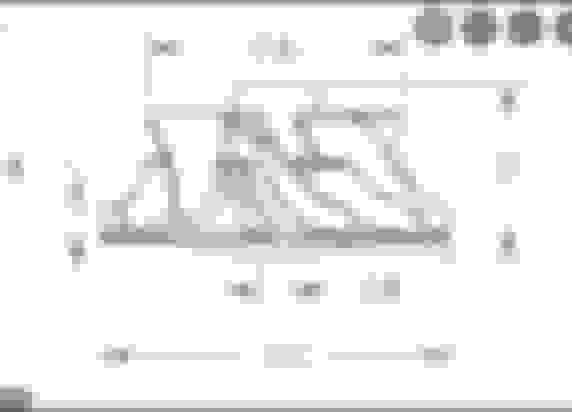
ive been told that the new turbos have a wider/deeper impellor, essentially measurement D (and maybe B) is that correct?