


Why did Mazda make the side housings out of iron?


Junior Member

Joined: Mar 2003
Posts: 11
Likes: 0
From: Madison, AL
I'm kind of getting into this thread late, but ...
One of the reasons I think you don't see extreme (and expensive) measures taken to reduce weight in engine blocks for street cars is that reducing 10 lbs of engine block is no more help to performance than reducing 10 lbs in the seats, or hatch, or whatever. If fact if you could take the 10 lbs out of the unsprung weight it would be BETTER than taking it out of the engine block.
Wonder how much weight you could save by putting in a lexan hatch glass?
One of the reasons I think you don't see extreme (and expensive) measures taken to reduce weight in engine blocks for street cars is that reducing 10 lbs of engine block is no more help to performance than reducing 10 lbs in the seats, or hatch, or whatever. If fact if you could take the 10 lbs out of the unsprung weight it would be BETTER than taking it out of the engine block.
Wonder how much weight you could save by putting in a lexan hatch glass?
WingmaN

Joined: Aug 2002
Posts: 4,324
Likes: 0
From: Fort Worth Texas
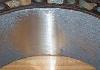
But you are taking out much more than 10lbs. between the 3 side plates. I had the numbers at one time of the weight of each housing and combined they are very heavy. Depending on the aluminum alloy used the weight difference is 1/3 to 1/2 of cast iron.
I will see if I can find all my notes from when I was toying with the casted aluminum idea.
I will see if I can find all my notes from when I was toying with the casted aluminum idea.
Junior Member
Joined: Mar 2003
Posts: 11
Likes: 0
From: Madison, AL
Oh, I agree, you would save much more than 10 lbs.
My point was that the cost per pound of weight savings is probably less in many other areas of the car. The manufacturer is engineering the entire car; not just the engine.
My point was that the cost per pound of weight savings is probably less in many other areas of the car. The manufacturer is engineering the entire car; not just the engine.

Rotary Enthusiast
Joined: Oct 2002
Posts: 1,165
Likes: 0
From: California, Bay Area
They didnt use aluminum because flame spray coatings were in their infancy, and flame spraying the housings would have cost WAY to much, they also didnt have some of the nice hard ceramics, and such developed that would be good for this aplication, it would be way more trouble for the factory then it was worth, the reason they used the steel inserts on rotor housings was to eliminate costly flme spraying done on earlyer all aluminum housings, these coatings had to be sprayed on, then machined and finished to spec, exactly like Scalliwag is doing, except in a factory this takes time, which means money. Its much simpler to stamp out a steel insert, cast aluminum around it, and dip it in an electroplating vat for a few minutes. I had a site that talked about why mazda went to steel inserts in depth, but i cant find it right now. Also there would be much more aluminum in the side housings then in the rotor housings which means $$, if you has AL Side housings, you wouldnt be able to simply lapp them for a rebuild, you would like ly have to surface grind them, re flme spray them, surface grind again, and then lap, which would be very expencive, and the cost of new aluminum housings would make them like 500-600 dollars each insted of 300. although it would be nice to drop 40-50 pounds from the engine bay
WingmaN
Joined: Aug 2002
Posts: 4,324
Likes: 0
From: Fort Worth Texas
Thanks Drago! That got me to seeing the obvious now. Since they could not use hard chrome or nitriding on aluminum that would be the only reason for the steel sleeve. To make a sleeve sleeve to use in a side plate was probably more trouble than it would have been worth.
That makes a lot of sense.
I would love to read up on some of their R&D with the early flame spraying. That would be very hard to avoid a very high failure rate. Since the housings would get VERY hot during the FLAME spray process it was not an option for me on my project.
As long as everyone here notices that Drago was talking about flame spray and should not be confused with ARC spray process this should make more sense to you.
Flame spray uses oxy/acetylene (like a cutting torch setup) hence the term FLAME. The ARC process being used on my housings would be like having TWO wire welders. Instead of the work being the ground, one wire acts as the positive and one wire as the negative current. The two wires are guided into a nozzle. When they meet they create an ARC. Right behind where the wires arc there is a high pressure clean air source (that can be substituted with other gases like nitrogen to create a different result) With the ARC process you want to keep the part as cool as possible which is a really good thing
That makes a lot of sense.
I would love to read up on some of their R&D with the early flame spraying. That would be very hard to avoid a very high failure rate. Since the housings would get VERY hot during the FLAME spray process it was not an option for me on my project.
As long as everyone here notices that Drago was talking about flame spray and should not be confused with ARC spray process this should make more sense to you.
Flame spray uses oxy/acetylene (like a cutting torch setup) hence the term FLAME. The ARC process being used on my housings would be like having TWO wire welders. Instead of the work being the ground, one wire acts as the positive and one wire as the negative current. The two wires are guided into a nozzle. When they meet they create an ARC. Right behind where the wires arc there is a high pressure clean air source (that can be substituted with other gases like nitrogen to create a different result) With the ARC process you want to keep the part as cool as possible which is a really good thing
Last edited by Scalliwag; Mar 22, 2003 at 09:52 AM.
Rotary Enthusiast
Joined: Oct 2002
Posts: 1,165
Likes: 0
From: California, Bay Area
http://members.rogers.com/sofronov/C...otary/12A.html
They talk about it here briefly, if you look the home page also documents such things as why they switched from carbon seels, the problems with early iron seals ( and the neat drilled out seals to supress harmonics they developed that were never implements, experimental engines, why they put in exaust sleeves, everything you ever wanted to know about the development of the rotary, i love this site, lol i had to dig it up agin in my bookmarks, but i found it, i think it will greatly help your noble quest Scalliwag.
They talk about it here briefly, if you look the home page also documents such things as why they switched from carbon seels, the problems with early iron seals ( and the neat drilled out seals to supress harmonics they developed that were never implements, experimental engines, why they put in exaust sleeves, everything you ever wanted to know about the development of the rotary, i love this site, lol i had to dig it up agin in my bookmarks, but i found it, i think it will greatly help your noble quest Scalliwag.
WingmaN
Joined: Aug 2002
Posts: 4,324
Likes: 0
From: Fort Worth Texas
Someone PM'ed me that link last October and I posted it in the Resurfacing thread https://www.rx7club.com/forum/showth...5&pagenumber=4
It's about half way down. That was the link that Brandon dismissed as nothing to base anything on. That was pretty early on in the arguing stages
That site has really good info but it a hard as hell to navigate through.
The 13b page was pretty interesting too because it talks about the changes there as well.
Actually after I went back and read page 4 over, someone had PM'ed me about microporosity and the link came up during a web search.
It's about half way down. That was the link that Brandon dismissed as nothing to base anything on. That was pretty early on in the arguing stages
That site has really good info but it a hard as hell to navigate through.
The 13b page was pretty interesting too because it talks about the changes there as well.
Actually after I went back and read page 4 over, someone had PM'ed me about microporosity and the link came up during a web search.
Last edited by Scalliwag; Mar 24, 2003 at 02:46 PM.

Thread
Thread Starter
Forum
Replies
Last Post
stickmantijuana
20B Forum
8
Aug 18, 2015 02:46 PM
