


Is this rotor reusable?


copper in bearings is bad period. just replace them for peace of mind, longevity and hell they dont cost much.
__________________
Not so.
Mazda recommends used bearings in rebuilds to minimize the high spots that can cause seize associated with fresh pressed in bearings- hence the longer specified break in on new bearings.
If you look at high rpm rotaries there will often only be copper showing on the bearings as the babbit had to be removed to gain proper clearance. The limit of bearing clearance is rotor to rotor housing contact (race engines mill material off the rotor face to gain back this clearance while allowing more bearing clearance for eccentric shaft flex.)
The bearings are coated with babbit as a sacrificial metal in case of seize and to absorb contaminants; which is desirable. but by no means crucial to normal operation.
From what I understand, the most important specifications on bearings are smooth bearing surface to reduce oil film heating, proper clearance for operating conditions and free of contaminants.
__________________
Not so.
Mazda recommends used bearings in rebuilds to minimize the high spots that can cause seize associated with fresh pressed in bearings- hence the longer specified break in on new bearings.
If you look at high rpm rotaries there will often only be copper showing on the bearings as the babbit had to be removed to gain proper clearance. The limit of bearing clearance is rotor to rotor housing contact (race engines mill material off the rotor face to gain back this clearance while allowing more bearing clearance for eccentric shaft flex.)
The bearings are coated with babbit as a sacrificial metal in case of seize and to absorb contaminants; which is desirable. but by no means crucial to normal operation.
From what I understand, the most important specifications on bearings are smooth bearing surface to reduce oil film heating, proper clearance for operating conditions and free of contaminants.



Rotary tuner

Joined: Feb 2004
Posts: 124
Likes: 0
From: In Sweden
keep them. Goopy Performance sells an oversize bearing for spun rotors, plus it has a VERY generous oil channel. 
i have a set of rotors that went through the same thing. i pressed the rear rotor bearing out with my thumbs, and it didn't look all chewed to hell. all the slots are within spec and they look otherwise healthy. i plan to send them to Goopy whenever i'm ready to use them again.
i have a set of rotors that went through the same thing. i pressed the rear rotor bearing out with my thumbs, and it didn't look all chewed to hell. all the slots are within spec and they look otherwise healthy. i plan to send them to Goopy whenever i'm ready to use them again.
Acctually it was me who told Jonathan @ Goopy about this for some year ago

Last edited by wankeltrim; May 12, 2011 at 01:50 AM. Reason: add more
You assemble the front cover without a gasket (just rtv) and the lack of gasket thickness puts more pressure on the o-ring from oil pump outlet to front cover so that you have less blow by the o-ring and less chance of pushing the o-ring out with really high oil pressures.
I think I remember reading Judge Ito goes further and punches around the o-ring seat on the boss so the o-ring is held in place by the sharp edges of the punch marks.
I have found on 89+ FC engines with the teflon back up ring that you will squeeze the stock o-ring into the front cover oil passage if you assemble it as stock without the gasket though- leaving just the back up ring to seal. Here, you have to use an o-ring sized to fit where the backup ring goes normally.
I think I remember reading Judge Ito goes further and punches around the o-ring seat on the boss so the o-ring is held in place by the sharp edges of the punch marks.
I have found on 89+ FC engines with the teflon back up ring that you will squeeze the stock o-ring into the front cover oil passage if you assemble it as stock without the gasket though- leaving just the back up ring to seal. Here, you have to use an o-ring sized to fit where the backup ring goes normally.

[QUOTE=BLUE TII;
[B]drill multiple oil entry holes in main bearings grooves[/B]
Pic? Just wondering how many you drilled/how far spaced apart.
I think what you did to the crank is what PJ is talking about. I seen his done, gave me the idea.
[B]drill multiple oil entry holes in main bearings grooves[/B]
Pic? Just wondering how many you drilled/how far spaced apart.
I think what you did to the crank is what PJ is talking about. I seen his done, gave me the idea.


You assemble the front cover without a gasket (just rtv) and the lack of gasket thickness puts more pressure on the o-ring from oil pump outlet to front cover so that you have less blow by the o-ring and less chance of pushing the o-ring out with really high oil pressures.
I think I remember reading Judge Ito goes further and punches around the o-ring seat on the boss so the o-ring is held in place by the sharp edges of the punch marks.
I have found on 89+ FC engines with the teflon back up ring that you will squeeze the stock o-ring into the front cover oil passage if you assemble it as stock without the gasket though- leaving just the back up ring to seal. Here, you have to use an o-ring sized to fit where the backup ring goes normally.
I think I remember reading Judge Ito goes further and punches around the o-ring seat on the boss so the o-ring is held in place by the sharp edges of the punch marks.
I have found on 89+ FC engines with the teflon back up ring that you will squeeze the stock o-ring into the front cover oil passage if you assemble it as stock without the gasket though- leaving just the back up ring to seal. Here, you have to use an o-ring sized to fit where the backup ring goes normally.
sometimes clamping down on an o-ring has the negative effect, if there is any oil in that seat area when tightening it down it will actually force the o-ring to pop out versus clamp down on it tighter. so if you do the gasket elimination method either use a strong bonding agent to hold the o-ring in place or be sure the o-ring seating areas are 100% dry and oil free. another alternative is to find the properly sized square cut o-ring. i'm not 100% sure why mazda was infatuated with sticking round cut seals into square cut holes throughout these motors.
Last edited by RotaryEvolution; May 12, 2011 at 03:05 PM.
one other thing i have on my list things to do is to find a spacer to place inside the o-ring to prevent it from collapsing into the oil galley passage. there is some variations in o-ring thickness throughout the years of engines though but i thought this would be the best alternative to this issue.
Yeah, on my list of things to do is to have the front iron to front cover dowel pinned at the oil pump outlet so I can just slip the o-ring over the tubular dowel.
[I]quote=BLUE TII;
drill multiple oil entry holes in main bearings grooves
Pic? Just wondering how many you drilled/how far spaced apart.
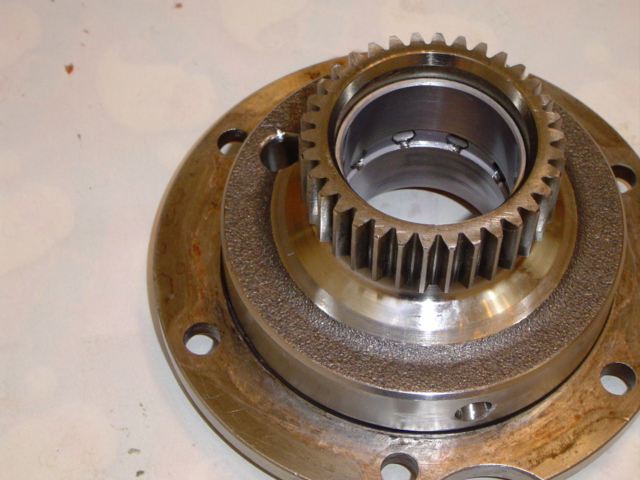
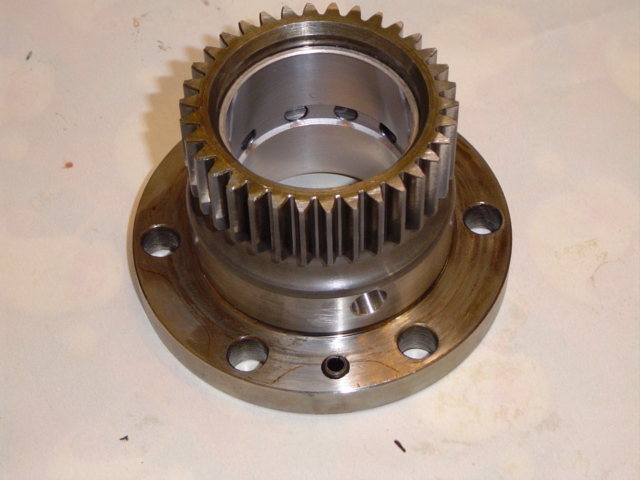
The important thing is to leave enough material the bearing will not distort when pressed in and also to use no center punch, sharp bits and little pressure to avoid distortion.
With all of these oil system mods it would be EASY to do more harm than good for your engine if poorly executed.
Yeah, on my list of things to do is to have the front iron to front cover dowel pinned at the oil pump outlet so I can just slip the o-ring over the tubular dowel.
[I]quote=BLUE TII;
drill multiple oil entry holes in main bearings grooves
Pic? Just wondering how many you drilled/how far spaced apart.
The important thing is to leave enough material the bearing will not distort when pressed in and also to use no center punch, sharp bits and little pressure to avoid distortion.
With all of these oil system mods it would be EASY to do more harm than good for your engine if poorly executed.
i, too, have thought of this but i just don't have (or personally know someone with) the skill and tools/materials to do it.

Thread
Thread Starter
Forum
Replies
Last Post
stickmantijuana
20B Forum
9
Sep 22, 2015 07:39 PM
