When you click on links to various merchants on this site and make a purchase, this can result in this site earning a commission. Affiliate programs and affiliations include, but are not limited to, the eBay Partner Network.
Just thought I would share one of 10 new items we are releasing this year;
Cast Lower & Upper Intake manifolds for both 13BREW & 13BT engines, both semi pport and standard 4 port sideport engine combinations.
We are currently working on 3/4 versions to dyno test which one works best, for best all around powerband.
dumping the 30 year old upper/lower OE type design; that was based more on both NA and
street use technology at the time, might be more fruitful.
it’s probably one of the most overlooked potential areas of improvement imo. Sort of referenced to it the other day in a different thread about people being too busy reading and intently following grandma’s old recipe book to be bothered with understanding how to be a good cook ...
dumping the 30 year old upper/lower OE type design; that was based more on both NA and
street use technology at the time, might be more fruitful.
it’s probably one of the most overlooked potential areas of improvement imo. Sort of referenced to it the other day in a different thread about people being too busy reading and intently following grandma’s old recipe book to be bothered with understanding how to be a good cook ...
.
I have considered this, and devised a way to do it. Interested in this way for a couple reasons; reduce price, and leak points.
Either way we have made a TON of progress and will have some billet models to dyno test next week already...
dumping the 30 year old upper/lower OE type design; that was based more on both NA and
street use technology at the time, might be more fruitful.
it’s probably one of the most overlooked potential areas of improvement imo. Sort of referenced to it the other day in a different thread about people being too busy reading and intently following grandma’s old recipe book to be bothered with understanding how to be a good cook ...
.
I agree a one piece intake manifold sounds great in theory, but I think that adopting it would make semi-routine maintenance & repairs with the engine in the car more of a PITA than it is with the OEM 2 piece design (or similar). For example, getting to the fuel injectors on a 13BT/13B-REW to have them serviced involves removing the UIM with a 2-piece design. If it were a 1 piece design, it would be more difficult to pull the whole manifold when you have the turbo(s) in the way.
Yes that is an option from the drop down menu on the group buy( click on the link in first post).
Should have the prototype billet models very soon, to hit dyno ASAP.
Hmm... do you have a rough estimate on when these things might make it out the door? We'll be finalizing my build and making the intake piping in 2-3 months.
3 months is the rough time frame. Only thing that will extend it, is based on how many revisions it takes to get the dyno/drivability where we want it...
Curious to see results of this, always awesome to see new components being developed for rotaries.
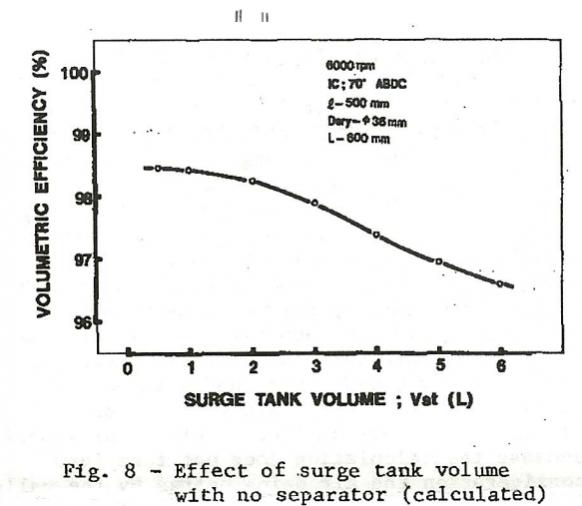
Interesting that you are going to a regular plenum design, similar to what is more often seen on piston engines.
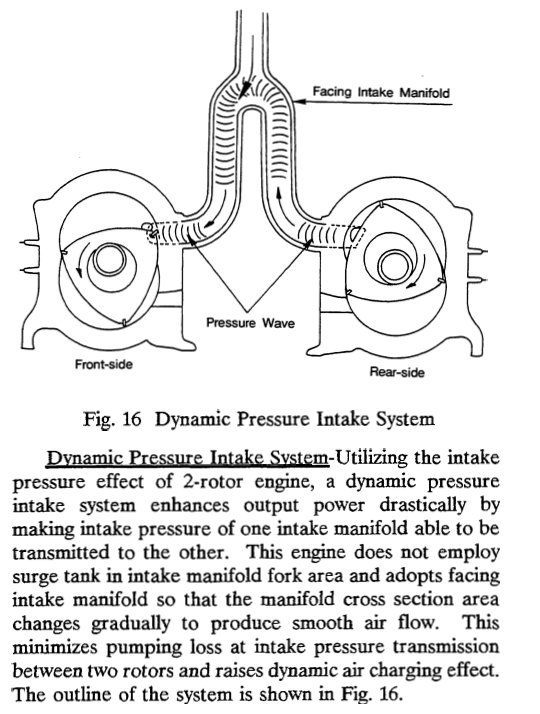
If you look at the stock intake manifolds on the FD and RX-8 you can see that they don't use a plenum or surge tank to maximize the dynamic supercharging effect:
So when trying different manifold styles I would not just focus on tuning intake runner length and plenum size for inertia effect but also try a design more focussed on dynamic supercharging.
Even though it's 30 year old technology, physics have not changed since then.
I am running an auto 4-port RX-8 intake on my S5 13BT engine.
Last edited by John Huijben; Feb 11, 2021 at 09:37 AM.
Curious to see results of this, always awesome to see new components being developed for rotaries.
Interesting that you are going to a regular plenum design, similar to what is more often seen on piston engines.
If you look at the stock intake manifolds on the FD and RX-8 you can see that they don't use a plenum or surge tank to maximize the dynamic supercharging effect:
So when trying different manifold styles I would not just focus on tuning intake runner length and plenum size for inertia effect but also try a design more focussed on dynamic supercharging.
Even though it's 30 year old technology, physics have not changed since then.
I am running an auto 4-port RX-8 intake on my S5 13BT engine.
You are correct that pulse tuning plays a HUGE factor, as we've already been dyno testing our Rx8 UIM. We have a model that also has halved the plenum volume to see that effect also. We have about 5 different variations to test.
V1 should be ready to dyno next week. Its in the CNC now.
Are you planning to test a version with staged primary and secondary ports instead of all open at the same time? I'd be interesting to see the differences!
Are you planning to test a version with staged primary and secondary ports instead of all open at the same time? I'd be interesting to see the differences!
I agree! I would like to know it it makes a difference especially on a half bridged engine to keep port velocity up on the primary ports in the idle/ low throttle inputs to increase torque and spool the turbo up.
I agree a one piece intake manifold sounds great in theory, but I think that adopting it would make semi-routine maintenance & repairs with the engine in the car more of a PITA than it is with the OEM 2 piece design (or similar). For example, getting to the fuel injectors on a 13BT/13B-REW to have them serviced involves removing the UIM with a 2-piece design. If it were a 1 piece design, it would be more difficult to pull the whole manifold when you have the turbo(s) in the way.
no, I don’t think you understood my intention at all.
when your engine can make boost at low rpm and easily on part throttle too the entire dynamic changes on intake design imo, but it seems that very few people are looking or thinking about it much.
what everyone mostly has and what is being done in general is an NA design intake manifold from the 1990 era.
edit:
It kind of goes along with a number of rotary engine builders figuring out 20 years ago that a 50mm PP NA intake port wasn’t really needed, but the right shape and sizing leading up to a smaller, better positioned and intentionally shaped port mattered more. Such that they were then able to make the same power at lower rpm and with more/broader torque too.
one thing to consider about how it’s being done now is the total length and volume, which kind of borders on ridiculously long and big imo. I’d argue you don’t need anything more than a plenum on top of a properly designed UIM with an appropriate secondary port control. When you then start looking at how you can configure that and a few other things leading up to it then you can probably cut the volume in at least half, if not even less. When you’re talking about compressible fluid under pressure, volume matters when the end goal is response. So some things you might think will cost response might not due to the other things that are offsetting it in the other direction.
When you’re talking about port runners, it’s the combination of volume and length that counts. NA engines like long runners, but the reason they work for NA is why they might not be ideal for FI. Length adds friction loss, which means more boost required to overcome it. So hogging it out offsets some of that except now you added volume. The other way to overcome it is to shorten it up.
Look at the new Garrett G-series turbo. They have a 2.157” ID v-band turbine inlet on a 1000 hp turbo. Some people think that’s too small and is choking it compared to say a T4 flange. I’ve even seen it stated on here. Well the truth is; not necessarily.
Even a T4 entrance tapers down substantially an inch or two further in. If it was 2.157” ID for a long distance; yeah that’s a restriction, but not so much for an inch or two that it gets down to anyway. How you lead into it is important though, i.e. how you manage the flow and velocity to be an advantage rather than a hindrance.
As Garrett has proved; the inlet wasn’t the hindrance, it was how well they could manage flow through the turbine wheel that mattered more. I still think many people here are overlooking their ability to get much more flow through a much smaller turbine, because nobody is really evaluating that compared to say a BW turbine and how that much smaller size results in equal or less MOI despite being heavier high temp material. I might suggest that the separate pulse/divided flowpath is maybe not as critical as currently thought until you start looking at really big power in a much larger turbo size.
.
all very good stuff here. i have favored the OE UIM because it is designed to exploit the violent pressure wave when the intake slams shut.
think of the 13B as a two piston motor.
when one piston is at BDC the other is at TDC.
when the front rotor intake port closes the rear rotor intake port opens. "intake pressure transmission"
Newton's third law/ for every action there is an equal and opposite reaction./
at 20 psi of boost and charge air speeds approaching 500 miles an hour coming to an abrupt stop. as the port closes it is similar to a rubber ball hitting the floor... a big bounce in the other direction...
just as the other intake OPENS.
now look at the OE UIM from above and you will see that Mazda engineered a beautiful U shaped passage to facilitate this. the Cosmo and the aftermarket copy do not offer this feature... they just have a rectangular plenum which dilutes the pressure impulse. a plenum works fine for a V8 where the impulses are all mixed up and not as strong.
because of the U shape at this point in time my favorite intake combo is the OE UIM and the Ground Zero/Xcentric LIM. another plus for the Xcentric is the well designed turn to the port which the aftermarket Cosmo knock off doesn't share.
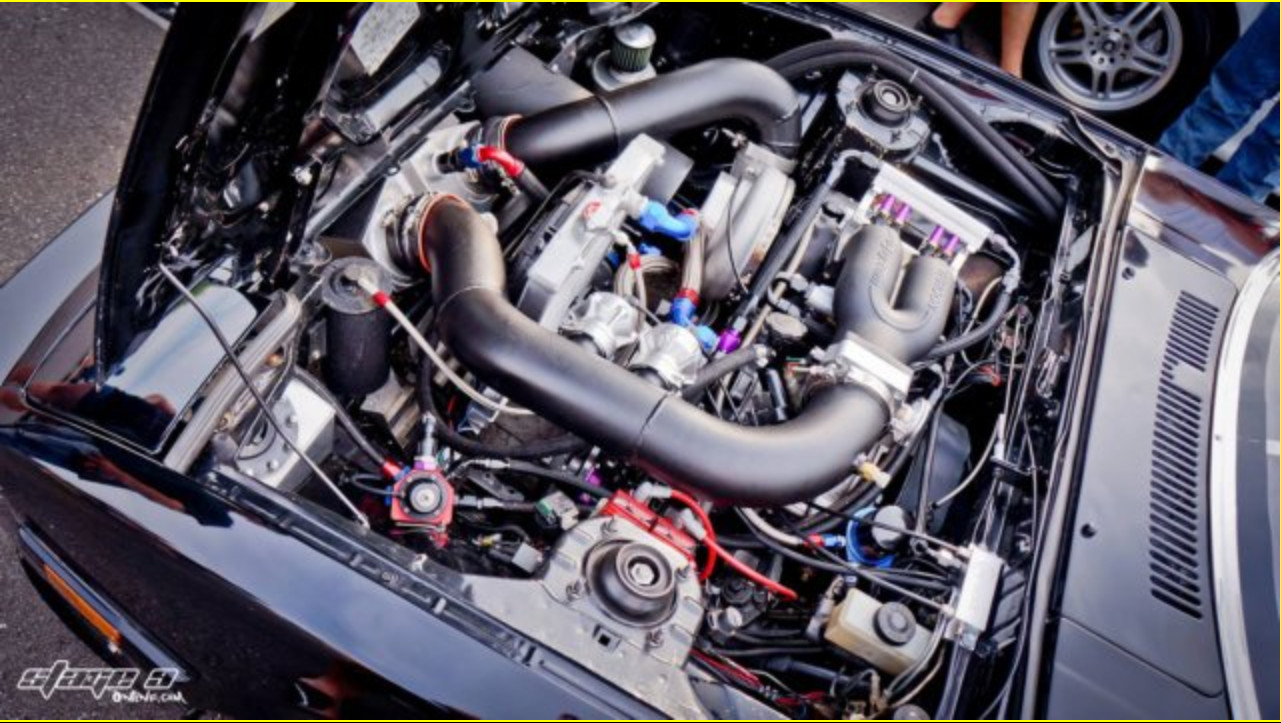
this engine bay caught my eye a few years ago. i don't remember all the details but the car is in Kansas (?) and is insanely fast. notice the UIM. purposely designed to capture the intake pulses between the front and rear rotor.
i am happy that Turblown is on the case. i do hope whatever emerges takes advantage of the crossflow dynamics existant in the 2 rotor and also hope it retains primary and secondary throttle plates..
Last edited by Howard Coleman; Mar 7, 2021 at 06:05 PM.
all very good stuff here. i have favored the OE UIM because it is designed to exploit the violent pressure wave when the intake slams shut.
think of the 13B as a two piston motor.
when one piston is at BDC the other is at TDC.
when the front rotor intake port closes the rear rotor intake port opens. "intake pressure transmission"
Newton's third law/ for every action there is an equal and opposite reaction./
at 20 psi of boost and charge air speeds approaching 500 miles an hour coming to an abrupt stop. as the port closes it is similar to a rubber ball hitting the floor... a big bounce in the other direction...
just as the other intake OPENS.
now look at the OE UIM from above and you will see that Mazda engineered a beautiful U shaped passage to facilitate this. the Cosmo and the aftermarket copy do not offer this feature... they just have a rectangular plenum which dilutes the pressure impulse. a plenum works fine for a V8 where the impulses are all mixed up and not as strong.
because of the U shape at this point in time my favorite intake combo is the OE UIM and the Ground Zero/Xcentric LIM. another plus for the Xcentric is the well designed turn to the port which the aftermarket Cosmo knock off doesn't share.
this engine bay caught my eye a few years ago. i don't remember all the details but the car is in Kansas (?) and is insanely fast. notice the UIM. purposely designed to capture the intake pulses between the front and rear rotor.
i am happy that Turblown is on the case. i do hope whatever emerges takes advantage of the crossflow dynamics existant in the 2 rotor and also hope it retains primary and secondary throttle plates..
Pro-Jay Typhoon intake on "Bola de Humo" OEM chassis FB:
Sent them a message on Facebook. They were going to try to dyno last week, but have not heard back yet. Sent them a follow up today. Hopefully they will be able to dyno soon. I assume if they did and had good results they would not be sitting on the info.
Sent them a message on Facebook. They were going to try to dyno last week, but have not heard back yet. Sent them a follow up today. Hopefully they will be able to dyno soon. I assume if they did and had good results they would not be sitting on the info.
I was under the impression that they would be showing results for each of their designs, whether there was gains or if it just moved the power band up or down, or lost power. Hopefully we see some sort of update, even if it isn't amazing results.
half-joking posting this so don’t read into it too much, but when was the last time you saw him post up anything that was anything short of a promotional ballyhooing cheerleader rally call?