


hello from Tacoma, wa

Thread Starter
"The Sushi Guy"
Joined: Jun 2008
Posts: 127
Likes: 0
From: washington
Yeah if you're running a manual boost controller on the stock ecu you might wanna remove it until you get an aftermarket ecu installed. And the PowerFC is a great choice. If you're in Tacoma you should consider coming out to the July Steve Kan tuning session and meeting THE MAN. He'll impart a lot of knowledge throughout the day. One thing I like about us NWesters is we tend to appreciate the stock body lines of the FD... Just add our own little twist with wheels, suspension, and spoilers.
Also fyi, you might wanna add quotations around "sleeper" cuz it's not possible to make an FD a "sleeper" lol Imean the closest you can get is throwing an LS series motor in it. Or keeping it all stock on the outside with big single and lots of power
Also fyi, you might wanna add quotations around "sleeper" cuz it's not possible to make an FD a "sleeper" lol Imean the closest you can get is throwing an LS series motor in it. Or keeping it all stock on the outside with big single and lots of power
Thread Starter
"The Sushi Guy"
Joined: Jun 2008
Posts: 127
Likes: 0
From: washington
Yeah if you're running a manual boost controller on the stock ecu you might wanna remove it until you get an aftermarket ecu installed. And the PowerFC is a great choice. If you're in Tacoma you should consider coming out to the July Steve Kan tuning session and meeting THE MAN. He'll impart a lot of knowledge throughout the day. One thing I like about us NWesters is we tend to appreciate the stock body lines of the FD... Just add our own little twist with wheels, suspension, and spoilers.
Also fyi, you might wanna add quotations around "sleeper" cuz it's not possible to make an FD a "sleeper" lol Imean the closest you can get is throwing an LS series motor in it. Or keeping it all stock on the outside with big single and lots of power
Also fyi, you might wanna add quotations around "sleeper" cuz it's not possible to make an FD a "sleeper" lol Imean the closest you can get is throwing an LS series motor in it. Or keeping it all stock on the outside with big single and lots of power
btw mazdatim, pm me you cell and i will text you when i'm on my way to del taco.
Last edited by 94---->RX7; Jun 24, 2008 at 01:48 PM.





Thread Starter
"The Sushi Guy"
Joined: Jun 2008
Posts: 127
Likes: 0
From: washington

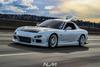

It had a HKS T04Z turbo.
Per the Edmunds inside line test:
"Mazda rotary engines love to rev, and given enough turbo pressure can produce startling horsepower numbers — even if their peak torque output remains modest. But this car was beat up during the production and on the chassis dyno it produced only 306 horsepower at 6,650 rpm and 256 pound-feet of torque at 5,950 rpm at the rear wheels — better than stock, but nowhere near its potential. More importantly, there was little low-end torque to get those big wheels turning. It took 6 seconds for the flying brick to hit 60 mph and 14.1 seconds to run the quarter-mile at 104.5 mph. Stock third-generation U.S.-spec Mazda RX-7s easily bettered those times when they were being sold new in the '90s."
Per the Edmunds inside line test:
"Mazda rotary engines love to rev, and given enough turbo pressure can produce startling horsepower numbers — even if their peak torque output remains modest. But this car was beat up during the production and on the chassis dyno it produced only 306 horsepower at 6,650 rpm and 256 pound-feet of torque at 5,950 rpm at the rear wheels — better than stock, but nowhere near its potential. More importantly, there was little low-end torque to get those big wheels turning. It took 6 seconds for the flying brick to hit 60 mph and 14.1 seconds to run the quarter-mile at 104.5 mph. Stock third-generation U.S.-spec Mazda RX-7s easily bettered those times when they were being sold new in the '90s."
Ouch... that's even worse!! For some reason I think it was just a really terribly built car and those power numbers have nothing to do with the car being beat up during production. I don't think they bothered to get it tuned very well

Thread Starter
"The Sushi Guy"
Joined: Jun 2008
Posts: 127
Likes: 0
From: washington
It had a HKS T04Z turbo.
Per the Edmunds inside line test:
"Mazda rotary engines love to rev, and given enough turbo pressure can produce startling horsepower numbers — even if their peak torque output remains modest. But this car was beat up during the production and on the chassis dyno it produced only 306 horsepower at 6,650 rpm and 256 pound-feet of torque at 5,950 rpm at the rear wheels — better than stock, but nowhere near its potential. More importantly, there was little low-end torque to get those big wheels turning. It took 6 seconds for the flying brick to hit 60 mph and 14.1 seconds to run the quarter-mile at 104.5 mph. Stock third-generation U.S.-spec Mazda RX-7s easily bettered those times when they were being sold new in the '90s."
Per the Edmunds inside line test:
"Mazda rotary engines love to rev, and given enough turbo pressure can produce startling horsepower numbers — even if their peak torque output remains modest. But this car was beat up during the production and on the chassis dyno it produced only 306 horsepower at 6,650 rpm and 256 pound-feet of torque at 5,950 rpm at the rear wheels — better than stock, but nowhere near its potential. More importantly, there was little low-end torque to get those big wheels turning. It took 6 seconds for the flying brick to hit 60 mph and 14.1 seconds to run the quarter-mile at 104.5 mph. Stock third-generation U.S.-spec Mazda RX-7s easily bettered those times when they were being sold new in the '90s."

At a recent Autocross event, I was beat by a Subaru Forester. I'll take being beat by their Volvo monster any time.
Thread Starter
"The Sushi Guy"
Joined: Jun 2008
Posts: 127
Likes: 0
From: washington

That Chick

Joined: Jul 2006
Posts: 468
Likes: 0
From: WA State