


Air Atomization Nozzle.... Completely mechanical activation.


Thread Starter
Eats, Sleeps, Dreams Rotary
iTrader: (52)
Joined: Oct 2001
Posts: 3,902
Likes: 10
From: NJ
Air Atomization Nozzle.... Completely mechanical activation.
Like others, I have been persueing many options with preturbo water injection. I have followed Dudemaaanrx7's thread as well as Rice Racings innovative idea's. In my research, I believe I have found an answer to the only piece of the puzzle that isn't completely mechanical; the activation of the nozzle.
I will be purchasing, and testing the below to find if my assumptions are true. This of course is all theory until it can be proven to work reliably, or at all for that matter. So I propose these thoughts to the community, to see what you guys think.
Fluid Products produces a nozzle that has very promising atomization, 10-50 microns. It also comes in many variations to flow more than enough water for our needs.
The Viscomist
http://www.fluidproducts.com/air-atomizing-nozzles.htm

This nozzle is different from others I have seen in a few ways. Its body is obviously different, but it also has something that is very unique. A signal port. That's right, a 3 port design allows the nozzle to flow water, air, and be activated by an air signal port. When there is no air signal, the nozzle body is closed.
My plan is to "T" into the air feed and use it to activate the signal port as well. By placing a metering valve just before the signal port the valve will allow adjustment of pressure that reaches the port. In turn, adjusting it's activaction. The ONLY possible flaw in this is that the actual activation pressure is higher than the desired activation. In my case, 8-10psi is my plan. I am hoping for a low activation point that can be raised by the use of the valve. The relatively low liquid pressures listed in the flow chart, leads me to believe it isn't that high. I will be contacting them on this.....
http://www.fluidproducts.com/PDFs/Le...ingNozzles.pdf
Thoughts are very welcome of course!
I will be purchasing, and testing the below to find if my assumptions are true. This of course is all theory until it can be proven to work reliably, or at all for that matter. So I propose these thoughts to the community, to see what you guys think.
Fluid Products produces a nozzle that has very promising atomization, 10-50 microns. It also comes in many variations to flow more than enough water for our needs.
The Viscomist
http://www.fluidproducts.com/air-atomizing-nozzles.htm
This nozzle is different from others I have seen in a few ways. Its body is obviously different, but it also has something that is very unique. A signal port. That's right, a 3 port design allows the nozzle to flow water, air, and be activated by an air signal port. When there is no air signal, the nozzle body is closed.
My plan is to "T" into the air feed and use it to activate the signal port as well. By placing a metering valve just before the signal port the valve will allow adjustment of pressure that reaches the port. In turn, adjusting it's activaction. The ONLY possible flaw in this is that the actual activation pressure is higher than the desired activation. In my case, 8-10psi is my plan. I am hoping for a low activation point that can be raised by the use of the valve. The relatively low liquid pressures listed in the flow chart, leads me to believe it isn't that high. I will be contacting them on this.....
http://www.fluidproducts.com/PDFs/Le...ingNozzles.pdf
Thoughts are very welcome of course!




it's water, it suppresses knock, it basically atomizes itself going into the engine, it has been used for 50 years with decent success with garden hoses.
about the only benefit i see is less stumbling ignition breakup.
i suppose what i'm trying to say is don't expect much more than the sentence above. focus less on the nozzle and mainly on stable and progressive injection amounts.
about the only benefit i see is less stumbling ignition breakup.
i suppose what i'm trying to say is don't expect much more than the sentence above. focus less on the nozzle and mainly on stable and progressive injection amounts.
Last edited by RotaryEvolution; Jan 28, 2012 at 12:25 AM.
Thread Starter
Eats, Sleeps, Dreams Rotary
iTrader: (52)
Joined: Oct 2001
Posts: 3,902
Likes: 10
From: NJ
it's water, it suppresses knock, it basically atomizes itself going into the engine, it has been used for 50 years with decent success with garden hoses.
about the only benefit i see is less stumbling ignition breakup.
i suppose what i'm trying to say is don't expect much more than the sentence above. focus less on the nozzle and mainly on stable and progressive injection amounts.
about the only benefit i see is less stumbling ignition breakup.
i suppose what i'm trying to say is don't expect much more than the sentence above. focus less on the nozzle and mainly on stable and progressive injection amounts.
This nozzle should really not lose any of the standard capabilities and functions as the others used. It simply seems to be an upgrade in the realm of activation.
Every kit or use of these nozzles I have seen still retains a form of electronic boost switch activation. A boost switch that can fail. I am hoping that this will make the system completely mechanical.
Thanks for the input.
Thread Starter
Eats, Sleeps, Dreams Rotary
iTrader: (52)
Joined: Oct 2001
Posts: 3,902
Likes: 10
From: NJ
The standard atomization nozzles can go as low as 1-2gph, which is 60-120cc. They step up from there.
This particular nozzle can also go quite low. The second link I posted has the flow chart. Remember that you must use the relative boost that it will be running, because the system is boost fed.
This particular nozzle can also go quite low. The second link I posted has the flow chart. Remember that you must use the relative boost that it will be running, because the system is boost fed.

Full Member
Joined: Jun 2009
Posts: 152
Likes: 14
From: 3116
Considering it will be filtered air coming from the turbo, it should be just dandy.
The atomization nozzle in general has been thoroughly proven by many members. The way it neumatically and progressively injects is much of its appeal. Another key point is the atomization itself. Without proper break down of the water before it hits the compressor blade, wear and damage will occur. So yes, the nozzle choice is very important in that aspect.
This nozzle should really not lose any of the standard capabilities and functions as the others used. It simply seems to be an upgrade in the realm of activation.
Every kit or use of these nozzles I have seen still retains a form of electronic boost switch activation. A boost switch that can fail. I am hoping that this will make the system completely mechanical.
Thanks for the input.
The atomization nozzle in general has been thoroughly proven by many members. The way it neumatically and progressively injects is much of its appeal. Another key point is the atomization itself. Without proper break down of the water before it hits the compressor blade, wear and damage will occur. So yes, the nozzle choice is very important in that aspect.
This nozzle should really not lose any of the standard capabilities and functions as the others used. It simply seems to be an upgrade in the realm of activation.
Every kit or use of these nozzles I have seen still retains a form of electronic boost switch activation. A boost switch that can fail. I am hoping that this will make the system completely mechanical.
Thanks for the input.
I only figured this out after noticing water dripping out of the air filter after pulling over and seeing water on the ground. Even running a max of 15psi the same problem still occured.
To eliminate it altogether I set the WI to switch off under 20% throttle, that way the nozzle would stop spraying as soon as the throttle was lifted completely, no matter what the boost pressure. As soon as I set this up water stopped dripping from the filter and compressor blade wear ceased completely. It's been like this for a while now and there is absolutely no more blade wear at all. This was injecting over 650cc per minute through a single external mix nozzle.
So there is one advantage to an ECU controlled solenoid vs and entirely mechanical activation.
Trending Topics

Senior Member


Joined: Mar 2006
Posts: 436
Likes: 27
From: Bear Cage
http://www.lechlerusa.com/pdfs/Visco..._Manual_US.pdf
Unless I'm misreading the above they recommend 40psi to activate the signal. May not be a good nozzel to use if you want to activate it on boost pressure. Might want to call them and ask if it will work at lower signal pressures.
Unless I'm misreading the above they recommend 40psi to activate the signal. May not be a good nozzel to use if you want to activate it on boost pressure. Might want to call them and ask if it will work at lower signal pressures.
The Viscomist
http://www.fluidproducts.com/air-atomizing-nozzles.htm
This nozzle is different from others I have seen in a few ways. Its body is obviously different, but it also has something that is very unique. A signal port. That's right, a 3 port design allows the nozzle to flow water, air, and be activated by an air signal port. When there is no air signal, the nozzle body is closed.
My plan is to "T" into the air feed and use it to activate the signal port as well. By placing a metering valve just before the signal port the valve will allow adjustment of pressure that reaches the port. In turn, adjusting it's activaction. The ONLY possible flaw in this is that the actual activation pressure is higher than the desired activation. In my case, 8-10psi is my plan. I am hoping for a low activation point that can be raised by the use of the valve. The relatively low liquid pressures listed in the flow chart, leads me to believe it isn't that high. I will be contacting them on this.....
http://www.fluidproducts.com/PDFs/Le...ingNozzles.pdf
Thoughts are very welcome of course!
http://www.fluidproducts.com/air-atomizing-nozzles.htm
This nozzle is different from others I have seen in a few ways. Its body is obviously different, but it also has something that is very unique. A signal port. That's right, a 3 port design allows the nozzle to flow water, air, and be activated by an air signal port. When there is no air signal, the nozzle body is closed.
My plan is to "T" into the air feed and use it to activate the signal port as well. By placing a metering valve just before the signal port the valve will allow adjustment of pressure that reaches the port. In turn, adjusting it's activaction. The ONLY possible flaw in this is that the actual activation pressure is higher than the desired activation. In my case, 8-10psi is my plan. I am hoping for a low activation point that can be raised by the use of the valve. The relatively low liquid pressures listed in the flow chart, leads me to believe it isn't that high. I will be contacting them on this.....
http://www.fluidproducts.com/PDFs/Le...ingNozzles.pdf
Thoughts are very welcome of course!

Full Member

Joined: Jul 2008
Posts: 76
Likes: 0
From: Frankfort, Kentucky
The standard atomization nozzles can go as low as 1-2gph, which is 60-120cc. They step up from there.
This particular nozzle can also go quite low. The second link I posted has the flow chart. Remember that you must use the relative boost that it will be running, because the system is boost fed.
This particular nozzle can also go quite low. The second link I posted has the flow chart. Remember that you must use the relative boost that it will be running, because the system is boost fed.
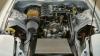
I have discovered that compressor blade wear occurs after the throttle is lifted. The WI is still active for a split second after the throttle plates close, because intake boost pressure is still above the activation point (12psi activation in my case with a max boost pressure of 21psi). It takes a certain amount of time for the intake pressure to drop from 21psi to sub 12psi and in this short period of time some compressor surge occurs, even with a soft BOV setting. I'm assuming the compressor surge creates large droplets of water - hence the blade wear. Possibly because the intake velocity drops rapidly once the throttle plates close and the water falls out of suspension...
I only figured this out after noticing water dripping out of the air filter after pulling over and seeing water on the ground. Even running a max of 15psi the same problem still occured.
To eliminate it altogether I set the WI to switch off under 20% throttle, that way the nozzle would stop spraying as soon as the throttle was lifted completely, no matter what the boost pressure. As soon as I set this up water stopped dripping from the filter and compressor blade wear ceased completely. It's been like this for a while now and there is absolutely no more blade wear at all. This was injecting over 650cc per minute through a single external mix nozzle.
So there is one advantage to an ECU controlled solenoid vs and entirely mechanical activation.
I only figured this out after noticing water dripping out of the air filter after pulling over and seeing water on the ground. Even running a max of 15psi the same problem still occured.
To eliminate it altogether I set the WI to switch off under 20% throttle, that way the nozzle would stop spraying as soon as the throttle was lifted completely, no matter what the boost pressure. As soon as I set this up water stopped dripping from the filter and compressor blade wear ceased completely. It's been like this for a while now and there is absolutely no more blade wear at all. This was injecting over 650cc per minute through a single external mix nozzle.
So there is one advantage to an ECU controlled solenoid vs and entirely mechanical activation.
Ive never seen any wear or daage fro pre turbo "water" injection on a cast or billet wheel. And the time of whick you go from full boost to vacume from lifting from a pull would be no different then having it cut off at 20% throttle. The action happens for both so fast when lettting off that your better off just having it shut off by the boost sensor for your AI injection system. My system turn on at 15 psi and turn off 14.99 psi and less
Last edited by silverfdturbo6port; Jan 30, 2012 at 05:57 PM.
Thread Starter
Eats, Sleeps, Dreams Rotary
iTrader: (52)
Joined: Oct 2001
Posts: 3,902
Likes: 10
From: NJ
http://www.lechlerusa.com/pdfs/Visco..._Manual_US.pdf
Unless I'm misreading the above they recommend 40psi to activate the signal. May not be a good nozzel to use if you want to activate it on boost pressure. Might want to call them and ask if it will work at lower signal pressures.
Unless I'm misreading the above they recommend 40psi to activate the signal. May not be a good nozzel to use if you want to activate it on boost pressure. Might want to call them and ask if it will work at lower signal pressures.
No worries, the other nozzles in use are still the valid option.
Thanks!

Thread Starter
Eats, Sleeps, Dreams Rotary
iTrader: (52)
Joined: Oct 2001
Posts: 3,902
Likes: 10
From: NJ
I have all the parts sorted. My engine and tranny rebuild should be finished in a few months.
My build thread will have extensive updates. I have decided on Brent's nozzle. It works great and he has had success with it.
My build thread will have extensive updates. I have decided on Brent's nozzle. It works great and he has had success with it.
Thread Starter
Eats, Sleeps, Dreams Rotary
iTrader: (52)
Joined: Oct 2001
Posts: 3,902
Likes: 10
From: NJ
I chose to purchase Brent's nozzle and solenoid. He was very willing to work with me on my request. His nozzle works, and is proven. Atomization is great, and the flow is mapped. The solenoid is also VERY high quality. Because it is designed for nitrous, it's durability is high.
-My system will be built with Aeroquip teflon braided line and AN fittings.
-My ABS is being removed in place for a custom polished aluminum tank. Incorporating a spare fitting to externally presurize the system for testing.
-Russel AN aluminum filter
-Aluminum body swivel metering valve.
-Nason brass boost switch. I am not fond of plastic units. Nason states a 1 million cycles lifespan. It is the same piece that Devils Own sells. After speaking with their tech department, they have never had a reported failure in 7 years of business.
I will be creating a new thread once the system is operational with all the details. I will also be updating my build thread once I turn up the boost
-My system will be built with Aeroquip teflon braided line and AN fittings.
-My ABS is being removed in place for a custom polished aluminum tank. Incorporating a spare fitting to externally presurize the system for testing.
-Russel AN aluminum filter
-Aluminum body swivel metering valve.
-Nason brass boost switch. I am not fond of plastic units. Nason states a 1 million cycles lifespan. It is the same piece that Devils Own sells. After speaking with their tech department, they have never had a reported failure in 7 years of business.
I will be creating a new thread once the system is operational with all the details. I will also be updating my build thread once I turn up the boost

Thread
Thread Starter
Forum
Replies
Last Post
