


Scoot 4-rotor FD featured in Nov. Import Racer!


Thread Starter
Joined: Apr 2003
Posts: 4,057
Likes: 262
From: Around
 Scoot 4-rotor FD featured in Nov. Import Racer!
quick magazine specs:
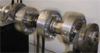
12A based N/A peripheral 4-rotor with custom designed 3-piece eccentric shaft
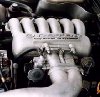
4 individual 46mm slide valve throttle bodies in a CF ram air induction box
8 550cc FD injectors
lightweight 12A rotors with 3mm apex seals
twin Power FC's with Commanders with twin crank triggers at 90 degree offset
custom SS equal lenght 4-1 header
pressure variable exhaust bypass (muffled at low throttle, open at WOT)
tons of other stuff
475hp at 8000
345 lbs-ft at 6000

12A based N/A peripheral 4-rotor with custom designed 3-piece eccentric shaft
4 individual 46mm slide valve throttle bodies in a CF ram air induction box
8 550cc FD injectors
lightweight 12A rotors with 3mm apex seals
twin Power FC's with Commanders with twin crank triggers at 90 degree offset
custom SS equal lenght 4-1 header
pressure variable exhaust bypass (muffled at low throttle, open at WOT)
tons of other stuff
475hp at 8000
345 lbs-ft at 6000



That's gotta be tricky, but I imagine you have 1 PowerFC for the first 2 rotors and another for the rear 2. I guess just as long as you program them the same, you're good to go.
I figured they'd be making more horsepower than that, although that's nothing to sneeze at!
Dale
I figured they'd be making more horsepower than that, although that's nothing to sneeze at!
Dale


Originally Posted by dcfc3s
That's gotta be tricky, but I imagine you have 1 PowerFC for the first 2 rotors and another for the rear 2. I guess just as long as you program them the same, you're good to go.
I figured they'd be making more horsepower than that, although that's nothing to sneeze at!
Dale
I figured they'd be making more horsepower than that, although that's nothing to sneeze at!
Dale

Full Member

Joined: Jan 2003
Posts: 130
Likes: 0
From: Detroit area
Originally Posted by 95R2-89TII Ground Zero
More than likely have changed the compression ratio....but more importantly.....why not?
For the same reasons I kept the stock seals in my single turbo motor.
Trending Topics
Rebreaking things
Joined: Jun 2001
Posts: 2,586
Likes: 0
From: 1 foot in Boston 1 in NJ
Originally Posted by dcfc3s
That's gotta be tricky, but I imagine you have 1 PowerFC for the first 2 rotors and another for the rear 2. I guess just as long as you program them the same, you're good to go.
I figured they'd be making more horsepower than that, although that's nothing to sneeze at!
Dale
I figured they'd be making more horsepower than that, although that's nothing to sneeze at!
Dale
I think pfc#1 controls rotors 1,3 and pfc #2 controls 2,4.
A 2 rotor fires every 180 deg.
The 4 rotor in the 787 and 792 fires every 90 deg.
Rotor #1=0 deg
Rotor #2=90 deg
Rotor #3=180 deg
Rotor #4=270 deg
Of course they could have joined two two rotor e-shafts end to end in which case your theory would be correct.

Originally Posted by CCarlisi
Dale,
I think pfc#1 controls rotors 1,3 and pfc #2 controls 2,4.
A 2 rotor fires every 180 deg.
The 4 rotor in the 787 and 792 fires every 90 deg.
Rotor #1=0 deg
Rotor #2=90 deg
Rotor #3=180 deg
Rotor #4=270 deg
Of course they could have joined two two rotor e-shafts end to end in which case your theory would be correct.
I think pfc#1 controls rotors 1,3 and pfc #2 controls 2,4.
A 2 rotor fires every 180 deg.
The 4 rotor in the 787 and 792 fires every 90 deg.
Rotor #1=0 deg
Rotor #2=90 deg
Rotor #3=180 deg
Rotor #4=270 deg
Of course they could have joined two two rotor e-shafts end to end in which case your theory would be correct.
Thread Starter
Joined: Apr 2003
Posts: 4,057
Likes: 262
From: Around
Just quoting myself from the very first post....
YOU NEED TO READ!! 
Originally Posted by neit_jnf
twin Power FC's with Commanders with twin crank triggers at 90 degree offset
Last edited by neit_jnf; Nov 2, 2004 at 05:46 PM.
Originally Posted by neit_jnf
Just quoting myself from the very first post....
YOU NEED TO READ!!
YOU NEED TO READ!!


I for one am not impressed.
Correct me if I'm wrong, but isn't the main advantage of the rotary its inherrent smoothness and ability to sustain high RPM's, which is how it makes good horsepower for its small size? Adding rotors should increase this smoothness and internal counterbalancing (think V-12 as opposed to V-twin), so why are they not revving their motor much higher than 8000 RPM? It seems like Scoot has built this car for the wow factor alone, as evidenced by using two half-decent ECU's instead of one really good one.
If they were shooting for increased torque, why not just build a larger displacement rotary engine from scratch? It would have less parts, that should net you with less weight per displacement. Such a concoction couldn't be so difficult to fabricate, Mazda has been making rotaries for years.
-s-
Correct me if I'm wrong, but isn't the main advantage of the rotary its inherrent smoothness and ability to sustain high RPM's, which is how it makes good horsepower for its small size? Adding rotors should increase this smoothness and internal counterbalancing (think V-12 as opposed to V-twin), so why are they not revving their motor much higher than 8000 RPM? It seems like Scoot has built this car for the wow factor alone, as evidenced by using two half-decent ECU's instead of one really good one.
If they were shooting for increased torque, why not just build a larger displacement rotary engine from scratch? It would have less parts, that should net you with less weight per displacement. Such a concoction couldn't be so difficult to fabricate, Mazda has been making rotaries for years.
-s-

Super Snuggles

Joined: Feb 2001
Posts: 10,091
Likes: 34
From: Redmond, WA
Originally Posted by scotty305
why are they not revving their motor much higher than 8000 RPM?
For it to be worthwhile, you must be able to provide enough air to keep the engine fed, and the 12A ports probably become a restriction before 8,000 rpm is reached, causing horsepower to fall off. If you could provide enough air to keep making power at 8,000+ rpm, you'd sacrifice more low end to do it. There's a balance that needs to be maintained.
It seems like Scoot has built this car for the wow factor alone, as evidenced by using two half-decent ECU's instead of one really good one.
If they were shooting for increased torque, why not just build a larger displacement rotary engine from scratch? It would have less parts, that should net you with less weight per displacement.
Such a concoction couldn't be so difficult to fabricate, Mazda has been making rotaries for years.


Originally Posted by jimlab
For it to be worthwhile, you must be able to provide enough air to keep the engine fed, and the 12A ports probably become a restriction before 8,000 rpm is reached, causing horsepower to fall off. If you could provide enough air to keep making power at 8,000+ rpm, you'd sacrifice more low end to do it. There's a balance that needs to be maintained.
Originally Posted by jimlab
...Or, you could look at it as using two readily available and perfectly acceptable ECUs instead of trying to find or build one that will control a 4-rotor engine, a configuration never available in any production car...
Not likely, the rotary design doesn't lend itself well to increasing displacement. You either increase the number of rotors, increasing length and weight, or you increase the size of the rotors and housings, increasing height, width, and weight. Either way, you've got a packaging and weight problem. You can't "bore and stroke" a rotary to increase displacement with no increase in package size.
But you can't tell me that Mazda is the only company capable of fabricating a rotary: http://www.freedom-motors.com/ builds them for use in watercraft, and I'm sure that there are plenty of other places that could make them if they felt so inclined.
I must admit that this is an interesting topic compared to most that I've seen on this board recently, but it would be even better if there were more innovative ideas being brought up. UC Berkeley has been making those miniature silicon rotary motors for a while now, who's going to push the envelope next?
-s-
Super Snuggles
Joined: Feb 2001
Posts: 10,091
Likes: 34
From: Redmond, WA
Originally Posted by scotty305
There are people racing 1st-gens that turn over 10,000 rpm and make power doing it. Many of them do this with bridgeports, not even peripheral. I'm guessing that the problem is with the eccentric shaft.
In any event, there are reasons *not* to turn more rpm, just because you can. I doubt those bridgeport or peripheral port engines idle well, and I doubt they'd be something you'd want to drive in stop and go traffic every day.
But you can't tell me that Mazda is the only company capable of fabricating a rotary: http://www.freedom-motors.com/ builds them for use in watercraft, and I'm sure that there are plenty of other places that could make them if they felt so inclined.


Thread
Thread Starter
Forum
Replies
Last Post
Turblown
Vendor Classifieds
12
Oct 17, 2020 03:25 PM


