Mazda Remans..... the saga continues


Senior Member

Joined: Sep 2006
Posts: 252
Likes: 9
From: DC Metro
Are these a cost-effective alternative for someone considering a rebuild? Stock rebuilds seem to be around $4500 at shops in my area, but I imagine that price goes up if hard parts need to be replaced. If one is not looking for port work, is it more cost effective, or better for future reliability, to pay a shop to pick up the reman and just swap it in?


Are these a cost-effective alternative for someone considering a rebuild? Stock rebuilds seem to be around $4500 at shops in my area, but I imagine that price goes up if hard parts need to be replaced. If one is not looking for port work, is it more cost effective, or better for future reliability, to pay a shop to pick up the reman and just swap it in?

to flush it out without really harming the seals would probably be 100% distilled water and a bottle of water wetter run through it for a few weeks(preferrably not mid winter) and then flush the water out.





^ Doing it in the vehicle and running it like that will cause some of the crap to clog parts of the radiator. I would not recommend running one of these engines unless it has been flushed thoroughly before installing one in a vehicle
i think you underestimate the amount of crap that dislodges itself that is already in the system..
fact is, the engine is one big sludge trap and collects almost everything that can't float freely in the coolant. you likely aren't going to get much out of the engine once it's assembled. nor will it really cause much harm where it tends to collect anyways.
many of these engines were like this from day one.
fact is, the engine is one big sludge trap and collects almost everything that can't float freely in the coolant. you likely aren't going to get much out of the engine once it's assembled. nor will it really cause much harm where it tends to collect anyways.
many of these engines were like this from day one.
Last edited by RotaryEvolution; Nov 4, 2013 at 03:03 PM.
^ What crap thats in the system?
If the cooling system is maintained properly then there should be no crap in the system. It certainly is not smart to have the attitude that just because it is dirty I should not care and contribute to the problem. That is asinine.
If the engine is removed and the person doing the work notices contamination proper actions should be taken to remove said crap before installing an engine that someone pays minimum $2800 for. Not counting all the external seals, gaskets, and other things people generally replace when working on these cars. Plus their time.
It is really not hard to clean the rest of the cooling system when all of the components are removed from the car except the heater core. But there are easy ways to flush it out while performing the engine swap.
But to say just leave it is just asking for trouble, and bad advice.
If the cooling system is maintained properly then there should be no crap in the system. It certainly is not smart to have the attitude that just because it is dirty I should not care and contribute to the problem. That is asinine.
If the engine is removed and the person doing the work notices contamination proper actions should be taken to remove said crap before installing an engine that someone pays minimum $2800 for. Not counting all the external seals, gaskets, and other things people generally replace when working on these cars. Plus their time.
It is really not hard to clean the rest of the cooling system when all of the components are removed from the car except the heater core. But there are easy ways to flush it out while performing the engine swap.
But to say just leave it is just asking for trouble, and bad advice.
when you take an engine apart you see the accumulation spots which always have the sludge i was referring to.
the water jackets are always rusted as well.
yeah it kind of sucks getting an engine you think should be clean but it isn't but all the crap stays where it started and doesn't "plug up the radiator" or other things. how else do you suggest doing it without tearing the engine apart?
i swear you guys are too ******* **** sometimes.
the water jackets are always rusted as well.
yeah it kind of sucks getting an engine you think should be clean but it isn't but all the crap stays where it started and doesn't "plug up the radiator" or other things. how else do you suggest doing it without tearing the engine apart?
i swear you guys are too ******* **** sometimes.
Last edited by RotaryEvolution; Nov 6, 2013 at 10:11 AM.
^ have you ever disassembled one of these reman motors?
The rust is loosely attached to the walls and can be easily flushed out.
It is dumb to not take that step before installing the engine.
Regarding being ****: When building a 500hp+ car it is important to pay attention the every detail.
The rust is loosely attached to the walls and can be easily flushed out.
It is dumb to not take that step before installing the engine.
Regarding being ****: When building a 500hp+ car it is important to pay attention the every detail.
Deposits like this can easily be flushed out prior to running the engine in the car. Do you want that in your radiator? I sure dont.
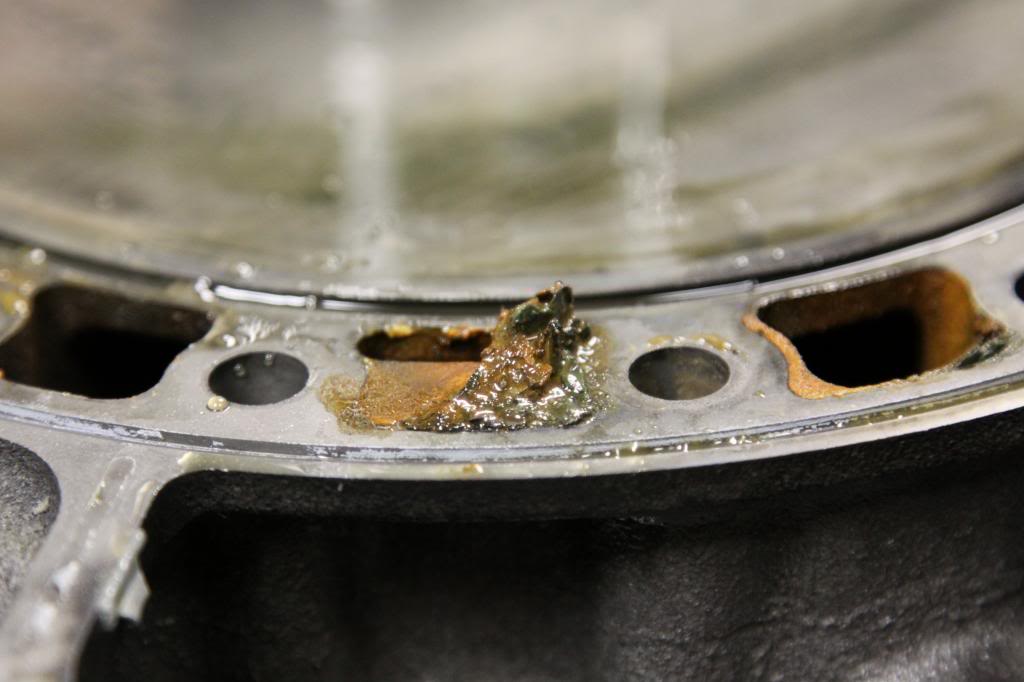
Look, a passage partially blocked by flakes of rust and "crap". again easily flushed out.
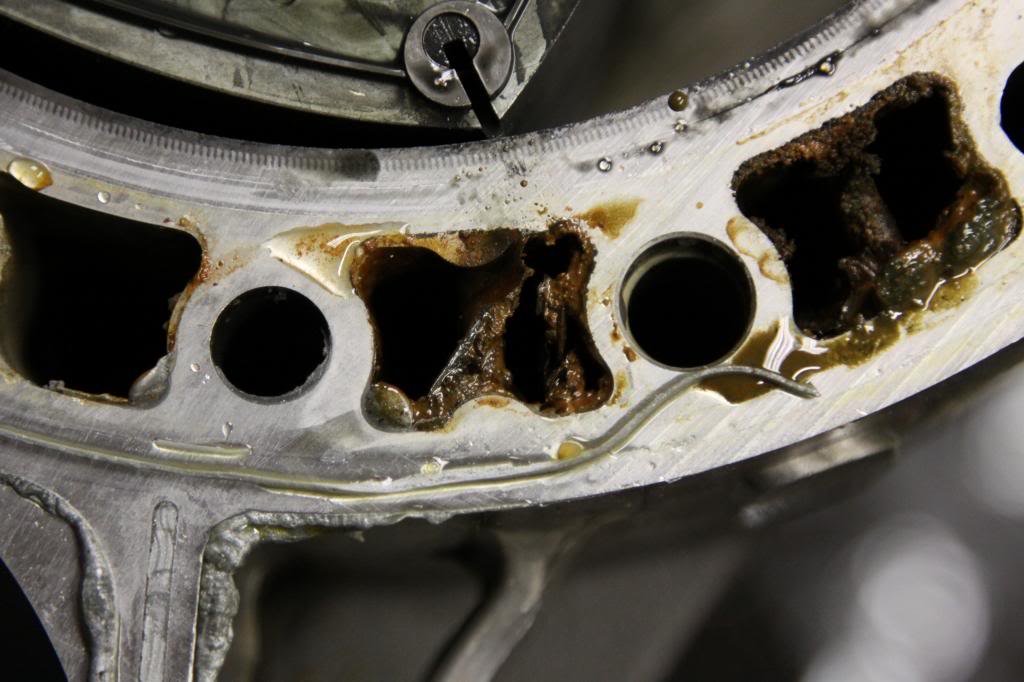
More flakes of crap
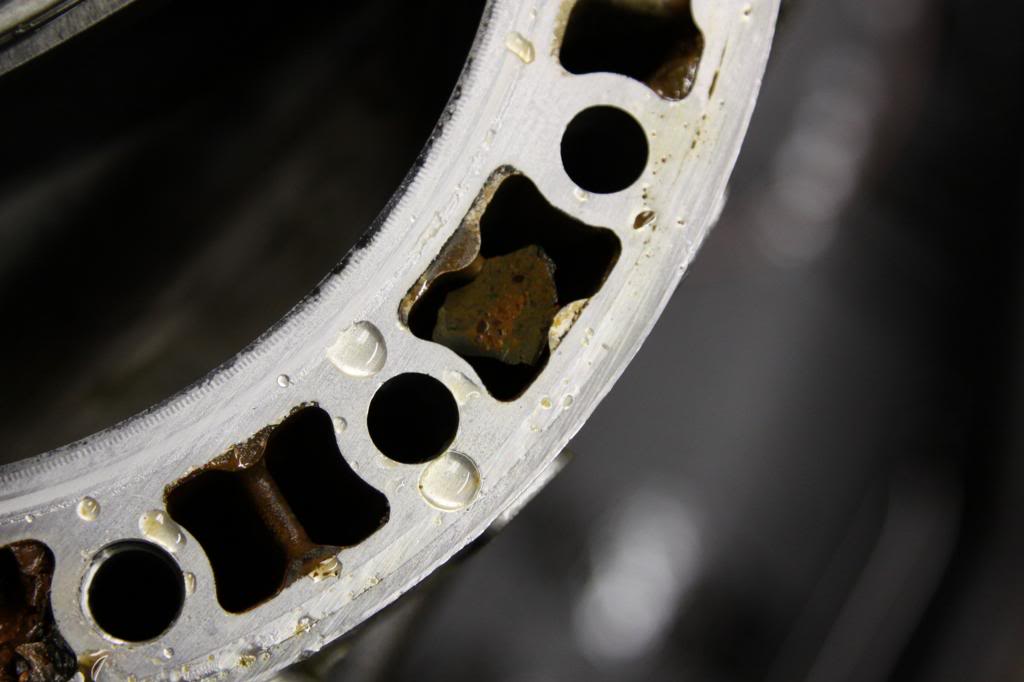
BTW, these pics are all from my own engine.
Compresed air wont do anything. Water and maybe a solvent of some sort will. I would make a plate to bolt to the WP housing flange on the front iron and feed water through one side and let it flush out the other.

Look, a passage partially blocked by flakes of rust and "crap". again easily flushed out.

More flakes of crap

BTW, these pics are all from my own engine.
Compresed air wont do anything. Water and maybe a solvent of some sort will. I would make a plate to bolt to the WP housing flange on the front iron and feed water through one side and let it flush out the other.
alright, do what makes you feel better. you might get a few small blobs to loosen up but the rest just finds another pocket in the system to settle into without filling the engine with water/degreaser and spinning it around like a washing machine for 10 hours.
looks nasty i know, so does every other engine that gets torn apart, but those cars didn't have plugged up radiators either.
looks nasty i know, so does every other engine that gets torn apart, but those cars didn't have plugged up radiators either.
Last edited by RotaryEvolution; Nov 6, 2013 at 10:51 AM.
Here is a pic of my engine with 70kmi. In car since 1992.
Look at the coolant passages on the housings and look at my new ones. A properly maintained cooling system does not have crap in it.
Look at the coolant passages on the housings and look at my new ones. A properly maintained cooling system does not have crap in it.

you will never get a reman engine that has had rust in it to look like that, because you are comparing a mazda reman to a third party rebuild with brand new housings that were never exposed to the same environments. i'm not sure why you are even making that comparison as if i'm trying to say that rust is fine or that what i'm actually trying to say is that it sucks that it's there but it already is and 90% of it is staying right where it is.
Last edited by RotaryEvolution; Nov 6, 2013 at 11:00 AM.

ok then mazda didn't use the same flushing procedure on the brand new engines(probably none) that they use now on the remans.
but why do you still think that is relevant? you still won't get one of these engines to ever be flushed out and clean like that, ever.
but why do you still think that is relevant? you still won't get one of these engines to ever be flushed out and clean like that, ever.


Thread Starter


Joined: Mar 2001
Posts: 30,816
Likes: 655
From: FL-->NJ/NYC again!
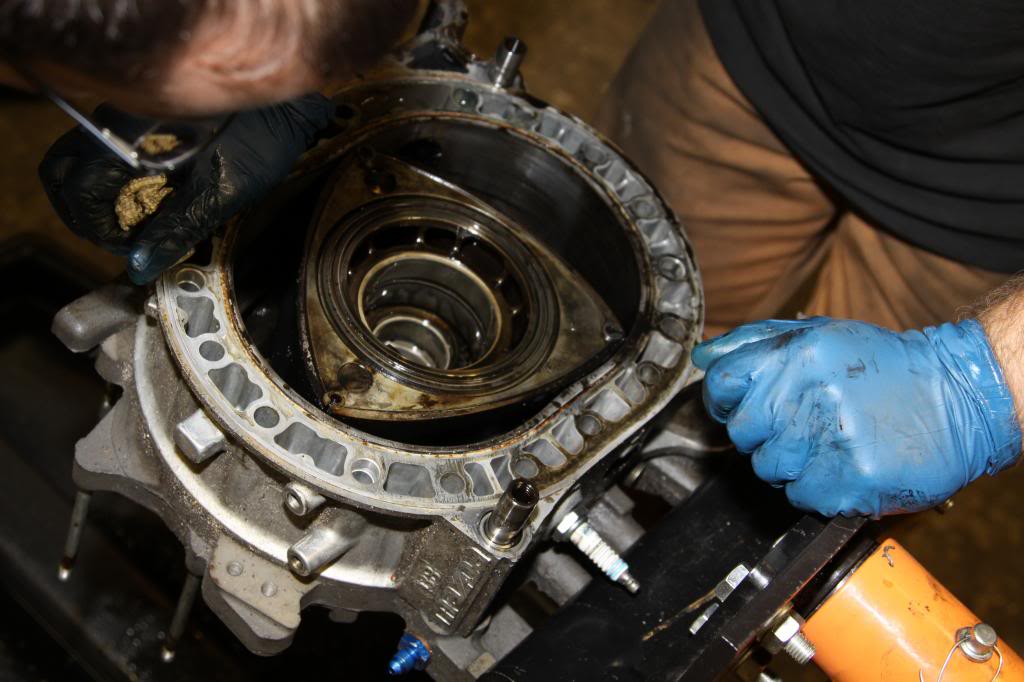
Recently pulled apart a reman for porting, and upon tearing down the engine rotors discovered that on each rotor one of the outer blue-marked oil control rings springs was UPSIDE DOWN.
Beware guys, I couldn't believe this when I saw it, I do have pics I can post later.
Beware guys, I couldn't believe this when I saw it, I do have pics I can post later.