3rd Generation Specific (1993-2002) 1993-2002 Discussion including performance modifications and Technical Support Sections.
Sponsored by:

Mazda: FD's compressor surge from the factory

Thread Tools
 
Search this Thread
 
Old Dec 15, 2010 | 10:41 AM
  #26  
DI2CCO's Avatar
POWERHOUSE
Tenured Member 05 Years
iTrader: (1)
 
Joined: Apr 2009
Posts: 20
Likes: 0
From: BREA, CALIFORNIA
Originally Posted by adamrs80
Is it possible for a moderator to delete a post so it doesn't junk up an otherwise very good thread?
They {meaning Mazda}. Coment coming from an engineer and thats why i stay off this site lots of punks trash fitting against each other. Some RX fans we are!
Reply
Old Dec 15, 2010 | 10:49 AM
  #27  
RotaryEvolution's Avatar
Sharp Claws
Tenured Member 15 Years
iTrader: (30)
 
Joined: Oct 2003
Posts: 5,107
Likes: 50
From: Central Florida
well, you did basically make yourself sound like you think you are smarter than the mazda engineers who built the turbo system. the system does work fine, when it is all working correctly.

arrogance usually is rewarded with arrogance.
Reply
Old Dec 15, 2010 | 11:03 AM
  #28  
DI2CCO's Avatar
POWERHOUSE
Tenured Member 05 Years
iTrader: (1)
 
Joined: Apr 2009
Posts: 20
Likes: 0
From: BREA, CALIFORNIA
This is a good thread and dont mean to clutter However just want the rx owners to understand why the twins are a little eratic and get surges. Simple to understand put some twins on the table follow the air flow pattern and see how your air crashes even if you have a prespool in the secondary. done with my comments....peace
Reply
Old Dec 15, 2010 | 05:21 PM
  #29  
Turbo8's Avatar
REPU Garage
Tenured Member 10 Years
iTrader: (17)
 
Joined: Jun 2007
Posts: 623
Likes: 0
From: Northern Colorado
My friend and I reviewed the diagnostic setup and to our naked eye on video playback it appeared as if the charge control and charge relief solenoids switch at the exact same time. This was a 2nd gear run, however, so everything is happening relatively quickly engine speed wise, and since we have no clue how long this potential surge condition can last, we could have easily missed it.

We're going to try it again in a higher gear and see if we can see it.
Reply
Old Dec 15, 2010 | 07:21 PM
  #30  
arghx's Avatar
Thread Starter
rotorhead
Tenured Member: 20 Years
Liked
Loved
Community Favorite
iTrader: (3)
 
Joined: Aug 2004
Posts: 16,205
Likes: 461
From: cold
^ are you logging from the factory diagnostic protocol? Because that has a very slow sample rate

It is interesting that two different SAE papers talk about this surge condition (on the 13B-REW and the 20B) but the workshop manual and service highlights say nothing about it. I am inclined to believe the SAE papers.
Reply
Old Dec 15, 2010 | 08:30 PM
  #31  
dgeesaman's Avatar
Moderator
Tenured Member: 20 Years
Liked
Loved
iTrader: (8)
 
Joined: May 2002
Posts: 12,313
Likes: 27
From: Hershey PA
Originally Posted by DI2CCO
They {meaning Mazda}. Coment coming from an engineer and thats why i stay off this site lots of punks trash fitting against each other. Some RX fans we are!
This thread is after all a technical discussion about the technical challenges of sequential twin turbo transition. Sweeping generalizations that defy convention and are supported with neither fact nor theory might get attention but not consideration.

HERE is what they failed to tell everybody.

The SEQ. turbo is the best concept ever HOWEVER this design is horrible. To cut a long story short you got two turbos forcing air agaist each other.
You have two turbos generating 10psi of pressure. You have an engine drawing vacuum if not for the turbos. The air coming off the compressor(s) goes right into the engine. Since both turbos are equal size and efficiency, the 10psi of air coming from the other compessor has no more effect than if a wall was there instead. I've monitored boost pressure on both sides of the charge control valve and they are both 10psi when it opens. It's no different than an exhaust manifold that joins and exits in one tailpipe.

thats why you get all kind of spikes and motor blowouts.
Boost spikes are caused by poor boost control. The stock Mazda design does not spike boost and the engine does not blow up. Poorly modified cars might do those things, but it's not because the flow is going backwards, and it's certainly not a fault in Mazda's design.

THE FIX. $$ have a welding guru weld dividers one in between your lower Y-pipe and one mid exhaust manifold. TO seperate your air flow from both turbos into the same direction.
You could do all of that and if that's the only change to the stock design you've added restriction. No benefit. It will be slower and hotter.

Last edited by dgeesaman; Dec 15, 2010 at 08:33 PM.
Reply
Old Dec 15, 2010 | 08:48 PM
  #32  
Turbo8's Avatar
REPU Garage
Tenured Member 10 Years
iTrader: (17)
 
Joined: Jun 2007
Posts: 623
Likes: 0
From: Northern Colorado
Originally Posted by arghx
^ are you logging from the factory diagnostic protocol? Because that has a very slow sample rate

It is interesting that two different SAE papers talk about this surge condition (on the 13B-REW and the 20B) but the workshop manual and service highlights say nothing about it. I am inclined to believe the SAE papers.

No, my friend could not get his board to read the factory diagnostic protocol so we used his diagnostic LED board. It displays exactly everything going into and out of the ECU in realtime, albeit in LED form.
Reply
Old Dec 16, 2010 | 08:42 AM
  #33  
arghx's Avatar
Thread Starter
rotorhead
Tenured Member: 20 Years
Liked
Loved
Community Favorite
iTrader: (3)
 
Joined: Aug 2004
Posts: 16,205
Likes: 461
From: cold
The only way to know for sure would be for someone to disassemble the sequential turbo control logic in the factory computer.
Reply
Old Dec 16, 2010 | 03:14 PM
  #34  
RENESISFD's Avatar
Wastegate John
Tenured Member 10 Years
iTrader: (13)
 
Joined: Feb 2008
Posts: 2,979
Likes: 9
From: Long Island NY 11746
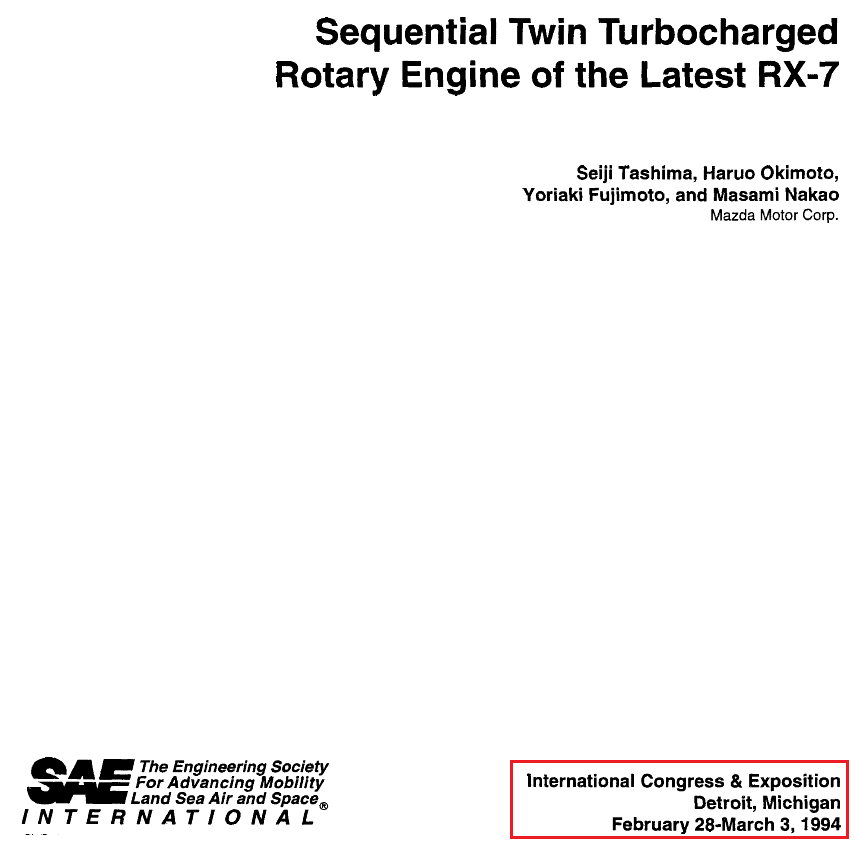
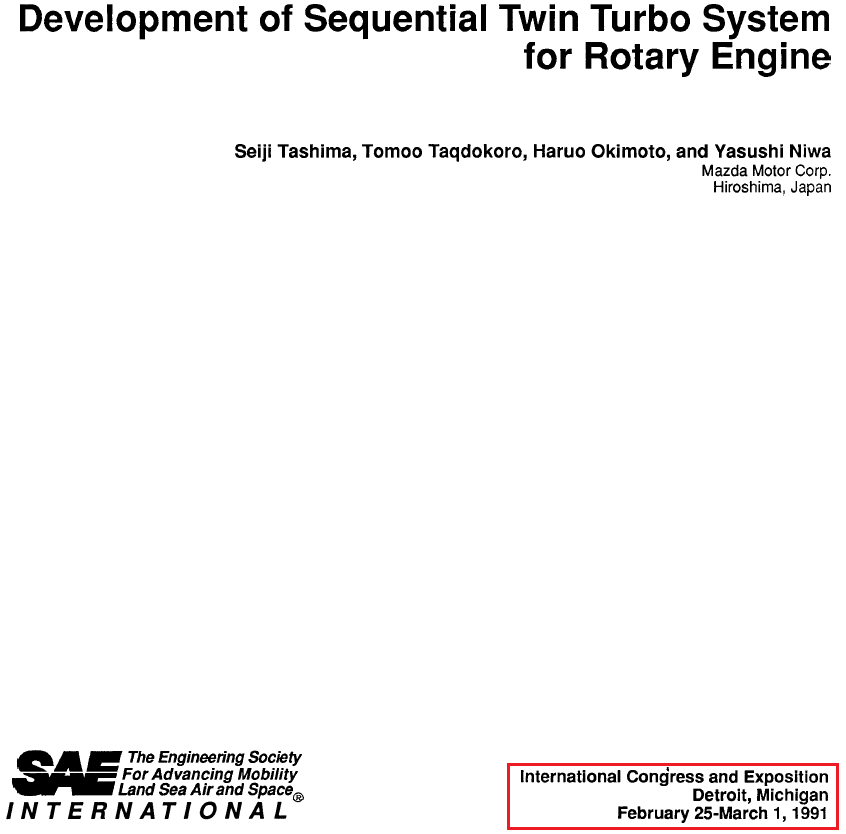
Do you know the publishing date of these documents?

I wonder if this system was being developed and later scratched for some reason.


John
Reply
Old Dec 16, 2010 | 04:21 PM
  #35  
Turbo8's Avatar
REPU Garage
Tenured Member 10 Years
iTrader: (17)
 
Joined: Jun 2007
Posts: 623
Likes: 0
From: Northern Colorado
Originally Posted by arghx
The only way to know for sure would be for someone to disassemble the sequential turbo control logic in the factory computer.
How can I not know for sure when I can see everything the ECU is switching and controlling in realtime?
Reply
Old Dec 16, 2010 | 04:46 PM
  #36  
dgeesaman's Avatar
Moderator
Tenured Member: 20 Years
Liked
Loved
iTrader: (8)
 
Joined: May 2002
Posts: 12,313
Likes: 27
From: Hershey PA
Originally Posted by arghx
The only way to know for sure would be for someone to disassemble the sequential turbo control logic in the factory computer.
Or, as I had already mentioned, you just monitor the output of the factory computer. Watch the TCA, CCA, CRV, WG, PC, etc. That's easy to do and no matter what's going inside the ECU the electrical output to the solenoids is the bottom line.
Reply
Old Dec 16, 2010 | 08:37 PM
  #37  
Enervation's Avatar
Full Member
Tenured Member 15 Years
 
Joined: Jun 2009
Posts: 85
Likes: 1
From: Chch, New Zealand
As someone earlier pointed out, it may be that the research was done after the first FDs (series 6) were released. It may be that Series 7 (96-99) or Series 8 (99+) models have this new control technique.

Either way, it's pretty simple to check using a portable oscilloscope or logic analyser. I'd do it myself except I only have access to mains powered o'scopes.
Reply
Old Dec 17, 2010 | 10:30 AM
  #38  
arghx's Avatar
Thread Starter
rotorhead
Tenured Member: 20 Years
Liked
Loved
Community Favorite
iTrader: (3)
 
Joined: Aug 2004
Posts: 16,205
Likes: 461
From: cold
Originally Posted by RENESISFD
Do you know the publishing date of these documents?

I wonder if this system was being developed and later scratched for some reason.


John
The first paper:


The second paper:


Originally Posted by Turbo8
How can I not know for sure when I can see everything the ECU is switching and controlling in realtime?
It is conceivable, although not likely, that it only happens rarely or under very specific conditions, and we would only be able to find out if we understood how the ECU was programmed. But if you can't observe it during normal driving, for all intents and purposes the service manual is correct and for whatever reason there is a significant difference between all of Mazda's test engines and their production engines. That in itself would be a fascinating mystery.
Attached Thumbnails Mazda: FD's compressor surge from the factory-paperdate1.png   Mazda: FD's compressor surge from the factory-paperdate2.png  
Reply
Related Topics
Thread
Thread Starter
Forum
Replies
Last Post
befarrer
Single Turbo RX-7's
1
Sep 4, 2015 08:26 PM


All times are GMT -5. The time now is 10:24 AM.