When you click on links to various merchants on this site and make a purchase, this can result in this site earning a commission. Affiliate programs and affiliations include, but are not limited to, the eBay Partner Network.
Moving them to the pump inlet bypasses the radiator so you'll be recirculating hot coolant from the heater and turbo...
Correct and that's exactly what you want and exactly how it is plumbed in factory automotive cooling systems.
In order to provide proper flow through the heater and turbo circuits, the feed has to be downstream of the water pump (whether mechanical or EWP) and the return has to be upstream. If you make the return upstream of the radiator, then:
(a) in a thermostat-less EWP system, it will work ok but those circuits will be passing through the radiator all the time. This will add to the problem of overcooling and diminish heater performance. The heater core will itself actually take heat out of the system and therefore will be introducing coolant into the radiator at cooler than system operating temp. I foresee less of a problem with the turbo coolant circuit in less scenario but the flow through that circuit won't be as good as if the return went straight before the EWP.
(b) in a top thermostat EWP system (like my current factory position bypass thermostat setup), the thermostat will cease to properly regulate system temperatures, because a proportion of coolant flow will always pass through the radiator irrespective of whether the thermostat is open or closed. This will also significantly increase warm-up times, overcooling and reduce heater performance.
(c) in a bottom thermostat EWP system (like the Lotus/Rover/Fiat/BMW style), the heater and turbo coolant circuit won't work at all, because when the thermostat is closed, the return is no longer upstream of the EWP and consequently that coolant path will close.
By bypassing the heater and turbo coolant circuits, you are essentially equalising the temperature of those circuits with engine coolant temperature. The heater and turbo coolant circuits won't overheat provided that overall system temperature doesn't. Recirculating the coolant through the heater and turbo won't actually decrease overall cooling efficiency of the system. This is because under either scenario all factors affecting temperature reduction across the radiator remain equal (water pump flow, inlet/outlet diameter, inlet/outlet hose diameter, airflow, core design, core surface area and thickness, conductivity of material etc). It's not like you're pumping purely hot coolant either - the bypassed coolant, mixes in with the cooled coolant from the bottom radiator hose.
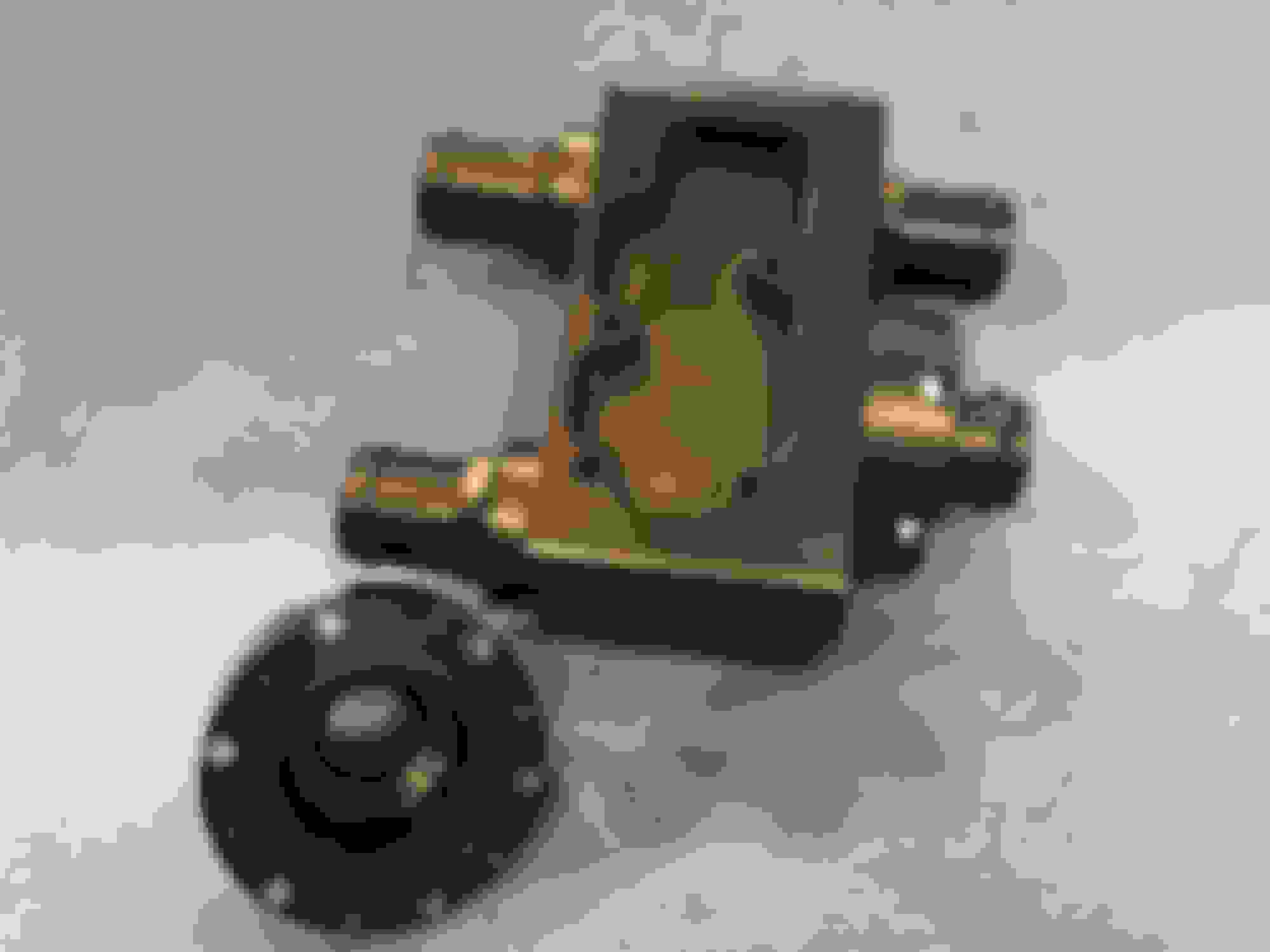
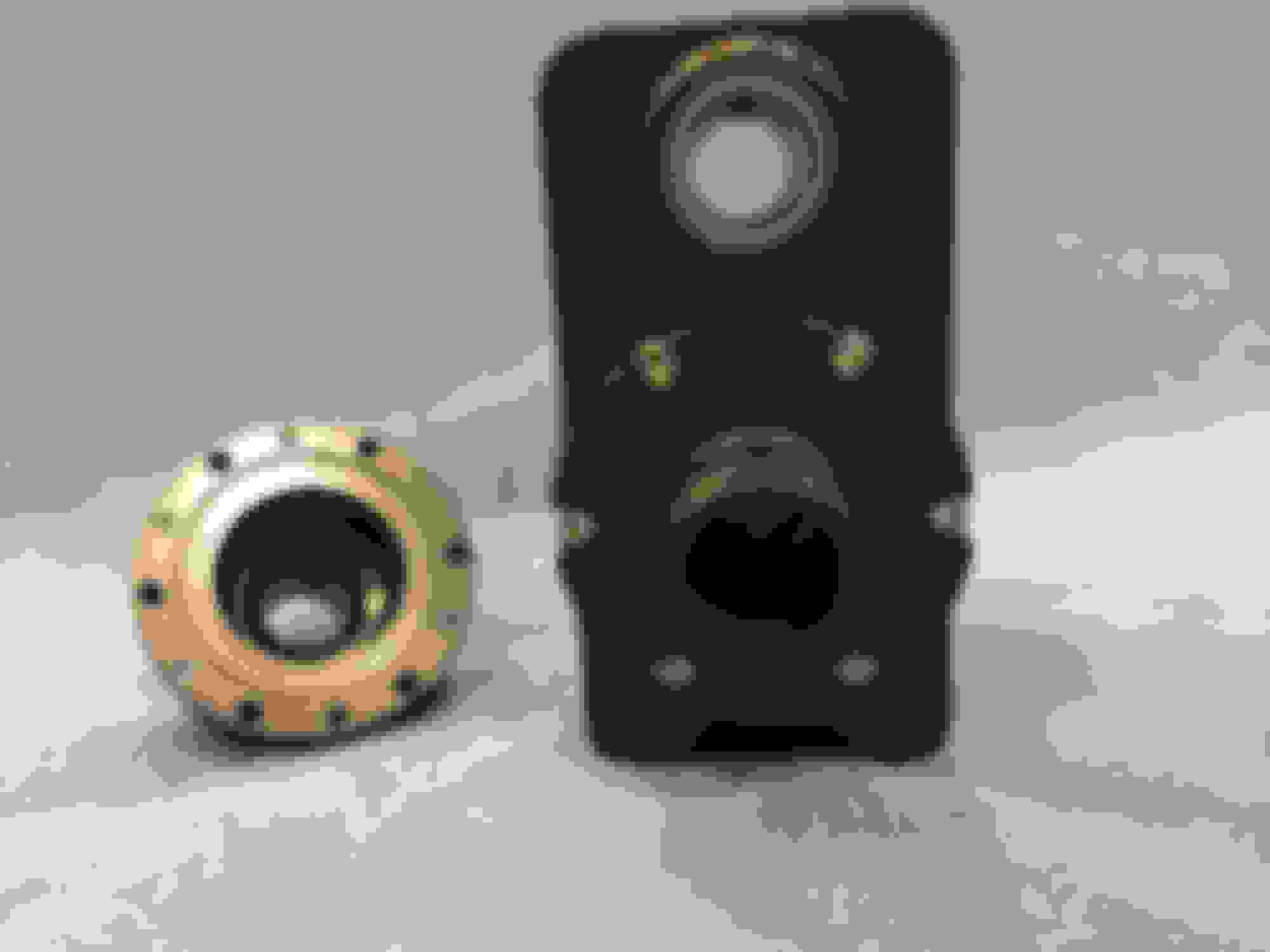
Here is my custom made setup. I am going to open a group but interest thread on these to get an improved version produced to shrink the footprint, and make some other design changes I feel are necessary. They will have the option of fittings or no fittings, and will be something like a -20 AN o ring for flexibility. It uses a GM thermostat, and completely bypasses when cold. This would be between the pump and the radiator.
Here is my custom made setup. I am going to open a group but interest thread on these to get an improved version produced to shrink the footprint, and make some other design changes I feel are necessary. They will have the option of fittings or no fittings, and will be something like a -20 AN o ring for flexibility. It uses a GM thermostat, and completely bypasses when cold. This would be between the pump and the radiator.
The basic function is: water pump forces water towards the thermostat. If thermostat is closed, the water goes across the block internally and bypasses the radiator. If the thermostat is open, the bypass is plugged and the water is forced through the radiator.
Anywhere in between is normal thermostat modulation. This allows for continuous flow during warmup, avoiding any hot spots, whilst retaining the ability to warmup the engine and related fluids quickly.
My goal with this deaign is to allow for the use of an EWP with continuous flow during warmup, a fast warmup like factory, and then basically direct flow once up to temp.
The internal passages are all 1" diameter. The big question is what kind of a market is there for it?
I am currently working with a friend of mine who is a badass machinist to make the new and improved version.
Last edited by Monkman33; Feb 22, 2017 at 11:08 AM.
looks like an oil thermostat, same working principle right?
pretty much. But with a replaceable thermostat. Chose GM style with bypass blockoff plate so people could choose what temp they wanted along with being able to service without entire unit replacement.
I will try to create a drawing tonight that takes into account rerouting turbos and heater return to before EWP, and with remote thermostat from a fiat and see if its correct, KYPREO
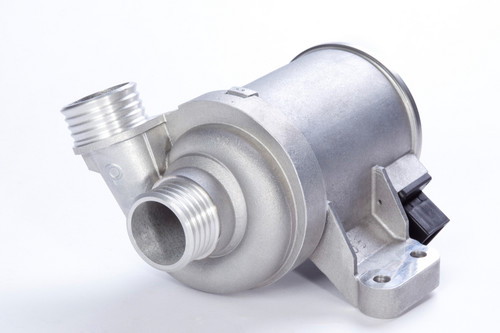
Another pump to consider is the pierburg CWA400 EWP. This pump comes off of the bmw 335i. It flows a ton of water and has a built in solid state relay. Also you can get a controller from this company Tecomotive - tinyCWA that will control it properly as well as run the pump after shut down and control an electric fan after shut down as well.
Another pump to consider is the pierburg CWA400 EWP. This pump comes off of the bmw 335i. It flows a ton of water and has a built in solid state relay. Also you can get a controller from this company Tecomotive - tinyCWA that will control it properly as well as run the pump after shut down and control an electric fan after shut down as well.
the CWA400 pumps out 150 L/m which is the same as the davies craig pump. it's cool that there is another choice though.
Not sure if right thread, but has anyone verified the temp calibration on the Craig Davies EWP and the stock water temp sensor?
The location of my EWP temp sensor is on the outlet neck (where the cap goes and where you install the thermostat). Same as this one here: https://cdn3.volusion.com/wpyhq.jsay...jpg?1459350630
So essentially ~4" from the stock temp sensor on the back of the water pump. You can see both sensors.
The thermostat is bypassed.
The EWP sees higher temps, about 20 degrees more or so.
I am using the stock water temp sensor and calibration on the adaptronic.
Earlier today testing, below were the temps
EWP water temp 200*F
Stock water temp 180*F
Oil Pedestal Temp ~160*F
Ambient Temp ~60*F
The problem is the EWP alarm goes off at about 200*F, before my fans even come on.
Not sure if right thread, but has anyone verified the temp calibration on the Craig Davies EWP and the stock water temp sensor?
The location of my EWP temp sensor is on the outlet neck (where the cap goes and where you install the thermostat). Same as this one here: https://cdn3.volusion.com/wpyhq.jsay...jpg?1459350630
So essentially ~4" from the stock temp sensor on the back of the water pump. You can see both sensors.
The thermostat is bypassed.
The EWP sees higher temps, about 20 degrees more or so.
I am using the stock water temp sensor and calibration on the adaptronic.
Earlier today testing, below were the temps
EWP water temp 200*F
Stock water temp 180*F
Oil Pedestal Temp ~160*F
Ambient Temp ~60*F
The problem is the EWP alarm goes off at about 200*F, before my fans even come on.
Bringing back an old thread. I was wondering if you found out any information regarding the difference in temperature from Stock to EWP. I just finished installing my EWP on my car, and have the water temp sensor at the fill neck as well. I decided to remove the thermostat, due to concerns mentioned above. The car isn't running yet so I'm not sure if there will be an over-cooling issue or not yet. I have the EWP connected to solid state relay controlled by a AEM infinity. One concern that I have is that I hooked up a variable DC power supply onto the EWP and ran it to help bleed the system. I don't know if it's just me but just visually inspecting the water from the fill neck, it appears that the water isn't moving that much. Perhaps someone can give some insight on what I'm seeing.
I've just installed the Sakebomb EWP kit and am over cooling, 15 minutes on a highway at 70 mph and the car drops to 160F. So far I have left the LCD controller set to 85C (default at power up), I will try this increased to 90C but as this now also controls the temp the fans kick in there is a limit to how high I want to go.
In regards the turbo cooling flow, would a simple mod be to T into the drain from the AST at the bottom of the radiator? This would bring the turbo return up stream of the EWP.
I've just installed the Sakebomb EWP kit and am over cooling, 15 minutes on a highway at 70 mph and the car drops to 160F. So far I have left the LCD controller set to 85C (default at power up), I will try this increased to 90C but as this now also controls the temp the fans kick in there is a limit to how high I want to go.
In regards the turbo cooling flow, would a simple mod be to T into the drain from the AST at the bottom of the radiator? This would bring the turbo return up stream of the EWP.
Yep, that sounds fine. Tapping the turbo return anywhere upstream of the EWP that draws from the bottom of the radiator will work well. I am using sharing it with the heater return line myself.
This alone probably will not solve the over-cooling problem. To fix that you need to incorporate a thermostat. This will then allow you to set the controller to 85C with the thermofans kicking in at a more sensible temperature. Personally, my preference is to use a separate controller for the fans eg aftermarket ECU so that the switch on/off temp can be configured with precision separately from the EWP target temp. The controller is great and the algorithm works well to get the engine up to operating temp quickly (when used in conjunction with the thermostat) but unfortunately the thermofan control is tied to the EWP temp which isn't ideal in my opinion.
Yep, that sounds fine. Tapping the turbo return anywhere upstream of the EWP that draws from the bottom of the radiator will work well. I am using sharing it with the heater return line myself.
This alone probably will not solve the over-cooling problem. To fix that you need to incorporate a thermostat. This will then allow you to set the controller to 85C with the thermofans kicking in at a more sensible temperature. Personally, my preference is to use a separate controller for the fans eg aftermarket ECU so that the switch on/off temp can be configured with precision separately from the EWP target temp. The controller is great and the algorithm works well to get the engine up to operating temp quickly (when used in conjunction with the thermostat) but unfortunately the thermofan control is tied to the EWP temp which isn't ideal in my opinion.
Yes I agree with your thoughts on pump and fan control.
I reached out to Davies Craig on it, I'm surprised the controller is so restricted, I doubt it would cost any more to have user programmability for different pump duty cycles and fan switch points. Davies Craig don't have any intention of offering this and their recommendation was to re-install the thermostat with a couple of 5mm holes drilled in it.
Yes I agree with your thoughts on pump and fan control.
I reached out to Davies Craig on it, I'm surprised the controller is so restricted, I doubt it would cost any more to have user programmability for different pump duty cycles and fan switch points. Davies Craig don't have any intention of offering this and their recommendation was to re-install the thermostat with a couple of 5mm holes drilled in it.
That is an OK stop-gap solution but requires modification to the thermostat to remove the bypass section and manually block up the bypass channel. Otherwise coolant flow will pass straight across the front of the engine and not through it. While going to that effort, it is better to incorporate a proper bypass thermostat, as this (when used in combination with the controller) gives you faster-than-factory warmup times and rock-solid temperatures.
I'm not too fussed about the fan control because pretty much every aftermarket ECU offers that. Otherwise, you can get programmable thermatic switches which will do the job. Davies Craig actually makes a cheap standalone one. I used this for years without issue. It switches off the fan 5'C below the set-point, which you can set wherever you want it.